| Availability: | |
|---|---|
| Quantity: | |
MINGHUNG
1. Product Overview
The High-Efficiency Plywood Veneer Sorting Line is an integrated automated solution designed for the veneer processing stage in plywood manufacturing. It combines post-drying handling, defect detection, grading, repairing, splicing, and stacking into a continuous, automated process. Controlled by an intelligent system and high-precision mechanical actuators, this line enables seamless operations from veneer feeding to finished stack output. It is widely used in the production of engineered flooring substrates, furniture panels, packaging boards, and other plywood products.
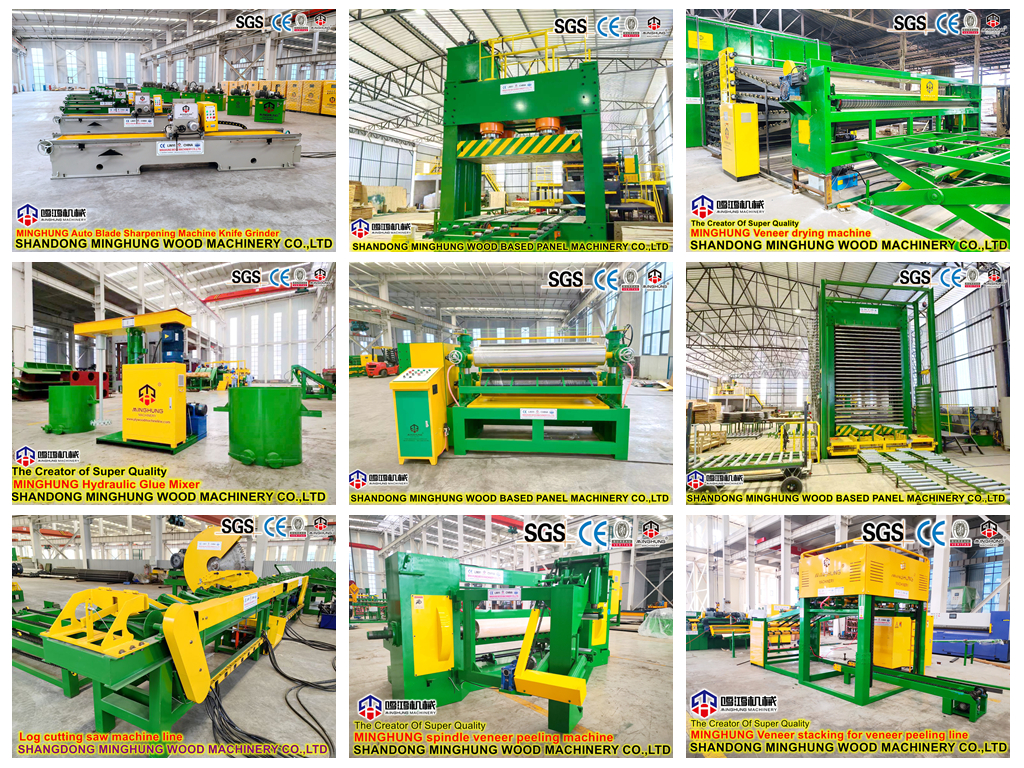
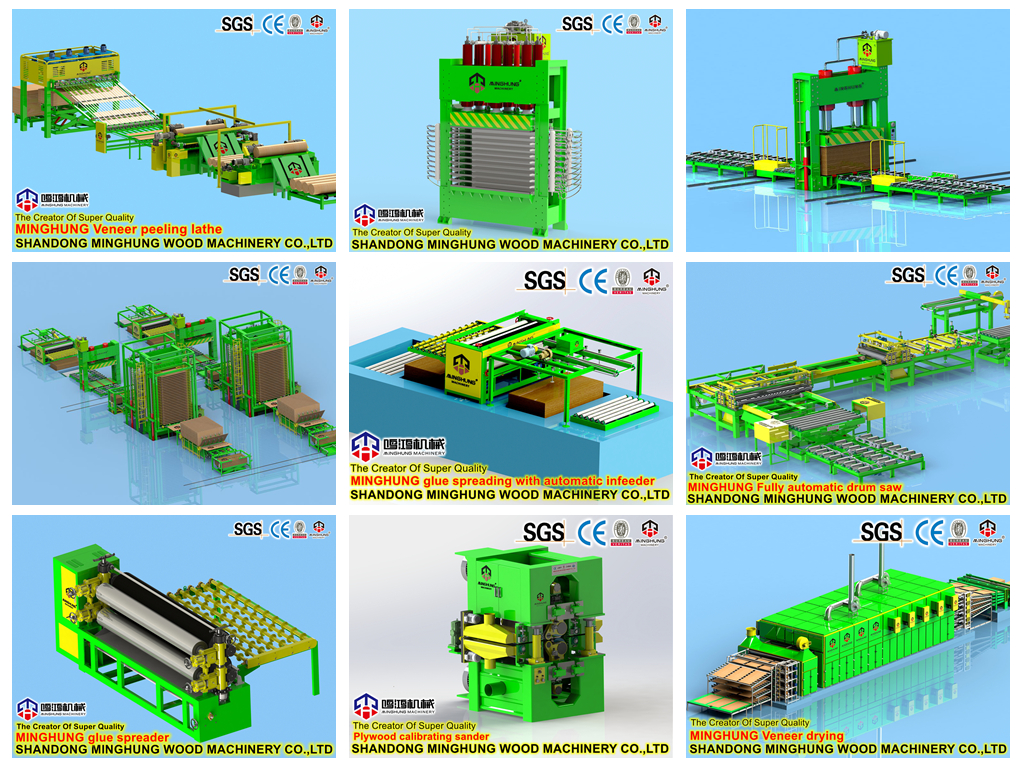
The plywood production line consists of multiple key equipment covering the complete process from log handling to finished panel output. The main equipment includes:
1. Log Processing Equipment
Log Debarker: Removes the outer bark of logs in preparation for rotary cutting.
Log Centering Device: Determines the central axis of logs to ensure uniform veneer thickness during cutting.
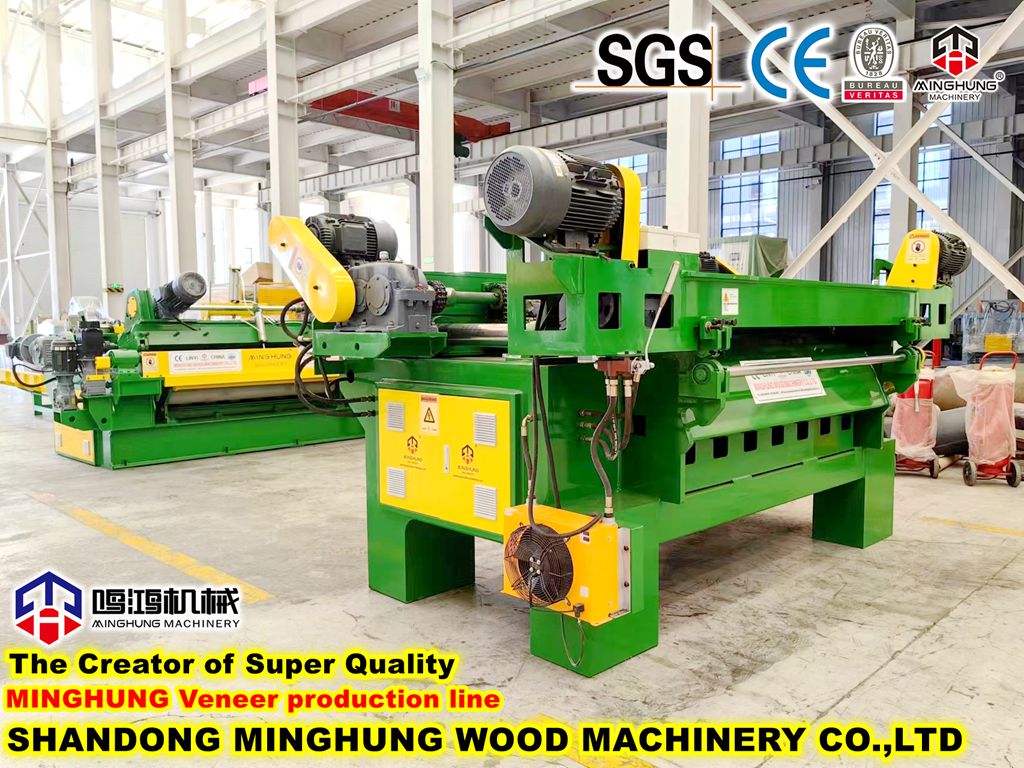
Rotary Veneer Lathe: The core equipment that continuously cuts logs into a continuous veneer ribbon.
Veneer Clipper: Cuts the continuous veneer ribbon into sheet veneers according to preset dimensions.
wood debraker
veneer peeling machine
2. Veneer Drying & Conditioning Equipment
Veneer Dryer: Uses hot air or roller-type drying to control veneer moisture content to 8%-12%.
Veneer Splicing Machine: Joins narrow or damaged veneers into standard-sized sheets.
Veneer Repair Machine: Repairs defects such as holes and cracks in veneers.
Veneer Sorting Equipment: Grades veneers using visual inspection or vision systems.
Veneer Dryer
Veneer Repair Machine
3. Gluing & Lay-up Equipment
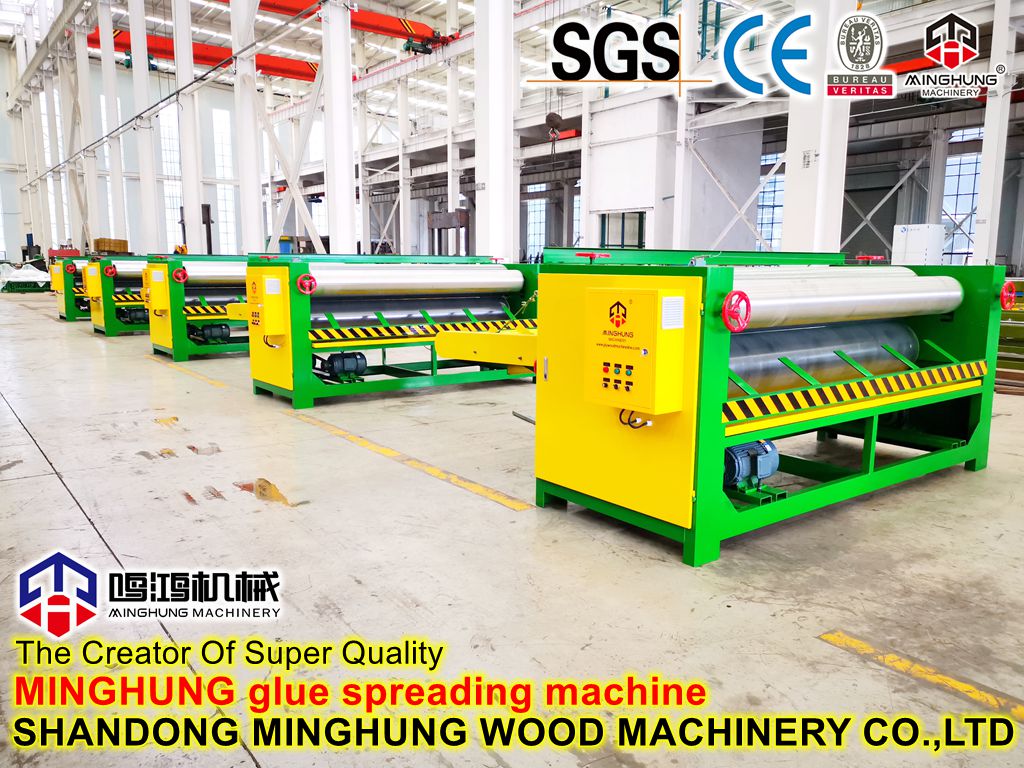
Glue Spreader: Evenly applies adhesive to the surface of veneers, commonly using roller-type spreaders.
Lay-up Line: Assembles glued veneers according to the principle of perpendicular grain orientation between adjacent layers.
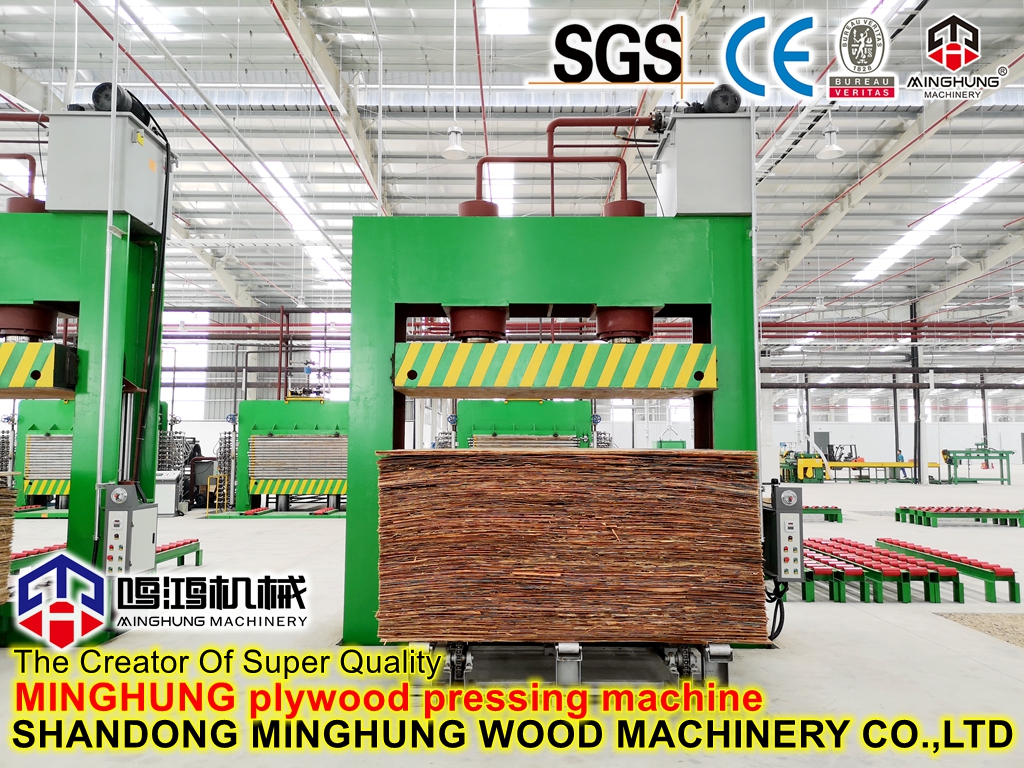
Cold Press: Applies low pressure to the assembled veneer stack for preliminary bonding.
Glue Spreader
Cold Press
4. Hot Pressing & Post-processing Equipment
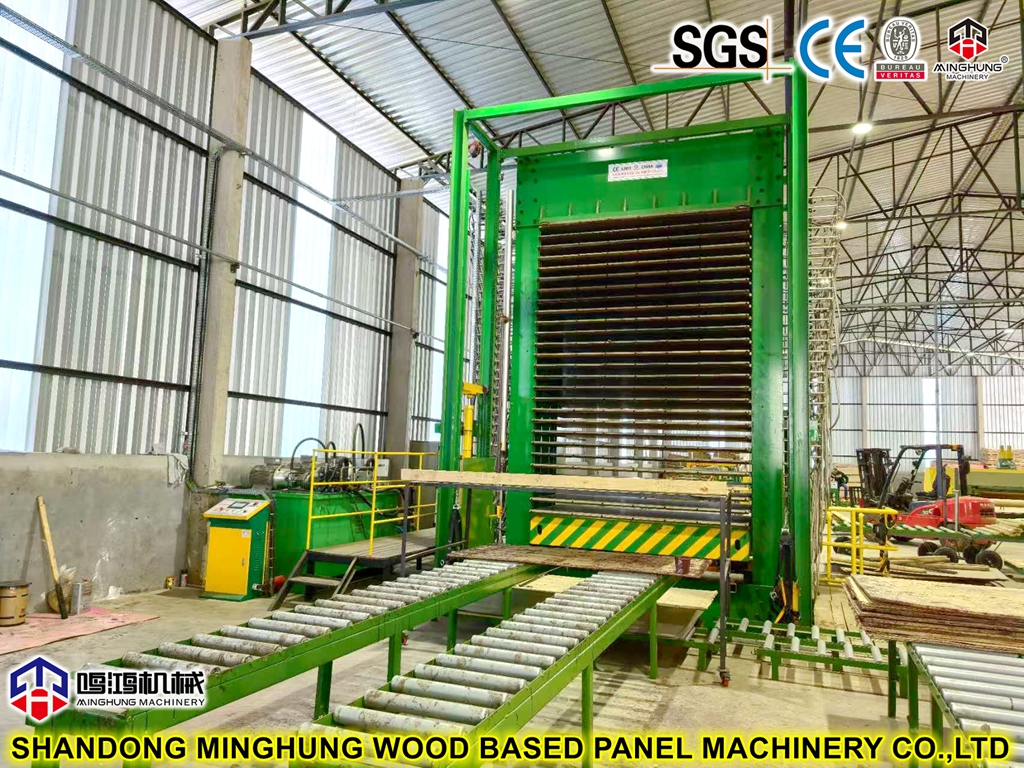
Hot Press: Cures the adhesive under high temperature and high pressure to form plywood panels.
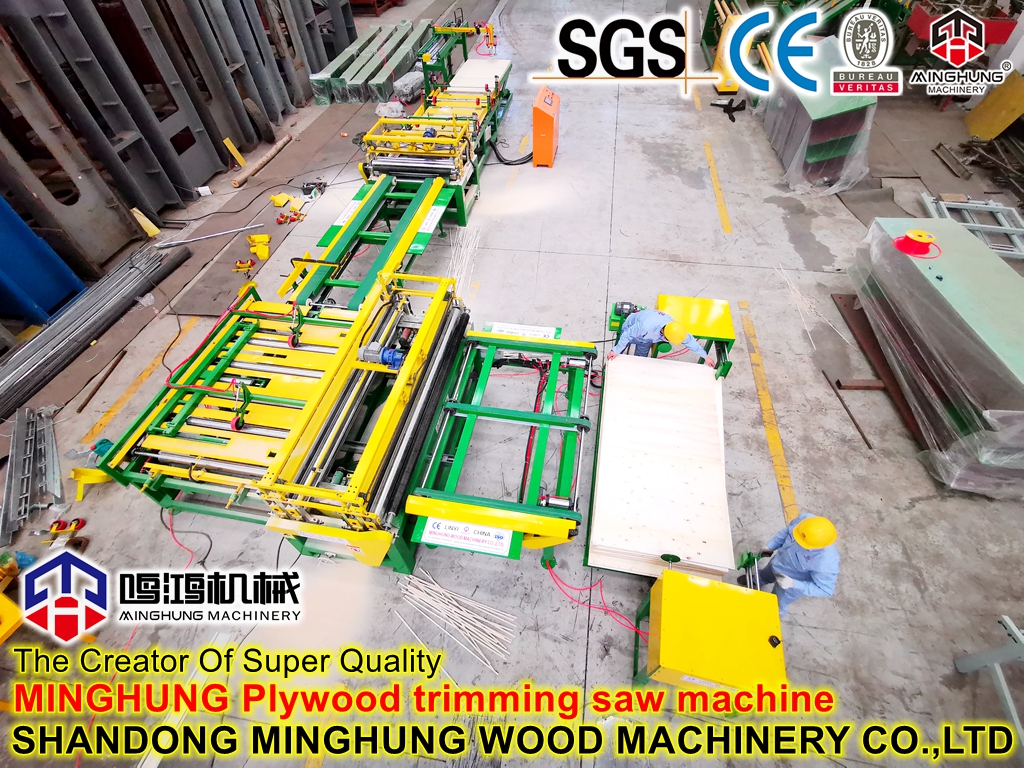
Edge Trimmer: Cuts rough-edged panels into standard sizes.
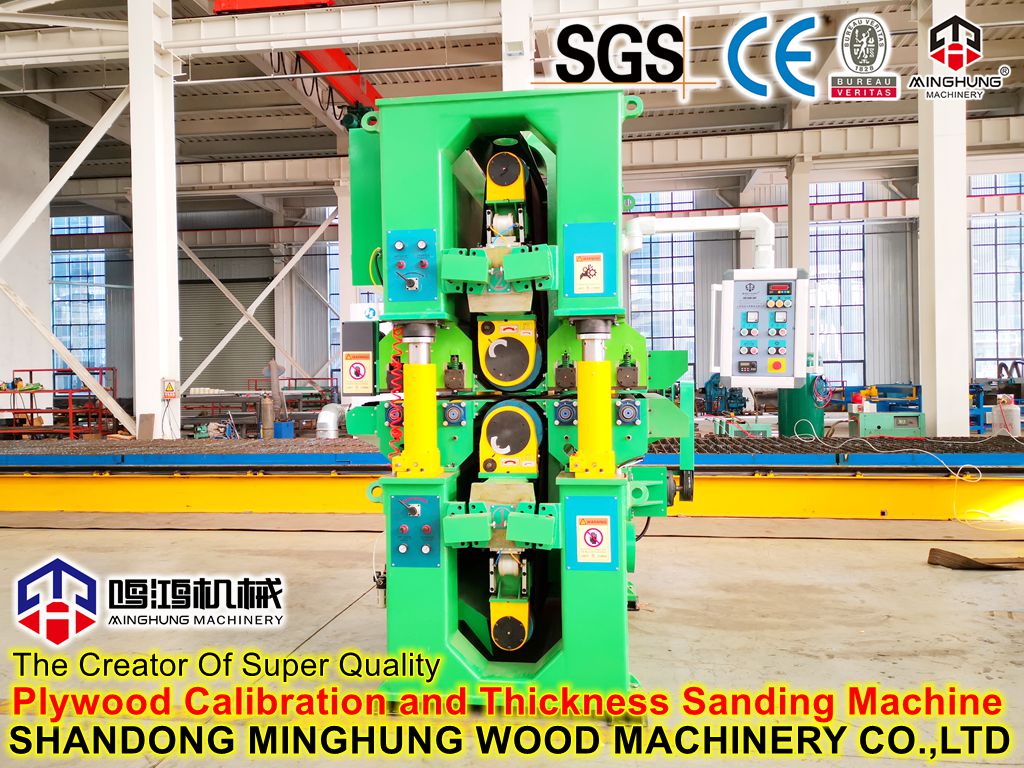
Sander: Performs fine sanding on panel surfaces to improve flatness and thickness accuracy.
Hot Press
Edge Trimmer
Sander
5. Auxiliary Equipment
Boiler & Thermal Oil System: Provides heat sources for dryers and hot presses.
Environmental Protection Equipment: Includes exhaust gas treatment and dust collection systems to meet environmental requirements.- Automation Control System: PLC or DCS control systems for coordinated line operation.

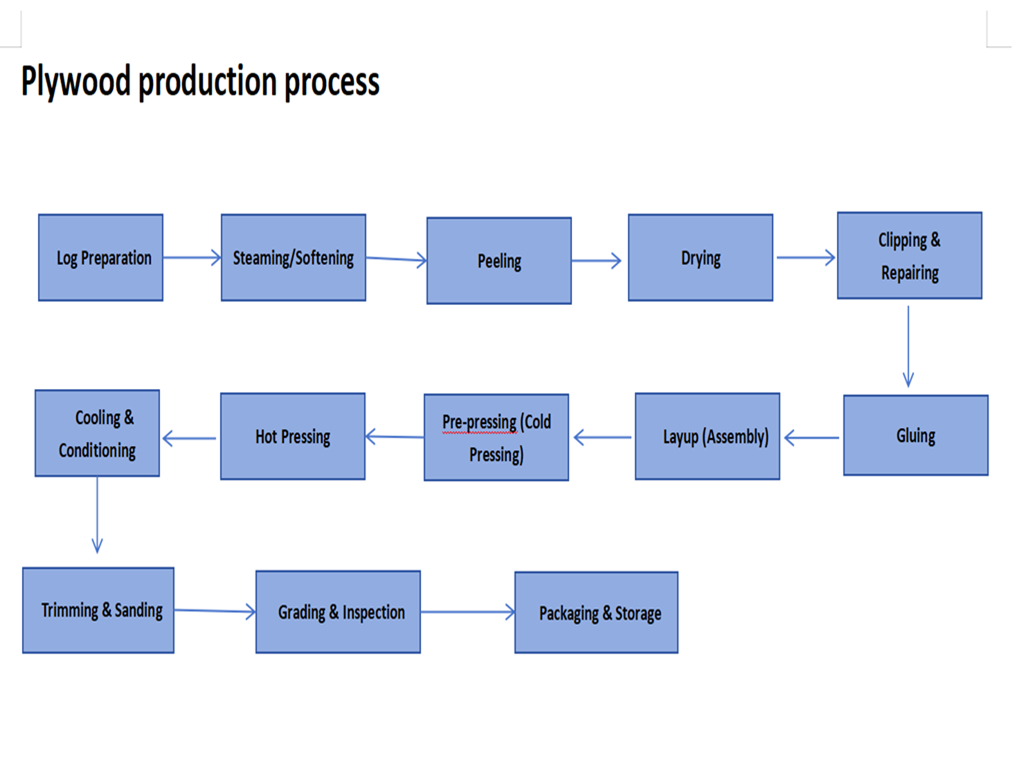
Plywood Production Process
The plywood production process can be divided into six stages: log processing, veneer manufacturing, veneer drying and conditioning, gluing and lay-up, hot pressing, and post-processing.
Stage 1: Log Processing
1. Logs are sorted and stacked by species and diameter upon arrival.
2. The debarker removes the bark from logs.
3. Logs are centered using the centering device and fed into the rotary veneer lathe.
4. The lathe peels the log into a continuous veneer ribbon, which is then clipped into sheet veneers.
Stage 2: Veneer Drying
1. Wet veneers enter the dryer to reduce moisture content via hot air or hot rollers.
2. After drying, veneer moisture content is controlled to 8%-12% to ensure subsequent bonding quality.
3. Dried veneers undergo natural conditioning or forced cooling.
Stage 3: Veneer Conditioning
1. Sorting equipment grades dried veneers (face, back, core grades).
2. Repair machines patch defects such as holes or cracks in veneers.
3. Splicing machines join narrow veneers into required dimensions.
4. Conditioned veneers are stacked by grade for later use.
Stage 4: Gluing & Lay-up
1. Core and back veneers receive uniform adhesive application via glue spreader.
2. The lay-up line assembles veneers according to the principle of perpendicular grain orientation between adjacent layers.
3. The assembled veneer stack is sent to the cold press for preliminary bonding under low pressure.
Stage 5: Hot Pressing
1. The pre-pressed stack enters the hot press, where adhesive is cured under high temperature (110-140°C) and high pressure (8-20 kg/cm²).
2. Pressing time depends on panel thickness, typically 30-60 seconds per millimeter.
3. After hot pressing, panels undergo cooling and conditioning to relieve internal stress.
Stage 6: Post-processing & Finished Product
1. Edge trimmers cut rough panels to standard sizes (e.g., 1220×2440 mm).
2. Sanders calibrate panel thickness to ensure tolerance within ±0.2 mm.
3. Finished panels are inspected, graded, and packed for storage.

Final Applications of Plywood
Plywood is widely used in various fields due to its structural stability, high strength, and excellent workability.
1. Construction & Decoration
Interior Decoration: Wall panels, ceilings, partitions, doors, window frames.
Concrete Formwork: High-quality formwork and film-faced plywood for construction sites.
Structural Materials: Beams, columns, flooring, and roof panels for timber frame buildings.
2. Furniture Manufacturing
Panel Furniture: Cabinets, wardrobes, TV stands, bookcases.
Sofa Frames: Internal support structures for sofas.
Office Furniture: Desks, conference tables, partition screens.
3. Packaging & Transportation
Export Crates: Packaging for heavy machinery and electromechanical products.
Pallets & Skids: Wooden pallets and warehouse skids for logistics.
Container Flooring: Floors for shipping containers (typically high-density hardwood plywood).
4. Transportation
Vehicle Flooring: Floors for buses, RVs, and railway carriages.
Marine Interiors: Interior panels for yachts and ships.
5. Industrial & Special Applications
Electrical Insulation Panels: Specially treated insulating plywood.
Sports Equipment: Basketball court flooring, gymnastics apparatus.
Mold Bases: Base materials for precision molds.
Technical Specifications (Reference)
Parameter | Specification |
Veneer Thickness Range | 1.0 – 4.5 mm |
Max. Veneer Width | 1300 mm (customizable) |
Min. Veneer Length | 500 mm |
Inspection Speed | 0 – 60 m/min |
Defect Detection Accuracy | ±0.5 mm |
Splicing Rate | 6 – 12 sheets/min (depending on sheet size) |
Repair Success Rate | ≥ 98% |
Our contacts:
Whatsapp: +8618769900191 +8615589105786 +8618954906501
Email: osbmdfmachinery@gmail.com
This new facility marks a fresh start for our company. Guided by our enduring commitment to "precision engineering and quality first," we are now better equipped than ever to provide efficient, durable, and innovative machinery solutions for the worldwide wood-based panel industry.
As Christmas approaches, Shandong MINGHUNG wood based panel machinery Co., Ltd. has welcomed another peak in shipments.
In early December 2025, the culmination of close collaboration between the MINGHUNG foreign trade team and our partners — 9 containers fully loaded with the core equipment for a plywood production line .
Shandong Minghung Wood Machinery Factory Shandong minghung wood machine factory produces plywood machinery in linyi city city, china, dedicated to providing high-quality and suitable machines veneer machine,plywood machine,veneer splicing machine.veneer dryer machine,veneer peeling machine,plywood v
How to produce Particle board? What is the production step of Making Particle board?Introduction:Particle board, also known as chipboard, is a versatile and cost-effective material widely used in the construction and furniture industries. It is made by compressing wood particles and adhesive togethe