| Availability: | |
|---|---|
| Quantity: | |
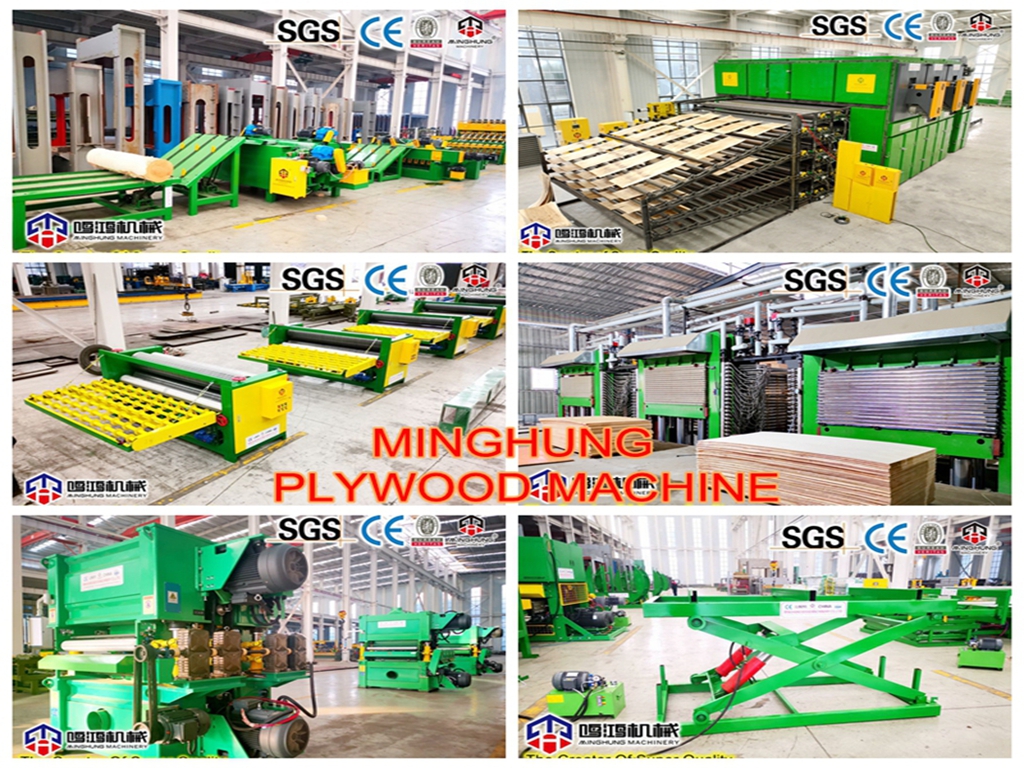
Main Production Equipment
1. Log Processing Section:
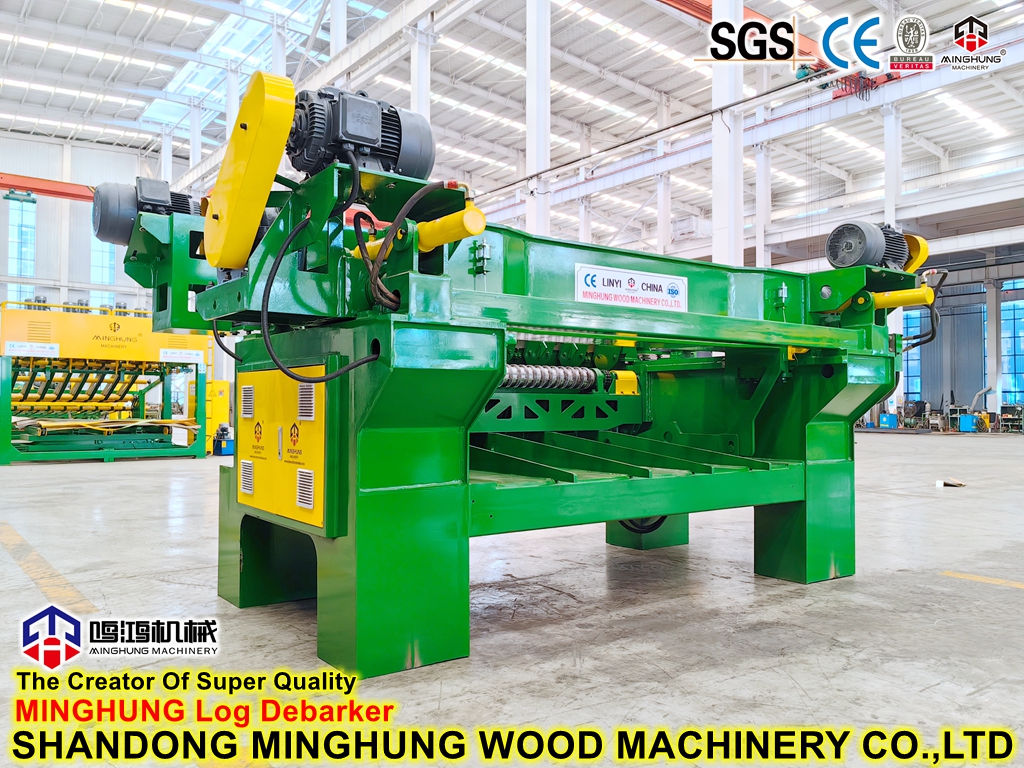
Debarker: Removes bark from logs, reducing tool wear and improving veneer quality.
Crosscut Saw: Cuts logs to the required length for peeling.
Log Conditioning Equipment (Steaming Pond or Vat): Softens logs, reducing wood fiber strength to facilitate peeling of high-quality, continuous veneer ribbons.
2. Veneer Preparation Section:
Peeling Machine / Lathe: The core equipment that rotates and peels logs into continuous veneer ribbons. Classified mainly into single-spindle and double-spindle types based on the number of spindles.
Key Equipment: Hydraulic Double-Spindle Peeling Machine
Structure & Principle: This machine features a set of hydraulically driven spindles at each end of the log. During operation, both spindles extend synchronously to firmly clamp the log at its central ends. The main motor drives the spindles, rotating the log at high speed. The knife carriage, mounted on precision guides, advances steadily towards the log's center under the control of a hydraulic or servo system according to the preset veneer thickness, peeling the log into a continuous ribbon like a "pencil sharpener."
Key Features:
Dual-End Drive: Synchronous clamping and driving at both ends ensure balanced force, greatly reducing log bending and vibration during high-speed rotation.
Hydraulic System: Provides powerful, smooth clamping and feeding force, adapting to logs of different diameters and hardness.
High-Precision Control: Modern models often use PLC and servo systems to precisely control the knife gap (determining veneer thickness), with tolerance as tight as ±0.05mm.
Large Diameter Capacity: Can process larger diameter logs, resulting in higher core yield.
3. Veneer Handling Section:
Veneer Reeler / Clipper: Reels up or shears the continuous veneer ribbon to size.
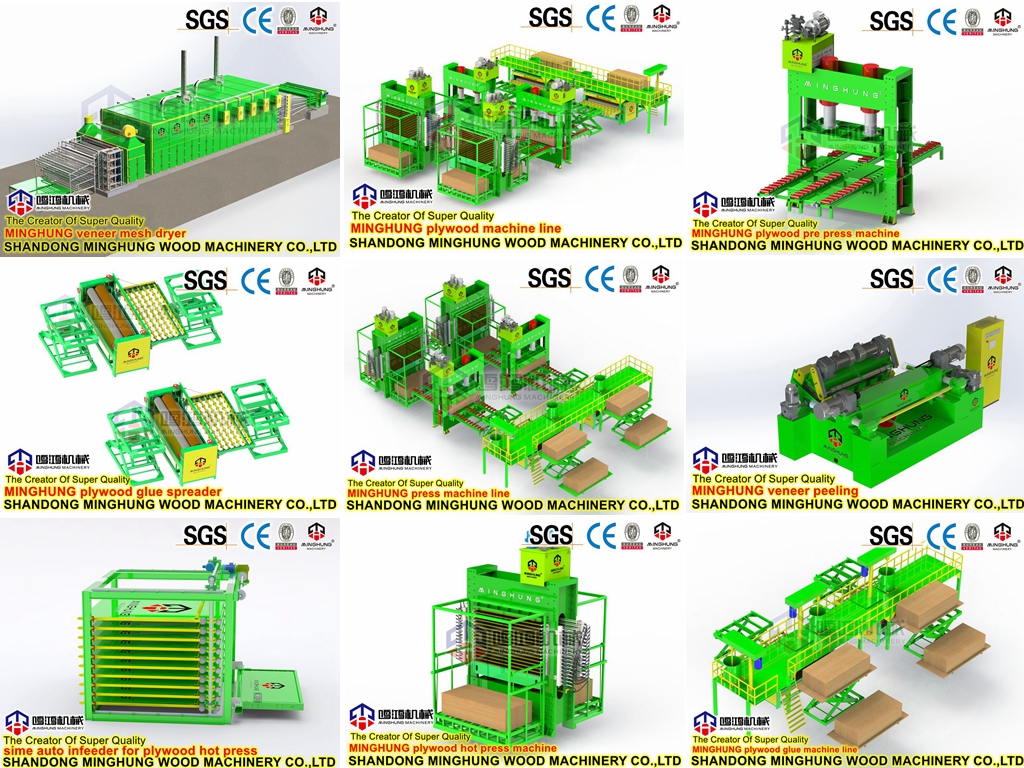
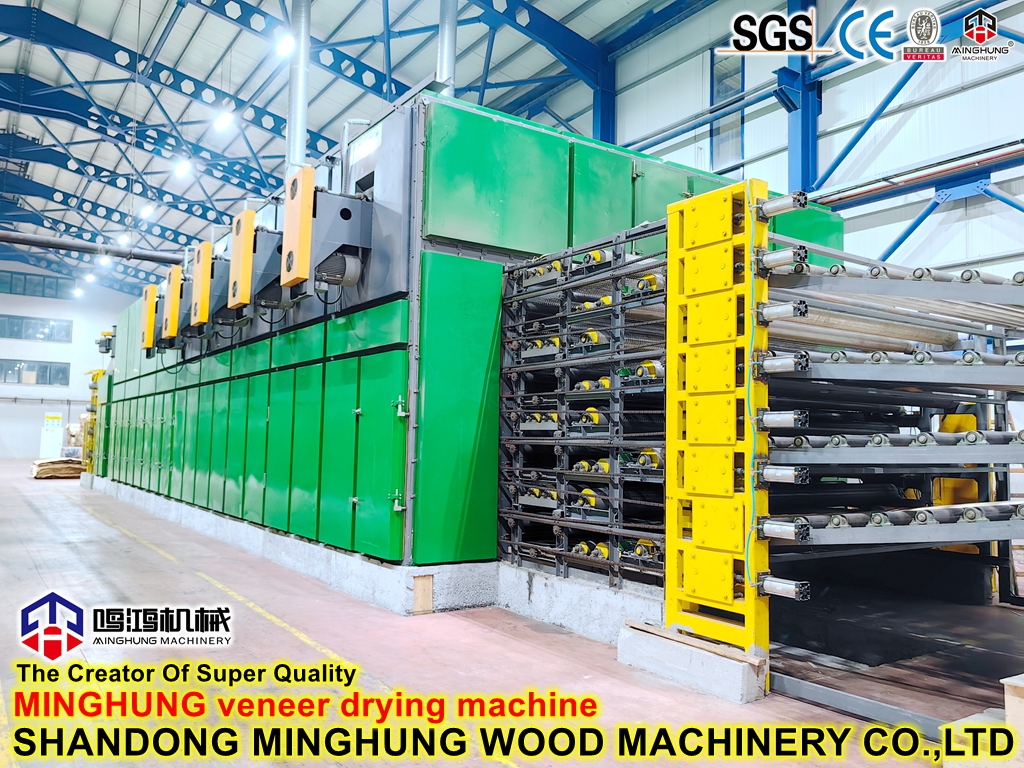
Dryer (Roller or Mesh Belt Type): Rapidly reduces the moisture content of wet veneer to 8%-12%, preventing mold and preparing it for hot pressing.
Veneer Patching & Splicing Equipment: Repairs defects, trims edges, and splices dried veneer sheets to improve yield.
4. Layup and Hot Pressing Section:
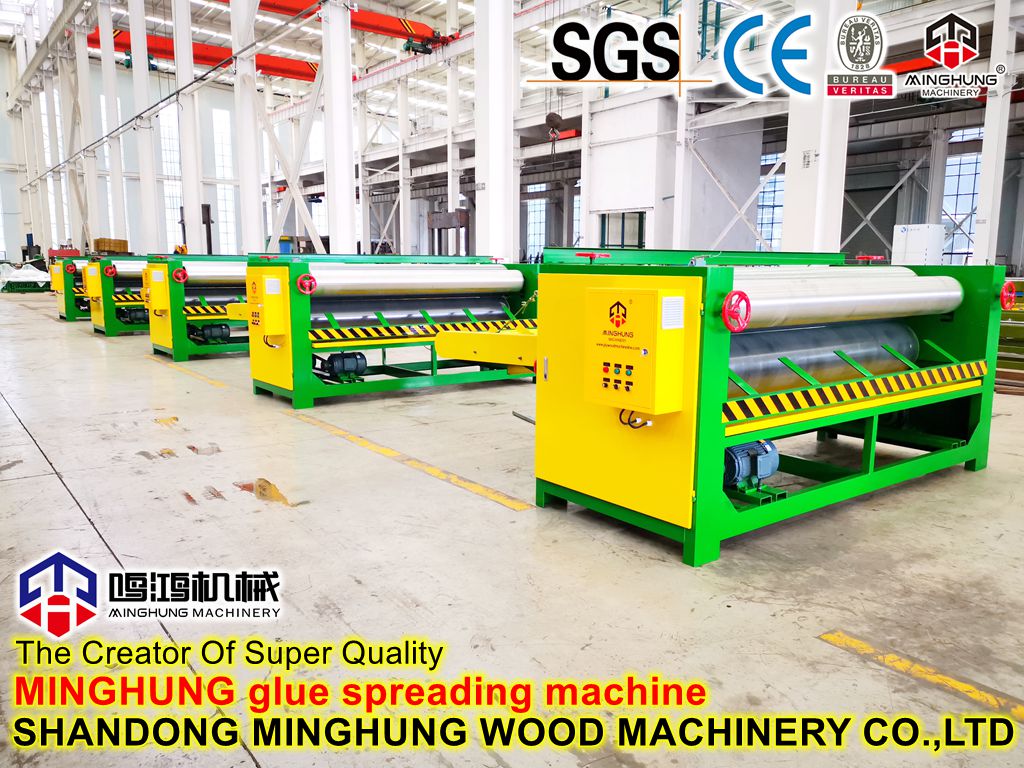
Glue Spreader: Applies adhesive (e.g., UF resin, PF resin) evenly onto veneer surfaces.
Layup Line: Assembles glue-coated veneer sheets into a mat (cross-banding adjacent layers perpendicularly), often automated or semi-automated.
Pre-press: Applies initial cold pressure to the mat for preliminary bonding, making it easier to handle and load into the hot press.
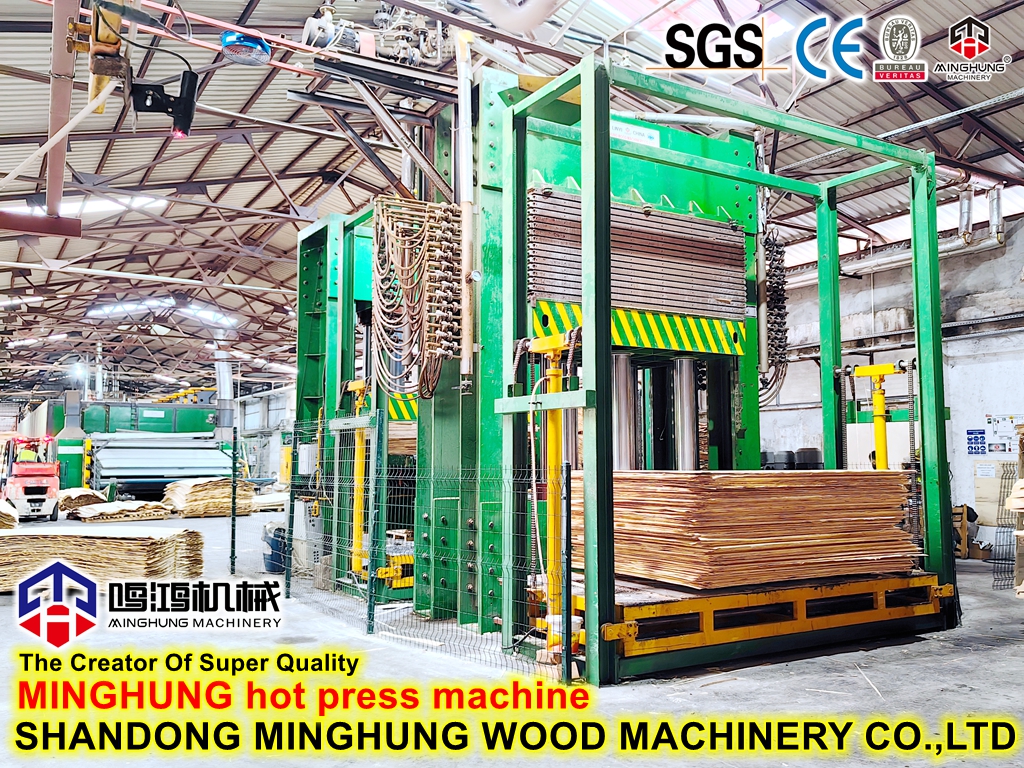
Hot Press: The core forming equipment. Cures the adhesive rapidly under high temperature and pressure, firmly bonding the mat into plywood.
5. Finishing Section:
Cooling and Unstacking System: Cools and sets the pressed panels and turns/separates them.
Edge Trimming Saw: Trims rough edges to achieve specified panel dimensions.
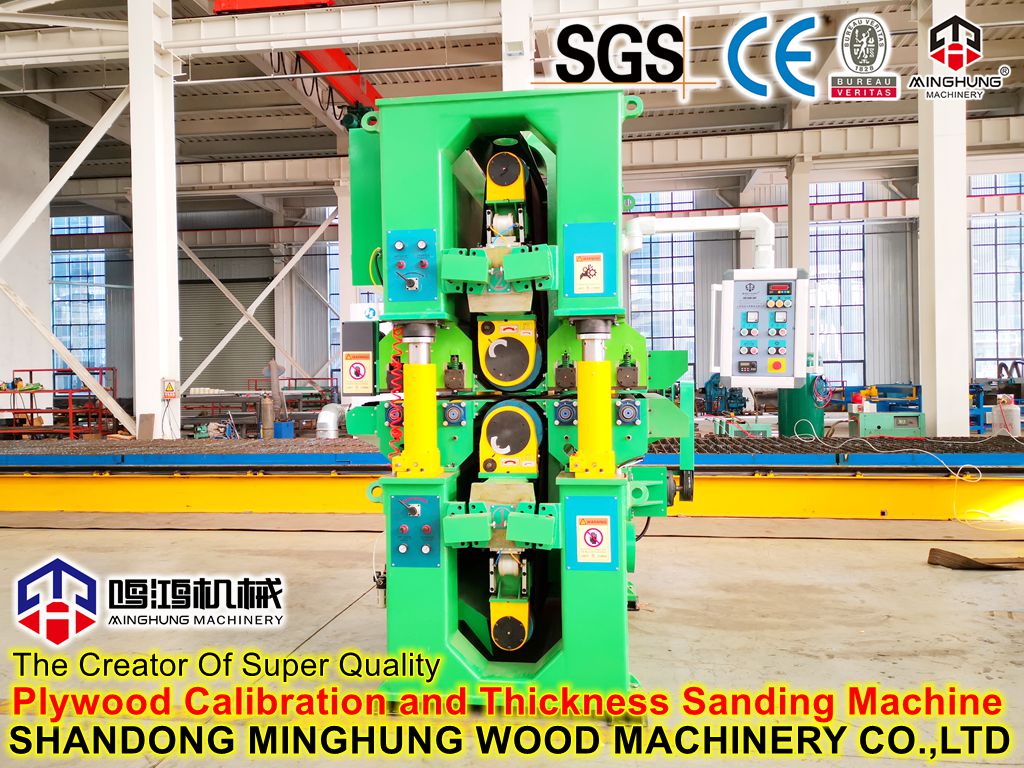
Sander: Calibrates panel thickness and smoothens surfaces.
Grading and Packaging Equipment: Sorts, inspects, and packages the final product.
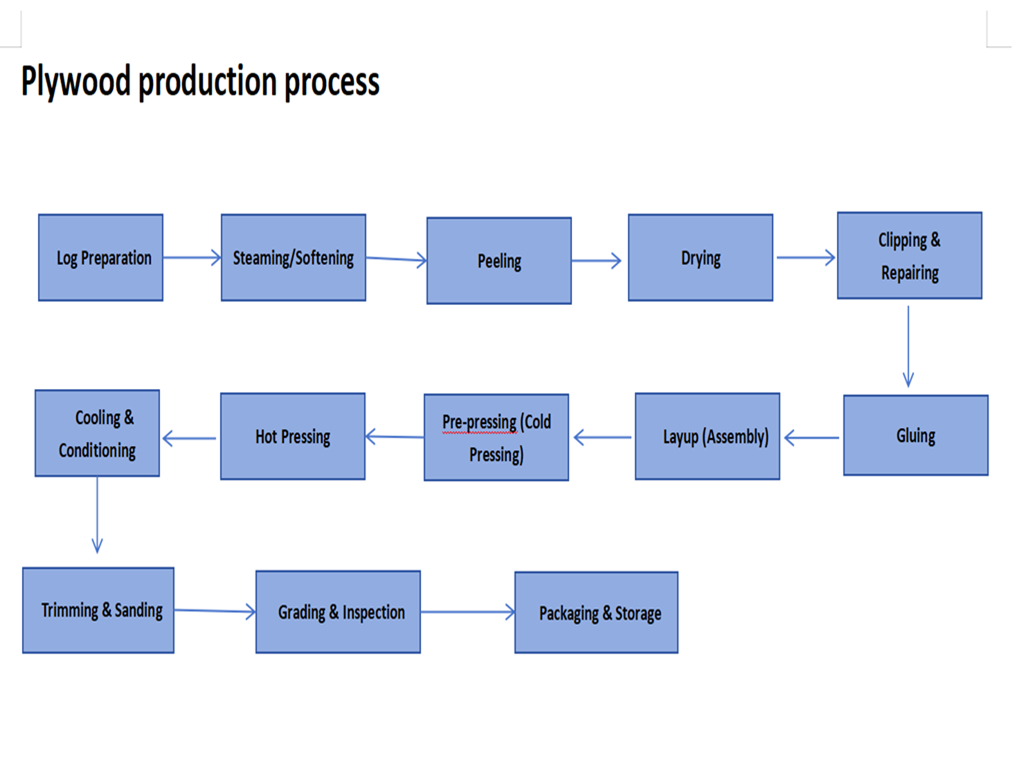
Production Process Flow
1. Log Preparation: Log → Debarking → Crosscutting → (Conditioning/Softening).
2. Peeling: Conditioned log block is loaded onto the peeling machine → Peeled into continuous veneer ribbon.
3. Veneer Handling: Veneer shearing/reeling → Drying → Patching/splicing.
4. Gluing & Layup: Dried veneer passes through glue spreader → Assembled into a cross-banded mat.
5. Pre-pressing & Hot Pressing: Mat enters pre-press for initial bonding → Transferred to hot press for curing under heat and pressure.
6. Finishing: Pressed panels are cooled → Trimmed to size → Sanded → Graded & inspected → Packaged for storage.

1. Exceptional Veneer Quality:
Consistent & Uniform Thickness: Dual-end rigid clamping and precise feed systems minimize vibration during peeling, producing veneer with very tight thickness tolerance, which is foundational for manufacturing high-grade, flat plywood.
Superior Surface Finish: Stable peeling reduces defects like "knife marks" or "fuzzing," resulting in veneer with lower backside checks and better strength.
2. High Production Efficiency & Automation:
High-Speed Peeling: Powerful dual-end drive allows higher rotational speeds, shortening veneer production cycles.
Handles Larger Logs: Can process larger diameter logs, broadening raw material sources and reducing cutting frequency.
Enhanced Production Continuity: High reliability reduces downtime caused by machine faults or poor veneer quality, enabling smoother integration with downstream drying and layup lines.
3. High Raw Material Utilization (Yield):
Smaller Residual Core: Due to excellent clamping rigidity, peeling can continue to a much smaller core diameter (as low as ~Φ50mm), significantly increasing veneer yield per log and reducing wood cost.
4. Excellent Equipment Stability & Durability:
Balanced Load Distribution: The hydraulic system and dual-spindle design ensure even load distribution, reducing wear on key components like spindles and bearings, extending equipment lifespan, and lowering maintenance costs.
5. Significant Economic Benefits:
Combining the above advantages, although the initial investment for a hydraulic double-spindle peeler is higher than for traditional single-spindle machines, it substantially improves the overall profitability and competitiveness of the production line by enhancing veneer quality (enabling premium products), increasing yield (saving wood), boostingproductivity (higher output), and reducing waste.

Main Applications
Perfect for producing various types of plywood, including:
Construction Plywood / Formwork,Furniture-Grade Plywood,Decorative Plywood,Laminated Veneer Lumber (LVL)
Why Choose Us?
We are more than a machinery supplier; we are your project partner. We provide comprehensive support including factory layout planning, on-site installation & commissioning, and thorough operator training to ensure your production line achieves optimal performance from day one.
Our contacts:
Whatsapp: +8618769900191 +8615589105786 +8618954906501
Email: osbmdfmachinery@gmail.com
Main Production Equipment
1. Log Processing Section:
Debarker: Removes bark from logs, reducing tool wear and improving veneer quality.
Crosscut Saw: Cuts logs to the required length for peeling.
Log Conditioning Equipment (Steaming Pond or Vat): Softens logs, reducing wood fiber strength to facilitate peeling of high-quality, continuous veneer ribbons.
2. Veneer Preparation Section:
Peeling Machine / Lathe: The core equipment that rotates and peels logs into continuous veneer ribbons. Classified mainly into single-spindle and double-spindle types based on the number of spindles.
Key Equipment: Hydraulic Double-Spindle Peeling Machine
Structure & Principle: This machine features a set of hydraulically driven spindles at each end of the log. During operation, both spindles extend synchronously to firmly clamp the log at its central ends. The main motor drives the spindles, rotating the log at high speed. The knife carriage, mounted on precision guides, advances steadily towards the log's center under the control of a hydraulic or servo system according to the preset veneer thickness, peeling the log into a continuous ribbon like a "pencil sharpener."
Key Features:
Dual-End Drive: Synchronous clamping and driving at both ends ensure balanced force, greatly reducing log bending and vibration during high-speed rotation.
Hydraulic System: Provides powerful, smooth clamping and feeding force, adapting to logs of different diameters and hardness.
High-Precision Control: Modern models often use PLC and servo systems to precisely control the knife gap (determining veneer thickness), with tolerance as tight as ±0.05mm.
Large Diameter Capacity: Can process larger diameter logs, resulting in higher core yield.
3. Veneer Handling Section:
Veneer Reeler / Clipper: Reels up or shears the continuous veneer ribbon to size.
Dryer (Roller or Mesh Belt Type): Rapidly reduces the moisture content of wet veneer to 8%-12%, preventing mold and preparing it for hot pressing.
Veneer Patching & Splicing Equipment: Repairs defects, trims edges, and splices dried veneer sheets to improve yield.
4. Layup and Hot Pressing Section:
Glue Spreader: Applies adhesive (e.g., UF resin, PF resin) evenly onto veneer surfaces.
Layup Line: Assembles glue-coated veneer sheets into a mat (cross-banding adjacent layers perpendicularly), often automated or semi-automated.
Pre-press: Applies initial cold pressure to the mat for preliminary bonding, making it easier to handle and load into the hot press.
Hot Press: The core forming equipment. Cures the adhesive rapidly under high temperature and pressure, firmly bonding the mat into plywood.
5. Finishing Section:
Cooling and Unstacking System: Cools and sets the pressed panels and turns/separates them.
Edge Trimming Saw: Trims rough edges to achieve specified panel dimensions.
Sander: Calibrates panel thickness and smoothens surfaces.
Grading and Packaging Equipment: Sorts, inspects, and packages the final product.
Production Process Flow
1. Log Preparation: Log → Debarking → Crosscutting → (Conditioning/Softening).
2. Peeling: Conditioned log block is loaded onto the peeling machine → Peeled into continuous veneer ribbon.
3. Veneer Handling: Veneer shearing/reeling → Drying → Patching/splicing.
4. Gluing & Layup: Dried veneer passes through glue spreader → Assembled into a cross-banded mat.
5. Pre-pressing & Hot Pressing: Mat enters pre-press for initial bonding → Transferred to hot press for curing under heat and pressure.
6. Finishing: Pressed panels are cooled → Trimmed to size → Sanded → Graded & inspected → Packaged for storage.

1. Exceptional Veneer Quality:
Consistent & Uniform Thickness: Dual-end rigid clamping and precise feed systems minimize vibration during peeling, producing veneer with very tight thickness tolerance, which is foundational for manufacturing high-grade, flat plywood.
Superior Surface Finish: Stable peeling reduces defects like "knife marks" or "fuzzing," resulting in veneer with lower backside checks and better strength.
2. High Production Efficiency & Automation:
High-Speed Peeling: Powerful dual-end drive allows higher rotational speeds, shortening veneer production cycles.
Handles Larger Logs: Can process larger diameter logs, broadening raw material sources and reducing cutting frequency.
Enhanced Production Continuity: High reliability reduces downtime caused by machine faults or poor veneer quality, enabling smoother integration with downstream drying and layup lines.
3. High Raw Material Utilization (Yield):
Smaller Residual Core: Due to excellent clamping rigidity, peeling can continue to a much smaller core diameter (as low as ~Φ50mm), significantly increasing veneer yield per log and reducing wood cost.
4. Excellent Equipment Stability & Durability:
Balanced Load Distribution: The hydraulic system and dual-spindle design ensure even load distribution, reducing wear on key components like spindles and bearings, extending equipment lifespan, and lowering maintenance costs.
5. Significant Economic Benefits:
Combining the above advantages, although the initial investment for a hydraulic double-spindle peeler is higher than for traditional single-spindle machines, it substantially improves the overall profitability and competitiveness of the production line by enhancing veneer quality (enabling premium products), increasing yield (saving wood), boostingproductivity (higher output), and reducing waste.

Main Applications
Perfect for producing various types of plywood, including:
Construction Plywood / Formwork,Furniture-Grade Plywood,Decorative Plywood,Laminated Veneer Lumber (LVL)
Why Choose Us?
We are more than a machinery supplier; we are your project partner. We provide comprehensive support including factory layout planning, on-site installation & commissioning, and thorough operator training to ensure your production line achieves optimal performance from day one.
Our contacts:
Whatsapp: +8618769900191 +8615589105786 +8618954906501
Email: osbmdfmachinery@gmail.com
Shandong Minghung Wood Machinery Factory Shandong minghung wood machine factory produces plywood machinery in linyi city city, china, dedicated to providing high-quality and suitable machines veneer machine,plywood machine,veneer splicing machine.veneer dryer machine,veneer peeling machine,plywood v
How to produce Particle board? What is the production step of Making Particle board?Introduction:Particle board, also known as chipboard, is a versatile and cost-effective material widely used in the construction and furniture industries. It is made by compressing wood particles and adhesive togethe
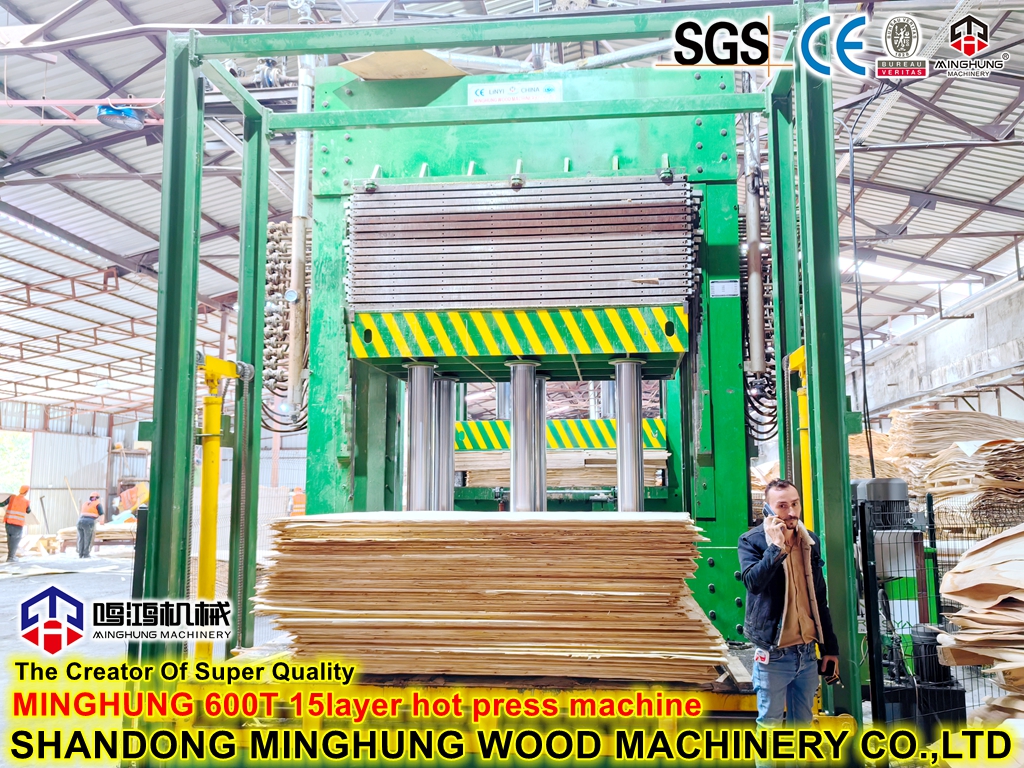
The Ultimate Guide to Plywood Hot Press Machines: Crafting High-Quality Plywood Introduction:Plywood is a versatile and widely used material in various industries, from construction to furniture manufacturing. Behind the scenes, plywood hot press machines play a crucial role in the production proces
What is a veneer dryer?MINGHUNG Roller veneer dryer for drying original wood veneer, remove abundant humidity, in the end, the wood veneer humidity will be 5%-10%, so it is suitable for making plywood.Veneer roller dryer are suitable for big drying capacity per day, it can be different length, width
Recently, a high-performance plywood sander was prepared for shipment at Qingdao Port, ready for its journey to our valued partner in Russia.
This shipment not only demonstrates Minghung Machinery’s strong production coordination and international trade execution capabilities but also ensures the rapid commissioning of the customer's production line.
MINGHUNG is a leading company in the industry of OSB&MDF making machine. With a strongfocus on producing high-quality machinery, we specialize in manufacturing thecomplete production line of Medium density fiberboard (MDF), High densityfiberboard (HDF),Particle board (PB), Oriented strand board (OSB) and Veneerable super strong particle board (LSB).
Peeling is the pre-treatment process. Chopping and planing are both aimed at obtaining specific forms of wood materials, but the forms and application scenarios are different.
Shipping multiple containers of gluing equipment to multiple countries in a single batch is a testament not only to our current order fulfillment capacity but, more importantly, to the international market’s trust in the quality and reliability of the ‘MINGHUNG’ brand.
The Differences And Comparisons between PB OSB And MDF