| Availability: | |
|---|---|
| Quantity: | |
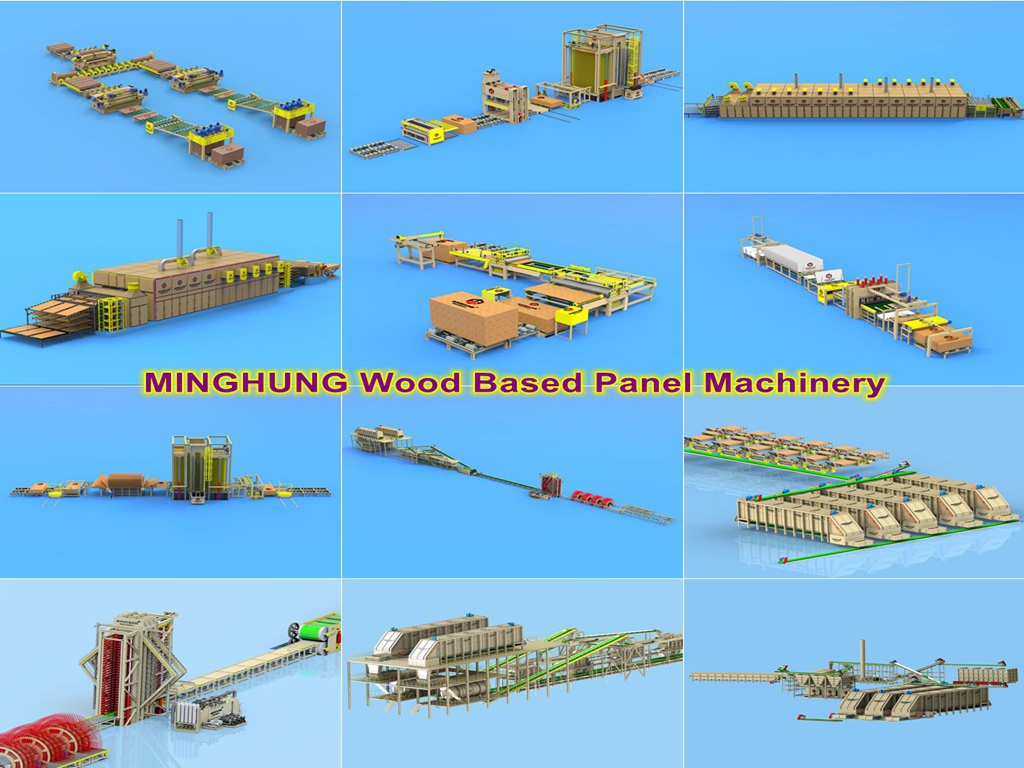
The Eucalyptus-Based Plywood Full Automatic Production Line is a high-end intelligent manufacturing system in the modern timber industry. It integrates machinery, electronics, computing, and artificial intelligence to achieve fully automated, intelligent, and clean production from eucalyptus veneer to finished plywood. This line is specifically optimized for the characteristics of fast-growing eucalyptus timber (such as hard texture, tendency to warp, and complex grain) to efficiently produce high-value-added, formaldehyde-free, and highly stable plywood and LVL (Laminated Veneer Lumber) products.
Characteristics of Eucalyptus Timber
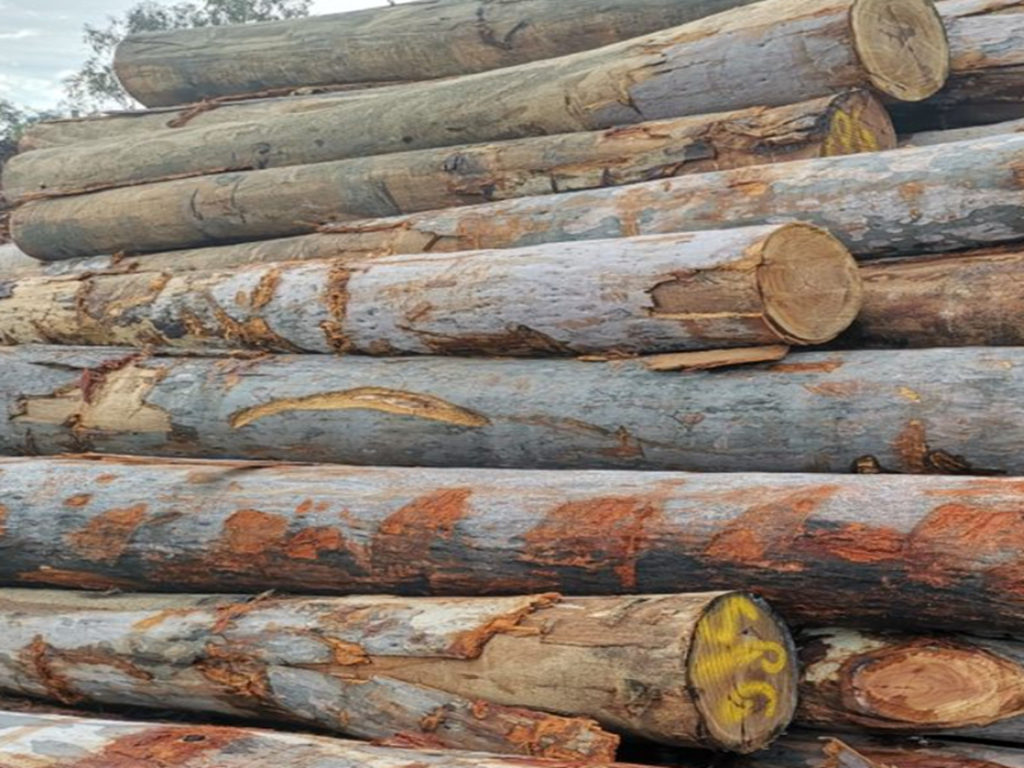
Fast-Growing and Abundant: Short rotation cycle, ensuring a sustainable and ample raw material supply.
High Density & Hardness: The wood is solid and wear-resistant, imparting high strength and durability to the finished panels.
Distinct Grain Pattern: Features a straight and aesthetically pleasing grain, suitable for furniture and decorative materials with a clear finish.

Characteristics of Plywood Made from Eucalyptus
When the inherent challenges of eucalyptus are overcome through advanced production lines and processes, the resulting plywood exhibits outstanding market competitiveness:
High Strength and Durability: The high-density eucalyptus core gives the panels excellent bending strength, stiffness, and impact resistance, making them ideal for construction formwork, container flooring, and load-bearing furniture.
Eco-Friendly and Healthy: The production line is optimized for formaldehyde-free adhesives like MDI, enabling the production of panels that meet top international standards such as CARB-NAF and EPA, suitable for underfloor heating and high-demand living spaces.
Superior Stability: Precise symmetrical assembly and the continuous pressing process effectively counteract the internal stress of eucalyptus, resulting in structurally stable panels that are resistant to warping and boast high dimensional accuracy.
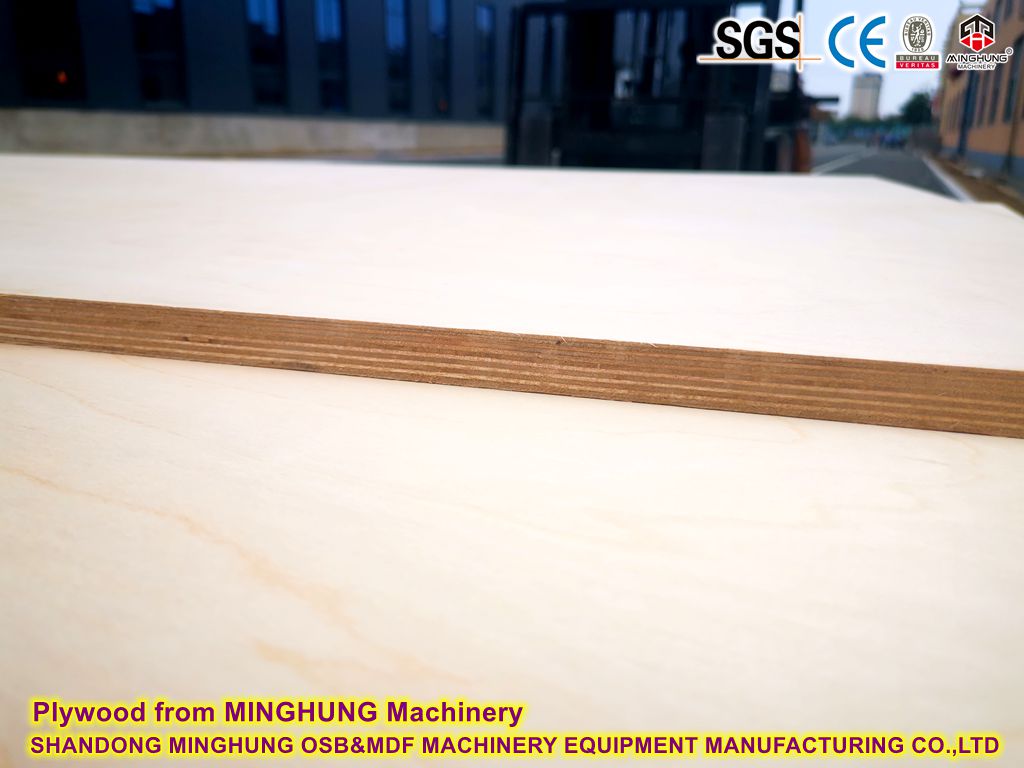
Excellent Workability and Finish: The panels have a flat surface and uniform density, facilitating further processing like sawing, drilling, and overlaying. The distinct grain also makes it a high-quality face veneer material.
Production Process
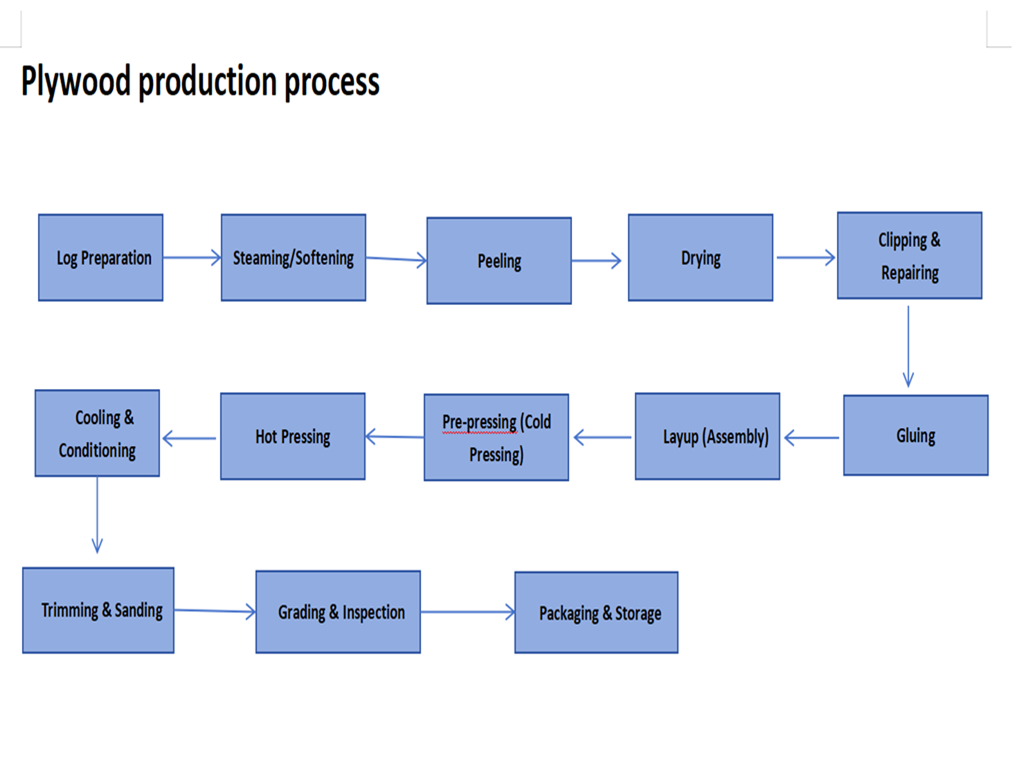
The full-automatic production line seamlessly integrates the following steps into a continuous workflow:
1. Veneer Preparation: Eucalyptus peeled veneer → Automatic feeding → Drying (uniform moisture removal) → Intelligent Grading and Patching (CCD inspection, automatic sorting and repair).
2. Gluing and Assembly: Qualified veneer → Automatic Gluing (MDI formaldehyde-free adhesive, precise application) → Robotic Assembly (automatic stacking of face, core, and back veneers to ensure a symmetrical structure).
3. Forming and Curing: Assembled mat → Continuous Pre-pressing (initial shaping) → (Optional) Microwave Preheating (improves efficiency) → Continuous Flat Press Hot Pressing (adhesive curing under heat and pressure).
4. Post-Processing: Pressed board ribbon → Cross-cutting to length → Cooling → Sanding (calibrating thickness and surface finishing) → Automatic Grading and Packaging.
The core equipment of this production line
Part One: Raw Material Processing and Plywood Preparation Section
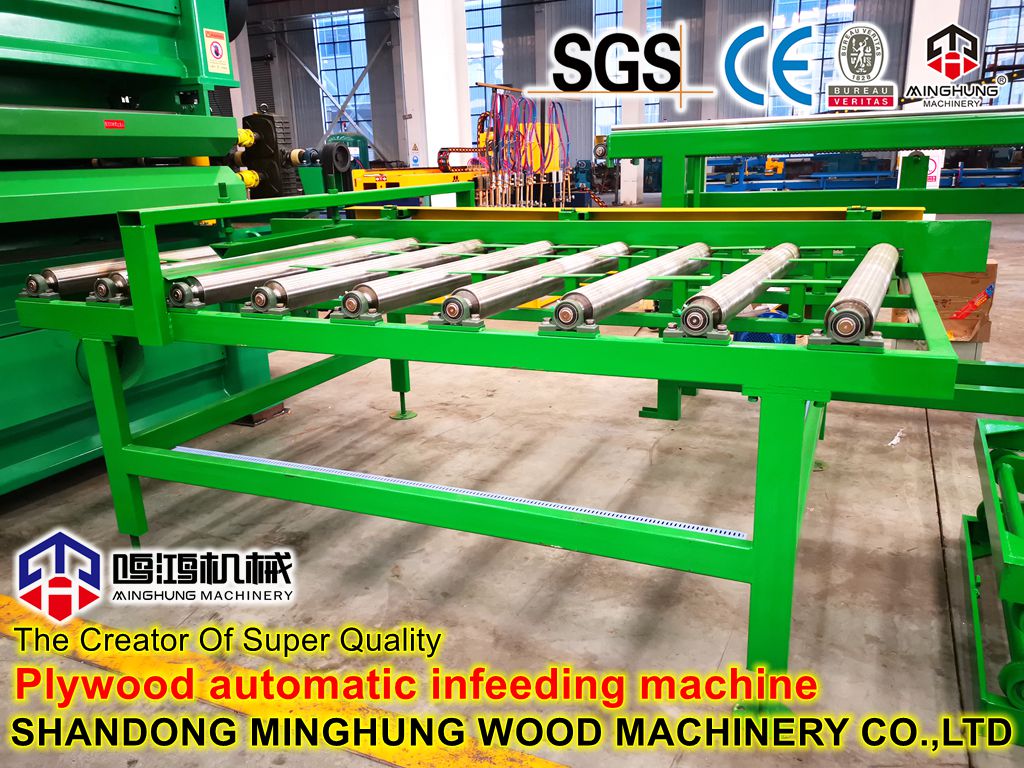
1. Automatic Feeder
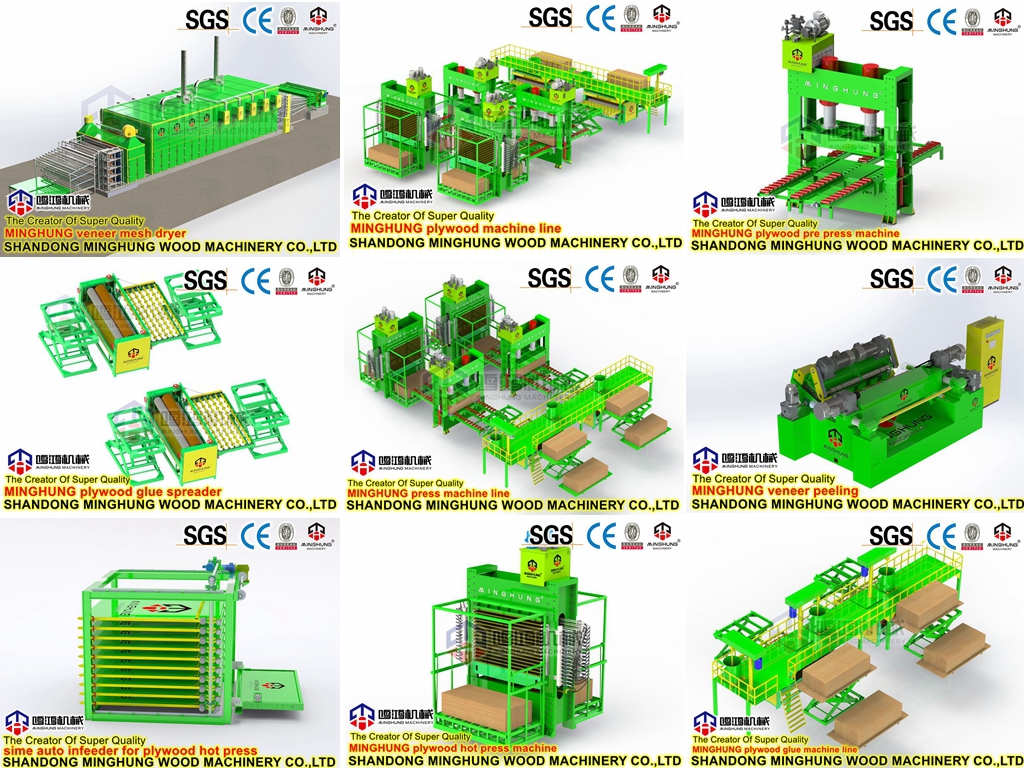
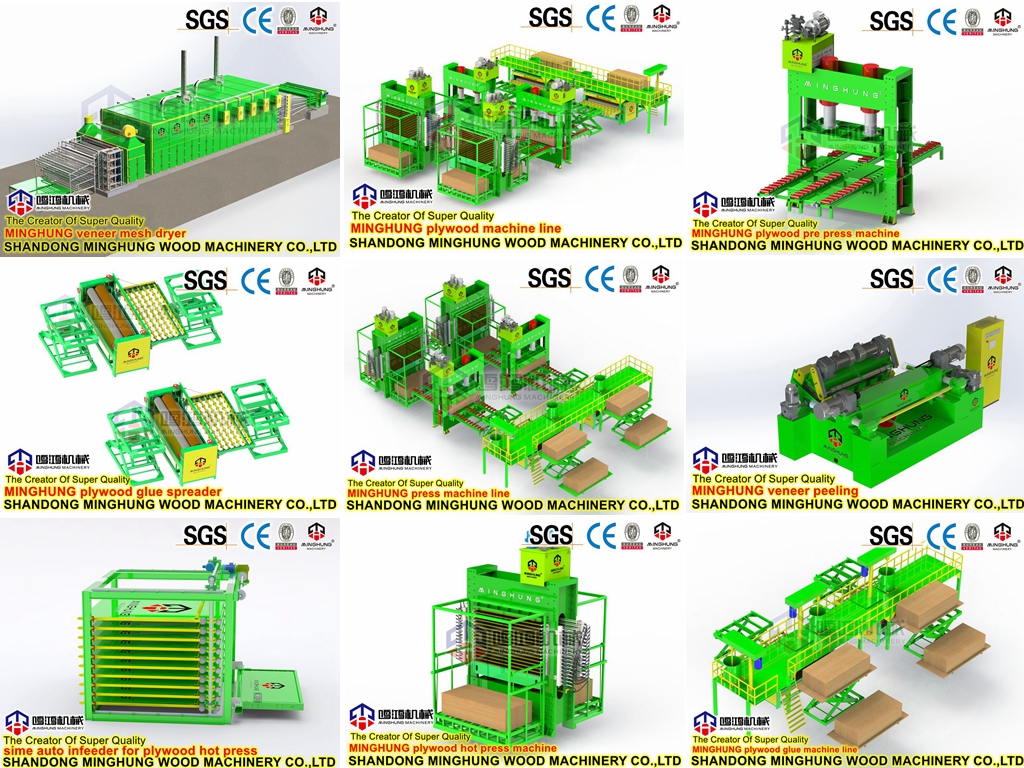
This is the starting point of the production line, responsible for automatically, continuously, and neatly feeding the peeled wet eucalyptus veneers into the dryer. It typically employs a hydraulic lifting table to receive the veneer packs from forklifts. Then, using a vacuum cup system or fork-arm mechanism, it precisely picks up and places the veneers sheet-by-sheet or in small stacks onto the conveyor line. Controlled by PLC programming, it ensures the feeding rhythm matches the intake speed of the subsequent dryer. This system realizes the first automated step of the process, significantly reducing manual labor intensity.
2. Mesh Dryer
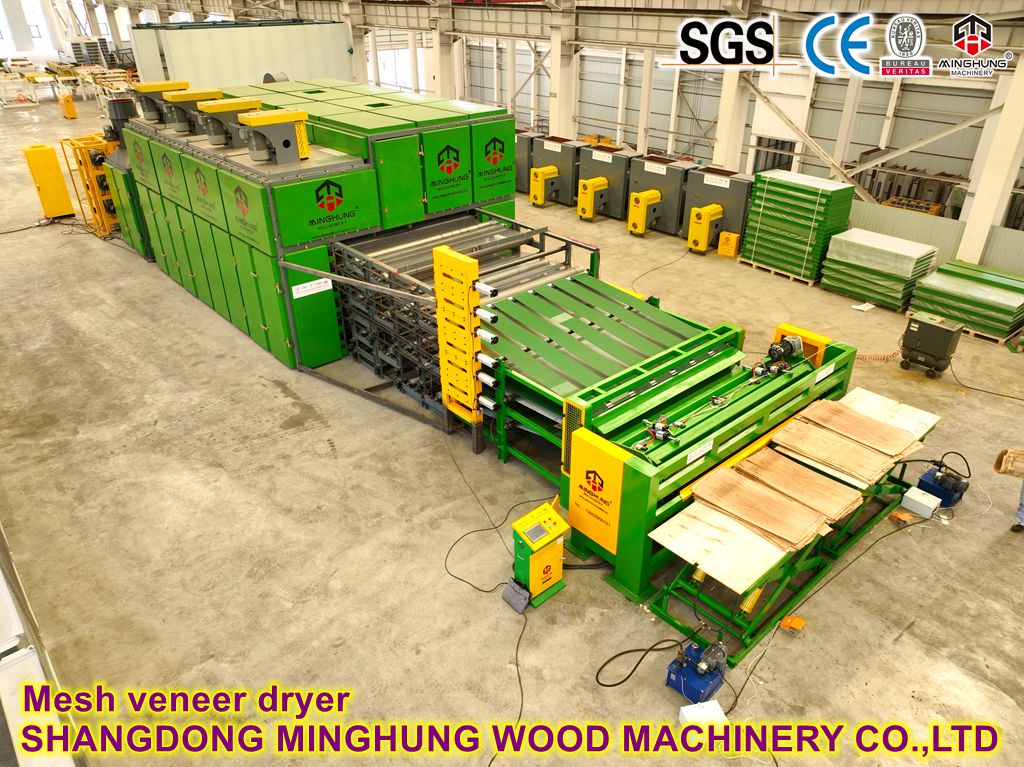
This is a key piece of equipment for processing eucalyptus veneer, specifically designed to overcome its tendency to warp and check.
Uses multi-layer mesh belts to carry the veneers, drying them via a hot air circulation system. This provides more uniform heating, making it more suitable for smaller or uneven-thickness veneers.
The core of this equipment lies in its precise control over temperature, air speed, and humidity. For eucalyptus, a strategy involving gradient temperature increase and multi-stage moisture removal is often adopted to ensure even moisture evaporation throughout the veneer, minimizing drying defects and providing high-quality veneer for subsequent processes.
3. Veneer Intelligent Grading Line and Automatic Patching Machine
This is an integrated intelligent system for inspection, sorting, and repair.
Intelligent Grading Line: At its heart are high-resolution CCD industrial cameras and backlighting systems mounted above the line. They scan each passing veneer sheet. Image processing software then analyzes defects (e.g., knots, holes, splits, discoloration) in real-time and automatically makes grading decisions (e.g., A, B, C grade) based on pre-set standards. Subsequently, pneumatic or mechanical actuators divert the graded veneers into corresponding conveyor lines or bins.
Automatic Patching Machine: For B/C grade veneers with repairable defects, the system directs them to the patching machine. This machine automatically performs tasks like "plugging" (filling holes with patches) or "stitching" (sewing splits with fiberglass thread), significantly enhancing veneer utilization and final product quality.
Part Two: Gluing and Mold Assembly Section
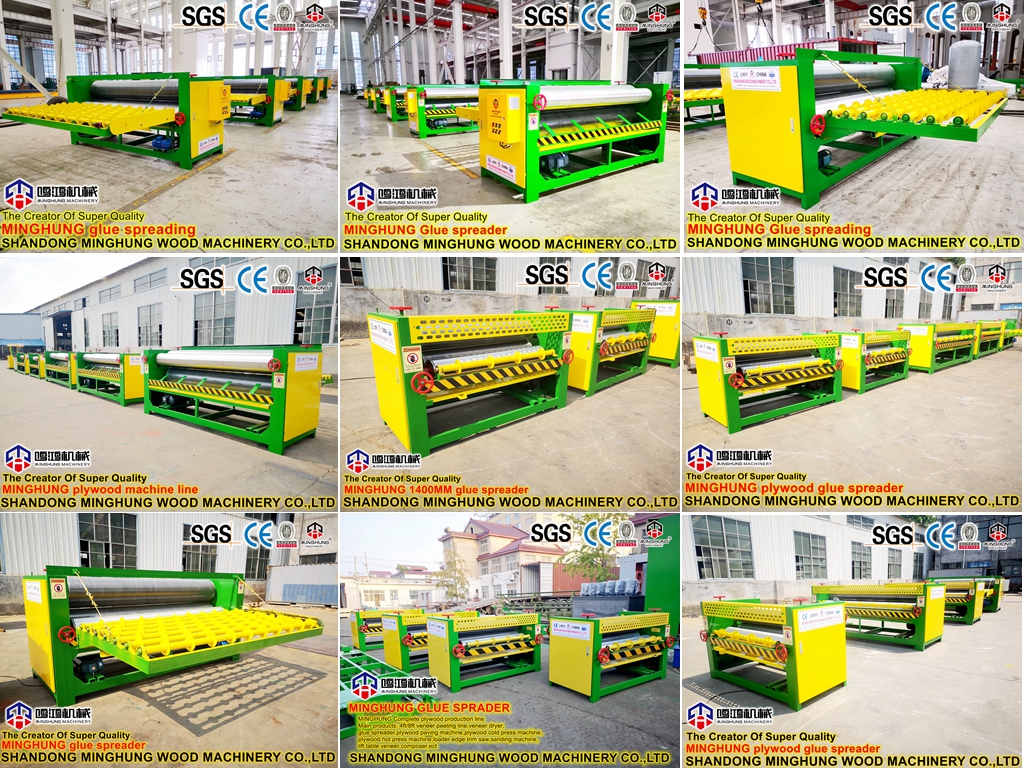
4. Precision Four-Roll Glue Spreader
This machine is responsible for applying the adhesive (e.g., MDI) evenly and in a measured amount onto the veneer surface. It consists of four precision-machined rollers: the applicator roll, meter roll, transfer roll, and glue doctor roll. By precisely adjusting the gaps and relative speeds between these rollers, the thickness of the adhesive film on the veneer can be strictly controlled. This design is particularly suitable for formaldehyde-free adhesives like MDI, which have low fluidity and high solid content. It ensures uniform gluing, prevents starved or excessive glue joints, and minimizes the consumption of expensive adhesive while guaranteeing bond strength.
5. Industrial Robotic Assembly System
This is the "heart" of the fully automatic production line, replacing the traditional, labor-intensive, and error-prone manual assembly. The system typically comprises multiple 6-axis industrial robots, customized vacuum cup grippers, and peripheral positioning conveyors. According to the production recipe (e.g., panel thickness, number of plies, structure) from the central control system, the robots precisely pick face, core, and back veneers from different bins and stack them at high speed and with high precision on the assembly table into a symmetrically structured mat. Its advantages include extremely high repeatable positioning accuracy, tireless continuous operation, and superior mat quality achieved through precise alignment, fundamentally ensuring the flatness and structural stability of the finished plywood.
Part Three: Hot Pressing Forming Section
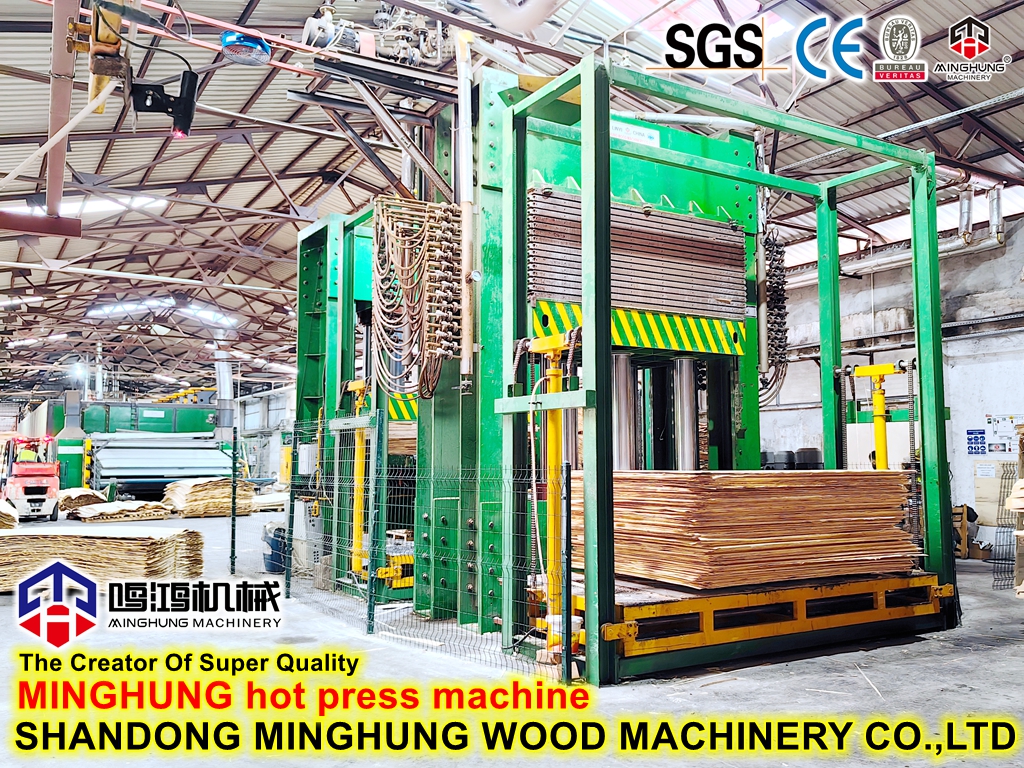
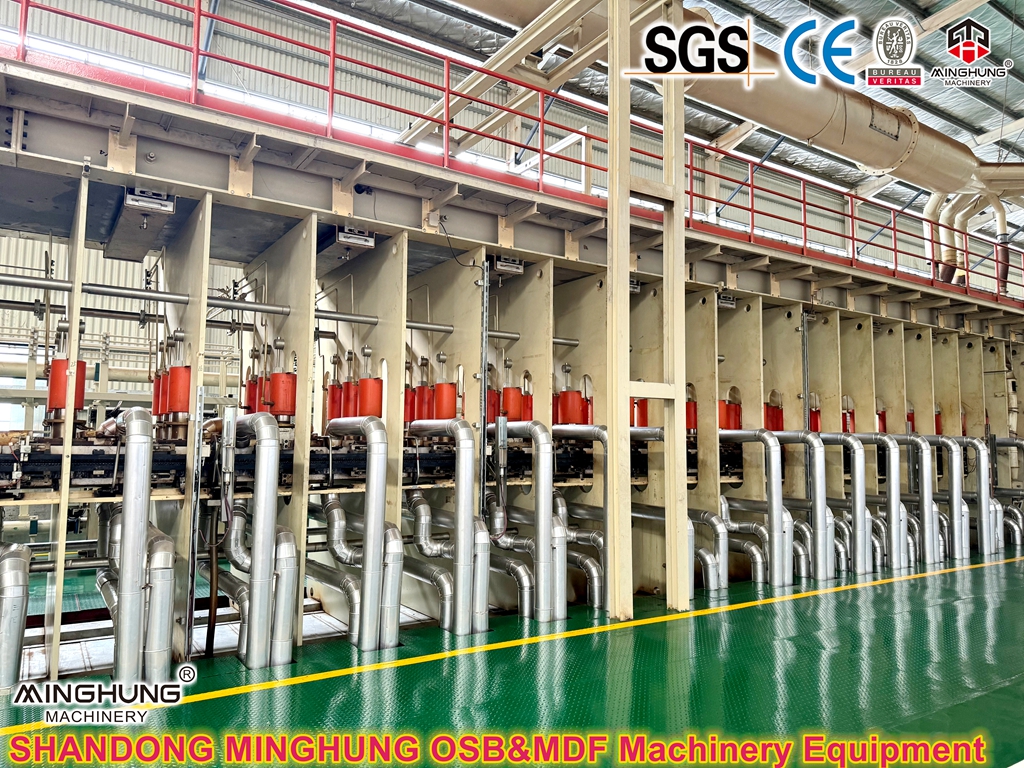
6. Continuous Flat Press Hot Press
This is the most technologically complex and capital-intensive core equipment on the line, determining the final quality and production efficiency of the plywood. It consists of heated platens, circulating steel belts, a hydraulic system, and an advanced control system. The mat enters from the infeed and is gripped between two massive circulating steel belts, moving continuously through a long (tens of meters) hot-press zone. Inside this zone, the mat is subjected to stable pressure and temperature from the heated platens, allowing the adhesive to fully cure. Compared to traditional intermittent presses, the continuous press produces panels with extremely uniform density, much flatter surfaces, and minimal thickness variation. Furthermore, as it operates continuously without the start-stop cycles of opening and closing, its production efficiency is vastly higher, and energy consumption is lower.
Part Four: Post-processing Section
7. Automatic Cross-Cut Saw & Calibrating Sander
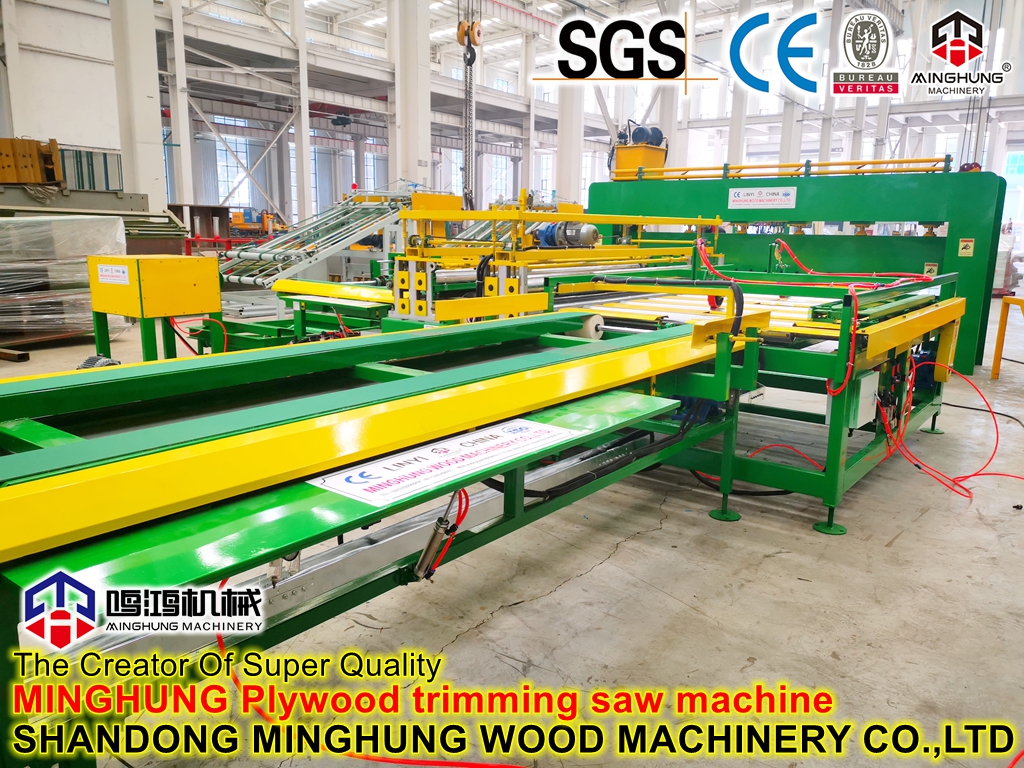
Automatic Cross-Cut Saw: The continuous press produces an endless ribbon of board. This equipment is responsible for cutting it into rough panels of pre-set lengths. It uses a high-speed saw blade driven by a servo motor, which moves synchronously with the board ribbon for a flying cut, ensuring smooth, chip-free edges.
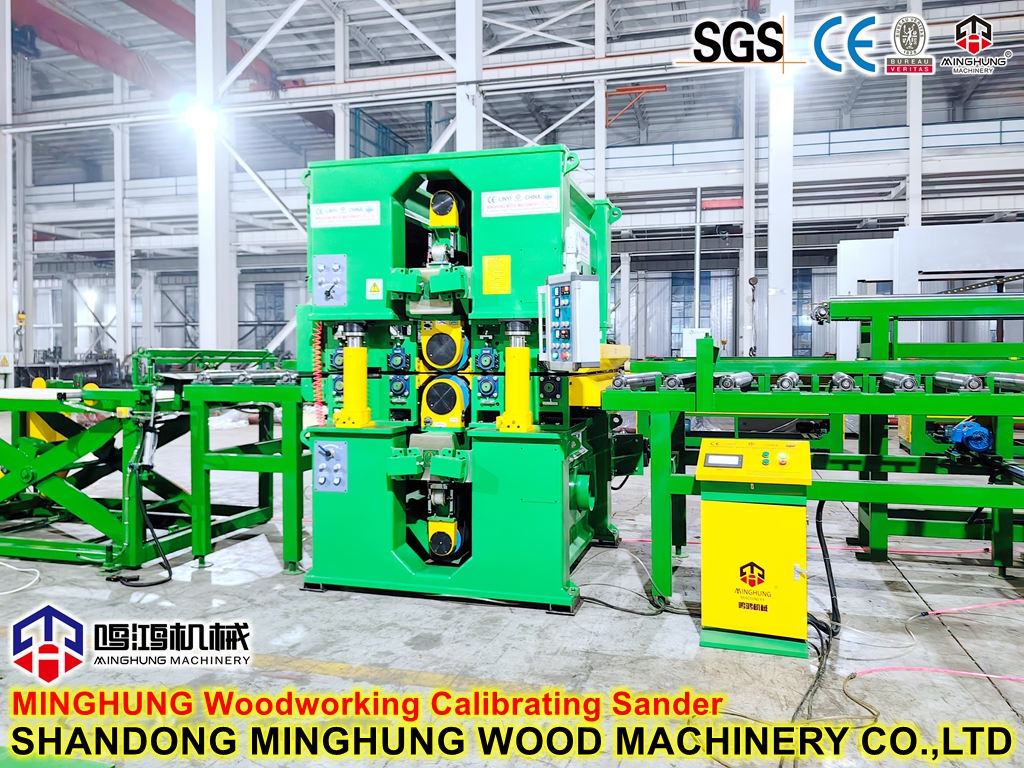
Calibrating Sander: Comprises multiple coarse and fine sanding units. It has two primary functions: 1) Calibrating - removing thickness variation across the panel by sanding, ensuring consistent thickness meets high standards. 2) Finishing - providing the desired surface smoothness or texture for subsequent processes like overlaying, printing, or direct painting.
8. Automatic Grading, Stacking, and Packaging System
This is the final stage of the production line, automating the handling of finished panels.
Automatic Grading: Uses visual inspection or ultrasonic thickness gauging to perform final quality checks and automatically grade each finished panel.
Robotic Stacking System: Industrial robots stack the graded panels into neat piles according to the grading results. The stacking pattern is programmable to suit different packaging and shipping requirements.
Automatic Packaging Machine: Automatically wraps the stacked packs with stretch film, installs edge protectors, and may even apply steel strapping, creating robust shipping units ready for dispatch to customers.
Key Technical Advantages and Features
Full Automation and Intelligence: From raw material to finished product, it drastically reduces manual intervention, lowering labor costs and human error, enabling 24/7 continuous production.
Data-Driven and Industry 4.0: A central control system (MES/ERP) monitors all equipment operating parameters and production data in real-time, enabling production process visualization, quality traceability, and intelligent production scheduling.
High Material Utilization Rate: Intelligent grading and patching, precise gluing, and optimized cutting maximize the use of every eucalyptus veneer.
Exceptional Product Quality: The continuous pressing process and precise process control ensure products have excellent dimensional stability, flatness, and internal bond strength.
Green and Eco-friendly: The line is designed specifically for formaldehyde-free adhesives (like MDI), coupled with efficient dust removal and exhaust gas treatment systems. The plywood produced complies with the world's strictest environmental standards (e.g., CARB-NAF, EPA TSCA Title VI).
Production Flexibility: The production line can be quickly reconfigured via software settings to switch between producing eucalyptus plywood or LVL of different specifications, thicknesses, and core structures.
Target Markets and Applications
The high-end eucalyptus plywood produced by this line is primarily used in:
High-End Furniture Manufacturing: As a substrate for eco-friendly furniture.
Underfloor Heating Substrates: Requiring high stability and formaldehyde-free emission.
Construction Formwork: High-strength, highly reusable eucalyptus plywood formwork.
Interior Decoration: For walls, partitions, etc.
Container Flooring: As well as applications for LVL in structural building materials, door and window frames, etc.
We are Shandong MINGHUNG Wood Based Panel Machinery Co.,Ltd China factory and manufacturer of full sets of Plywood machinery and Veneer machinery.

The machinery we have produced not only includes a complete production line for plywood, but also a full range of production equipment for particleboard, density board, and fiberboard. The main machinery includes peeling machines, chipping machines, rotary cutting machines, drying machines, gluing mixers, laying machines, pre-pressing machines, hot pressing machines, cooling machines, longitudinal and transverse sawing machines, sanding machines, as well as auxiliary machinery such as automatic feeding and discharging systems and lifting platforms.


Request Your Plywood Solution Now! 3D plant layout, on-site commissioning & global spare parts – Dominate the premium board market today!
Our contacts:
Whatsapp: +8618769900191 +8615589105786 +8618954906501
Email: osbmdfmachinery@gmail.com
The Eucalyptus-Based Plywood Full Automatic Production Line is a high-end intelligent manufacturing system in the modern timber industry. It integrates machinery, electronics, computing, and artificial intelligence to achieve fully automated, intelligent, and clean production from eucalyptus veneer to finished plywood. This line is specifically optimized for the characteristics of fast-growing eucalyptus timber (such as hard texture, tendency to warp, and complex grain) to efficiently produce high-value-added, formaldehyde-free, and highly stable plywood and LVL (Laminated Veneer Lumber) products.
Characteristics of Eucalyptus Timber
Fast-Growing and Abundant: Short rotation cycle, ensuring a sustainable and ample raw material supply.
High Density & Hardness: The wood is solid and wear-resistant, imparting high strength and durability to the finished panels.
Distinct Grain Pattern: Features a straight and aesthetically pleasing grain, suitable for furniture and decorative materials with a clear finish.

Characteristics of Plywood Made from Eucalyptus
When the inherent challenges of eucalyptus are overcome through advanced production lines and processes, the resulting plywood exhibits outstanding market competitiveness:
High Strength and Durability: The high-density eucalyptus core gives the panels excellent bending strength, stiffness, and impact resistance, making them ideal for construction formwork, container flooring, and load-bearing furniture.
Eco-Friendly and Healthy: The production line is optimized for formaldehyde-free adhesives like MDI, enabling the production of panels that meet top international standards such as CARB-NAF and EPA, suitable for underfloor heating and high-demand living spaces.
Superior Stability: Precise symmetrical assembly and the continuous pressing process effectively counteract the internal stress of eucalyptus, resulting in structurally stable panels that are resistant to warping and boast high dimensional accuracy.
Excellent Workability and Finish: The panels have a flat surface and uniform density, facilitating further processing like sawing, drilling, and overlaying. The distinct grain also makes it a high-quality face veneer material.

Production Process
The full-automatic production line seamlessly integrates the following steps into a continuous workflow:
1. Veneer Preparation: Eucalyptus peeled veneer → Automatic feeding → Drying (uniform moisture removal) → Intelligent Grading and Patching (CCD inspection, automatic sorting and repair).
2. Gluing and Assembly: Qualified veneer → Automatic Gluing (MDI formaldehyde-free adhesive, precise application) → Robotic Assembly (automatic stacking of face, core, and back veneers to ensure a symmetrical structure).
3. Forming and Curing: Assembled mat → Continuous Pre-pressing (initial shaping) → (Optional) Microwave Preheating (improves efficiency) → Continuous Flat Press Hot Pressing (adhesive curing under heat and pressure).
4. Post-Processing: Pressed board ribbon → Cross-cutting to length → Cooling → Sanding (calibrating thickness and surface finishing) → Automatic Grading and Packaging.

The core equipment of this production line
Part One: Raw Material Processing and Plywood Preparation Section
1. Automatic Feeder
This is the starting point of the production line, responsible for automatically, continuously, and neatly feeding the peeled wet eucalyptus veneers into the dryer. It typically employs a hydraulic lifting table to receive the veneer packs from forklifts. Then, using a vacuum cup system or fork-arm mechanism, it precisely picks up and places the veneers sheet-by-sheet or in small stacks onto the conveyor line. Controlled by PLC programming, it ensures the feeding rhythm matches the intake speed of the subsequent dryer. This system realizes the first automated step of the process, significantly reducing manual labor intensity.

2. Mesh Dryer
This is a key piece of equipment for processing eucalyptus veneer, specifically designed to overcome its tendency to warp and check.
Uses multi-layer mesh belts to carry the veneers, drying them via a hot air circulation system. This provides more uniform heating, making it more suitable for smaller or uneven-thickness veneers.
The core of this equipment lies in its precise control over temperature, air speed, and humidity. For eucalyptus, a strategy involving gradient temperature increase and multi-stage moisture removal is often adopted to ensure even moisture evaporation throughout the veneer, minimizing drying defects and providing high-quality veneer for subsequent processes.

3. Veneer Intelligent Grading Line and Automatic Patching Machine
This is an integrated intelligent system for inspection, sorting, and repair.
Intelligent Grading Line: At its heart are high-resolution CCD industrial cameras and backlighting systems mounted above the line. They scan each passing veneer sheet. Image processing software then analyzes defects (e.g., knots, holes, splits, discoloration) in real-time and automatically makes grading decisions (e.g., A, B, C grade) based on pre-set standards. Subsequently, pneumatic or mechanical actuators divert the graded veneers into corresponding conveyor lines or bins.
Automatic Patching Machine: For B/C grade veneers with repairable defects, the system directs them to the patching machine. This machine automatically performs tasks like "plugging" (filling holes with patches) or "stitching" (sewing splits with fiberglass thread), significantly enhancing veneer utilization and final product quality.
Part Two: Gluing and Mold Assembly Section
4. Precision Four-Roll Glue Spreader
This machine is responsible for applying the adhesive (e.g., MDI) evenly and in a measured amount onto the veneer surface. It consists of four precision-machined rollers: the applicator roll, meter roll, transfer roll, and glue doctor roll. By precisely adjusting the gaps and relative speeds between these rollers, the thickness of the adhesive film on the veneer can be strictly controlled. This design is particularly suitable for formaldehyde-free adhesives like MDI, which have low fluidity and high solid content. It ensures uniform gluing, prevents starved or excessive glue joints, and minimizes the consumption of expensive adhesive while guaranteeing bond strength.

5. Industrial Robotic Assembly System
This is the "heart" of the fully automatic production line, replacing the traditional, labor-intensive, and error-prone manual assembly. The system typically comprises multiple 6-axis industrial robots, customized vacuum cup grippers, and peripheral positioning conveyors. According to the production recipe (e.g., panel thickness, number of plies, structure) from the central control system, the robots precisely pick face, core, and back veneers from different bins and stack them at high speed and with high precision on the assembly table into a symmetrically structured mat. Its advantages include extremely high repeatable positioning accuracy, tireless continuous operation, and superior mat quality achieved through precise alignment, fundamentally ensuring the flatness and structural stability of the finished plywood.
Part Three: Hot Pressing Forming Section
6. Continuous Flat Press Hot Press
This is the most technologically complex and capital-intensive core equipment on the line, determining the final quality and production efficiency of the plywood. It consists of heated platens, circulating steel belts, a hydraulic system, and an advanced control system. The mat enters from the infeed and is gripped between two massive circulating steel belts, moving continuously through a long (tens of meters) hot-press zone. Inside this zone, the mat is subjected to stable pressure and temperature from the heated platens, allowing the adhesive to fully cure. Compared to traditional intermittent presses, the continuous press produces panels with extremely uniform density, much flatter surfaces, and minimal thickness variation. Furthermore, as it operates continuously without the start-stop cycles of opening and closing, its production efficiency is vastly higher, and energy consumption is lower.

Part Four: Post-processing Section
7. Automatic Cross-Cut Saw & Calibrating Sander
Automatic Cross-Cut Saw: The continuous press produces an endless ribbon of board. This equipment is responsible for cutting it into rough panels of pre-set lengths. It uses a high-speed saw blade driven by a servo motor, which moves synchronously with the board ribbon for a flying cut, ensuring smooth, chip-free edges.

Calibrating Sander: Comprises multiple coarse and fine sanding units. It has two primary functions: 1) Calibrating - removing thickness variation across the panel by sanding, ensuring consistent thickness meets high standards. 2) Finishing - providing the desired surface smoothness or texture for subsequent processes like overlaying, printing, or direct painting.

8. Automatic Grading, Stacking, and Packaging System
This is the final stage of the production line, automating the handling of finished panels.
Automatic Grading: Uses visual inspection or ultrasonic thickness gauging to perform final quality checks and automatically grade each finished panel.
Robotic Stacking System: Industrial robots stack the graded panels into neat piles according to the grading results. The stacking pattern is programmable to suit different packaging and shipping requirements.
Automatic Packaging Machine: Automatically wraps the stacked packs with stretch film, installs edge protectors, and may even apply steel strapping, creating robust shipping units ready for dispatch to customers.
Key Technical Advantages and Features
Full Automation and Intelligence: From raw material to finished product, it drastically reduces manual intervention, lowering labor costs and human error, enabling 24/7 continuous production.
Data-Driven and Industry 4.0: A central control system (MES/ERP) monitors all equipment operating parameters and production data in real-time, enabling production process visualization, quality traceability, and intelligent production scheduling.
High Material Utilization Rate: Intelligent grading and patching, precise gluing, and optimized cutting maximize the use of every eucalyptus veneer.
Exceptional Product Quality: The continuous pressing process and precise process control ensure products have excellent dimensional stability, flatness, and internal bond strength.
Green and Eco-friendly: The line is designed specifically for formaldehyde-free adhesives (like MDI), coupled with efficient dust removal and exhaust gas treatment systems. The plywood produced complies with the world's strictest environmental standards (e.g., CARB-NAF, EPA TSCA Title VI).
Production Flexibility: The production line can be quickly reconfigured via software settings to switch between producing eucalyptus plywood or LVL of different specifications, thicknesses, and core structures.
Target Markets and Applications
The high-end eucalyptus plywood produced by this line is primarily used in:
High-End Furniture Manufacturing: As a substrate for eco-friendly furniture.
Underfloor Heating Substrates: Requiring high stability and formaldehyde-free emission.
Construction Formwork: High-strength, highly reusable eucalyptus plywood formwork.
Interior Decoration: For walls, partitions, etc.
Container Flooring: As well as applications for LVL in structural building materials, door and window frames, etc.
We are Shandong MINGHUNG Wood Based Panel Machinery Co.,Ltd China factory and manufacturer of full sets of Plywood machinery and Veneer machinery.
The machinery we have produced not only includes a complete production line for plywood, but also a full range of production equipment for particleboard, density board, and fiberboard. The main machinery includes peeling machines, chipping machines, rotary cutting machines, drying machines, gluing mixers, laying machines, pre-pressing machines, hot pressing machines, cooling machines, longitudinal and transverse sawing machines, sanding machines, as well as auxiliary machinery such as automatic feeding and discharging systems and lifting platforms.

Request Your Plywood Solution Now! 3D plant layout, on-site commissioning & global spare parts – Dominate the premium board market today!
Our contacts:
Whatsapp: +8618769900191 +8615589105786 +8618954906501
Email: osbmdfmachinery@gmail.com
Shandong Minghung Wood Machinery Factory Shandong minghung wood machine factory produces plywood machinery in linyi city city, china, dedicated to providing high-quality and suitable machines veneer machine,plywood machine,veneer splicing machine.veneer dryer machine,veneer peeling machine,plywood v
How to produce Particle board? What is the production step of Making Particle board?Introduction:Particle board, also known as chipboard, is a versatile and cost-effective material widely used in the construction and furniture industries. It is made by compressing wood particles and adhesive togethe
The Ultimate Guide to Plywood Hot Press Machines: Crafting High-Quality Plywood Introduction:Plywood is a versatile and widely used material in various industries, from construction to furniture manufacturing. Behind the scenes, plywood hot press machines play a crucial role in the production proces
What is a veneer dryer?MINGHUNG Roller veneer dryer for drying original wood veneer, remove abundant humidity, in the end, the wood veneer humidity will be 5%-10%, so it is suitable for making plywood.Veneer roller dryer are suitable for big drying capacity per day, it can be different length, width
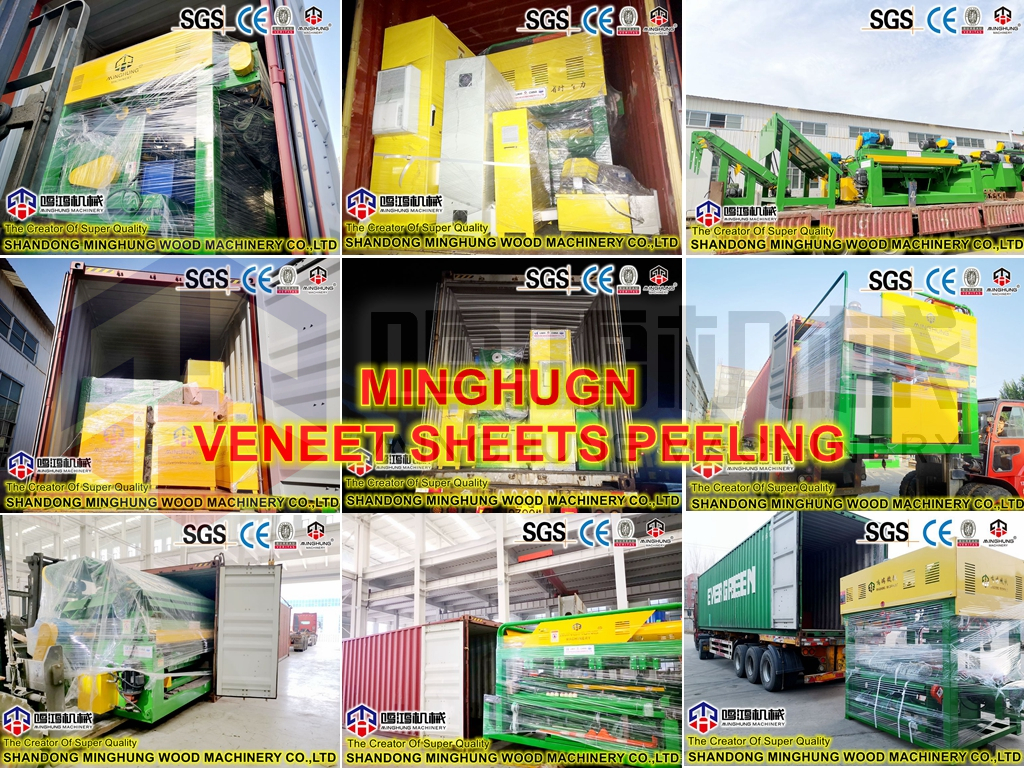
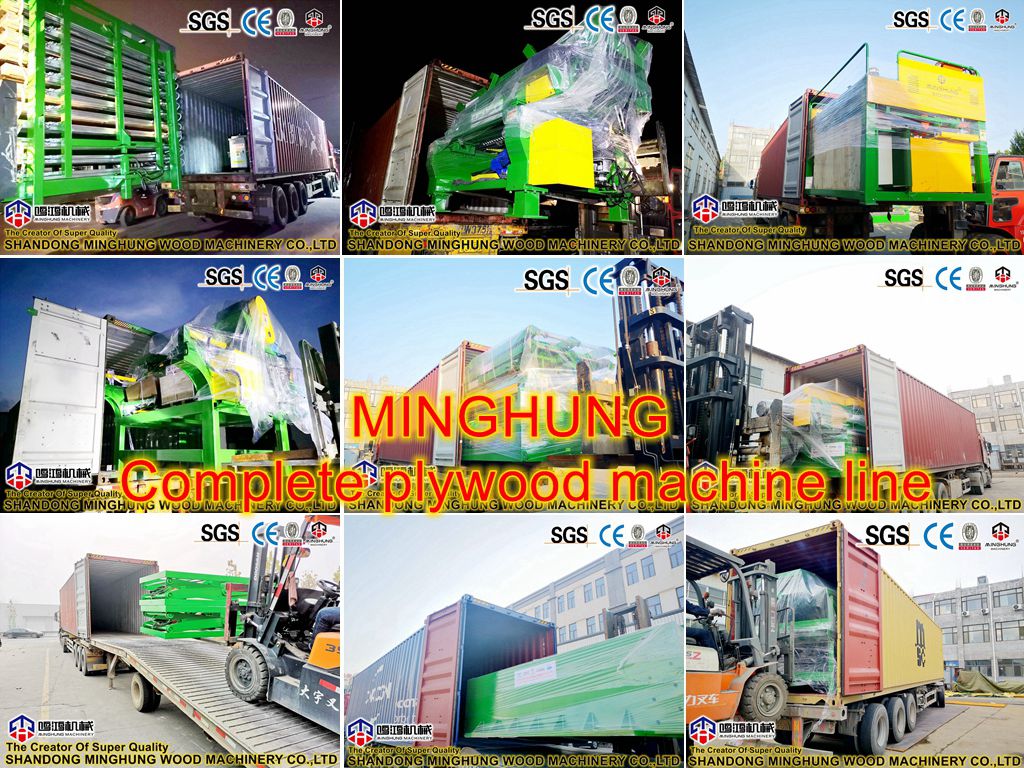
Recently, a high-performance plywood sander was prepared for shipment at Qingdao Port, ready for its journey to our valued partner in Russia.
This shipment not only demonstrates Minghung Machinery’s strong production coordination and international trade execution capabilities but also ensures the rapid commissioning of the customer's production line.
MINGHUNG is a leading company in the industry of OSB&MDF making machine. With a strongfocus on producing high-quality machinery, we specialize in manufacturing thecomplete production line of Medium density fiberboard (MDF), High densityfiberboard (HDF),Particle board (PB), Oriented strand board (OSB) and Veneerable super strong particle board (LSB).
Peeling is the pre-treatment process. Chopping and planing are both aimed at obtaining specific forms of wood materials, but the forms and application scenarios are different.
Shipping multiple containers of gluing equipment to multiple countries in a single batch is a testament not only to our current order fulfillment capacity but, more importantly, to the international market’s trust in the quality and reliability of the ‘MINGHUNG’ brand.
The Differences And Comparisons between PB OSB And MDF