| Availability: | |
|---|---|
| Quantity: | |
MINGHUNG
I. Overview and Importance of Veneer Dryers
1. Basic Definition and Process Position
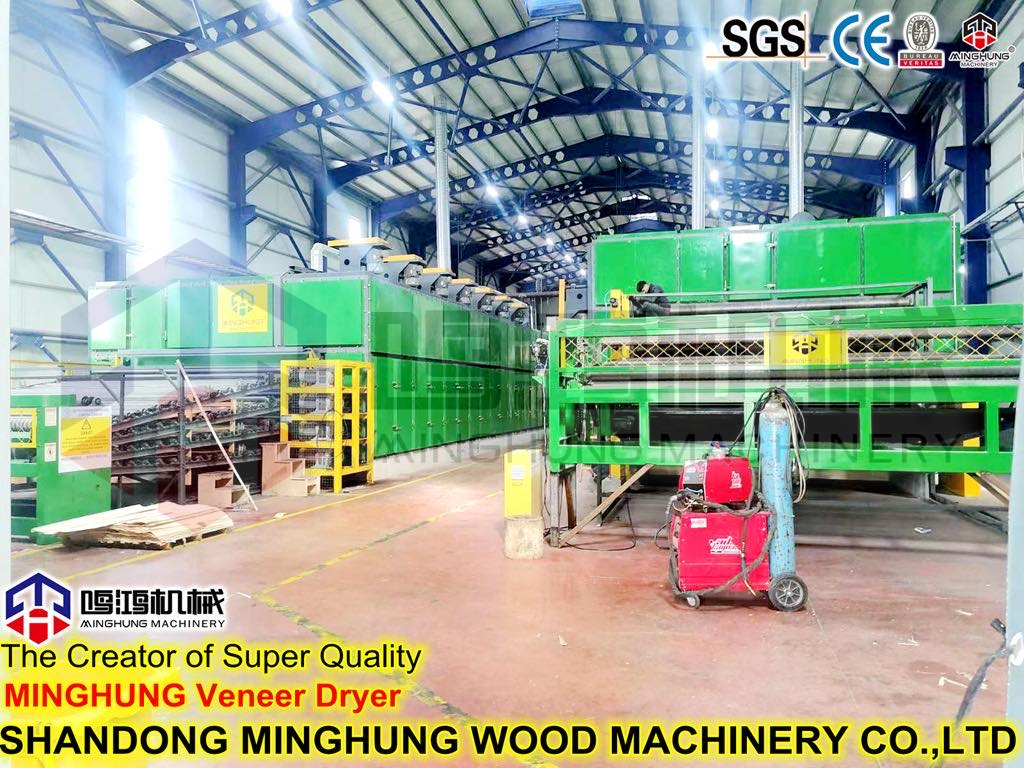
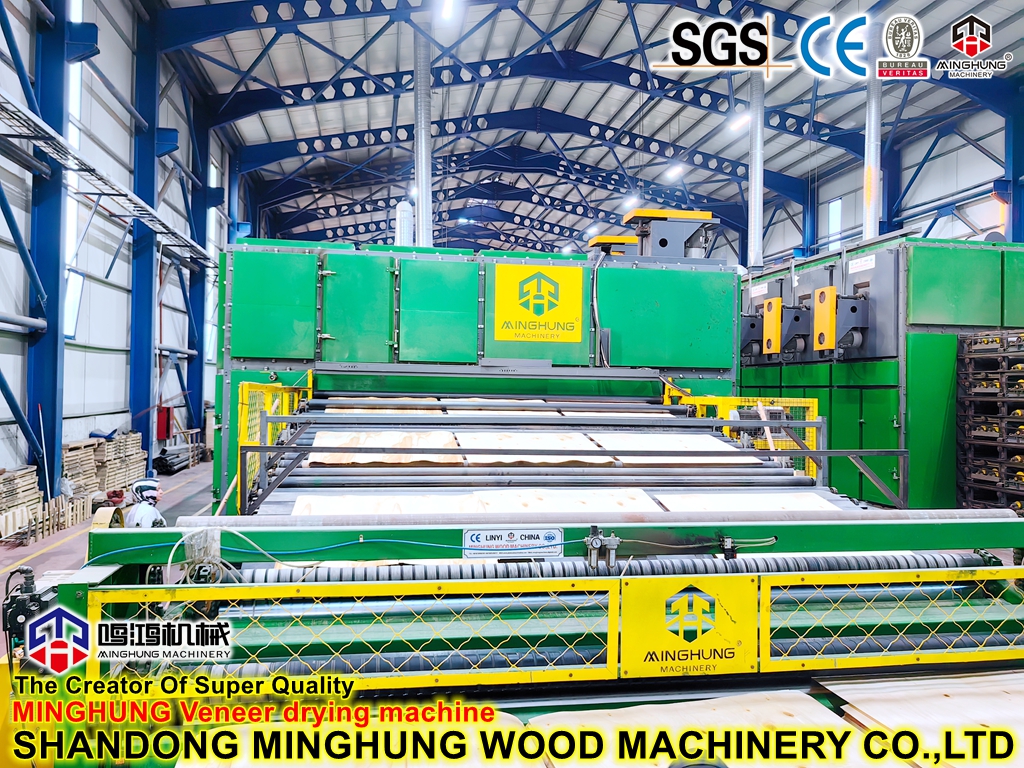
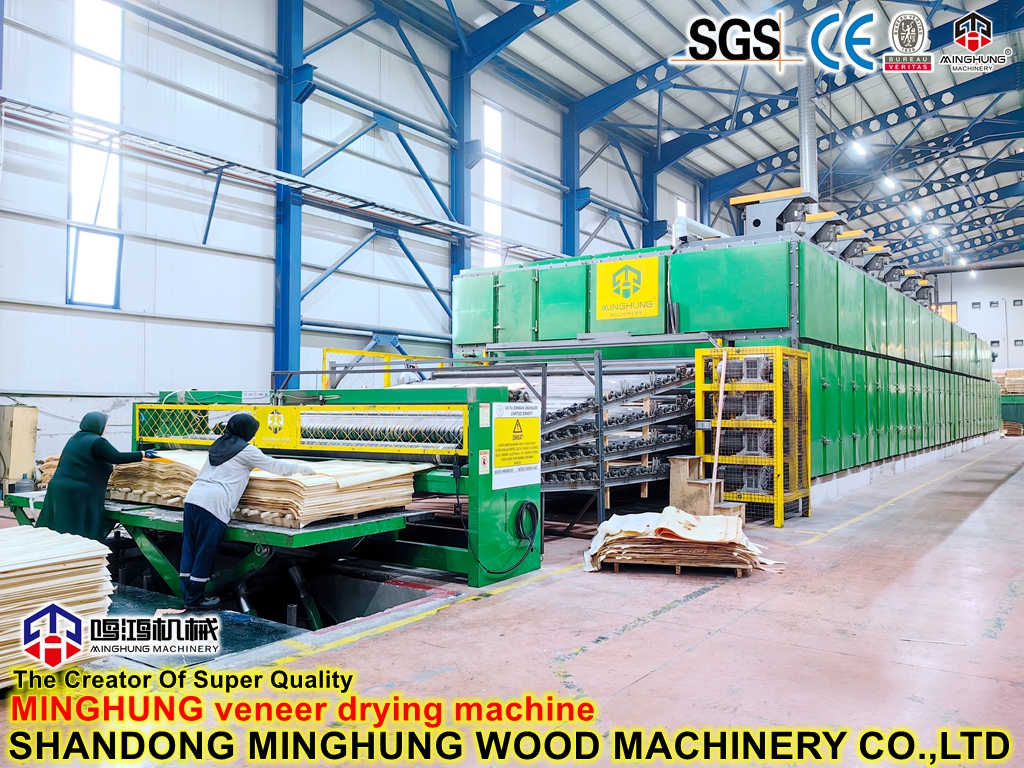
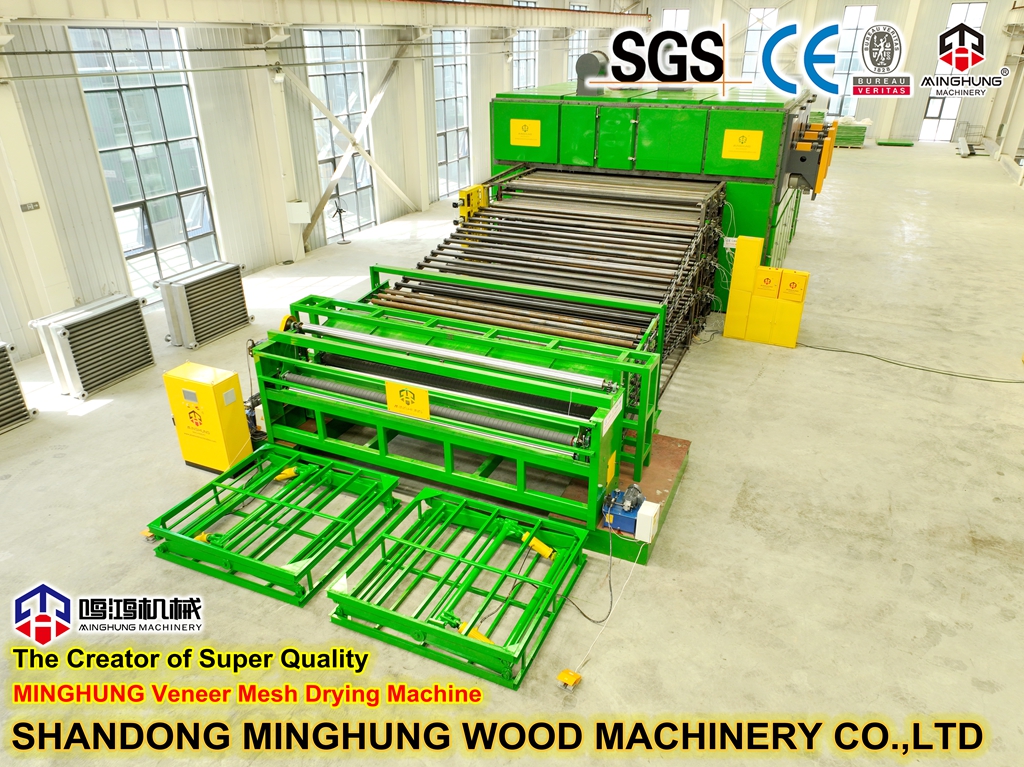
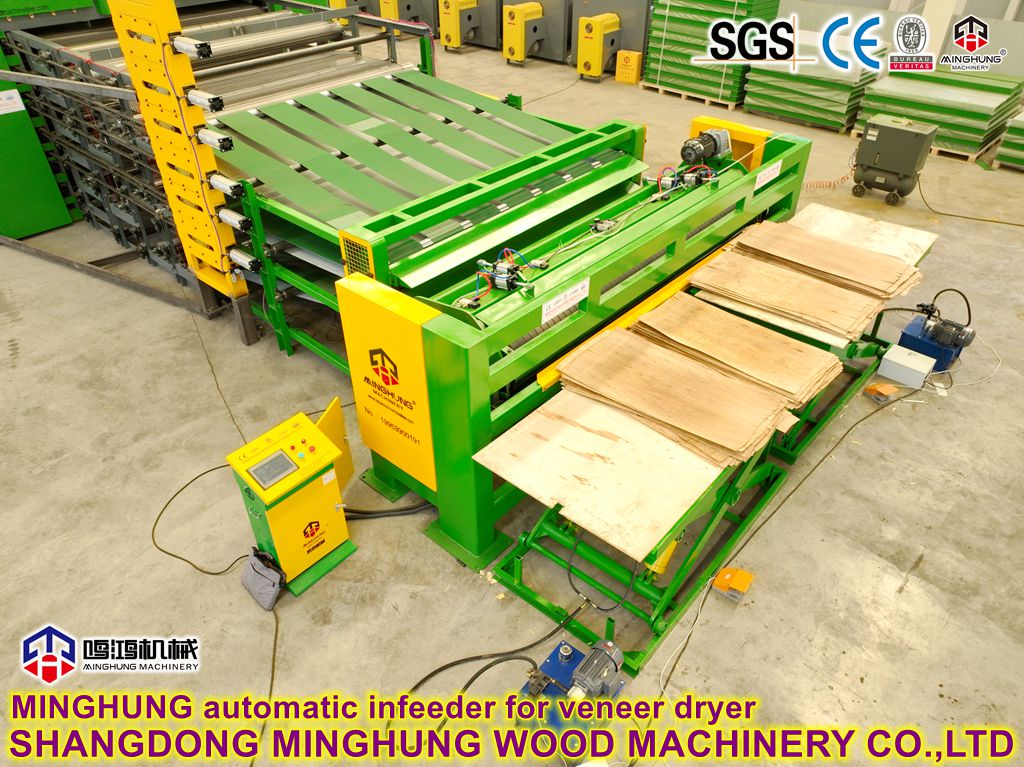
A veneer dryer is a critical pre-processing equipment in the plywood production line, specifically designed to rapidly dry wet veneer (with moisture content as high as 60-120% after peeling or slicing) to a moisture content suitable for gluing (8-12%). It serves as the first quality checkpoint in plywood production, where drying quality directly impacts the yield and product quality of subsequent lay-up and hot-pressing processes.
2. Characteristics of Drying
Fast drying speed:It only takes 5 to 20 minutes to go from wet plates to dry plates.
High temperature requirements: The drying temperature is usually between 150 and 250 degrees Celsius.
Extremely thin: The thickness of the single board ranges from 0.3mm to 3.0mm.
Continuous production:7x24hours continuous operation
II. Core Working Principles and Technical Parameters
![]() | Primary Drying Principle: Forced Convection Jet Drying |
The dominant technology uses high-temperature, high-speed air jets impinging on both surfaces of the continuously moving veneer, enabling rapid moisture evaporation.
Key Technical Parameter Ranges:
Drying Temperature: 160-240°C (adjustable by zone)
Airflow Velocity: 15-30 meters/second
Drying Time: 3-25 minutes (depending on thickness)
Energy Consumption: 120-200 kWh/m³
Line Speed: 15-60 meters/minute

![]() | Three stages of the drying process |
1. Preheating and heating-up period (accounting for 20% of the total time)
The surface temperature of the board rapidly rises to the temperature at which moisture evaporates
Avoid rapid heating that could cause the surface to harden
2. Constant drying period (accounting for 60% of the total time)
Stage of significant evaporation of free water
Requires maintaining adequate heat supply and high wind speed
3. Deceleration Drying Period (accounting for 20% of the total time)
Evaporation of bound water stage
The temperature needs to be reduced to prevent excessive drying

Main Equipment Types | Structure | Best For | Limitations |
Roller-Type Veneer Dryer | Features multiple tiers of rotating rollers (typically 3-8 layers). Jet boxes are positioned above and below the roller bed. | Versatile handling of various veneer thicknesses (0.5-3.0mm). Can help flatten slightly warped veneer. Mature technology. | Larger footprint. Potential for roller marks on veneer. Relatively higher energy consumption. |
Mesh Belt-Type Veneer Dryer | Utilizes continuous high-temperature resistant metal mesh belts (typically 2-4 tiers). Jets are arranged above and below the belt. | Excellent for thin veneers (0.3-1.5mm). Minimizes distortion and provides superior surface quality with more uniform drying. | Higher mesh belt maintenance costs. May provide insufficient support for very thick veneers. Higher initial investment. |
Combined-Type Dryer (Roller + Mesh Belt) | Integrates roller sections at the infeed (for wet veneer handling) with mesh belt sections in the middle and outfeed (for precise drying). | Plants processing a wide mix of veneer thicknesses. Combines the advantages of both systems. | Highest investment and operational complexity. |
IV. Key System Components and Technical Requirements
1. Conveyance System
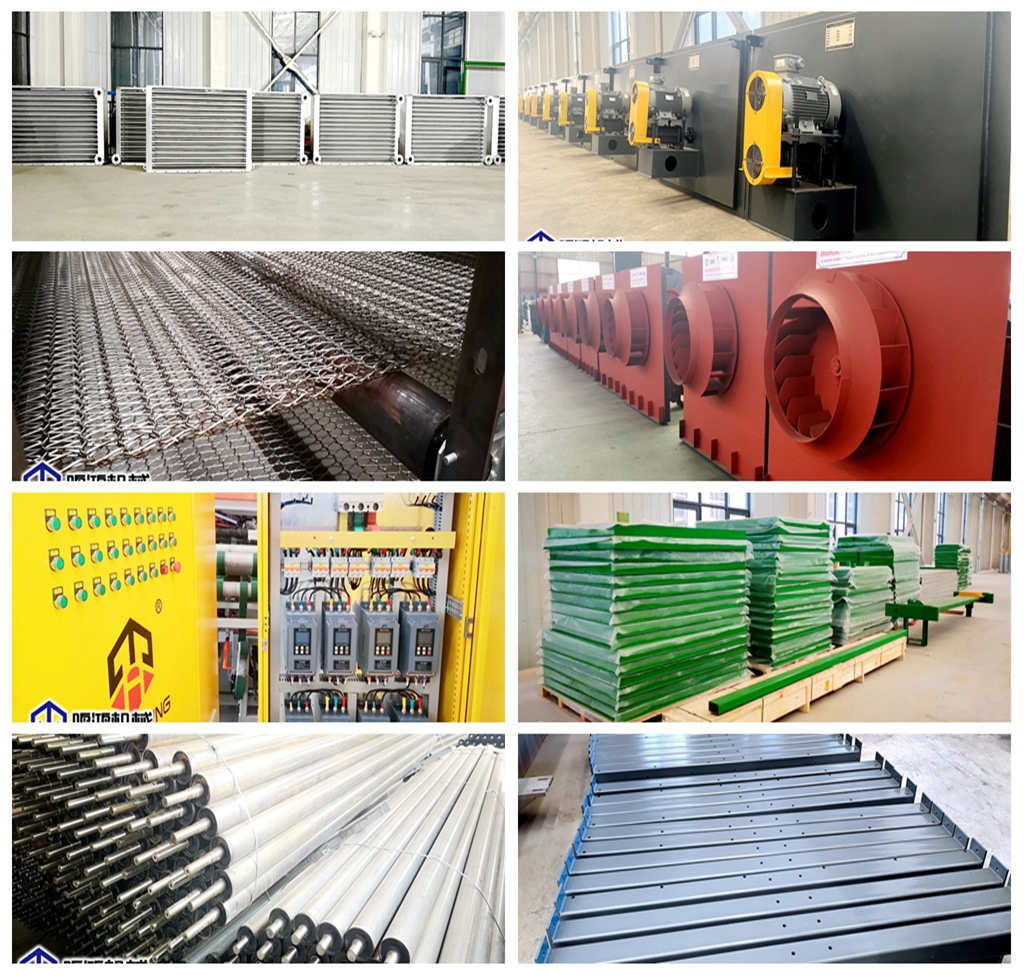
Rollers: Require high surface hardness (HRC 55-60), excellent straightness, and often chrome plating for durability.
Mesh Belts: Made from high-grade stainless steel (e.g., SUS304/316) with high tensile strength and long-term heat resistance.
2. Heating & Air System
Heat Sources: Options include steam, thermal oil, direct gas firing, biomass, or electric heating.
Jet System: Designed with specific nozzles (slot, round, venturi) and plenum chambers to ensure highly uniform airflow distribution across the veneer width.
3. Control System
Basic: Controls individual parameters like temperature and speed.
Advanced: Pre-programmed drying schedules and automatic execution.
Intelligent: AI-based adaptive control that adjusts parameters in real-time based on moisture feedback.

Breakdown of where cost reductions are realized
![]() | Significant Reduction in Direct Energy Costs (The Core Impact) |
This is the most significant and quantifiable contribution of energy-efficient equipment, primarily reflected in fuel and electricity consumption.
1. Lower Fuel Costs (Largest share, up to 60-70% of total savings)
Increased Thermal Efficiency: By optimizing insulation, minimizing heat leaks, and improving hot air circulation, more of the heat generated by fuel is effectively used for water evaporation instead of being lost to the environment. Every 10% increase in thermal efficiency leads to a proportional reduction in fuel expenses.
Waste Heat Recovery: Recovering both sensible heat and latent heat (released when moisture condenses) from the exhausted hot, humid air to preheat fresh air or incoming boards can directly save 5%-15% of fuel.
Multi-Fuel Compatibility and Optimization: The ability to flexibly use various energy sources like biomass pellets, wood chips, or natural gas allows the factory to choose the most economical fuel based on market price fluctuations, minimizing fuel procurement costs.
2. Lower Electricity Costs
Application of Variable Frequency Drive (VFD): Using VFDs for circulation and exhaust fans allows automatic speed adjustment based on the actual needs of each drying phase, avoiding the waste of "overpowered motors running at partial load." During low-load phases (middle/late stages), power consumption can be reduced by 30%-50%.
Optimized Operation Logic: Intelligent control systems precisely calculate the timing and volume of exhaust, reducing unnecessary full-speed fan operation time.
![]() | Reduction in Production and Operational Costs |
1. Shorter Drying Cycles, Increased Output
Efficient and uniform drying increases output per unit of time. For the same capital investment, increased annual production means fixed costs (depreciation, facility, management) are spread over more products, thereby reducing the indirect cost allocated to each board.
2. Optimized Labor and Maintenance Costs
Higher Automation: Intelligent control systems reduce dependence on highly experienced operators, enabling one person to manage multiple lines or even unattended operation, lowering labor costs.
Improved Equipment Reliability: High-quality design and materials reduce failure rates, lowering emergency repair costs and production stoppage losses.
Simplified Maintenance: Modular design and remote diagnostics make routine maintenance and troubleshooting more efficient.
![]() | Significant Reduction in Quality Loss Costs (Often Overlooked but Critical) |
This is a frequently underestimated but hugely impactful area in traditional cost calculations.
1. Increased Yield (Reduced Downgrades and Waste)
Uniform drying significantly reduces defects like cracking, warping, distortion, and delamination, which lead to downgraded products or scrap. Every 1% increase in yield means reduced losses in raw material, energy, and labor costs from previous processes (peeling, gluing).
Precise moisture content control prevents issues like poor bonding strength or customer returns due to over-drying or insufficient drying.
2. Reduced Rework and After-Sales Costs
Consistent drying quality ensures batch-to-batch uniformity, reducing internal rework or customer claims due to quality issues, saving substantial hidden costs and reputational damage.


As a direct manufacturer, we provide not only high-performance equipment but also comprehensive drying energy audits and personalized energy-saving solution design. Choosing our Energy-Saving Dryer is not just purchasing a machine; it's investing in long-term cost competitiveness for your plant.
Our contacts:
Whatsapp: +8618769900191 +8615589105786 +8618954906501
Email: osbmdfmachinery@gmail.com
I. Overview and Importance of Veneer Dryers
1. Basic Definition and Process Position
A veneer dryer is a critical pre-processing equipment in the plywood production line, specifically designed to rapidly dry wet veneer (with moisture content as high as 60-120% after peeling or slicing) to a moisture content suitable for gluing (8-12%). It serves as the first quality checkpoint in plywood production, where drying quality directly impacts the yield and product quality of subsequent lay-up and hot-pressing processes.
2. Characteristics of Drying
Fast drying speed:It only takes 5 to 20 minutes to go from wet plates to dry plates.
High temperature requirements: The drying temperature is usually between 150 and 250 degrees Celsius.
Extremely thin: The thickness of the single board ranges from 0.3mm to 3.0mm.
Continuous production:7x24hours continuous operation
II. Core Working Principles and Technical Parameters
![]() | Primary Drying Principle: Forced Convection Jet Drying |
The dominant technology uses high-temperature, high-speed air jets impinging on both surfaces of the continuously moving veneer, enabling rapid moisture evaporation.
Key Technical Parameter Ranges:
Drying Temperature: 160-240°C (adjustable by zone)
Airflow Velocity: 15-30 meters/second
Drying Time: 3-25 minutes (depending on thickness)
Energy Consumption: 120-200 kWh/m³
Line Speed: 15-60 meters/minute

![]() | Three stages of the drying process |
1. Preheating and heating-up period (accounting for 20% of the total time)
The surface temperature of the board rapidly rises to the temperature at which moisture evaporates
Avoid rapid heating that could cause the surface to harden
2. Constant drying period (accounting for 60% of the total time)
Stage of significant evaporation of free water
Requires maintaining adequate heat supply and high wind speed
3. Deceleration Drying Period (accounting for 20% of the total time)
Evaporation of bound water stage
The temperature needs to be reduced to prevent excessive drying

Main Equipment Types | Structure | Best For | Limitations |
Roller-Type Veneer Dryer | Features multiple tiers of rotating rollers (typically 3-8 layers). Jet boxes are positioned above and below the roller bed. | Versatile handling of various veneer thicknesses (0.5-3.0mm). Can help flatten slightly warped veneer. Mature technology. | Larger footprint. Potential for roller marks on veneer. Relatively higher energy consumption. |
Mesh Belt-Type Veneer Dryer | Utilizes continuous high-temperature resistant metal mesh belts (typically 2-4 tiers). Jets are arranged above and below the belt. | Excellent for thin veneers (0.3-1.5mm). Minimizes distortion and provides superior surface quality with more uniform drying. | Higher mesh belt maintenance costs. May provide insufficient support for very thick veneers. Higher initial investment. |
Combined-Type Dryer (Roller + Mesh Belt) | Integrates roller sections at the infeed (for wet veneer handling) with mesh belt sections in the middle and outfeed (for precise drying). | Plants processing a wide mix of veneer thicknesses. Combines the advantages of both systems. | Highest investment and operational complexity. |
IV. Key System Components and Technical Requirements
1. Conveyance System
Rollers: Require high surface hardness (HRC 55-60), excellent straightness, and often chrome plating for durability.
Mesh Belts: Made from high-grade stainless steel (e.g., SUS304/316) with high tensile strength and long-term heat resistance.
2. Heating & Air System
Heat Sources: Options include steam, thermal oil, direct gas firing, biomass, or electric heating.
Jet System: Designed with specific nozzles (slot, round, venturi) and plenum chambers to ensure highly uniform airflow distribution across the veneer width.
3. Control System
Basic: Controls individual parameters like temperature and speed.
Advanced: Pre-programmed drying schedules and automatic execution.
Intelligent: AI-based adaptive control that adjusts parameters in real-time based on moisture feedback.

Breakdown of where cost reductions are realized
![]() | Significant Reduction in Direct Energy Costs (The Core Impact) |
This is the most significant and quantifiable contribution of energy-efficient equipment, primarily reflected in fuel and electricity consumption.
1. Lower Fuel Costs (Largest share, up to 60-70% of total savings)
Increased Thermal Efficiency: By optimizing insulation, minimizing heat leaks, and improving hot air circulation, more of the heat generated by fuel is effectively used for water evaporation instead of being lost to the environment. Every 10% increase in thermal efficiency leads to a proportional reduction in fuel expenses.
Waste Heat Recovery: Recovering both sensible heat and latent heat (released when moisture condenses) from the exhausted hot, humid air to preheat fresh air or incoming boards can directly save 5%-15% of fuel.
Multi-Fuel Compatibility and Optimization: The ability to flexibly use various energy sources like biomass pellets, wood chips, or natural gas allows the factory to choose the most economical fuel based on market price fluctuations, minimizing fuel procurement costs.
2. Lower Electricity Costs
Application of Variable Frequency Drive (VFD): Using VFDs for circulation and exhaust fans allows automatic speed adjustment based on the actual needs of each drying phase, avoiding the waste of "overpowered motors running at partial load." During low-load phases (middle/late stages), power consumption can be reduced by 30%-50%.
Optimized Operation Logic: Intelligent control systems precisely calculate the timing and volume of exhaust, reducing unnecessary full-speed fan operation time.
![]() | Reduction in Production and Operational Costs |
1. Shorter Drying Cycles, Increased Output
Efficient and uniform drying increases output per unit of time. For the same capital investment, increased annual production means fixed costs (depreciation, facility, management) are spread over more products, thereby reducing the indirect cost allocated to each board.
2. Optimized Labor and Maintenance Costs
Higher Automation: Intelligent control systems reduce dependence on highly experienced operators, enabling one person to manage multiple lines or even unattended operation, lowering labor costs.
Improved Equipment Reliability: High-quality design and materials reduce failure rates, lowering emergency repair costs and production stoppage losses.
Simplified Maintenance: Modular design and remote diagnostics make routine maintenance and troubleshooting more efficient.
![]() | Significant Reduction in Quality Loss Costs (Often Overlooked but Critical) |
This is a frequently underestimated but hugely impactful area in traditional cost calculations.
1. Increased Yield (Reduced Downgrades and Waste)
Uniform drying significantly reduces defects like cracking, warping, distortion, and delamination, which lead to downgraded products or scrap. Every 1% increase in yield means reduced losses in raw material, energy, and labor costs from previous processes (peeling, gluing).
Precise moisture content control prevents issues like poor bonding strength or customer returns due to over-drying or insufficient drying.
2. Reduced Rework and After-Sales Costs
Consistent drying quality ensures batch-to-batch uniformity, reducing internal rework or customer claims due to quality issues, saving substantial hidden costs and reputational damage.


As a direct manufacturer, we provide not only high-performance equipment but also comprehensive drying energy audits and personalized energy-saving solution design. Choosing our Energy-Saving Dryer is not just purchasing a machine; it's investing in long-term cost competitiveness for your plant.
Our contacts:
Whatsapp: +8618769900191 +8615589105786 +8618954906501
Email: osbmdfmachinery@gmail.com
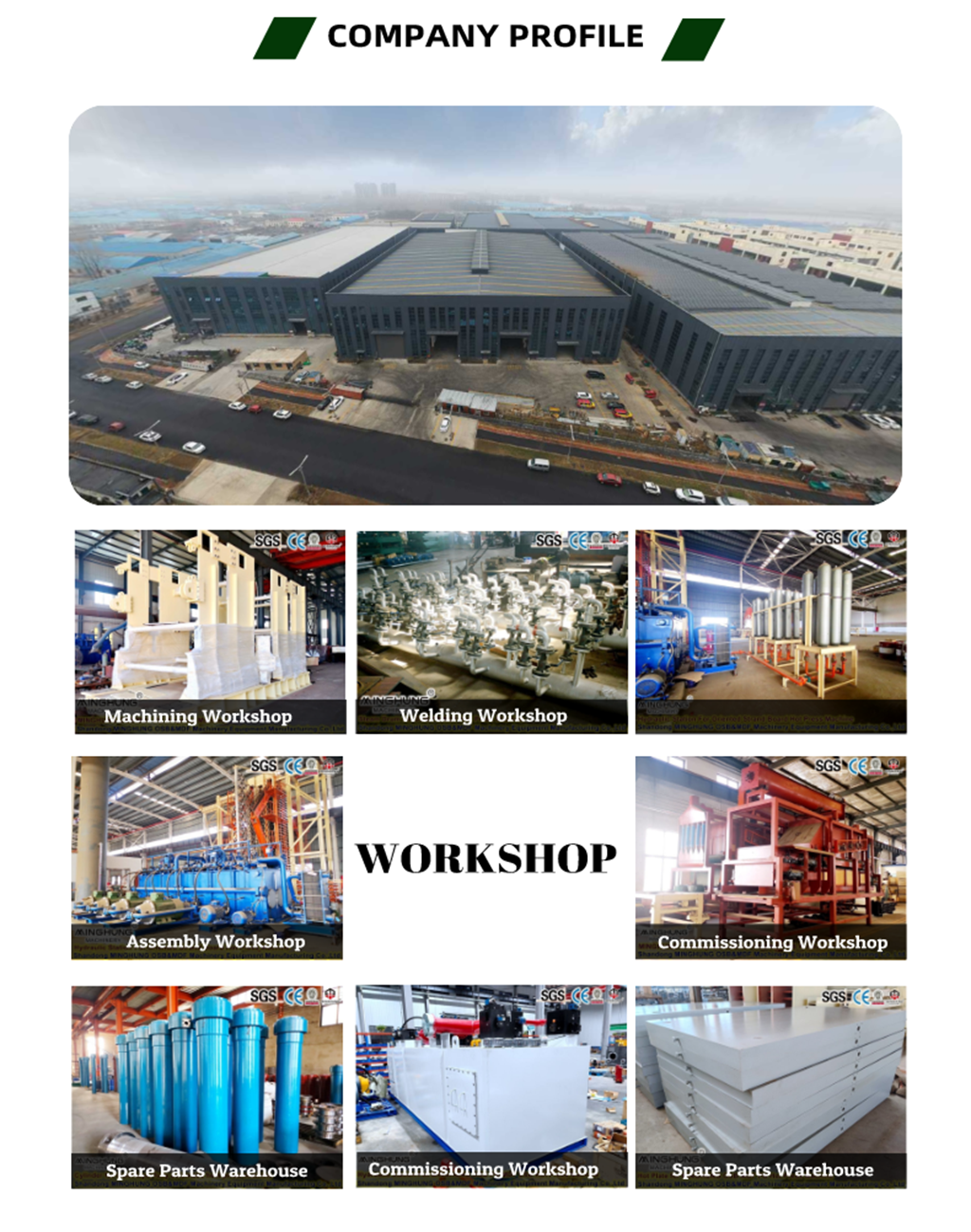
Shandong Minghung Wood Machinery Factory Shandong minghung wood machine factory produces plywood machinery in linyi city city, china, dedicated to providing high-quality and suitable machines veneer machine,plywood machine,veneer splicing machine.veneer dryer machine,veneer peeling machine,plywood v
How to produce Particle board? What is the production step of Making Particle board?Introduction:Particle board, also known as chipboard, is a versatile and cost-effective material widely used in the construction and furniture industries. It is made by compressing wood particles and adhesive togethe
The Ultimate Guide to Plywood Hot Press Machines: Crafting High-Quality Plywood Introduction:Plywood is a versatile and widely used material in various industries, from construction to furniture manufacturing. Behind the scenes, plywood hot press machines play a crucial role in the production proces
What is a veneer dryer?MINGHUNG Roller veneer dryer for drying original wood veneer, remove abundant humidity, in the end, the wood veneer humidity will be 5%-10%, so it is suitable for making plywood.Veneer roller dryer are suitable for big drying capacity per day, it can be different length, width
Recently, a high-performance plywood sander was prepared for shipment at Qingdao Port, ready for its journey to our valued partner in Russia.
This shipment not only demonstrates Minghung Machinery’s strong production coordination and international trade execution capabilities but also ensures the rapid commissioning of the customer's production line.
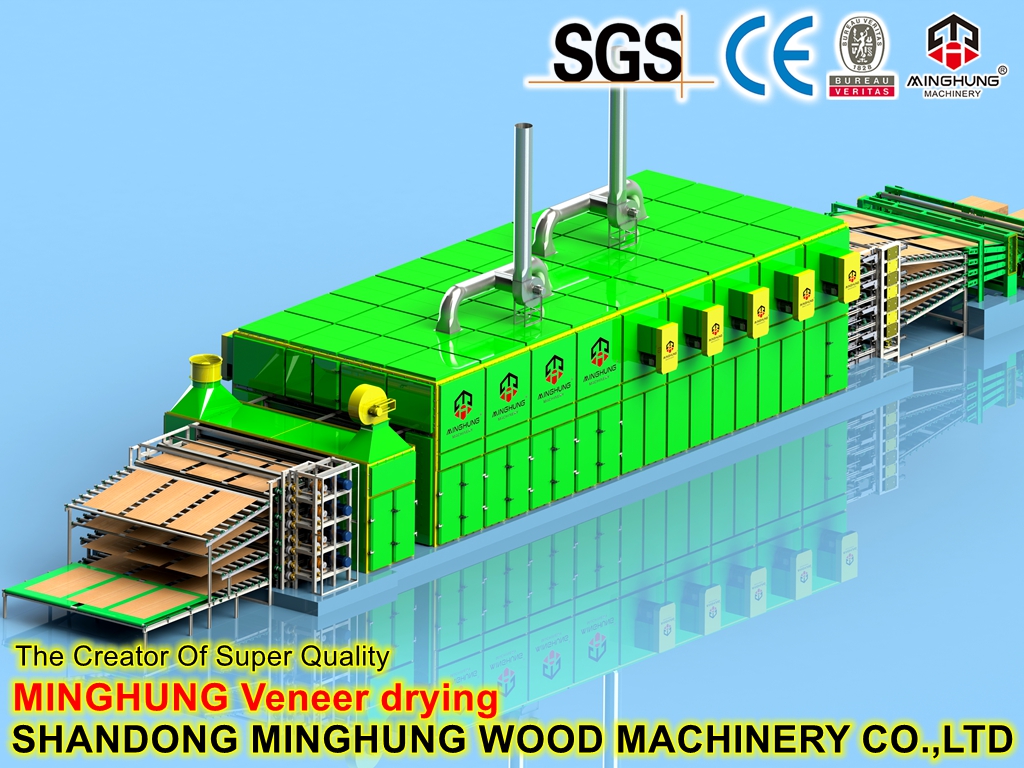
MINGHUNG is a leading company in the industry of OSB&MDF making machine. With a strongfocus on producing high-quality machinery, we specialize in manufacturing thecomplete production line of Medium density fiberboard (MDF), High densityfiberboard (HDF),Particle board (PB), Oriented strand board (OSB) and Veneerable super strong particle board (LSB).
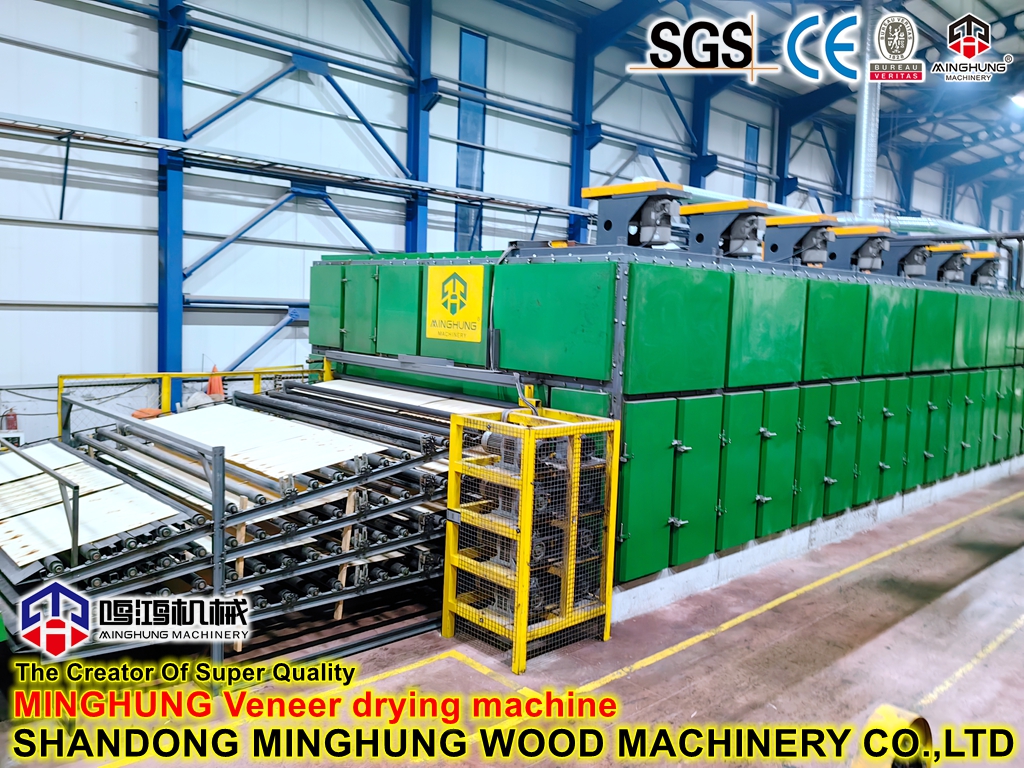
Peeling is the pre-treatment process. Chopping and planing are both aimed at obtaining specific forms of wood materials, but the forms and application scenarios are different.
Shipping multiple containers of gluing equipment to multiple countries in a single batch is a testament not only to our current order fulfillment capacity but, more importantly, to the international market’s trust in the quality and reliability of the ‘MINGHUNG’ brand.
The Differences And Comparisons between PB OSB And MDF