| Availability: | |
|---|---|
| Quantity: | |
MH-VPM
MINGHUNG
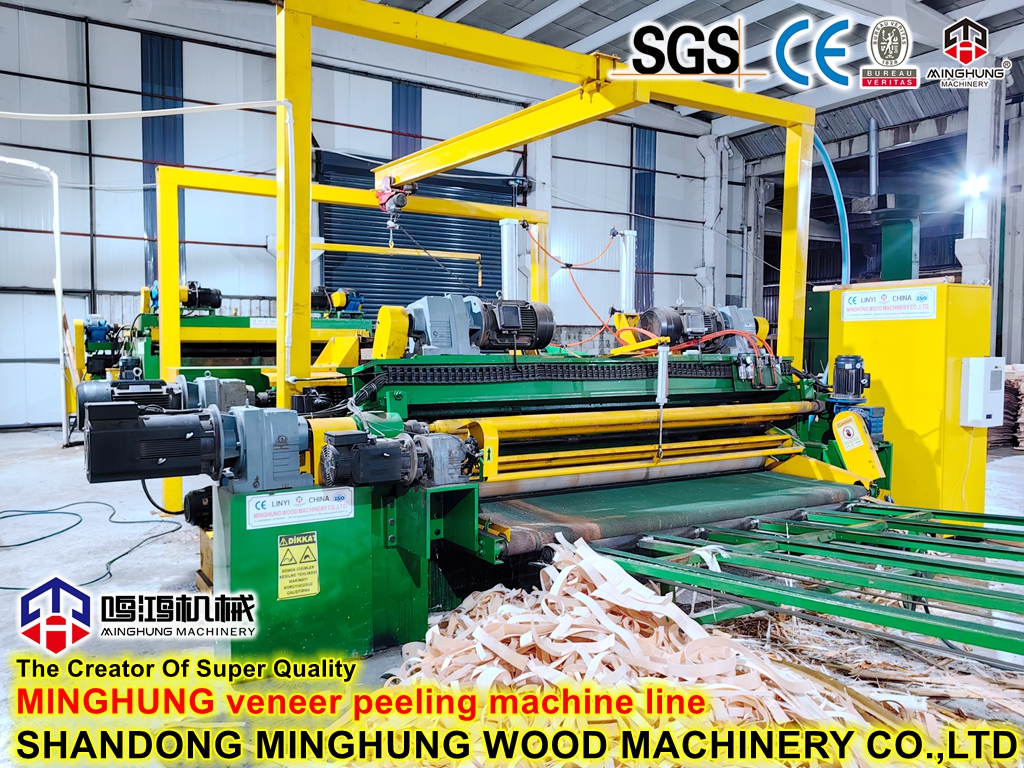
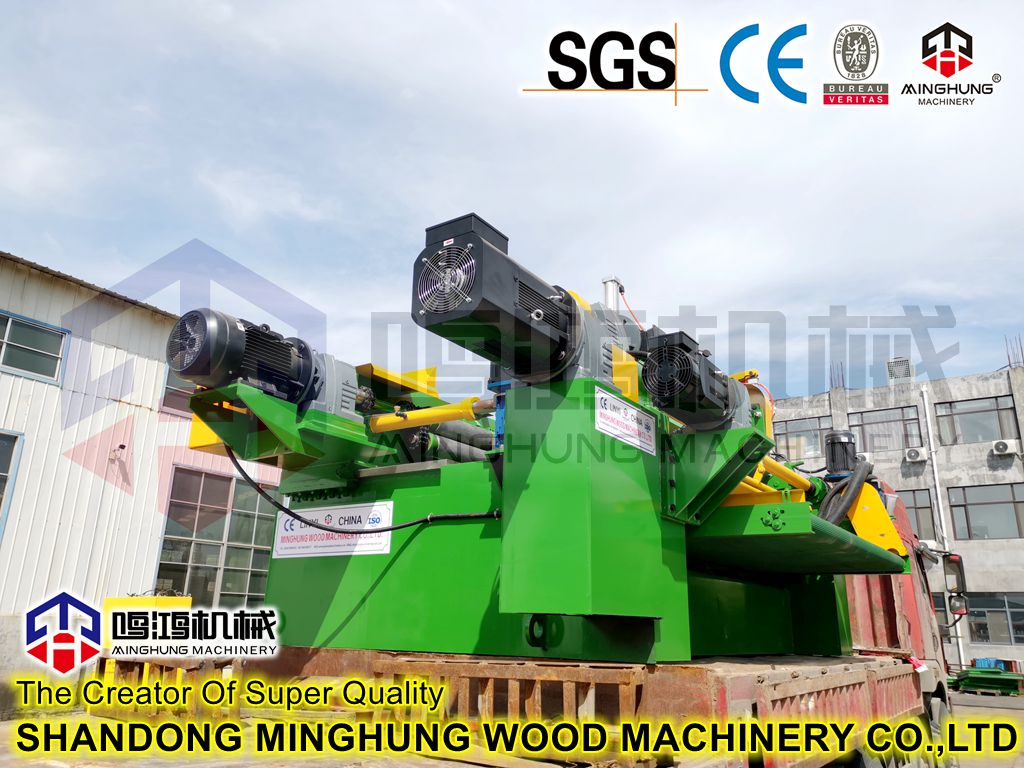
A customizable veneer peeling machine is a high-end veneer production equipment that, compared to standard models, can be deeply adapted and functionally configured according to the client's specific raw wood material, production goals, process requirements, and factory conditions. It is not merely a choice among preset models but a systematic solution starting from the design phase, aimed at providing the client with the most optimized, economical, and stable production tool.
|
Product Description
The veneer peeling machine is the core equipment in the production of plywood, Laminated Veneer Lumber (LVL), etc. Its primary function is to process softened log segments into continuous veneer sheets of uniform thickness through precise rotary cutting. The specific functions can be broken down as follows:
1. Continuous Peeling: Clamps and rapidly rotates the log segment while simultaneously feeding the knife carriage in a linear motion at a constant speed or constant linear velocity, "unwinding" the log into a continuous veneer ribbon.
2. Precise Control of Veneer Thickness: Utilizes precise mechanical transmission or CNC systems to ensure the veneer thickness is highly uniform within preset tolerances (e.g., ±0.05mm), which is crucial for determining plywood quality and glue consumption.
3. Adaptation to Different Specifications: By adjusting machine parameters (such as spindle distance, knife opening height, speed-to-feed ratio), it can produce veneer of different thicknesses (typically 0.1mm to over 4.0mm) and widths (determined by log length).
4. Ensuring Veneer Surface Quality: The pressure bar mechanism applies pressure to the log ahead of the cutting point, preventing wood from splitting prematurely, thereby yielding high-quality veneer with a smooth surface and minimal backside checks.
5. Achieving Efficient Production: Modern peeling machines enable continuous, efficient, large-scale production through automated controls (e.g., automatic log loading, centering, core ejection) and high-speed cutting.
|
Main Components
Function: Serves as the foundational load-bearing and mounting platform for the entire machine. Constructed from heavy-duty steel to ensure stability under the significant vibration and asymmetric loads of high-speed cutting, preventing deformation.
2. Spindle Drive and Clamping System
Chuck Spindles (Main Spindles): Typically two, they clamp the log segment from both ends and drive its rotation. They require high torque, rigidity, and synchronization.
Spindle Headstock: Houses the high-power main motor, reduction gearbox, and heavy-duty bearings that provide rotational power to the spindles.
Chuck Points: Toothed or specially textured components mounted on the ends of the spindles. They bite into the log end faces to provide strong driving torque and prevent slippage.
3. Knife Carriage and Feed System (Core of Precision)
Peeling Knife: A long, high-strength, highly wear-resistant cutting tool responsible for shearing the log.
Knife Holder (Knife Carriage): A precision moving platform that holds the peeling knife and pressure bar.
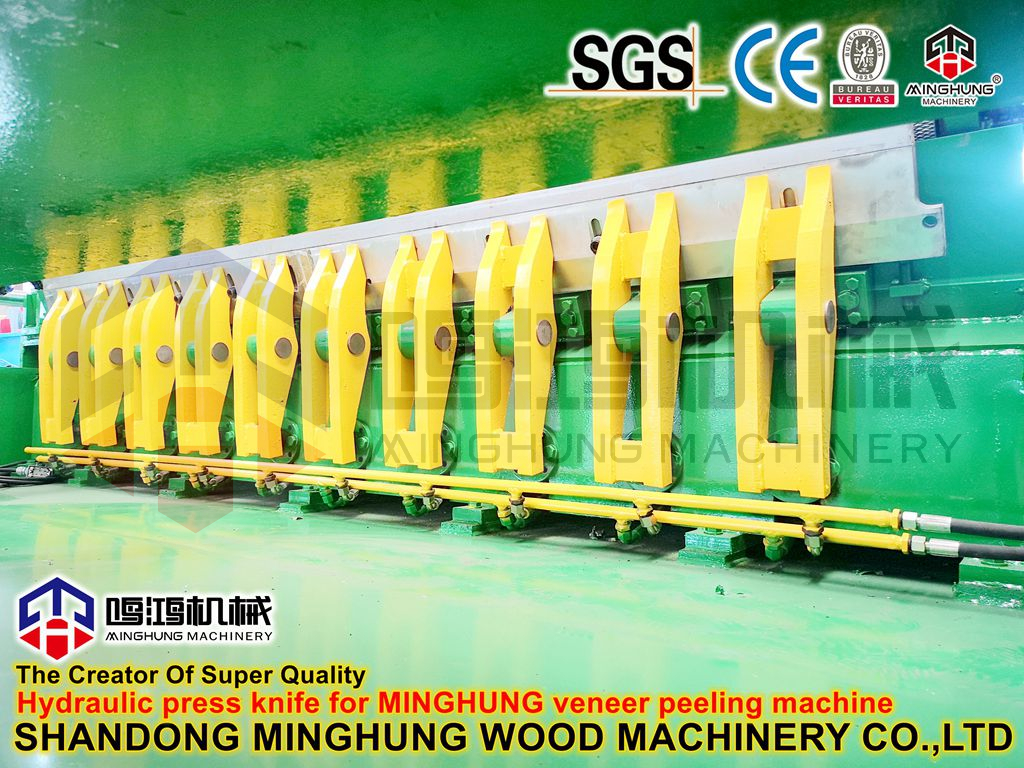
Pressure Bar and Pressure Bar Holder: Positioned in front of the knife edge, it applies controlled pressure to the log to compress the wood, control backside veneer checks, and influence thickness.
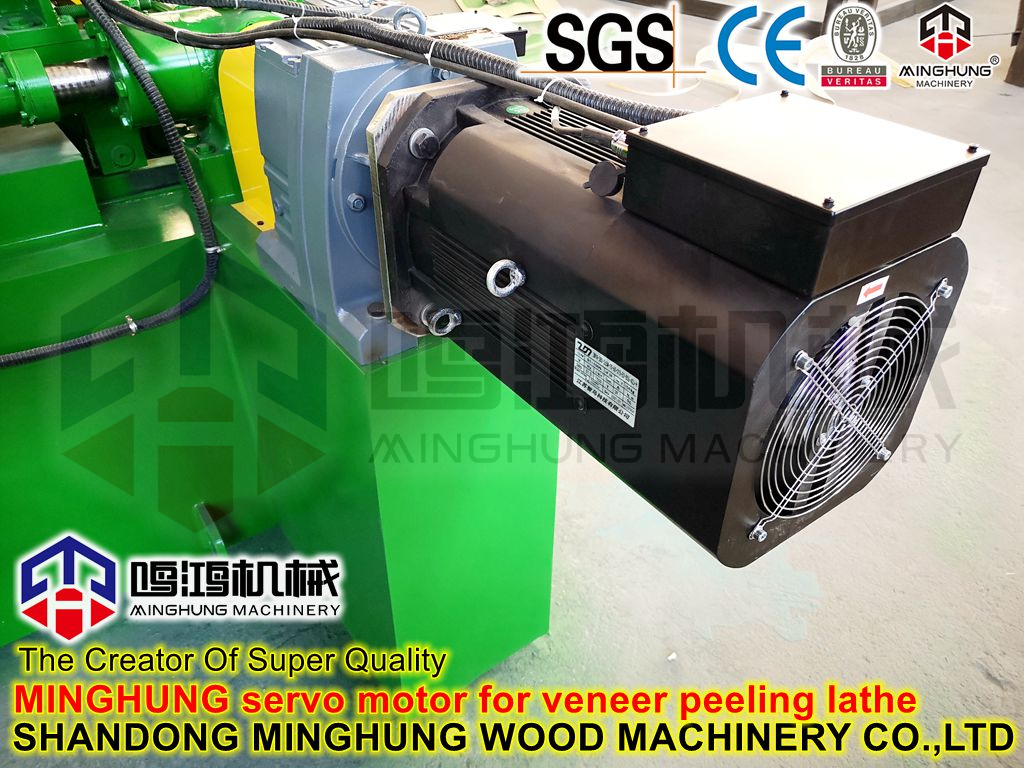
Feed Drive Unit: Typically consists of a servo motor driving a high-precision ball screw or hydrostatic screw. It controls the uniform feed of the knife carriage towards the rotating log. The feed rate determines the veneer thickness.
4. Control System
Main Control Unit: Typically an industrial PLC (Programmable Logic Controller), the brain of the machine.
Human-Machine Interface (HMI): A touchscreen for setting parameters (thickness, length, speed), monitoring status, and viewing alarms.
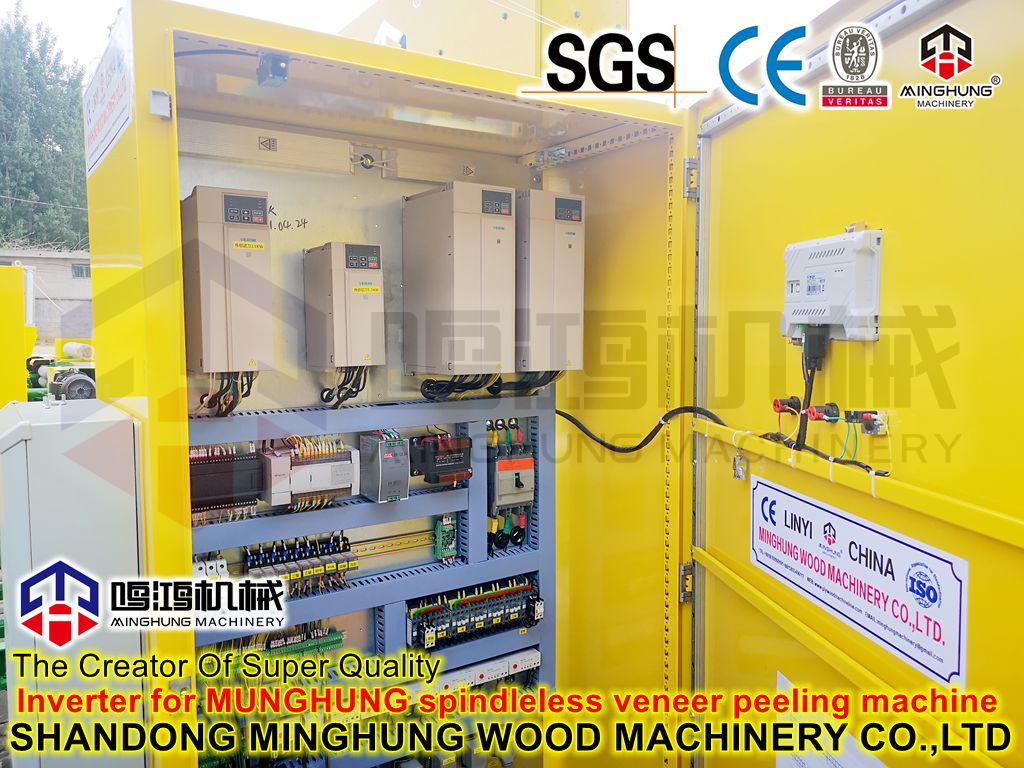
Drive Units: Servo drives, frequency inverters, etc., for precise control of the spindle and feed axis movements.
Sensors: Encoders (measuring position and speed), laser thickness gauges (for online monitoring and feedback of veneer thickness), proximity switches, etc.
5. Auxiliary Systems
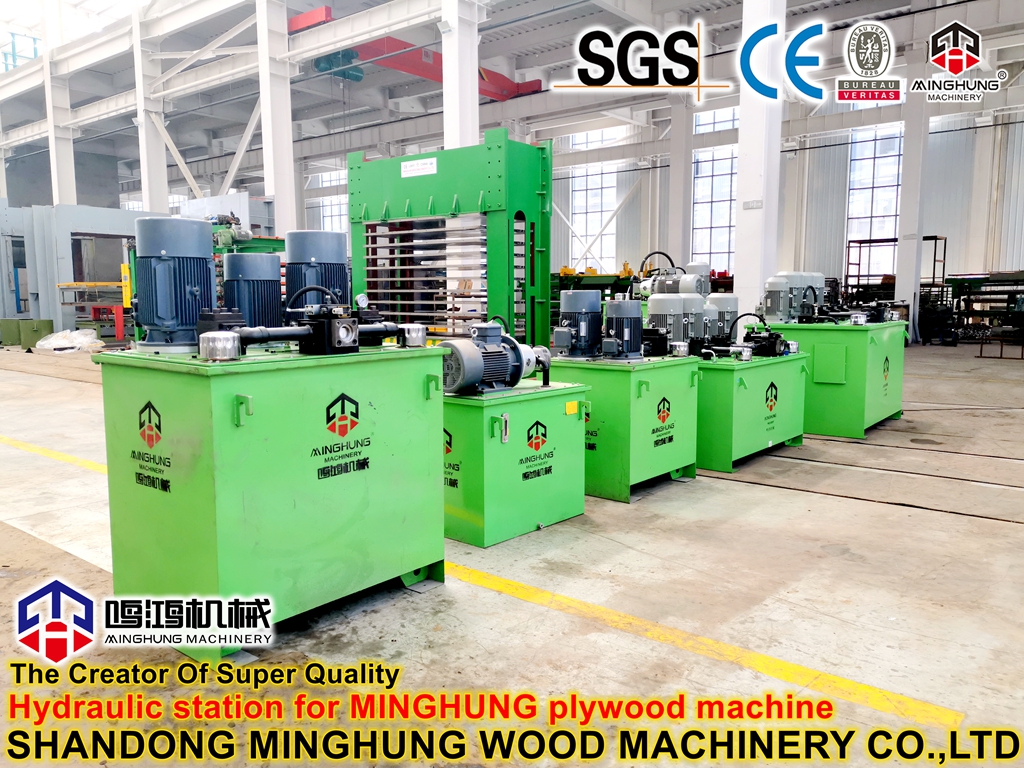
Hydraulic System: Provides power for actions like clamping/unchamping the spindles and moving the tailstock center.
Lubrication System: A centralized automatic lubrication system that supplies grease/oil to critical moving parts like guideways, screws, and bearings, ensuring longevity and precision.
Anti-Deflection Roll System: Supports large-diameter logs from below during peeling to prevent excessive bending due to their own weight and cutting forces.
Veneer Conveying and Winding/Reeling Device: Gently guides the continuous veneer ribbon out of the machine, and either cuts it or winds it into a roll.


|
Core Customization Areas and Options
1. Core Technology & Performance Customization:
Drive Method: Selection based on budget and precision requirements: traditional mechanical stepless speed variation, AC frequency conversion drive, full servo drive, or high-end hydrostatic drive systems. Servo and hydrostatic drives offer the best precision and smoothness.
Control Level: Ranging from basic PLC logic control to semi-automatic control with a Human-Machine Interface (HMI), and up to intelligent CNC systems capable of storing multiple process recipes and enabling fully automatic knife changing and parameter adjustment.
Precision Assurance: Optional equipment includes online laser thickness gauges, automatic knife gap compensation systems, vibration monitoring systems, etc., enabling closed-loop control and real-time compensation for veneer thickness and surface quality.
2. Mechanical Structure & Hardware Configuration Customization:
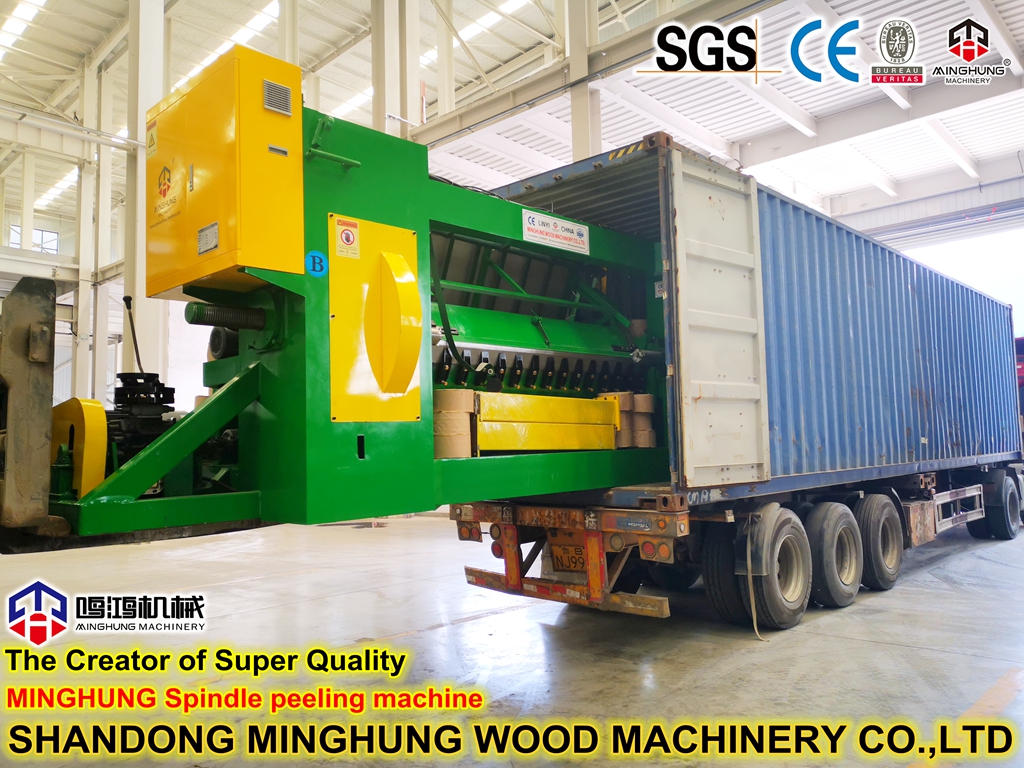
Peeling Type: Choice between Spindle-Type Peeling Machines (suited for large-diameter logs, high precision) and Spindleless Peeling Machines (suited for small-diameter logs, fast-growing timber, core re-processing) based on log diameter.
Spindle Specifications: Customization of spindle length, diameter, clamping force, and chuck point type (e.g., anti-split chucks) to adapt to logs of different lengths and hardness.
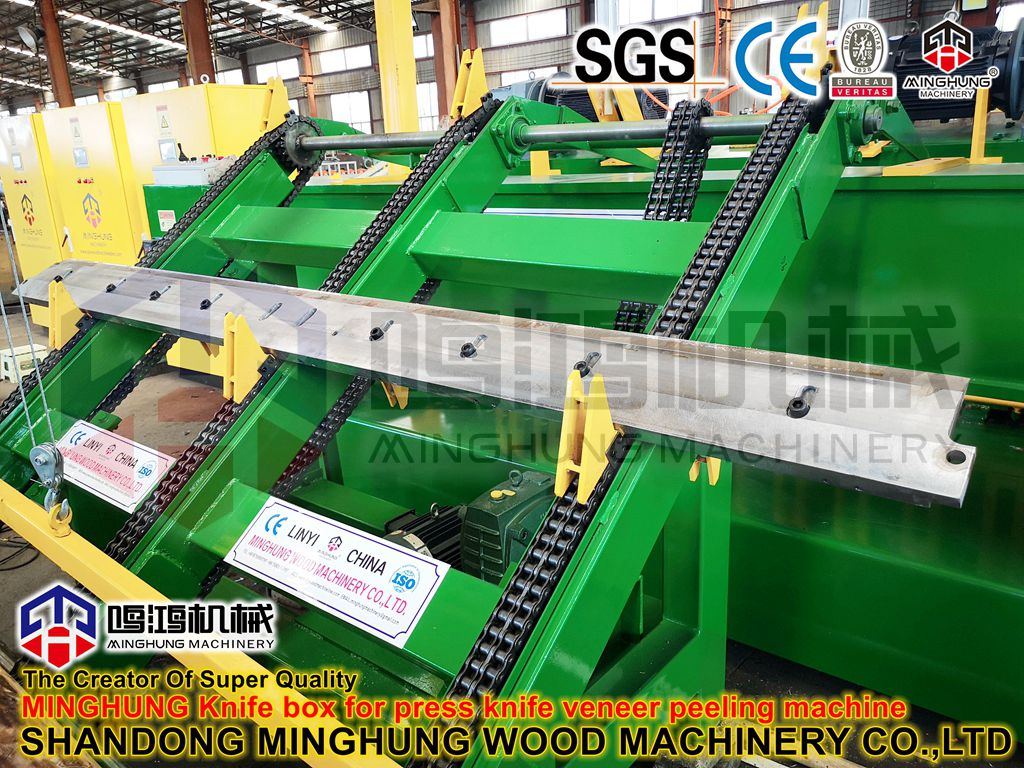
Knife & Pressure Bar System: Customization of peeling knife material (alloy tool steel, carbide), cutting angle, and the matching pressure bar profile and compression ratio based on wood hardness (e.g., eucalyptus, oak, pine).
Auxiliary Devices: Customization of the number and layout of anti-deflection rolls, veneer conveyor belt specifications, initial log centering devices (e.g., laser positioning), automatic core ejection devices, etc.
3. Production Adaptability & Process Customization:
Peeling Range: Customization of the minimum and maximum log diameter and length the machine can process.
Veneer Thickness Range: Customization of a broad or specifically precise thickness peeling capability based on end-product needs (e.g., thick core stock, thin face veneers), such as specializing in ultra-thin veneers (0.1-0.5mm) or thick core stock (1.5-4.0mm).
Capacity Matching: Adjusting main spindle power, feed speed, etc., to perfectly match the machine's output with the preceding and subsequent production stages (e.g., peeling, drying, hot pressing), avoiding bottlenecks.
4. Factory Adaptation & Service Support Customization:
Interfaces & Automation: Customization of mechanical and electrical interfaces with upstream/downstream equipment (e.g., debarkers, veneer reeling machines, dryers) for easy integration into automated production lines.
Maintenance & Service: Provision of customized training programs, preventive maintenance plans, remote diagnostics interfaces, and promises of rapid localized spare parts supply.
|
Core Value
Reduce Long-Term Operational Costs: Higher precision means less sanding allowance and lower adhesive consumption; a more suitable configuration reduces energy waste and equipment idling.
Strengthen Market Competitiveness: Enables flexible production of high-value-added, differentiated specialty veneer products (e.g., ultra-thin decorative veneers, specialty thickness core stock).
Gain a Long-Term Partner: An excellent customization provider is not just an equipment seller but a process partner in jointly solving production challenges.
Maximize Yield & Quality: Parameters optimized for specific wood species significantly reduce breakage, increase the proportion of high-grade veneer, and improve thickness uniformity.
|
Company Profile
We are Shandong MINGHUNG Wood Based Panel Machinery Co.,Ltd China factory and manufacturer of full sets of Plywood machinery and Veneer machinery. With many years production experience, advanced production technology,experienced workers and professional engineers, we can offer you the suitable, good and strong machinery for you.
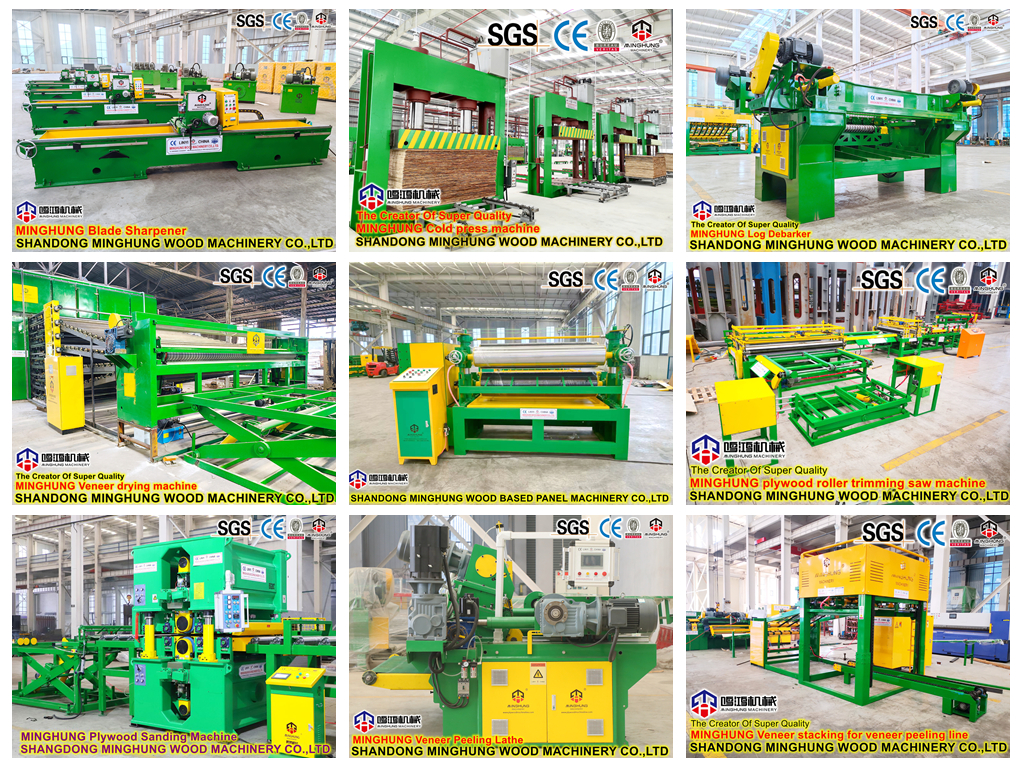
Machines include:Veneer production line(Log debaker,Veneer peeling machine, Log loader,Automatic stacker),Blade sharpener,Veneer patching machine,Veneer dryer machine(Veneer roller dryer, Veneer mesh dryer, Veneer press dryer), Veneer gluing machine,Plywood lay-up machine, Veneer jointing machine, Plywood cold press, Hot press machine,Plywood edge trimming cutting machine, Sanding and calibrating machine, Plywood overturn machine, Lift table, and so on.
|
Product Packaging
|
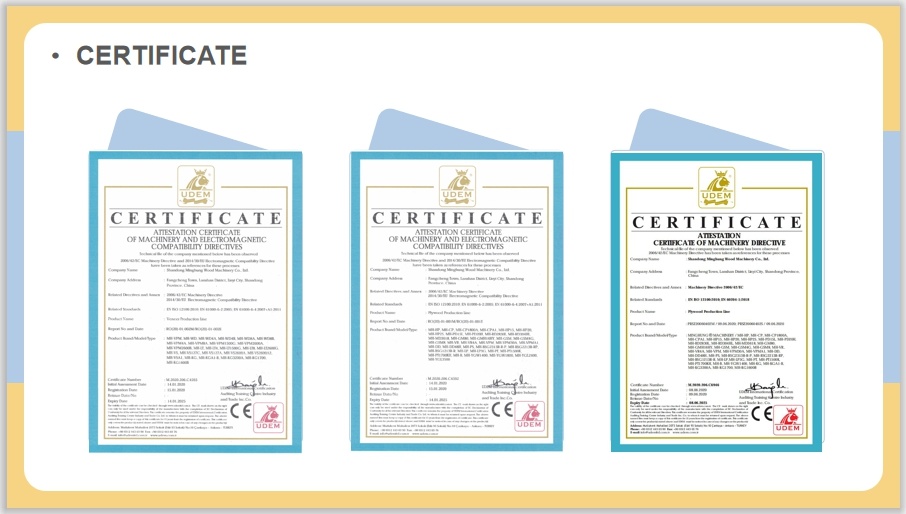
Certifications

|
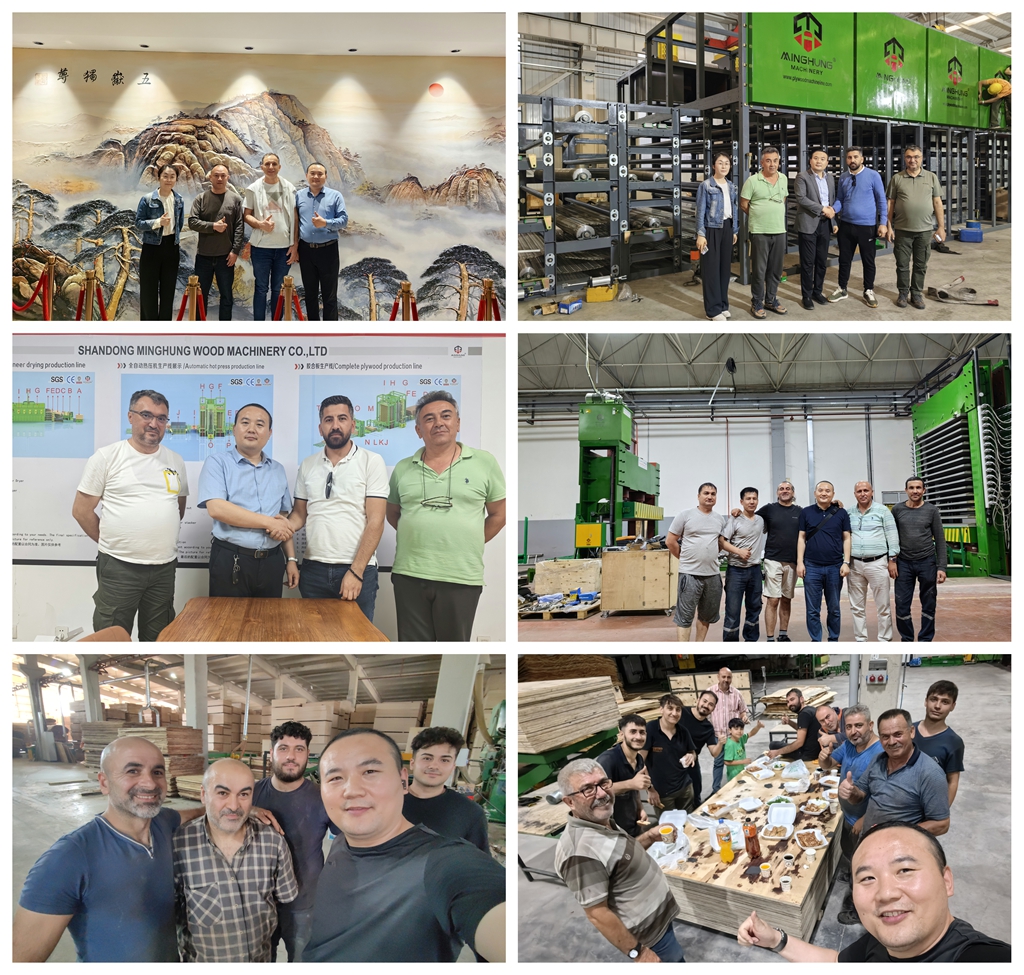
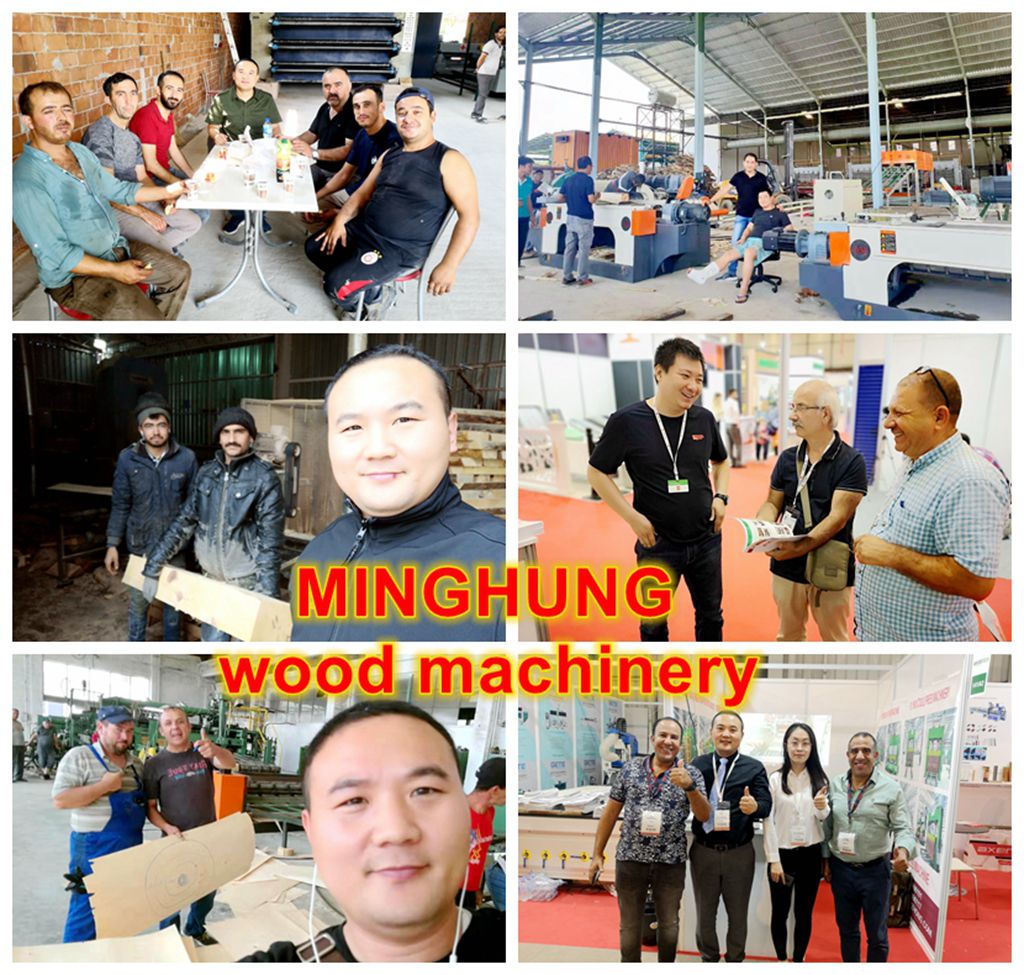
Customer Photos
Request a Quote Today! OEM/ODM solutions available – Start your plywood business with competitive edge!
Whatsapp: +8618769900191 +8615589105786 +8618954906501
Email: osbmdfmachinery@gmail.com
A customizable veneer peeling machine is a high-end veneer production equipment that, compared to standard models, can be deeply adapted and functionally configured according to the client's specific raw wood material, production goals, process requirements, and factory conditions. It is not merely a choice among preset models but a systematic solution starting from the design phase, aimed at providing the client with the most optimized, economical, and stable production tool.
|
Product Description
The veneer peeling machine is the core equipment in the production of plywood, Laminated Veneer Lumber (LVL), etc. Its primary function is to process softened log segments into continuous veneer sheets of uniform thickness through precise rotary cutting. The specific functions can be broken down as follows:
1. Continuous Peeling: Clamps and rapidly rotates the log segment while simultaneously feeding the knife carriage in a linear motion at a constant speed or constant linear velocity, "unwinding" the log into a continuous veneer ribbon.
2. Precise Control of Veneer Thickness: Utilizes precise mechanical transmission or CNC systems to ensure the veneer thickness is highly uniform within preset tolerances (e.g., ±0.05mm), which is crucial for determining plywood quality and glue consumption.
3. Adaptation to Different Specifications: By adjusting machine parameters (such as spindle distance, knife opening height, speed-to-feed ratio), it can produce veneer of different thicknesses (typically 0.1mm to over 4.0mm) and widths (determined by log length).
4. Ensuring Veneer Surface Quality: The pressure bar mechanism applies pressure to the log ahead of the cutting point, preventing wood from splitting prematurely, thereby yielding high-quality veneer with a smooth surface and minimal backside checks.
5. Achieving Efficient Production: Modern peeling machines enable continuous, efficient, large-scale production through automated controls (e.g., automatic log loading, centering, core ejection) and high-speed cutting.
|
Main Components
Function: Serves as the foundational load-bearing and mounting platform for the entire machine. Constructed from heavy-duty steel to ensure stability under the significant vibration and asymmetric loads of high-speed cutting, preventing deformation.
2. Spindle Drive and Clamping System
Chuck Spindles (Main Spindles): Typically two, they clamp the log segment from both ends and drive its rotation. They require high torque, rigidity, and synchronization.
Spindle Headstock: Houses the high-power main motor, reduction gearbox, and heavy-duty bearings that provide rotational power to the spindles.
Chuck Points: Toothed or specially textured components mounted on the ends of the spindles. They bite into the log end faces to provide strong driving torque and prevent slippage.
3. Knife Carriage and Feed System (Core of Precision)
Peeling Knife: A long, high-strength, highly wear-resistant cutting tool responsible for shearing the log.
Knife Holder (Knife Carriage): A precision moving platform that holds the peeling knife and pressure bar.
Pressure Bar and Pressure Bar Holder: Positioned in front of the knife edge, it applies controlled pressure to the log to compress the wood, control backside veneer checks, and influence thickness.
Feed Drive Unit: Typically consists of a servo motor driving a high-precision ball screw or hydrostatic screw. It controls the uniform feed of the knife carriage towards the rotating log. The feed rate determines the veneer thickness.
4. Control System
Main Control Unit: Typically an industrial PLC (Programmable Logic Controller), the brain of the machine.
Human-Machine Interface (HMI): A touchscreen for setting parameters (thickness, length, speed), monitoring status, and viewing alarms.
Drive Units: Servo drives, frequency inverters, etc., for precise control of the spindle and feed axis movements.
Sensors: Encoders (measuring position and speed), laser thickness gauges (for online monitoring and feedback of veneer thickness), proximity switches, etc.
5. Auxiliary Systems
Hydraulic System: Provides power for actions like clamping/unchamping the spindles and moving the tailstock center.
Lubrication System: A centralized automatic lubrication system that supplies grease/oil to critical moving parts like guideways, screws, and bearings, ensuring longevity and precision.
Anti-Deflection Roll System: Supports large-diameter logs from below during peeling to prevent excessive bending due to their own weight and cutting forces.
Veneer Conveying and Winding/Reeling Device: Gently guides the continuous veneer ribbon out of the machine, and either cuts it or winds it into a roll.


|
Core Customization Areas and Options
1. Core Technology & Performance Customization:
Drive Method: Selection based on budget and precision requirements: traditional mechanical stepless speed variation, AC frequency conversion drive, full servo drive, or high-end hydrostatic drive systems. Servo and hydrostatic drives offer the best precision and smoothness.
Control Level: Ranging from basic PLC logic control to semi-automatic control with a Human-Machine Interface (HMI), and up to intelligent CNC systems capable of storing multiple process recipes and enabling fully automatic knife changing and parameter adjustment.
Precision Assurance: Optional equipment includes online laser thickness gauges, automatic knife gap compensation systems, vibration monitoring systems, etc., enabling closed-loop control and real-time compensation for veneer thickness and surface quality.
2. Mechanical Structure & Hardware Configuration Customization:
Peeling Type: Choice between Spindle-Type Peeling Machines (suited for large-diameter logs, high precision) and Spindleless Peeling Machines (suited for small-diameter logs, fast-growing timber, core re-processing) based on log diameter.
Spindle Specifications: Customization of spindle length, diameter, clamping force, and chuck point type (e.g., anti-split chucks) to adapt to logs of different lengths and hardness.
Knife & Pressure Bar System: Customization of peeling knife material (alloy tool steel, carbide), cutting angle, and the matching pressure bar profile and compression ratio based on wood hardness (e.g., eucalyptus, oak, pine).
Auxiliary Devices: Customization of the number and layout of anti-deflection rolls, veneer conveyor belt specifications, initial log centering devices (e.g., laser positioning), automatic core ejection devices, etc.
3. Production Adaptability & Process Customization:
Peeling Range: Customization of the minimum and maximum log diameter and length the machine can process.
Veneer Thickness Range: Customization of a broad or specifically precise thickness peeling capability based on end-product needs (e.g., thick core stock, thin face veneers), such as specializing in ultra-thin veneers (0.1-0.5mm) or thick core stock (1.5-4.0mm).
Capacity Matching: Adjusting main spindle power, feed speed, etc., to perfectly match the machine's output with the preceding and subsequent production stages (e.g., peeling, drying, hot pressing), avoiding bottlenecks.
4. Factory Adaptation & Service Support Customization:
Interfaces & Automation: Customization of mechanical and electrical interfaces with upstream/downstream equipment (e.g., debarkers, veneer reeling machines, dryers) for easy integration into automated production lines.
Maintenance & Service: Provision of customized training programs, preventive maintenance plans, remote diagnostics interfaces, and promises of rapid localized spare parts supply.
|
Core Value
Reduce Long-Term Operational Costs: Higher precision means less sanding allowance and lower adhesive consumption; a more suitable configuration reduces energy waste and equipment idling.
Strengthen Market Competitiveness: Enables flexible production of high-value-added, differentiated specialty veneer products (e.g., ultra-thin decorative veneers, specialty thickness core stock).
Gain a Long-Term Partner: An excellent customization provider is not just an equipment seller but a process partner in jointly solving production challenges.
Maximize Yield & Quality: Parameters optimized for specific wood species significantly reduce breakage, increase the proportion of high-grade veneer, and improve thickness uniformity.
|
Company Profile
We are Shandong MINGHUNG Wood Based Panel Machinery Co.,Ltd China factory and manufacturer of full sets of Plywood machinery and Veneer machinery. With many years production experience, advanced production technology,experienced workers and professional engineers, we can offer you the suitable, good and strong machinery for you.
Machines include:Veneer production line(Log debaker,Veneer peeling machine, Log loader,Automatic stacker),Blade sharpener,Veneer patching machine,Veneer dryer machine(Veneer roller dryer, Veneer mesh dryer, Veneer press dryer), Veneer gluing machine,Plywood lay-up machine, Veneer jointing machine, Plywood cold press, Hot press machine,Plywood edge trimming cutting machine, Sanding and calibrating machine, Plywood overturn machine, Lift table, and so on.

|
Product Packaging
|
Certifications

|
Customer Photos
Request a Quote Today! OEM/ODM solutions available – Start your plywood business with competitive edge!
Whatsapp: +8618769900191 +8615589105786 +8618954906501
Email: osbmdfmachinery@gmail.com
As Christmas approaches, Shandong MINGHUNG wood based panel machinery Co., Ltd. has welcomed another peak in shipments.
In early December 2025, the culmination of close collaboration between the MINGHUNG foreign trade team and our partners — 9 containers fully loaded with the core equipment for a plywood production line .
Shandong Minghung Wood Machinery Factory Shandong minghung wood machine factory produces plywood machinery in linyi city city, china, dedicated to providing high-quality and suitable machines veneer machine,plywood machine,veneer splicing machine.veneer dryer machine,veneer peeling machine,plywood v
How to produce Particle board? What is the production step of Making Particle board?Introduction:Particle board, also known as chipboard, is a versatile and cost-effective material widely used in the construction and furniture industries. It is made by compressing wood particles and adhesive togethe
The Ultimate Guide to Plywood Hot Press Machines: Crafting High-Quality Plywood Introduction:Plywood is a versatile and widely used material in various industries, from construction to furniture manufacturing. Behind the scenes, plywood hot press machines play a crucial role in the production proces
What is a veneer dryer?MINGHUNG Roller veneer dryer for drying original wood veneer, remove abundant humidity, in the end, the wood veneer humidity will be 5%-10%, so it is suitable for making plywood.Veneer roller dryer are suitable for big drying capacity per day, it can be different length, width
Recently, a high-performance plywood sander was prepared for shipment at Qingdao Port, ready for its journey to our valued partner in Russia.
This shipment not only demonstrates Minghung Machinery’s strong production coordination and international trade execution capabilities but also ensures the rapid commissioning of the customer's production line.
MINGHUNG is a leading company in the industry of OSB&MDF making machine. With a strongfocus on producing high-quality machinery, we specialize in manufacturing thecomplete production line of Medium density fiberboard (MDF), High densityfiberboard (HDF),Particle board (PB), Oriented strand board (OSB) and Veneerable super strong particle board (LSB).
Peeling is the pre-treatment process. Chopping and planing are both aimed at obtaining specific forms of wood materials, but the forms and application scenarios are different.