| Availability: | |
|---|---|
| Quantity: | |
MH-CHP
MINGHUNG

I. Product Definition and Core Concept
The Ultra-Light Board Continuous Press is an advanced continuous hot-pressing and forming equipment specifically designed for producing ultra-low-density wood-based panels. Its core objective is to minimize panel density while ensuring the boards possess necessary structural strength and functionality.
Definition of "Ultra-Light Board": Typically refers to wood-based panels with a density range of 250 - 450 kg/m³, significantly lower than standard Medium-Density Fiberboard (650-800 kg/m³) or particleboard (600-750 kg/m³). Common products include ultra-lightweight MDF, lightweight particleboard, and soft fiberboard.
"Continuous Press" Format: Utilizes a steel-belt continuous press system, enabling a streamlined process from mat forming, pre-pressing, hot-pressing, and curing to cutting, ensuring high production efficiency and consistent product quality.
Working Principle of the Continuous Press
The working principle of a continuous press can be summarized as "continuous feeding, gradient pressing, synchronized heating, and dynamic forming."
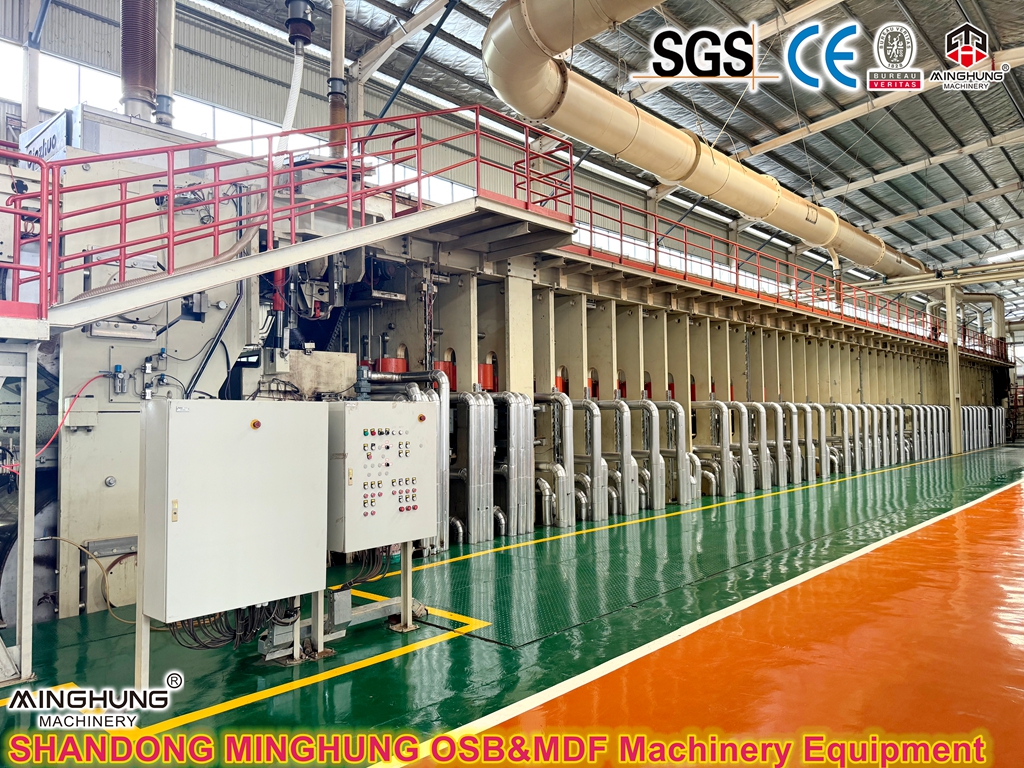
1. Continuous Feeding: The uniformly formed mat (a mixture of wood fibers or particles with adhesive) is smoothly and continuously fed into the press inlet, which is formed by two giant endless steel belts.
2. Gradient Pressing and Heating:
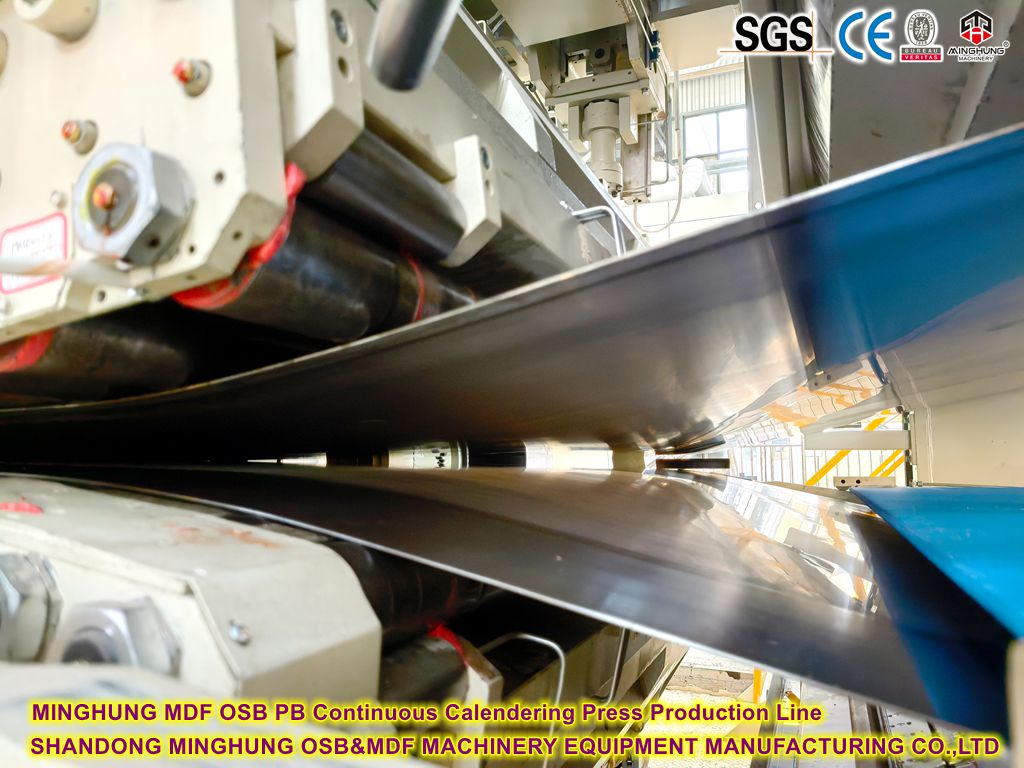
The mat enters the wedge-shaped pressing zone created by the upper and lower steel belts. Here, it is gently "nipped" and initially compressed.
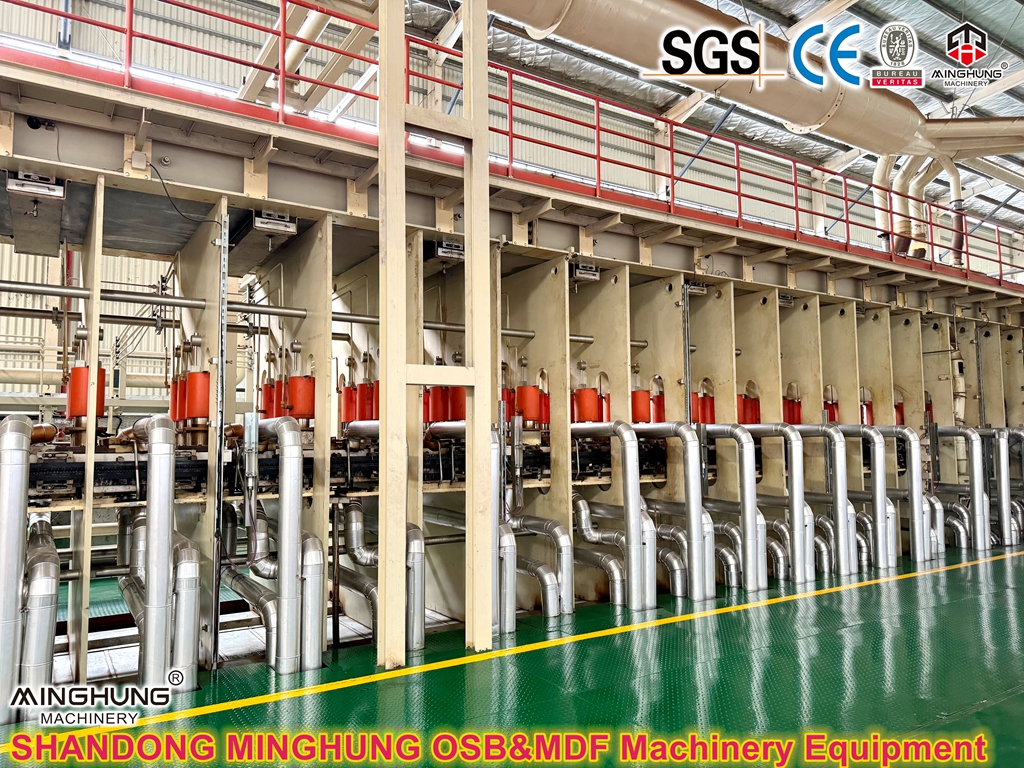
It then enters the Hot Pressing and Forming Zone. This zone is typically divided into multiple pressure sections (e.g., high-pressure, thickness calibration, low-pressure). A large array of computer-controlled small hydraulic cylinders applies precise pressure to the steel belts, creating the required pressure profile. Simultaneously, the heating system (hot oil or steam) maintains the belts at a constant high temperature (e.g., 180-220°C).
Under the combined action of high temperature and gradient pressure, the adhesive within the mat rapidly melts, flows, and cures, forming strong bonds between the wood components.
3. Continuous Forming and Discharge: The cured panel exits the press as a continuous sheet, which is then cut to predetermined lengths before proceeding to downstream processes like cooling and sanding.
Core Essence: It simulates the complete cycle of a traditional multi-opening press—"preheating, pressing, curing, pressure release"—but unfolds this cycle spatially along the press length. The mat experiences different stages as it moves through the press, translating the time-based cycle into a spatial one, thereby achieving uninterrupted continuous production.

Main Components
A typical continuous press consists primarily of the following five core component systems:
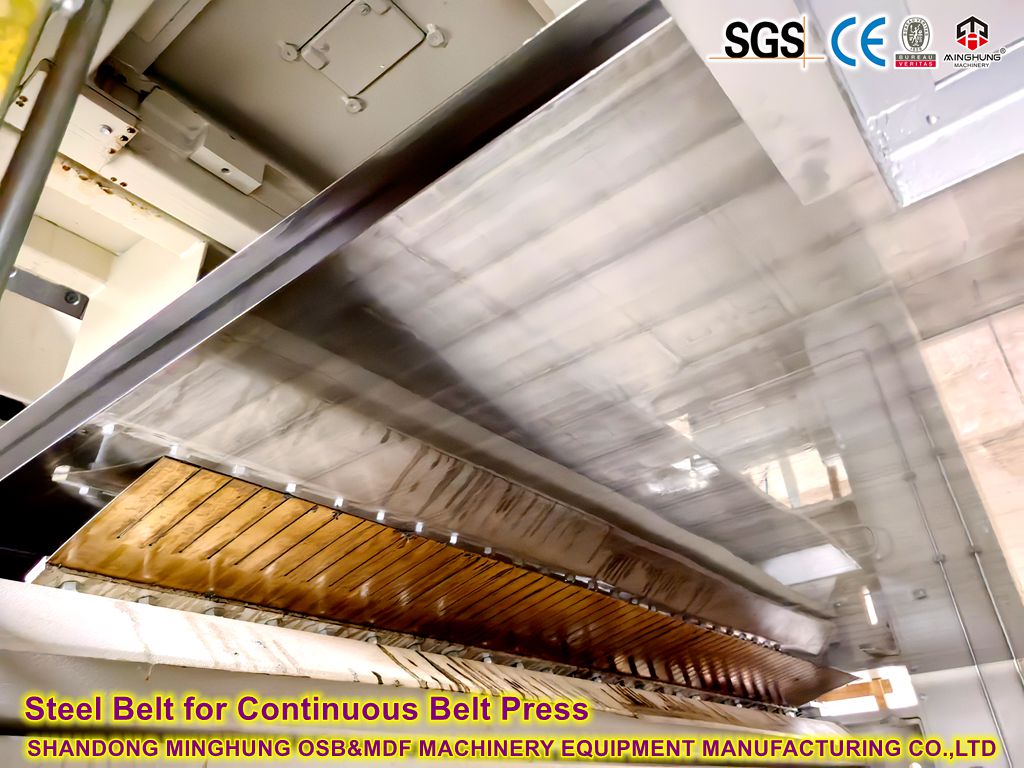
1. Steel Belt System:
Composition: Two parallel, endless, high-precision alloy steel belts.
Function: Acts as the continuously moving "mold" and hot-pressing surface. It carries and conveys the mat while transferring heat and pressure to it. The surface finish of the belts directly determines the surface quality of the final panel.
2. Heating System:
Composition: Thermal oil (or steam) circulation unit, heating plates/rollers, piping, and temperature control devices.
Function: Provides a stable and uniform heat source for the hot-pressing process. The high-temperature medium circulates through pipes within the press frame, heating the components in contact with the steel belts, thereby bringing and maintaining the belts at the required process temperature.
3. Hydraulic and Frame System:
Frame: A heavy-duty steel structure serving as the "skeleton" of the entire press, ensuring stability and precision under extreme pressure and temperature.
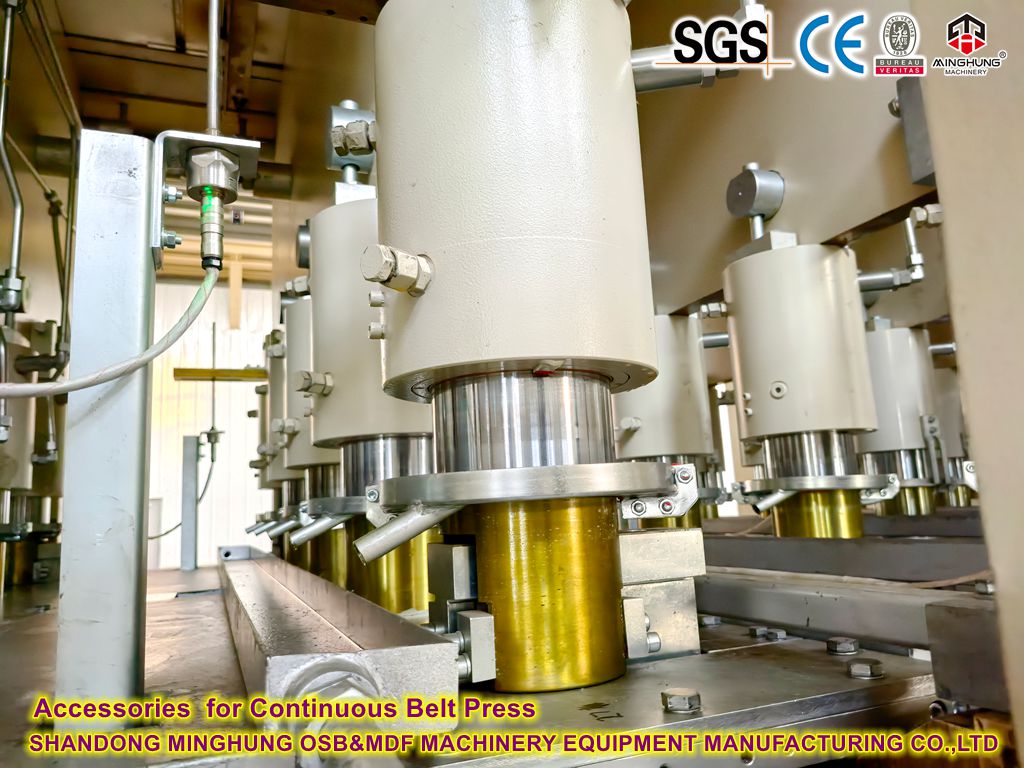
Hydraulic System: Includes hydraulic power units, a large number of small-diameter hydraulic cylinders (potentially hundreds), servo valves, and pressure sensors.
Function: The array of hydraulic cylinders applies pressure to the steel belts. The computer independently or group-controls the pressure in different zones to precisely generate and adjust the pressure gradient curve along the press length.
4. Drive and Tensioning System:
Composition: Main drive rollers, idler rollers, and belt tensioning devices.
Function: Drives the two steel belts to run synchronously and smoothly. Tensioning devices maintain appropriate belt tension to prevent tracking deviations and slippage, ensuring uniform panel thickness.
5. Control System:
Composition: Centered on a PLC (Programmable Logic Controller) and industrial computer, integrated with sensors for pressure, temperature, speed, thickness, etc.
Function: Serves as the "brain" of the press. It collects real-time data and uses complex algorithms to automatically and precisely coordinate all key process parameters such as pressure, temperature, and line speed. This ensures consistent product quality and enables the automation and optimization of the production process.
IV. Key Product Advantages
1. Product Advantages (of the Panels Produced):
Extreme Lightweighting: Reduces weight by 30%-50%, greatly facilitating transportation, handling, and installation.
Excellent Thermal and Acoustic Insulation: The porous structure makes it a good insulator for heat and sound.
Good Workability: Easy to cut, nail, and shape.
High Raw Material Utilization: Consumes less wood-based material per unit volume of product.
2. Production and Market Advantages:
High Production Efficiency: Inherits the high-speed continuous production characteristics of continuous presses.
Aligns with Green Trends: Lower raw material consumption and transportation energy savings due to product lightweighting.
Opens New Markets: Meets the urgent demand for lightweight materials in furniture, interior decoration, exhibitions, door cores, wall panels, etc.
V. Main Application Areas
Furniture Manufacturing: Cabinet backs, drawer bottoms, lightweight furniture components.
Interior Decoration: Partition wall panels, suspended ceiling panels, decorative wall panels.
Door Industry: Interior door core panels, significantly reducing door leaf weight.
Exhibition & Display Industry: Booth structures, advertising boards, requiring easy setup and transport.
Packaging Industry: High-end lightweight protective liners.
Others: Automotive interior substrates, model making, etc.
We are Shandong MINGHUNG Wood Based Panel Machinery Co.,Ltd China factory and manufacturer of full sets of Plywood machinery and Veneer machinery. With many years production experience, advanced production technology,experienced workers and professional engineers, we can offer you the suitable, good and strong machinery for you.


Our contacts:
Whatsapp: +8618769900191 +8615589105786 +8618954906501
Email: osbmdfmachinery@gmail.com

I. Product Definition and Core Concept
The Ultra-Light Board Continuous Press is an advanced continuous hot-pressing and forming equipment specifically designed for producing ultra-low-density wood-based panels. Its core objective is to minimize panel density while ensuring the boards possess necessary structural strength and functionality.
Definition of "Ultra-Light Board": Typically refers to wood-based panels with a density range of 250 - 450 kg/m³, significantly lower than standard Medium-Density Fiberboard (650-800 kg/m³) or particleboard (600-750 kg/m³). Common products include ultra-lightweight MDF, lightweight particleboard, and soft fiberboard.
"Continuous Press" Format: Utilizes a steel-belt continuous press system, enabling a streamlined process from mat forming, pre-pressing, hot-pressing, and curing to cutting, ensuring high production efficiency and consistent product quality.
Working Principle of the Continuous Press
The working principle of a continuous press can be summarized as "continuous feeding, gradient pressing, synchronized heating, and dynamic forming."
1. Continuous Feeding: The uniformly formed mat (a mixture of wood fibers or particles with adhesive) is smoothly and continuously fed into the press inlet, which is formed by two giant endless steel belts.
2. Gradient Pressing and Heating:
The mat enters the wedge-shaped pressing zone created by the upper and lower steel belts. Here, it is gently "nipped" and initially compressed.
It then enters the Hot Pressing and Forming Zone. This zone is typically divided into multiple pressure sections (e.g., high-pressure, thickness calibration, low-pressure). A large array of computer-controlled small hydraulic cylinders applies precise pressure to the steel belts, creating the required pressure profile. Simultaneously, the heating system (hot oil or steam) maintains the belts at a constant high temperature (e.g., 180-220°C).
Under the combined action of high temperature and gradient pressure, the adhesive within the mat rapidly melts, flows, and cures, forming strong bonds between the wood components.
3. Continuous Forming and Discharge: The cured panel exits the press as a continuous sheet, which is then cut to predetermined lengths before proceeding to downstream processes like cooling and sanding.
Core Essence: It simulates the complete cycle of a traditional multi-opening press—"preheating, pressing, curing, pressure release"—but unfolds this cycle spatially along the press length. The mat experiences different stages as it moves through the press, translating the time-based cycle into a spatial one, thereby achieving uninterrupted continuous production.
Main Components
A typical continuous press consists primarily of the following five core component systems:
1. Steel Belt System:
Composition: Two parallel, endless, high-precision alloy steel belts.
Function: Acts as the continuously moving "mold" and hot-pressing surface. It carries and conveys the mat while transferring heat and pressure to it. The surface finish of the belts directly determines the surface quality of the final panel.
2. Heating System:
Composition: Thermal oil (or steam) circulation unit, heating plates/rollers, piping, and temperature control devices.
Function: Provides a stable and uniform heat source for the hot-pressing process. The high-temperature medium circulates through pipes within the press frame, heating the components in contact with the steel belts, thereby bringing and maintaining the belts at the required process temperature.
3. Hydraulic and Frame System:
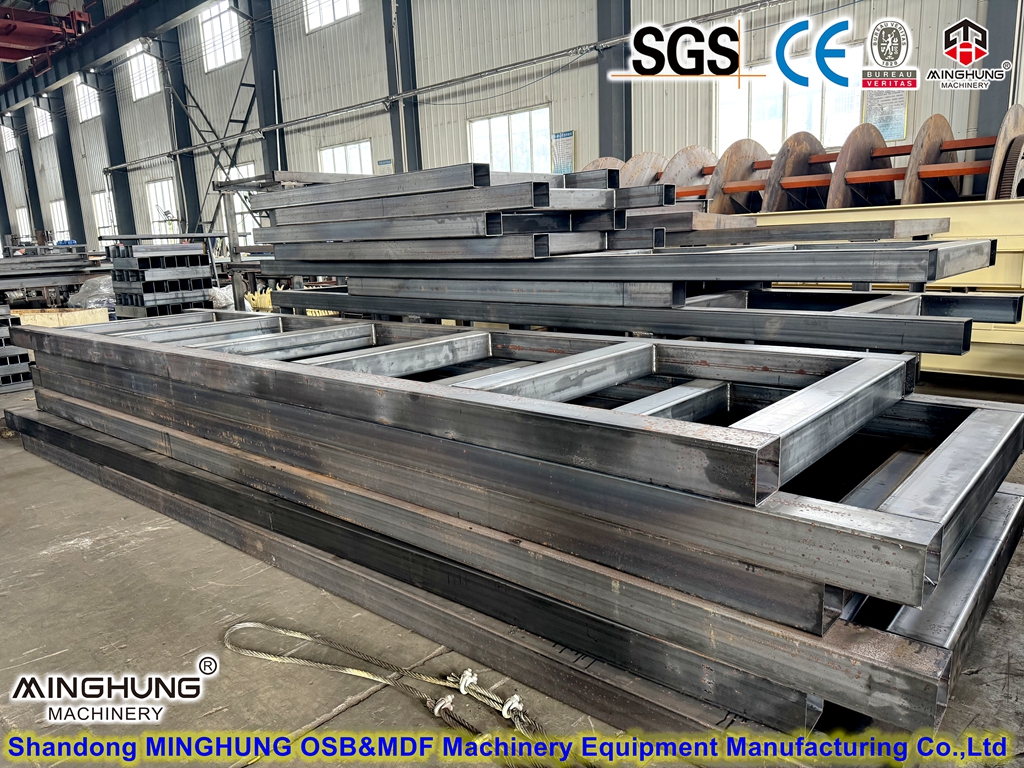
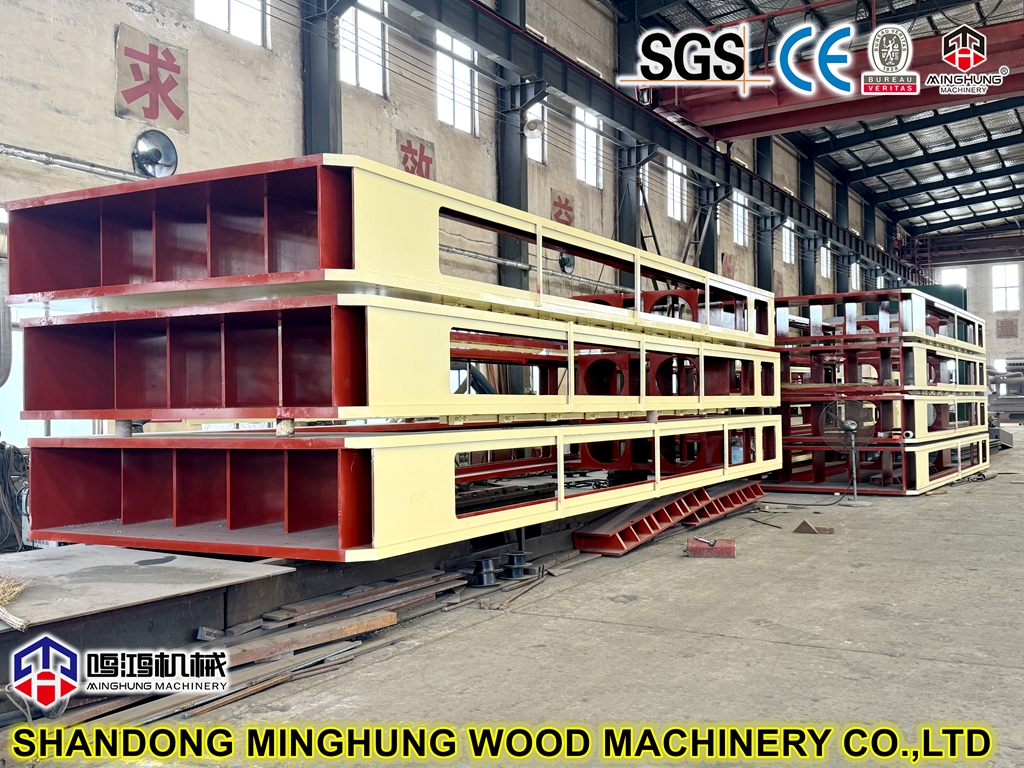
Frame: A heavy-duty steel structure serving as the "skeleton" of the entire press, ensuring stability and precision under extreme pressure and temperature.
Hydraulic System: Includes hydraulic power units, a large number of small-diameter hydraulic cylinders (potentially hundreds), servo valves, and pressure sensors.
Function: The array of hydraulic cylinders applies pressure to the steel belts. The computer independently or group-controls the pressure in different zones to precisely generate and adjust the pressure gradient curve along the press length.
4. Drive and Tensioning System:
Composition: Main drive rollers, idler rollers, and belt tensioning devices.
Function: Drives the two steel belts to run synchronously and smoothly. Tensioning devices maintain appropriate belt tension to prevent tracking deviations and slippage, ensuring uniform panel thickness.
5. Control System:
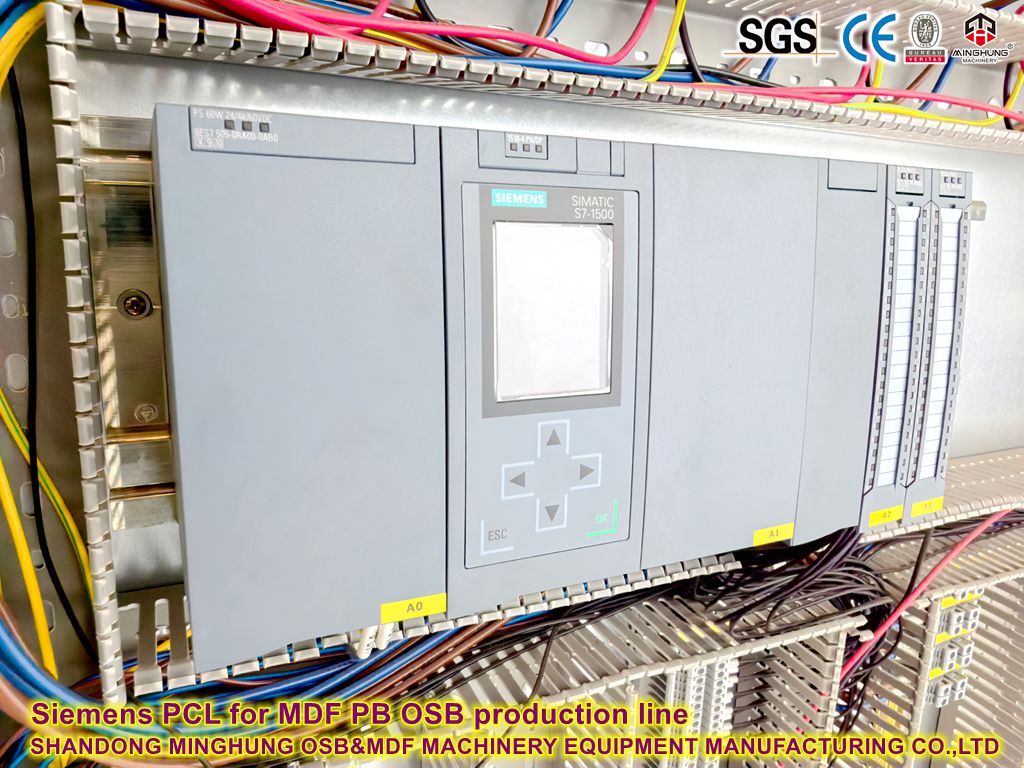
Composition: Centered on a PLC (Programmable Logic Controller) and industrial computer, integrated with sensors for pressure, temperature, speed, thickness, etc.
Function: Serves as the "brain" of the press. It collects real-time data and uses complex algorithms to automatically and precisely coordinate all key process parameters such as pressure, temperature, and line speed. This ensures consistent product quality and enables the automation and optimization of the production process.
IV. Key Product Advantages
1. Product Advantages (of the Panels Produced):
Extreme Lightweighting: Reduces weight by 30%-50%, greatly facilitating transportation, handling, and installation.
Excellent Thermal and Acoustic Insulation: The porous structure makes it a good insulator for heat and sound.
Good Workability: Easy to cut, nail, and shape.
High Raw Material Utilization: Consumes less wood-based material per unit volume of product.
2. Production and Market Advantages:
High Production Efficiency: Inherits the high-speed continuous production characteristics of continuous presses.
Aligns with Green Trends: Lower raw material consumption and transportation energy savings due to product lightweighting.
Opens New Markets: Meets the urgent demand for lightweight materials in furniture, interior decoration, exhibitions, door cores, wall panels, etc.
V. Main Application Areas
Furniture Manufacturing: Cabinet backs, drawer bottoms, lightweight furniture components.
Interior Decoration: Partition wall panels, suspended ceiling panels, decorative wall panels.
Door Industry: Interior door core panels, significantly reducing door leaf weight.
Exhibition & Display Industry: Booth structures, advertising boards, requiring easy setup and transport.
Packaging Industry: High-end lightweight protective liners.
Others: Automotive interior substrates, model making, etc.
We are Shandong MINGHUNG Wood Based Panel Machinery Co.,Ltd China factory and manufacturer of full sets of Plywood machinery and Veneer machinery. With many years production experience, advanced production technology,experienced workers and professional engineers, we can offer you the suitable, good and strong machinery for you.


Our contacts:
Whatsapp: +8618769900191 +8615589105786 +8618954906501
Email: osbmdfmachinery@gmail.com
As Christmas approaches, Shandong MINGHUNG wood based panel machinery Co., Ltd. has welcomed another peak in shipments.
In early December 2025, the culmination of close collaboration between the MINGHUNG foreign trade team and our partners — 9 containers fully loaded with the core equipment for a plywood production line .
Shandong Minghung Wood Machinery Factory Shandong minghung wood machine factory produces plywood machinery in linyi city city, china, dedicated to providing high-quality and suitable machines veneer machine,plywood machine,veneer splicing machine.veneer dryer machine,veneer peeling machine,plywood v
How to produce Particle board? What is the production step of Making Particle board?Introduction:Particle board, also known as chipboard, is a versatile and cost-effective material widely used in the construction and furniture industries. It is made by compressing wood particles and adhesive togethe
The Ultimate Guide to Plywood Hot Press Machines: Crafting High-Quality Plywood Introduction:Plywood is a versatile and widely used material in various industries, from construction to furniture manufacturing. Behind the scenes, plywood hot press machines play a crucial role in the production proces
Shandong Minghung will continue to focus on the research, development, and manufacturing of wood processing machinery. We are committed to building long-term, mutually beneficial partnerships with global clients through reliable products, timely deliveries, and professional service.
What is a veneer dryer?MINGHUNG Roller veneer dryer for drying original wood veneer, remove abundant humidity, in the end, the wood veneer humidity will be 5%-10%, so it is suitable for making plywood.Veneer roller dryer are suitable for big drying capacity per day, it can be different length, width
Particleboard (also known as chipboard) is a common engineered wood panel made by mixing wood fragments or particles with adhesives (such as urea-formaldehyde resin) and then hot-pressing them into shape.
Recently, a high-performance plywood sander was prepared for shipment at Qingdao Port, ready for its journey to our valued partner in Russia.
This shipment not only demonstrates Minghung Machinery’s strong production coordination and international trade execution capabilities but also ensures the rapid commissioning of the customer's production line.