| Availability: | |
|---|---|
| Quantity: | |
Overview
The Mixed Hardwood Raw Material Plywood Production Line is an automated or semi-automated industrial system specifically designed to manufacture plywood from a variety of wood species and specifications of mixed hardwood logs (such as poplar, eucalyptus, birch, acacia, etc.). Its core design philosophy is flexibility and efficiency, transforming widely sourced, non-uniform hardwood resources into high-value-added, standardized, quality plywood products. This production line covers the entire process from log handling to finished product packaging.
Mixed hardwood raw material
"Mixed hardwood raw material" is a professional term in the forestry and wood-based panel industry. It refers to raw material composed of a mixture of different wood species. These species are typically not single, precious, or uniform types of timber.
Specifically, it encompasses the following key characteristics:
1. Mixed Species: It is not a single type of tree (like all pine or all eucalyptus), but rather a blend of various hardwood and softwood species. Common species may include poplar, eucalyptus, birch, beech, acacia, and other fast-growing broad-leaved forest species.
2. Non-Uniform Specifications: The logs or wood pieces may vary in diameter, length, shape, and quality.
3. Non-Precious Wood: The term "mixed hardwood" often refers to woods that are not classified as high-grade furniture timber (like oak or walnut). They are widely sourced and relatively low-cost.
4. Resource Utilization: The primary purpose of using mixed hardwood raw material is to maximize the utilization of forest resources. It allows for the efficient comprehensive use of small-diameter logs, thinnings, and various species that are not suitable for high-end wood products individually but are abundant, thereby reducing production costs.
In plywood manufacturing, through specific production processes and equipment (such as the Mixed Hardwood Raw Material Plywood Production Line), these woods with varying properties can be processed into stable-quality and reliable performance plywood products.
Key Features
1. Wide Raw Material Adaptability: The core advantage is its ability to process mixed wood species, offering strong tolerance for variations in log diameter, species, and texture, thereby reducing raw material costs and procurement difficulties.
2. High Degree of Automation: From peeling to packaging, most processes are mechanized and automated, significantly reducing labor intensity, improving production efficiency, and ensuring consistent product quality.
3. Advanced Technology: Integrates a series of high-precision equipment, such as CNC veneer lathes, automated layup lines, and intelligent hot presses, ensuring high standards for plywood thickness, flatness, and bond strength.
4. Energy Saving & Environmental Protection: Modern lines are often equipped with waste heat recovery systems, efficient dust removal devices, and low-energy consumption designs to meet environmental regulations. Waste like bark and sawdust can be used as fuel in energy centers, achieving resource recycling.
5. Flexibility and Adjustability: By adjusting equipment and process parameters, it can produce plywood in various specifications (size, thickness), grades (interior, exterior), and structures (3-ply, 5-ply, multi-ply).
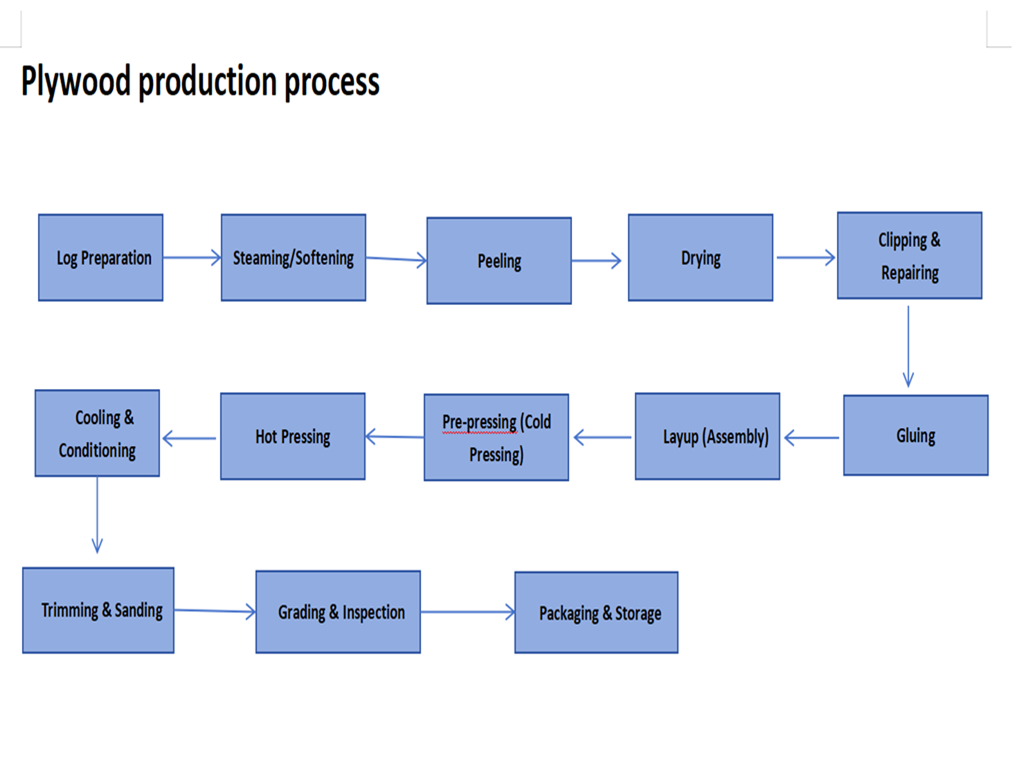
Core Process Flow and Key Equipment
Section 1: Raw Material Processing & Veneer Preparation
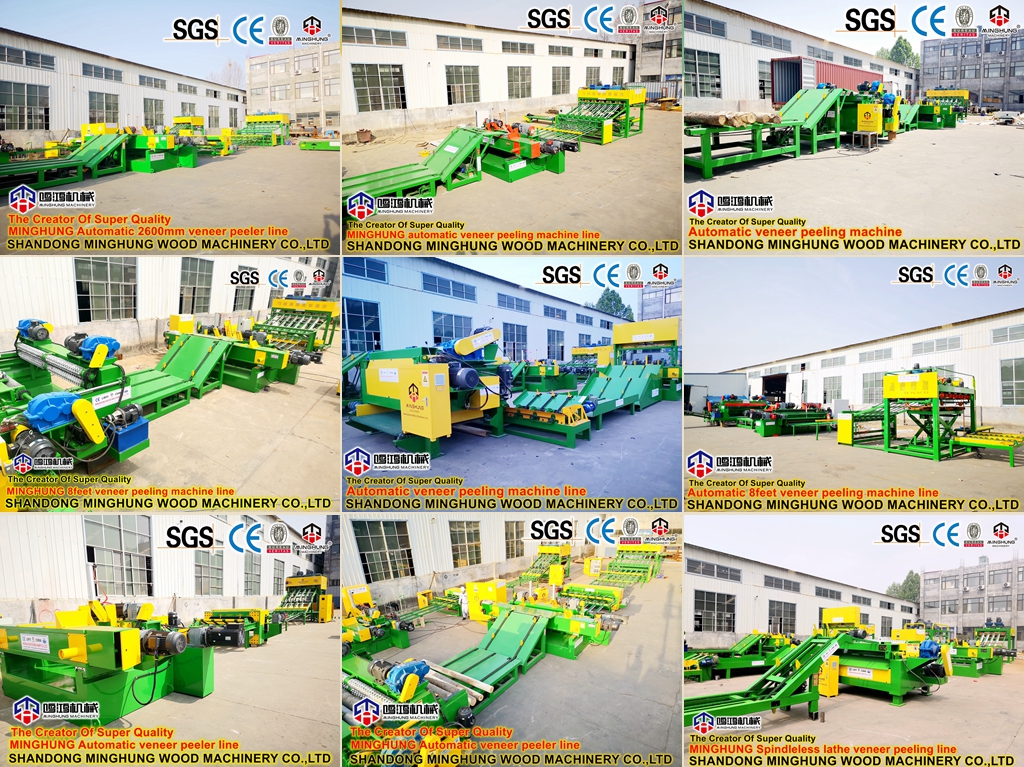
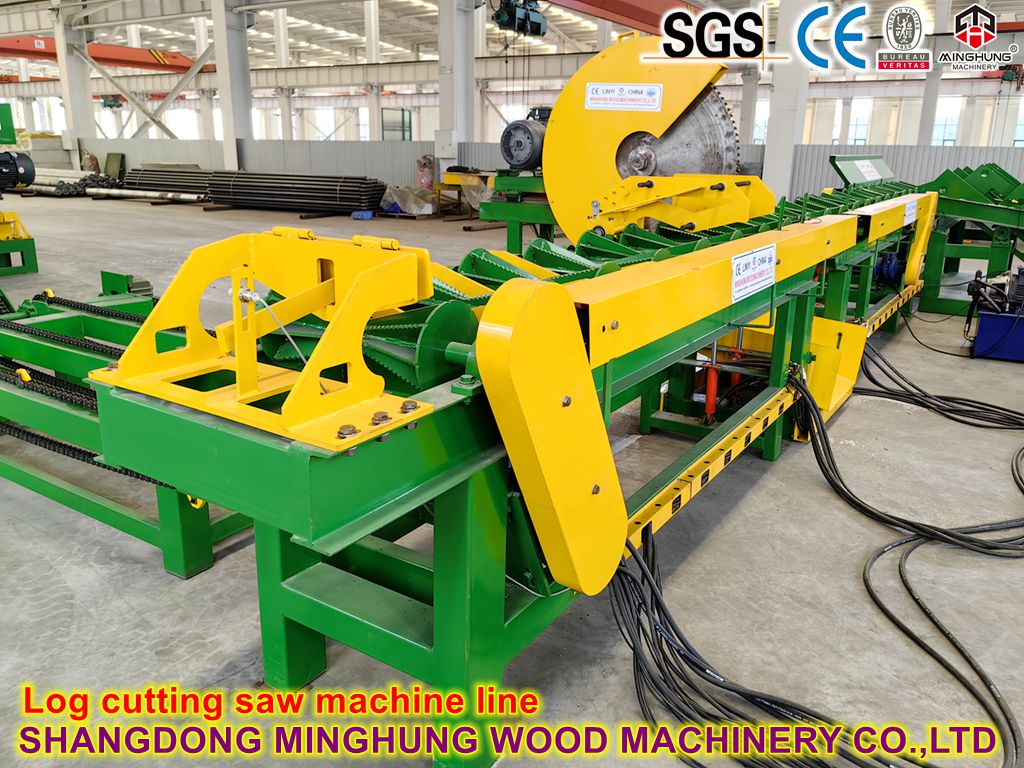
Log Cutting: A Log Debarking Saw cuts long logs into segments of required length.
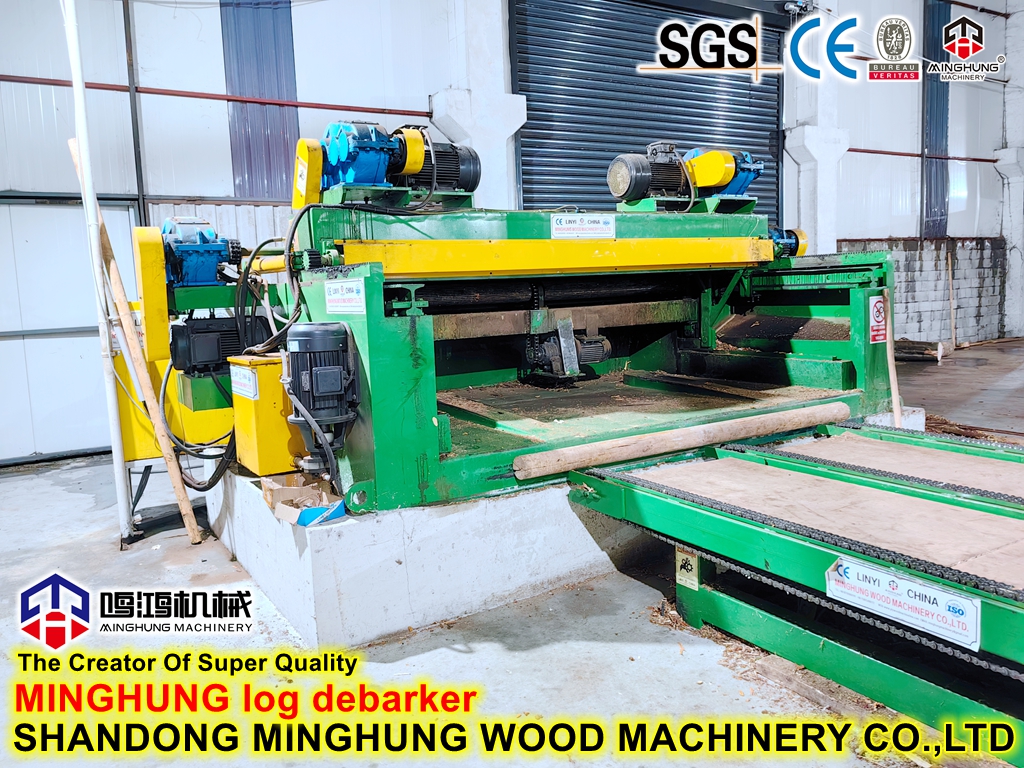
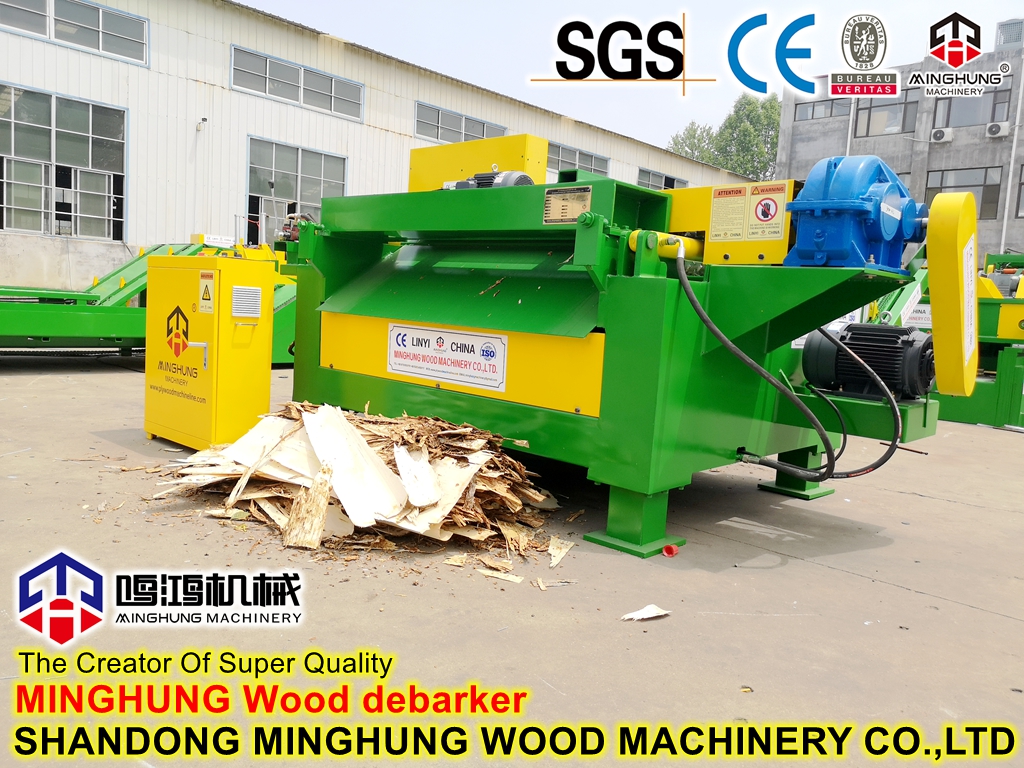
Debarking: A Drum Debarker or Ring Debarker removes bark to ensure a smooth veneer surface.
Steaming/Cooking: Log segments are softened in a Steaming Pond or Digester to facilitate peeling and reduce splintering.
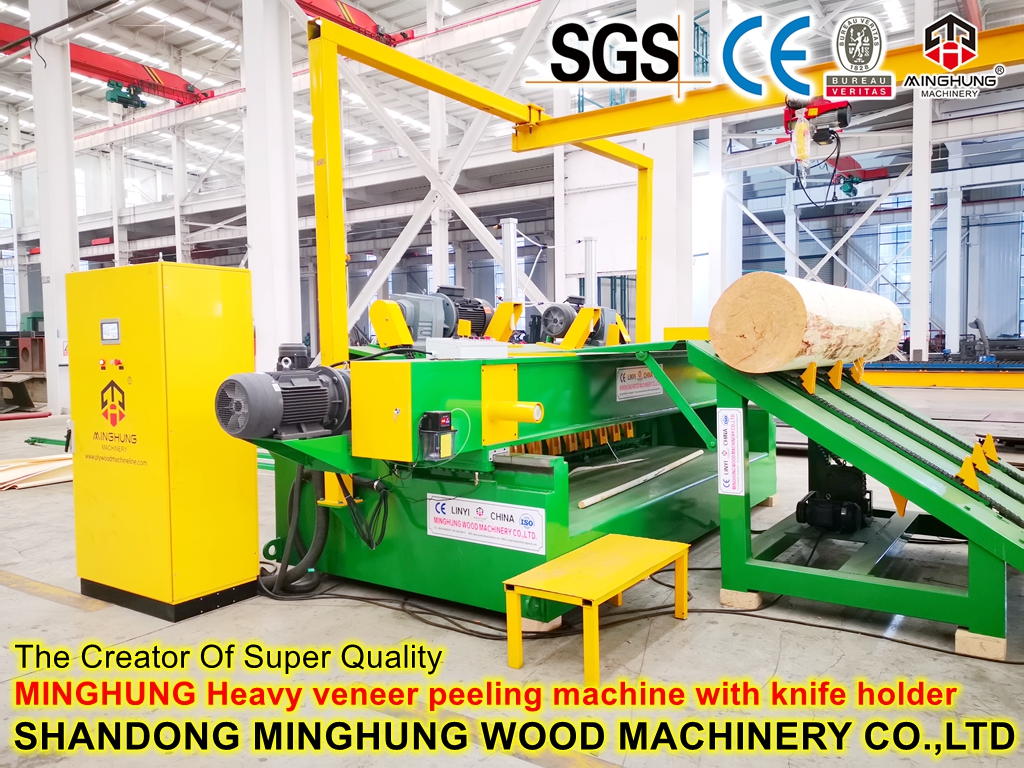
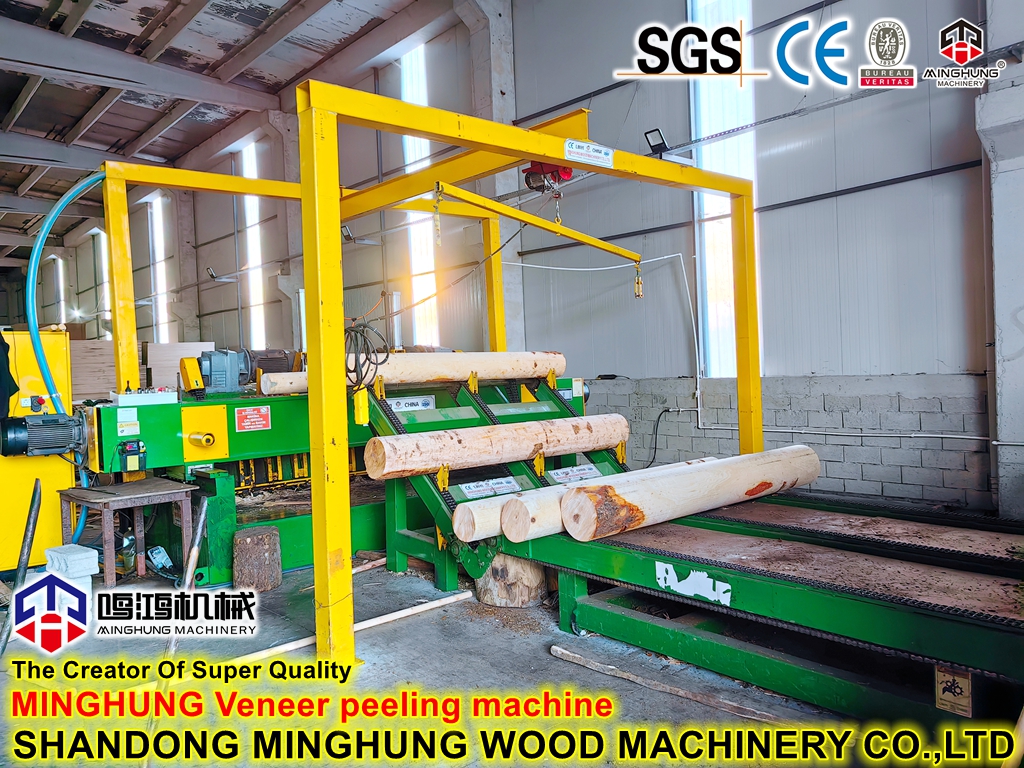
Peeling: A critical process. Log segments are rotated on a Veneer Lathe and continuously shaved into a continuous veneer ribbon. For mixed hardwoods, the lathe requires robust drive and precise control to handle varying wood hardness.
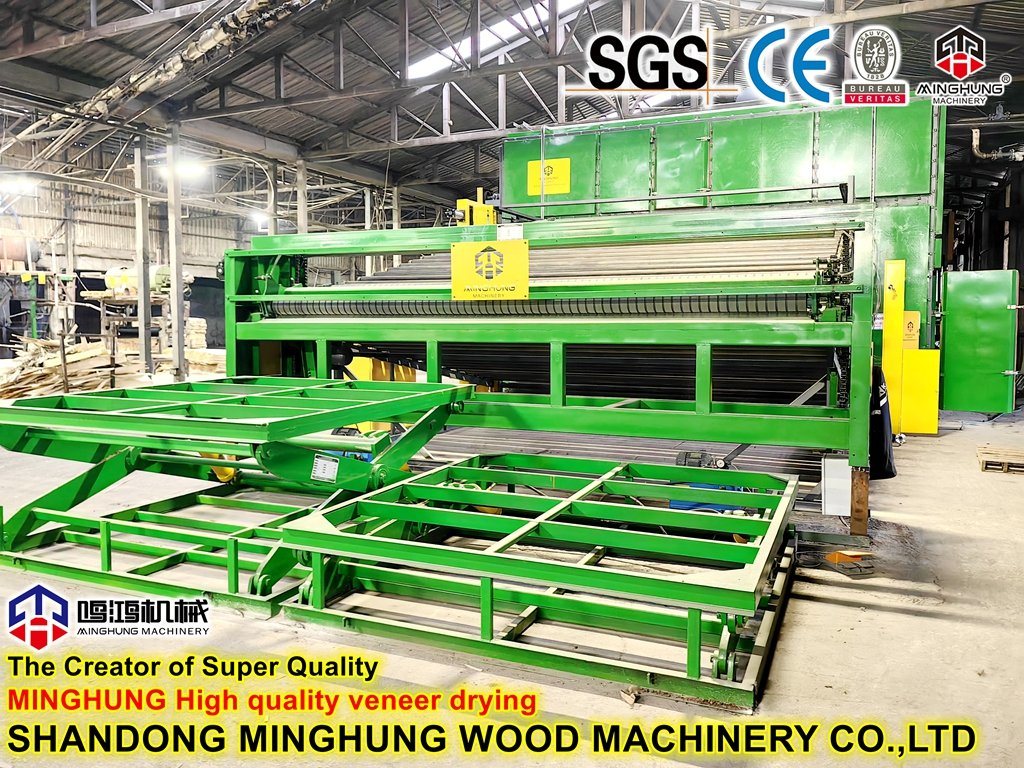
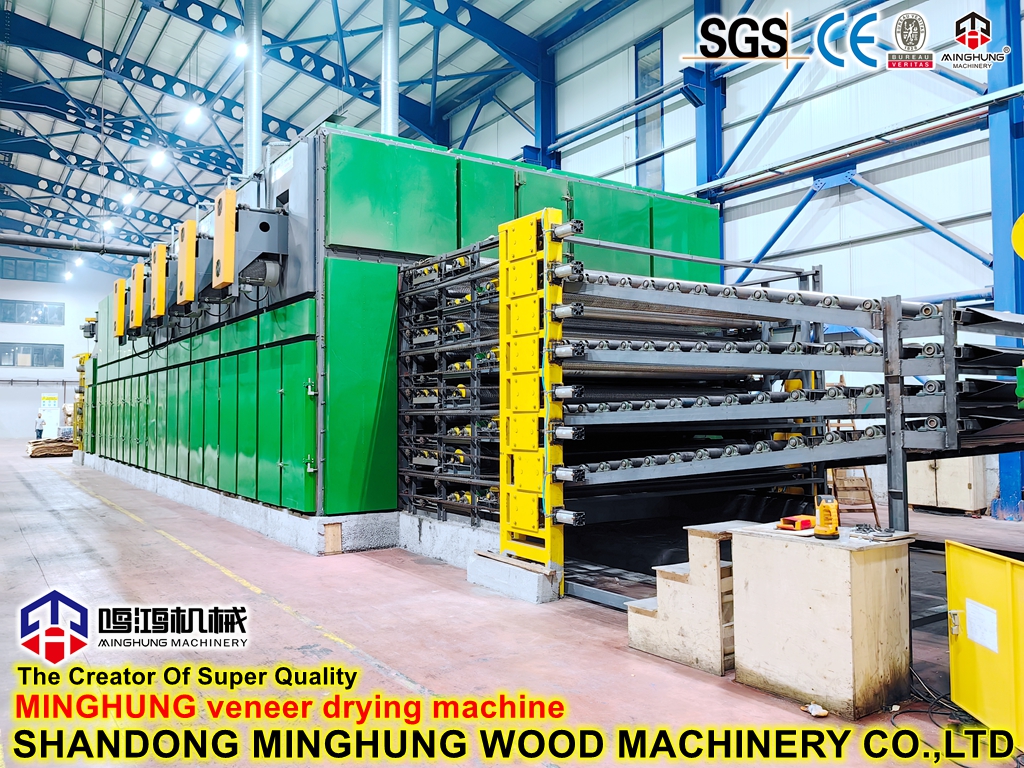
Veneer Drying & Clipping: Wet veneer is dried to suitable moisture content in a Veneer Dryer (usually roller or mesh belt type). It is then clipped to set dimensions by a Veneer Clipper.
Veneer Sorting & Patching: Dried veneer is graded on a Veneer Sorting Line manually or via vision systems. Defective sections are repaired by Veneer Patching Machines (e.g., for plugging holes, stitching) to improve yield.
Section 2: Gluing & Layup
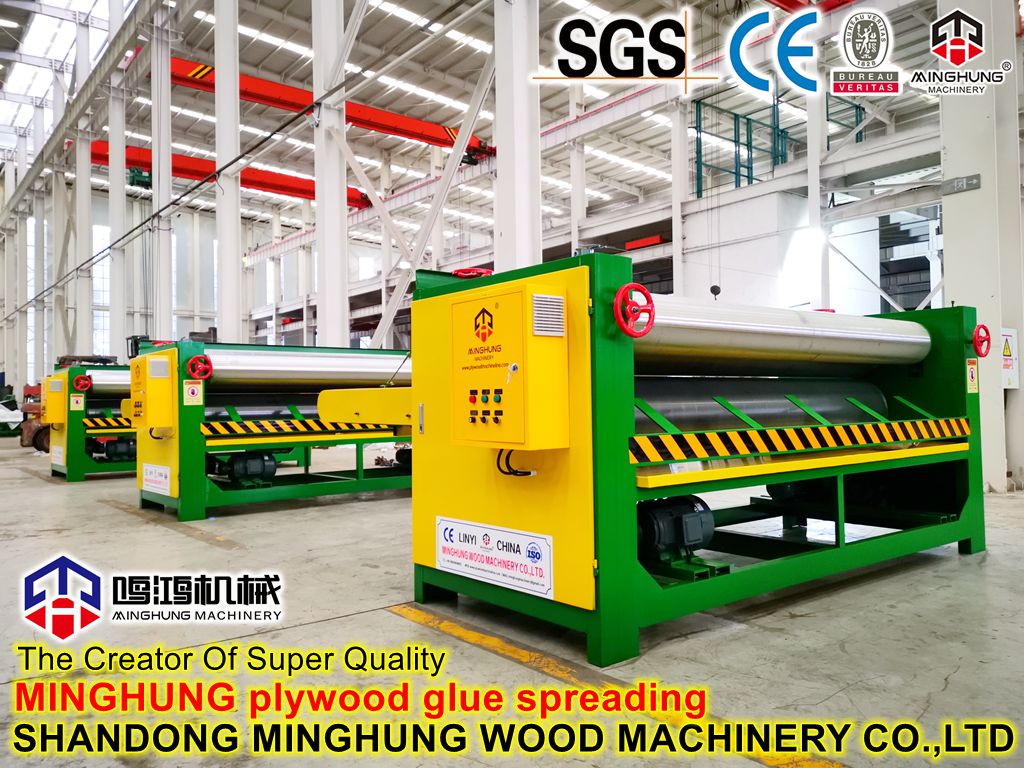
Gluing: An Glue Spreader (Roller type or 4-Roller type) applies adhesive (e.g., UF, PF resin) evenly onto the veneer surface. Adhesive formulas may need adjustment for mixed hardwoods to ensure good bonding.
Layup/Assembling: According to the target layer count, glued and unglued veneers are laid up cross-wise (with grains perpendicular). An Automatic Layup Machine performs this efficiently and accurately, ensuring symmetrical assembly and preventing warpage.
Section 3: Pressing & Post-Processing
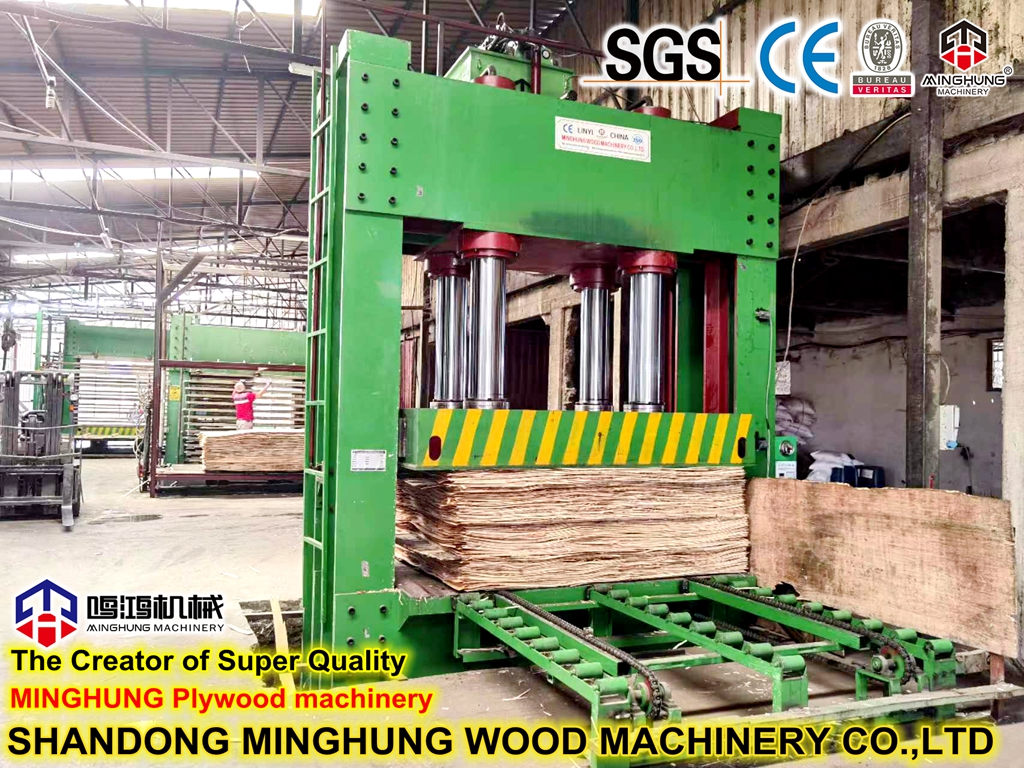
Pre-pressing: Before hot pressing, a Cold Press applies initial pressure to the mat for preliminary shaping, easing transport and preventing misalignment in the hot press.
Hot Pressing: The core forming process. The mat is fed into a Multi-Opening Hot Press , where high temperature (typically 120-180°C) and high pressure (typically 1.0-2.0 MPa) rapidly cure the adhesive, bonding the veneers into a solid panel.
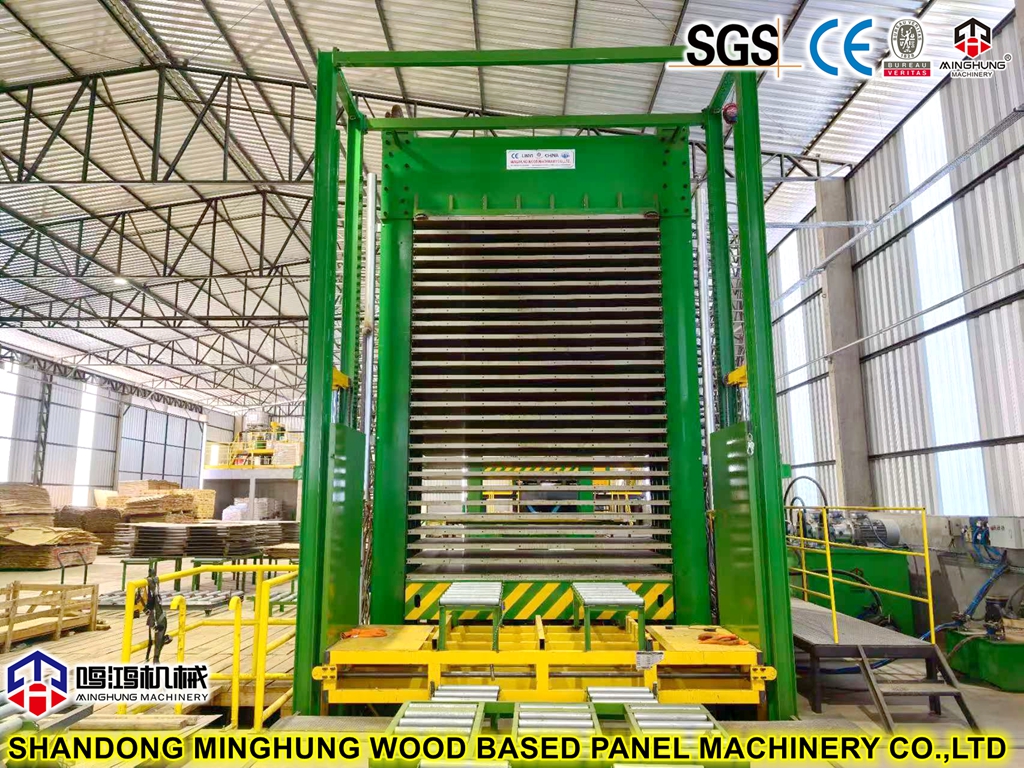
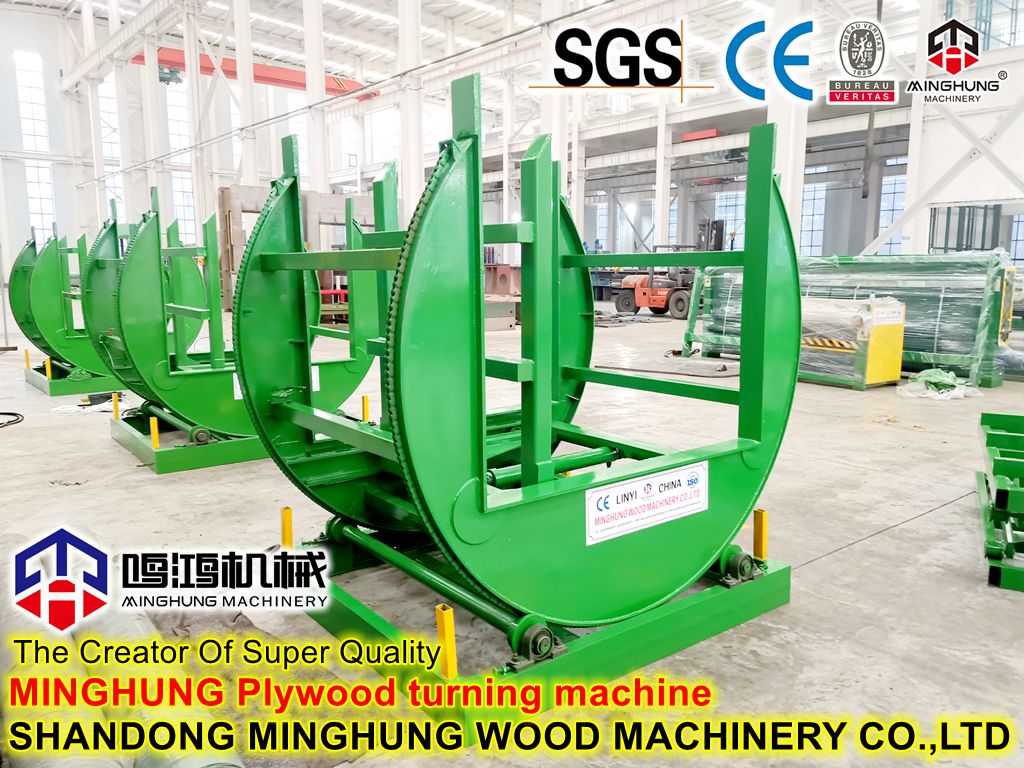
Cooling & Curing: The pressed panels are cooled and set in a Cooler/Stacker, then stored in a Curing Area to allow internal stresses to equilibrate and stabilize performance.
Section 4: Trimming & Sanding
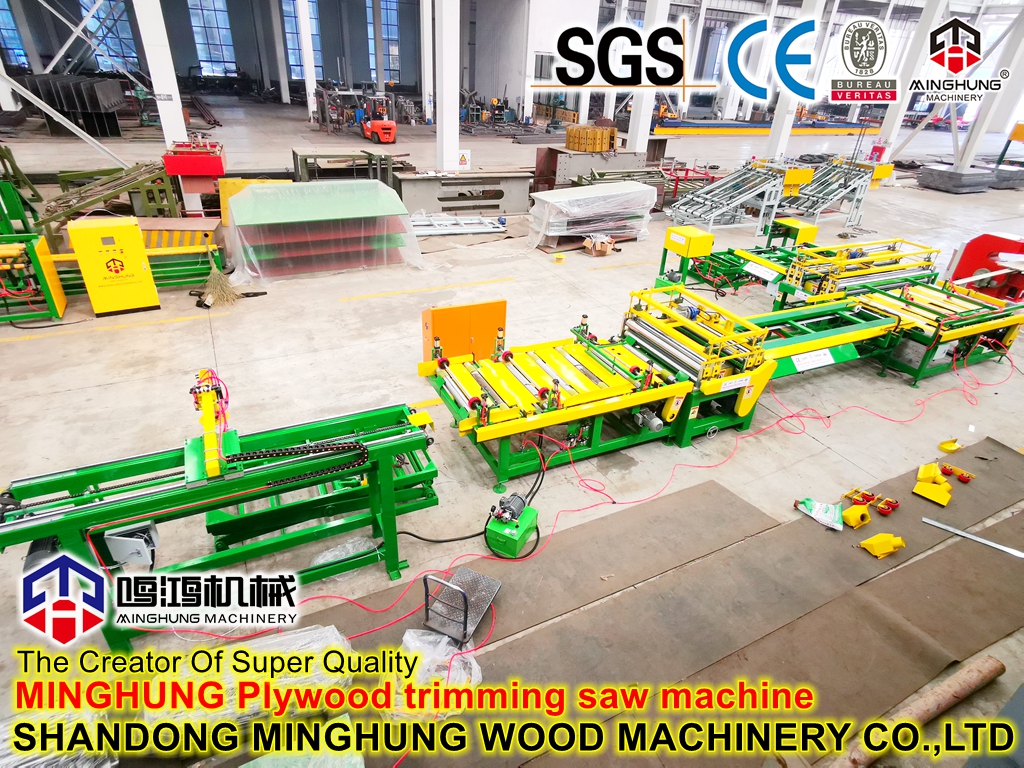
Trimming: A Panel Saw (cross-cut and edge trim) cuts the cooled rough-edged panels into standard-sized finished panels.
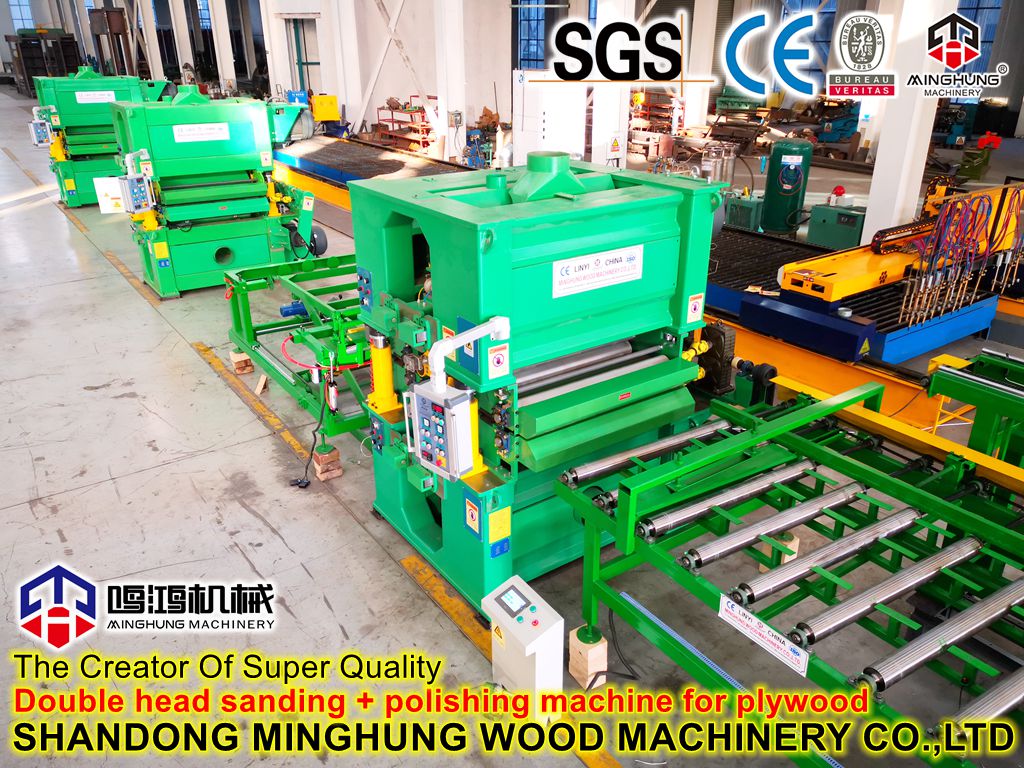
Sanding: A Wide Belt Sander (typically a combination of coarse and fine sanding) smoothes the panel surface, ensuring precise, consistent thickness and a smooth finish, providing a perfect substrate for further processing or laminating.
Section 5: Inspection & Packaging
Inspection: Finished panels are inspected for quality, including dimensions, appearance, bond strength, and formaldehyde emissions.
Grading & Packaging: Qualified panels are sorted by grade and packaged by an Automatic Packing Line with filming, strapping, and final packaging.

Application Fields
The plywood produced by this line is widely used in:
Furniture Manufacturing: For cabinets, wardrobes, table tops, etc.
Construction & Decoration: As concrete formwork, partitions, ceilings, floor underlayment, etc.
Packaging Industry: For making pallets, packing cases, etc.
Other Wood Products: Such as decoration panels for buses and ship interiors.
Customize Your Plywood Solution Now! Plant layout design, on-site training & global logistics support – Build your competitive plywood brand today!
Our contacts:
Whatsapp: +8618769900191 +8615589105786 +8618954906501
Email: osbmdfmachinery@gmail.com
Overview
The Mixed Hardwood Raw Material Plywood Production Line is an automated or semi-automated industrial system specifically designed to manufacture plywood from a variety of wood species and specifications of mixed hardwood logs (such as poplar, eucalyptus, birch, acacia, etc.). Its core design philosophy is flexibility and efficiency, transforming widely sourced, non-uniform hardwood resources into high-value-added, standardized, quality plywood products. This production line covers the entire process from log handling to finished product packaging.
Mixed hardwood raw material
"Mixed hardwood raw material" is a professional term in the forestry and wood-based panel industry. It refers to raw material composed of a mixture of different wood species. These species are typically not single, precious, or uniform types of timber.
Specifically, it encompasses the following key characteristics:
1. Mixed Species: It is not a single type of tree (like all pine or all eucalyptus), but rather a blend of various hardwood and softwood species. Common species may include poplar, eucalyptus, birch, beech, acacia, and other fast-growing broad-leaved forest species.
2. Non-Uniform Specifications: The logs or wood pieces may vary in diameter, length, shape, and quality.
3. Non-Precious Wood: The term "mixed hardwood" often refers to woods that are not classified as high-grade furniture timber (like oak or walnut). They are widely sourced and relatively low-cost.
4. Resource Utilization: The primary purpose of using mixed hardwood raw material is to maximize the utilization of forest resources. It allows for the efficient comprehensive use of small-diameter logs, thinnings, and various species that are not suitable for high-end wood products individually but are abundant, thereby reducing production costs.
In plywood manufacturing, through specific production processes and equipment (such as the Mixed Hardwood Raw Material Plywood Production Line), these woods with varying properties can be processed into stable-quality and reliable performance plywood products.
Key Features
1. Wide Raw Material Adaptability: The core advantage is its ability to process mixed wood species, offering strong tolerance for variations in log diameter, species, and texture, thereby reducing raw material costs and procurement difficulties.
2. High Degree of Automation: From peeling to packaging, most processes are mechanized and automated, significantly reducing labor intensity, improving production efficiency, and ensuring consistent product quality.
3. Advanced Technology: Integrates a series of high-precision equipment, such as CNC veneer lathes, automated layup lines, and intelligent hot presses, ensuring high standards for plywood thickness, flatness, and bond strength.
4. Energy Saving & Environmental Protection: Modern lines are often equipped with waste heat recovery systems, efficient dust removal devices, and low-energy consumption designs to meet environmental regulations. Waste like bark and sawdust can be used as fuel in energy centers, achieving resource recycling.
5. Flexibility and Adjustability: By adjusting equipment and process parameters, it can produce plywood in various specifications (size, thickness), grades (interior, exterior), and structures (3-ply, 5-ply, multi-ply).
Core Process Flow and Key Equipment
Section 1: Raw Material Processing & Veneer Preparation
Log Cutting: A Log Debarking Saw cuts long logs into segments of required length.

Debarking: A Drum Debarker or Ring Debarker removes bark to ensure a smooth veneer surface.

Steaming/Cooking: Log segments are softened in a Steaming Pond or Digester to facilitate peeling and reduce splintering.
Peeling: A critical process. Log segments are rotated on a Veneer Lathe and continuously shaved into a continuous veneer ribbon. For mixed hardwoods, the lathe requires robust drive and precise control to handle varying wood hardness.

Veneer Drying & Clipping: Wet veneer is dried to suitable moisture content in a Veneer Dryer (usually roller or mesh belt type). It is then clipped to set dimensions by a Veneer Clipper.

Veneer Sorting & Patching: Dried veneer is graded on a Veneer Sorting Line manually or via vision systems. Defective sections are repaired by Veneer Patching Machines (e.g., for plugging holes, stitching) to improve yield.
Section 2: Gluing & Layup
Gluing: An Glue Spreader (Roller type or 4-Roller type) applies adhesive (e.g., UF, PF resin) evenly onto the veneer surface. Adhesive formulas may need adjustment for mixed hardwoods to ensure good bonding.

Layup/Assembling: According to the target layer count, glued and unglued veneers are laid up cross-wise (with grains perpendicular). An Automatic Layup Machine performs this efficiently and accurately, ensuring symmetrical assembly and preventing warpage.
Section 3: Pressing & Post-Processing
Pre-pressing: Before hot pressing, a Cold Press applies initial pressure to the mat for preliminary shaping, easing transport and preventing misalignment in the hot press.

Hot Pressing: The core forming process. The mat is fed into a Multi-Opening Hot Press , where high temperature (typically 120-180°C) and high pressure (typically 1.0-2.0 MPa) rapidly cure the adhesive, bonding the veneers into a solid panel.

Cooling & Curing: The pressed panels are cooled and set in a Cooler/Stacker, then stored in a Curing Area to allow internal stresses to equilibrate and stabilize performance.

Section 4: Trimming & Sanding
Trimming: A Panel Saw (cross-cut and edge trim) cuts the cooled rough-edged panels into standard-sized finished panels.

Sanding: A Wide Belt Sander (typically a combination of coarse and fine sanding) smoothes the panel surface, ensuring precise, consistent thickness and a smooth finish, providing a perfect substrate for further processing or laminating.

Section 5: Inspection & Packaging
Inspection: Finished panels are inspected for quality, including dimensions, appearance, bond strength, and formaldehyde emissions.
Grading & Packaging: Qualified panels are sorted by grade and packaged by an Automatic Packing Line with filming, strapping, and final packaging.

Application Fields
The plywood produced by this line is widely used in:
Furniture Manufacturing: For cabinets, wardrobes, table tops, etc.
Construction & Decoration: As concrete formwork, partitions, ceilings, floor underlayment, etc.
Packaging Industry: For making pallets, packing cases, etc.
Other Wood Products: Such as decoration panels for buses and ship interiors.
Customize Your Plywood Solution Now! Plant layout design, on-site training & global logistics support – Build your competitive plywood brand today!
Our contacts:
Whatsapp: +8618769900191 +8615589105786 +8618954906501
Email: osbmdfmachinery@gmail.com
As Christmas approaches, Shandong MINGHUNG wood based panel machinery Co., Ltd. has welcomed another peak in shipments.
In early December 2025, the culmination of close collaboration between the MINGHUNG foreign trade team and our partners — 9 containers fully loaded with the core equipment for a plywood production line .
Shandong Minghung Wood Machinery Factory Shandong minghung wood machine factory produces plywood machinery in linyi city city, china, dedicated to providing high-quality and suitable machines veneer machine,plywood machine,veneer splicing machine.veneer dryer machine,veneer peeling machine,plywood v
How to produce Particle board? What is the production step of Making Particle board?Introduction:Particle board, also known as chipboard, is a versatile and cost-effective material widely used in the construction and furniture industries. It is made by compressing wood particles and adhesive togethe
The Ultimate Guide to Plywood Hot Press Machines: Crafting High-Quality Plywood Introduction:Plywood is a versatile and widely used material in various industries, from construction to furniture manufacturing. Behind the scenes, plywood hot press machines play a crucial role in the production proces
What is a veneer dryer?MINGHUNG Roller veneer dryer for drying original wood veneer, remove abundant humidity, in the end, the wood veneer humidity will be 5%-10%, so it is suitable for making plywood.Veneer roller dryer are suitable for big drying capacity per day, it can be different length, width
Recently, a high-performance plywood sander was prepared for shipment at Qingdao Port, ready for its journey to our valued partner in Russia.
This shipment not only demonstrates Minghung Machinery’s strong production coordination and international trade execution capabilities but also ensures the rapid commissioning of the customer's production line.
MINGHUNG is a leading company in the industry of OSB&MDF making machine. With a strongfocus on producing high-quality machinery, we specialize in manufacturing thecomplete production line of Medium density fiberboard (MDF), High densityfiberboard (HDF),Particle board (PB), Oriented strand board (OSB) and Veneerable super strong particle board (LSB).
Peeling is the pre-treatment process. Chopping and planing are both aimed at obtaining specific forms of wood materials, but the forms and application scenarios are different.