| Availability: | |
|---|---|
| Quantity: | |
MH-HP
MINGHUNG

Working Principle
This hot press operates on a combination of thermal oil heating and hydraulic pressing. The working cycle is as follows:
Heating phase. Thermal oil is heated to the set temperature by an external boiler and circulated through the precision channels inside the stainless steel hot plates, allowing each layer to heat up rapidly and maintain a uniform temperature distribution. The excellent thermal conductivity of stainless steel further improves temperature uniformity across the plate surface.
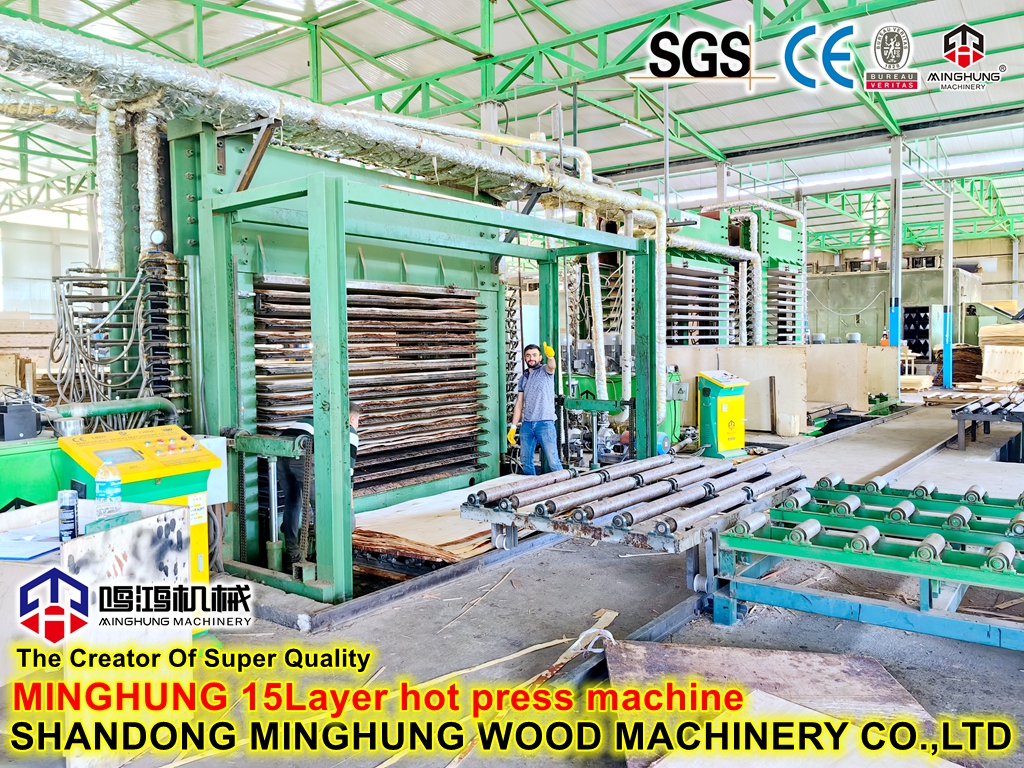
Loading phase. The operator or an automatic board loader places glued veneer stacks into each of the 10 openings layer by layer, with each stack positioned between two stainless steel hot plates.
Closing and pressing phase. The hydraulic system activates the main cylinder, pushing the moving platen upward to close all layers simultaneously. Once the pressure reaches the set value of 400 tons, the system enters pressure-holding mode, maintaining stable pressure to promote chemical crosslinking of the adhesive under high temperature and pressure.
Holding and curing phase. Under the set temperature and pressure, the press holds for a certain duration, ensuring full curing of the glue line and a dense internal structure of the board.
Pressure release and opening phase. After holding, the hydraulic system slowly releases pressure. The moving platen descends, and all layers open naturally. The finished plywood sheets are removed either manually or by an unloading device.
Throughout the entire working process, the stainless steel hot plates maintain a smooth, clean surface, preventing rust spots or contamination from oxidation or corrosion from affecting the boards.
Main Components
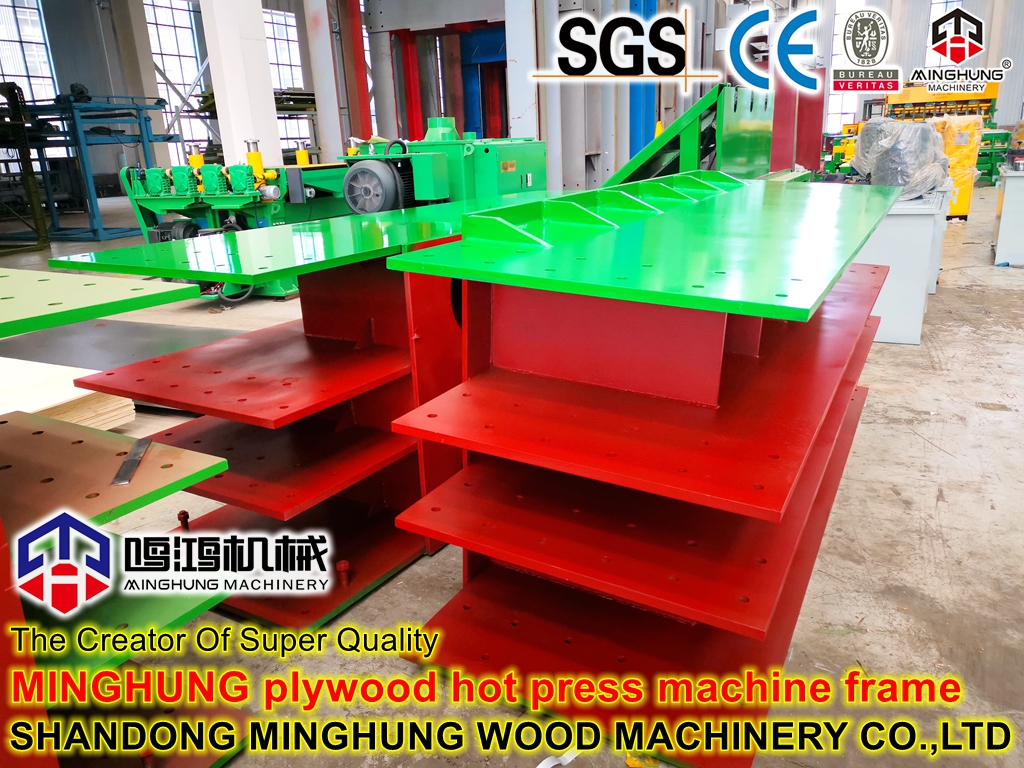
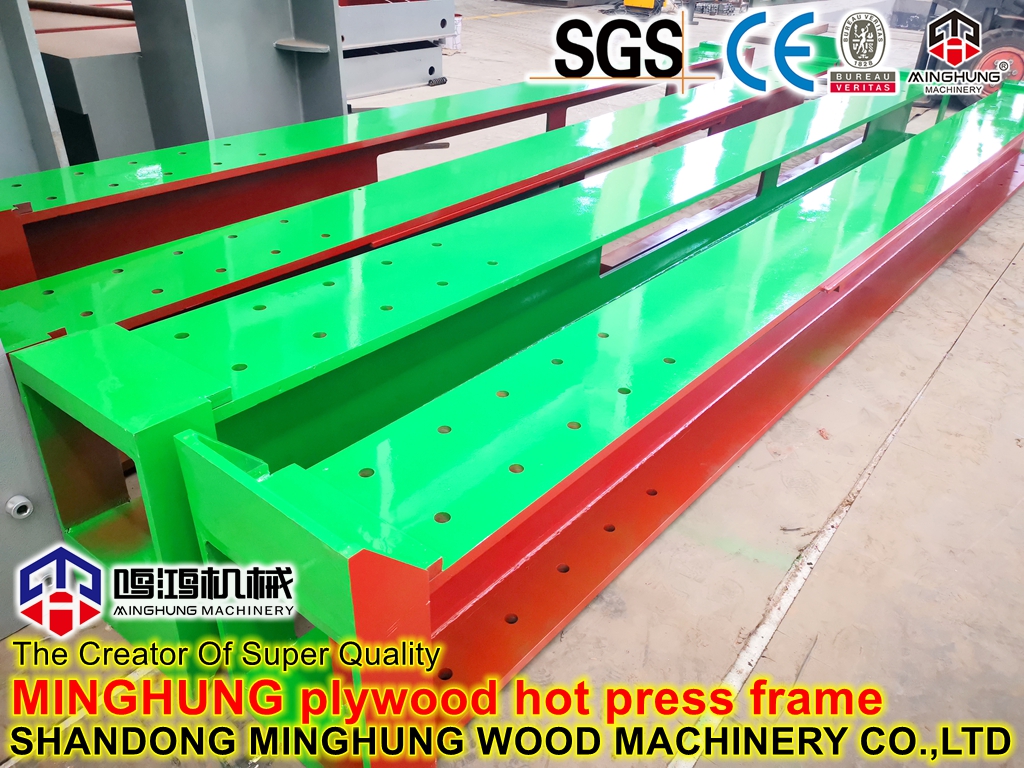
Main frame. Adopting an integral frame or column structure, bearing 400 tons of pressure and the machine weight. The frame is stress-relieved to eliminate internal stress, ensuring no deformation over long-term use.
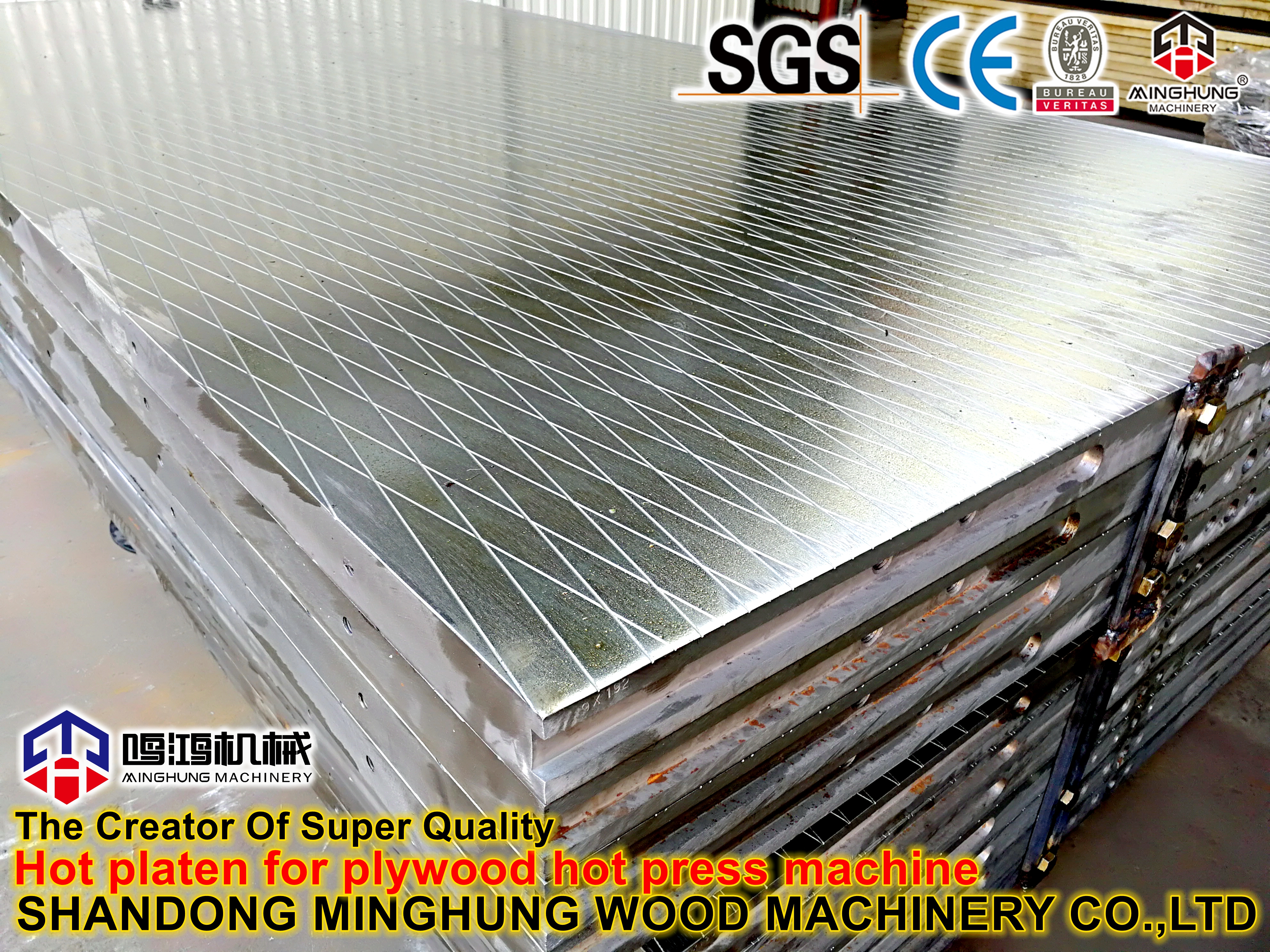
Stainless steel hot plates. Total of 11 plates (10 openings require 11 hot plates). Manufactured from high-quality high-temperature resistant stainless steel, with surfaces precision-ground for high flatness. Optimized internal channels are designed for uniform thermal oil circulation and temperature distribution. The stainless steel material offers excellent corrosion resistance and high-temperature oxidation resistance, will not rust, and will not contaminate the boards.
Moving platen. Connects the main cylinder and the hot plate stack, transmitting pressure to each layer of boards. The platen is reinforced to minimize deflection under 400 tons of pressure.
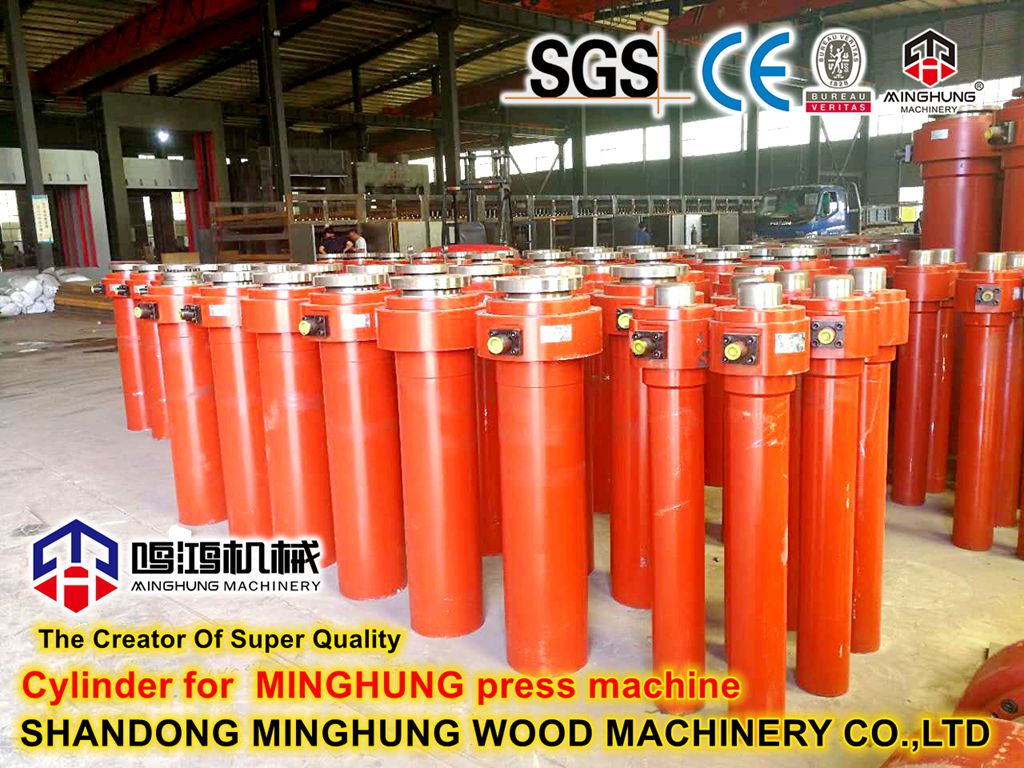
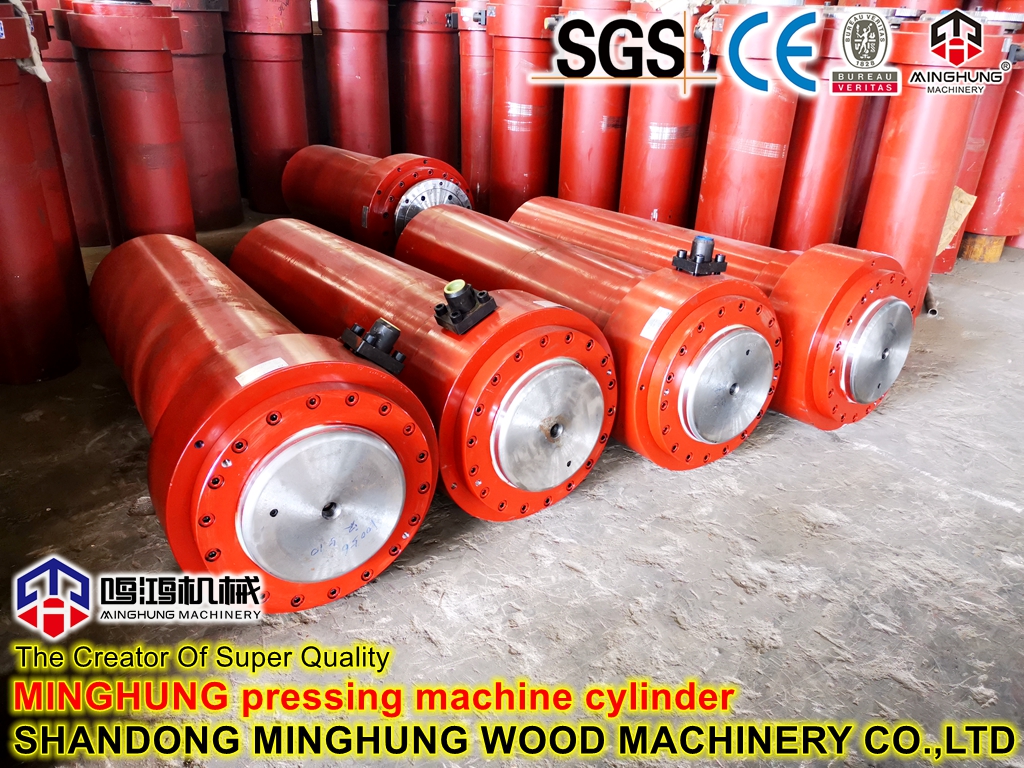
Main cylinder. A high-precision plunger cylinder providing stable 400 tons of pressure, with good sealing performance and long service life.
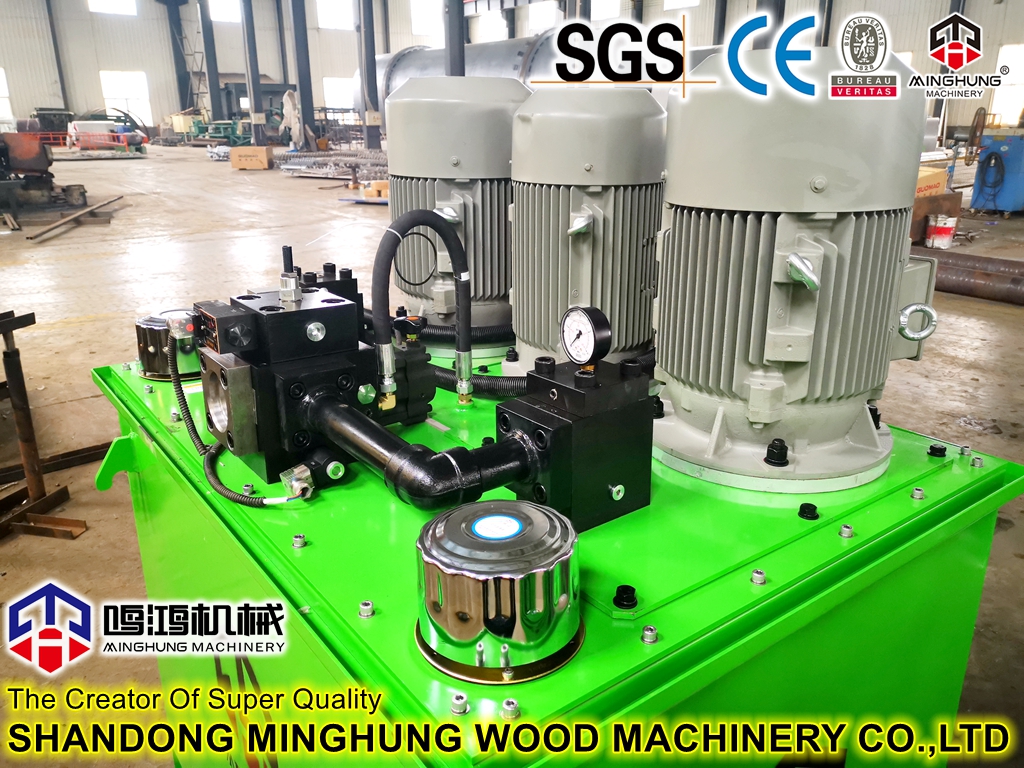
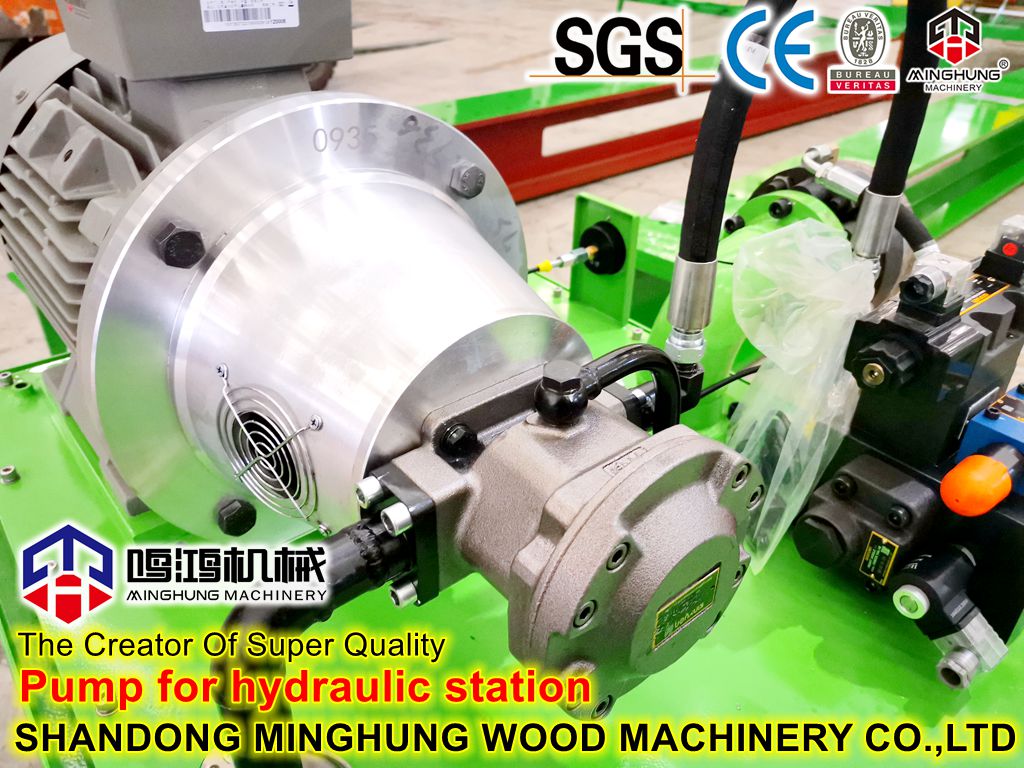
Hydraulic power unit. Consists of hydraulic pumps, oil tank, motor, proportional valves, pressure sensors, safety valves, and other components, responsible for supplying and precisely controlling hydraulic pressure.
Thermal oil heating system. Includes a thermal oil boiler or electric heating device, circulation pump, piping, valves, expansion tank, and temperature controllers, heating the thermal oil and circulating it through the stainless steel hot plates.
Control system. Uses a PLC controller with a touchscreen human-machine interface, enabling setting and automatic control of parameters such as temperature, pressure, holding time, and pressing curve. Supports storage and recall of multiple process recipes.
Safety protection devices. Includes safety light curtains, emergency stop buttons, hydraulic overpressure relief valves, hot plate overtemperature sensors, leak detection devices, and more.
Core Advantages
Stainless steel hot plates resist high temperature and rust.
High board surface cleanliness.
Excellent temperature uniformity.
400-ton high pressure.
10-layer high-efficiency structure.
Strong corrosion resistance.
Low maintenance cost.
Safe and reliable.
Applications of Plywood
High-end furniture panels. Wardrobe panels, cabinet panels, TV stand panels, and other products requiring high surface cleanliness. The stainless steel heating plates cause no rust contamination, allowing direct application of decorative surfaces.
Film-faced plywood. Film-faced panels for concrete formwork and high-quality formwork panels requiring a clean board surface to ensure film adhesion.
Eco-boards. Paint-free eco-boards require a high-quality appearance, as any surface contamination will affect the final product look.
Food-grade packaging panels. Plywood used for packaging that comes into contact with food, requiring non-toxic and contamination-free boards.
Export eco-friendly plywood. Export products with strict requirements for heavy metal content and surface cleanliness.
Multi-layer solid wood flooring substrate. Requires dimensional stability and high internal bond strength.
General plywood. Suitable for the production of all types of standard plywood.
Frequently Asked Questions
Question one: What are the advantages of stainless steel hot plates compared to ordinary carbon steel hot plates?
Answer: Stainless steel hot plates will not rust, oxidize, or flake off under high-temperature and high-humidity environments. The surface remains smooth and clean over long-term use, and no rust contamination will occur on the board surface. Additionally, stainless steel offers better corrosion resistance and stronger tolerance to acidic substances in the thermal oil. The internal channels of the hot plate are less prone to blockage, and the service life is significantly longer than that of carbon steel hot plates.
Question two: What types of boards can this hot press produce?
Answer: It is mainly suitable for plywood, film-faced concrete formwork, eco-boards, high-end furniture panels, multi-layer solid wood flooring substrates, and more. It is especially suitable for board products that have strict requirements for surface cleanliness.
Question three: What is the production capacity of the 10-layer 400-ton configuration?
Answer: Each cycle can press 10 plywood sheets simultaneously. Taking a typical 15-millimeter plywood as an example, the complete cycle time including loading, pressing, holding and curing, and unloading is approximately 8 to 12 minutes, allowing 5 to 7 cycles per hour. This corresponds to an hourly output of approximately 50 to 70 boards, depending on board thickness and adhesive type.
Question four: Can electric heating be selected as the heating method?
Answer: Yes. Thermal oil heating is the standard configuration. If the customer site does not have boiler conditions or has high environmental requirements, electric heating can be selected. Electric heating offers more precise temperature control but has higher operating electricity costs. We will recommend the most suitable solution based on the customer's actual situation.
Question five: What installation space is required for the machine?
Answer: The machine itself is approximately 6.5 meters long, 3.2 meters wide, and 3.0 meters high. Considering operation and maintenance space as well as upstream and downstream conveying equipment, we recommend reserving an installation area of no less than 8 meters in length, 5 meters in width, and 4.5 meters in height.
Question six: Do stainless steel hot plates require special maintenance?
Answer: No. Stainless steel hot plates are simpler to maintain than carbon steel hot plates. Only regular cleaning of residual glue from the surface is needed, with no concern about rust prevention. We recommend using wooden or plastic scrapers for cleaning, avoiding metal tools that could scratch the surface.
Question seven: Do you provide overseas installation and commissioning services?
Answer: Yes. We can send engineers to overseas customer sites for installation guidance, commissioning, and operator training. We also provide long-term free remote video technical support.
Question eight: What is the warranty period for the equipment?
Answer: The complete machine is warranted for 12 months from the date the equipment arrives at the customer's site. Thanks to the excellent material quality, the stainless steel hot plates themselves have a service life far exceeding the warranty period under normal use. Wear parts such as seals are not covered under warranty but can be supplied at cost long term.

The first day of the 2026 Shanghai International Woodworking Machinery Fair – if this morning's keyword was "surprise," then this afternoon's keywords are definitely "explosive" and "confidence"!
This new facility marks a fresh start for our company. Guided by our enduring commitment to "precision engineering and quality first," we are now better equipped than ever to provide efficient, durable, and innovative machinery solutions for the worldwide wood-based panel industry.
As Christmas approaches, Shandong MINGHUNG wood based panel machinery Co., Ltd. has welcomed another peak in shipments.
In early December 2025, the culmination of close collaboration between the MINGHUNG foreign trade team and our partners — 9 containers fully loaded with the core equipment for a plywood production line .
Shandong Minghung Wood Machinery Factory Shandong minghung wood machine factory produces plywood machinery in linyi city city, china, dedicated to providing high-quality and suitable machines veneer machine,plywood machine,veneer splicing machine.veneer dryer machine,veneer peeling machine,plywood v