| Availability: | |
|---|---|
| Quantity: | |
MH-CHP
MINGHUNG
Ⅰ. Fireproof Board Substrates
1. Substrate Types
Inorganic Substrates (Dominant):
Calcium Silicate Board: Quartz powder (45%) + Lime (33%) + Cement (15%) + Pulp fiber (7%)
Magnesium Oxide Board: MgO + MgCl₂ + Plant fibers (requires surface sealing)
Glass-MgO Board: MgO + Fiberglass mesh (high strength)
Organic substrates (flame-retardant modification)
Flame-retardant particleboard: Wood chips + phosphorus-nitrogen type flame retardant (addition amount 8-15%)
Flame-retardant MDF: Wood fibers impregnated with zinc borate/aluminum hydroxide (impregnation concentration ≥ 12%)
2. Standard Dimensions
Parameter | Standard Range | Customization |
Thickness | 6mm, 9mm, 12mm | 4mm(ultra-thin)-25mm |
Width | 1220mm, 1250mm | 800-1500m |
Length | 2440mm, 2750mm | 1200-3660mm |
II. Production Process of Flame-Retardant Particleboard Base Material
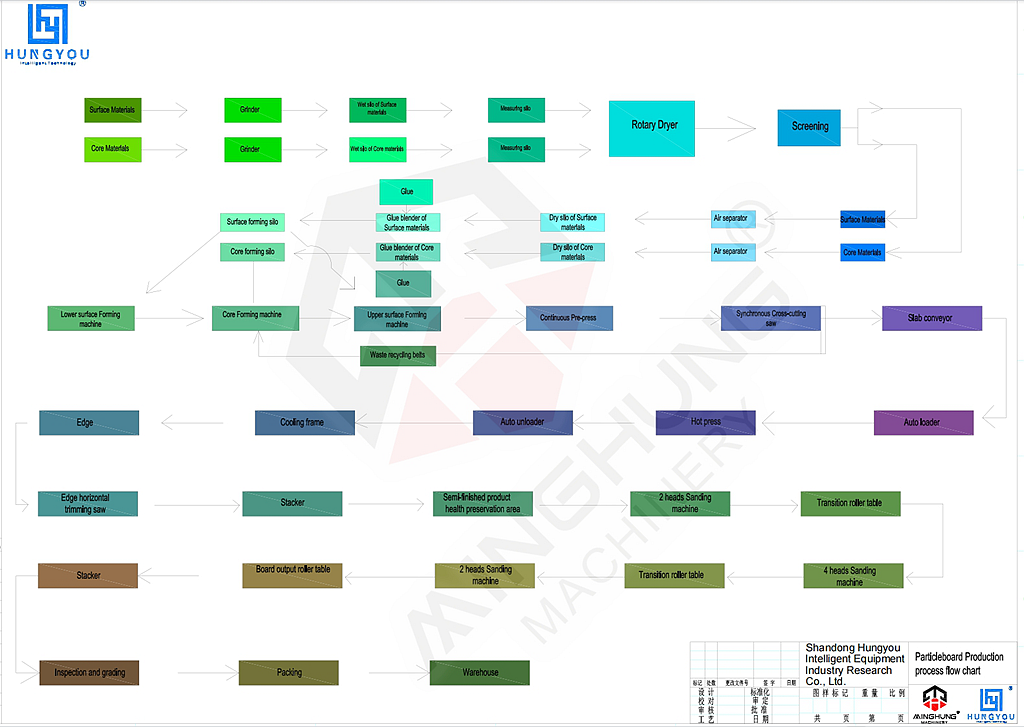
1. Raw Material Preparation
Wood fragmentation:Fast-growing forest wood (poplar/cedar) is debarked, sliced, and screened to produce 20-40mm long and 0.2-0.5mm thick particle boards.
Drying:The drum dryer reduces the moisture content of the particle boards from 40-60% to 2-4% (temperature 120-140℃, to avoid carbonization).
wood chipper machine
particleboard drying system
2. Application of Flame Retardants
Types of Flame Retardants:
Liquid type: Ammonium phosphate solution (concentration 15-20%)
Powder type: Polyphosphate ammonium (APP) + Aluminum hydroxide (ATH) compound (ratio 1:1)
Application method:
Liquid: Ammonium phosphate solution (15-20% conc.) sprayed at 10-12% dosage
Powder: APP+ATH blend (1:1 ratio) mixed with UF resin (25-30% of resin solids)
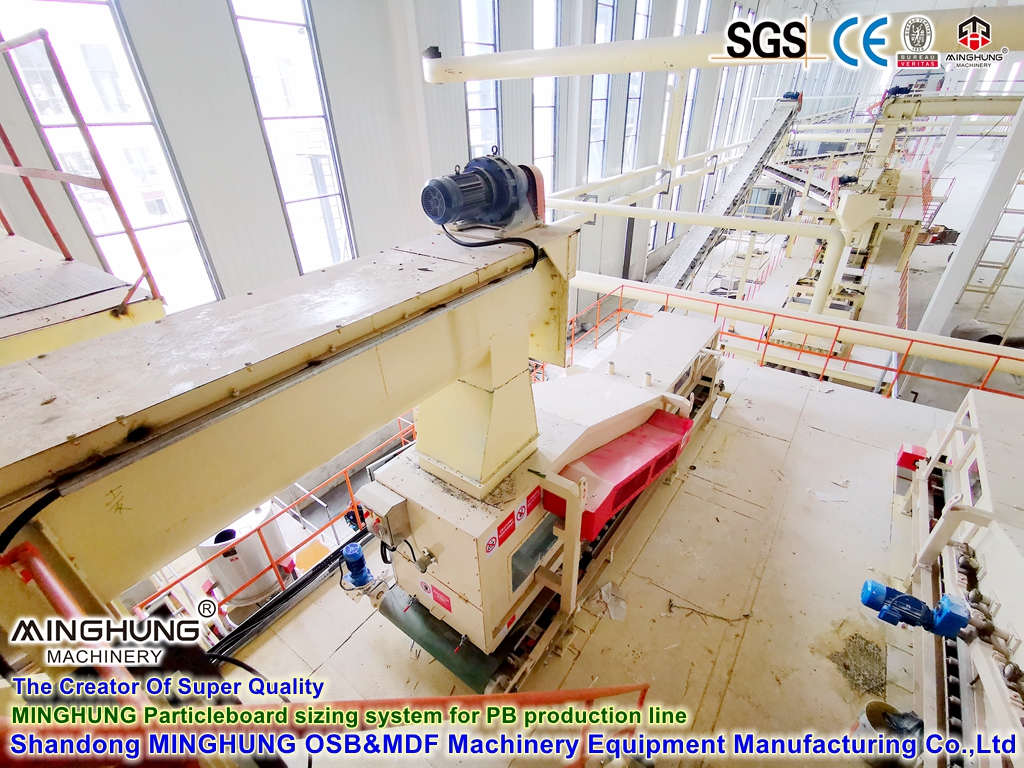
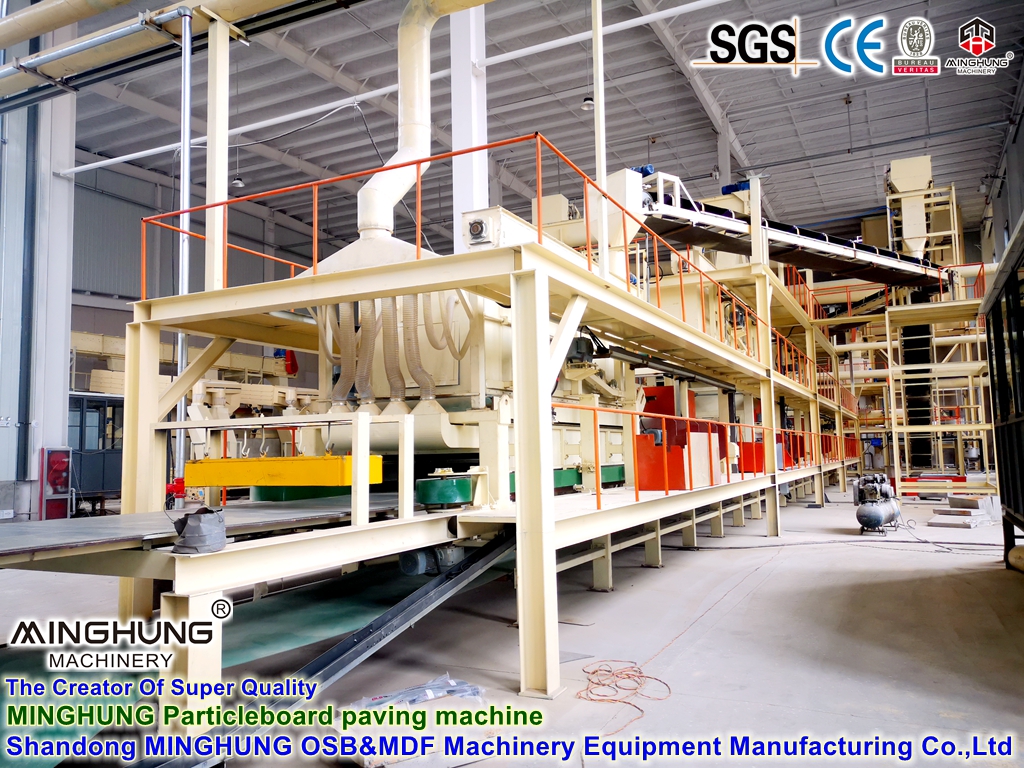
3. Blending & Forming
Resin System:Modified UF resin (50-55% solids) + retardant, total adhesive 8-10% of dry flakes
Layered Forming:
Surface: Fine flakes (<0.3mm, 40% for smoothness)
Core: Coarse flakes (>1mm, 60% for stability)
4. Pressing
Pre-pressing:cold-pressed at 1-1.5MPa for 30s to 50% target thickness
Continuous Hot Pressing:
Parameter | Surface Layer | Core Layer |
Temperature | 180-185℃ | 170-175℃ |
Pressure | 3.5-4.0MPa | 2.8-3.2MPa |
Time | 20-25 sec/mm | (e.g., 240-300s for 12mm) |
pre press machine
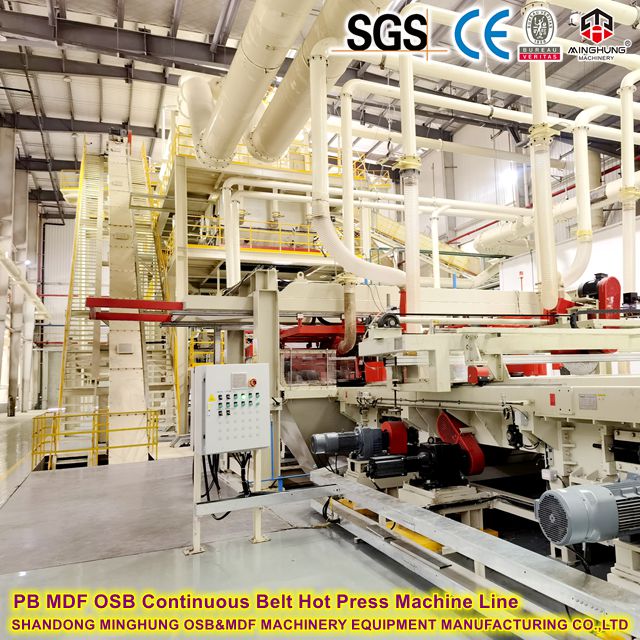
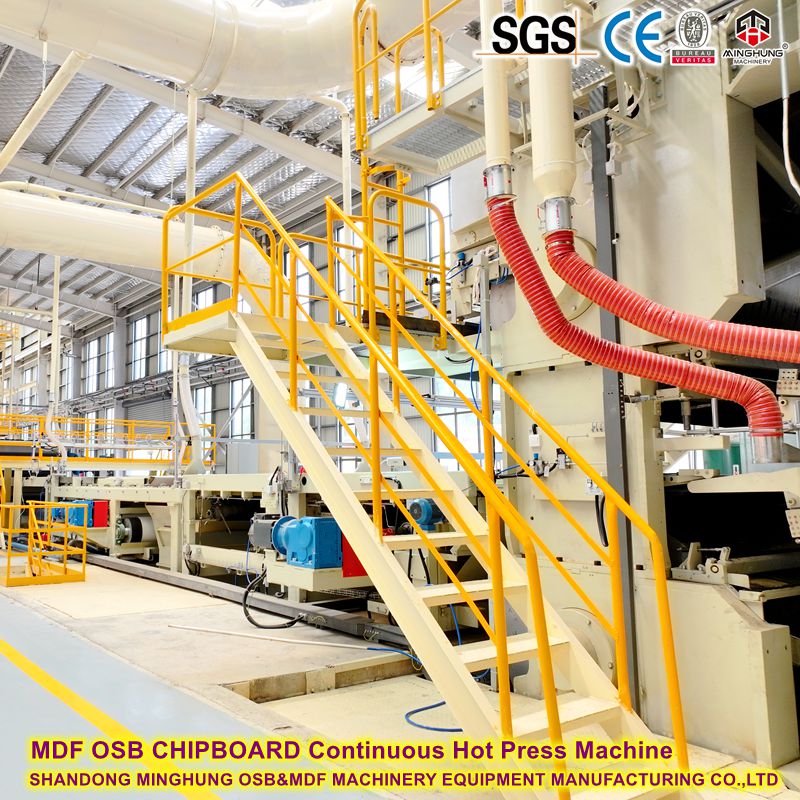
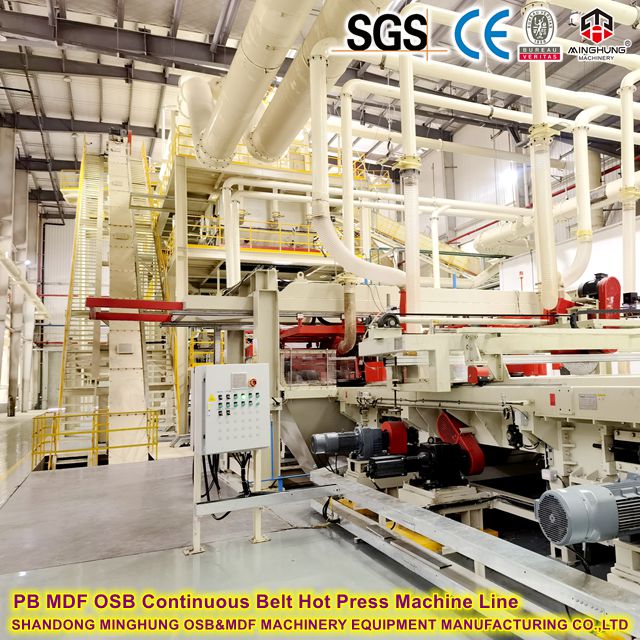
continuous hot press

5. Post-processing
Cooling & Conditioning: Roller cooling to <50℃, humidity adjusted to 8-10%
Curing: Stacked in climate chamber (25±2℃) for 48-72 hours
Sanding: Double-side calibrated to ±0.15mm tolerance
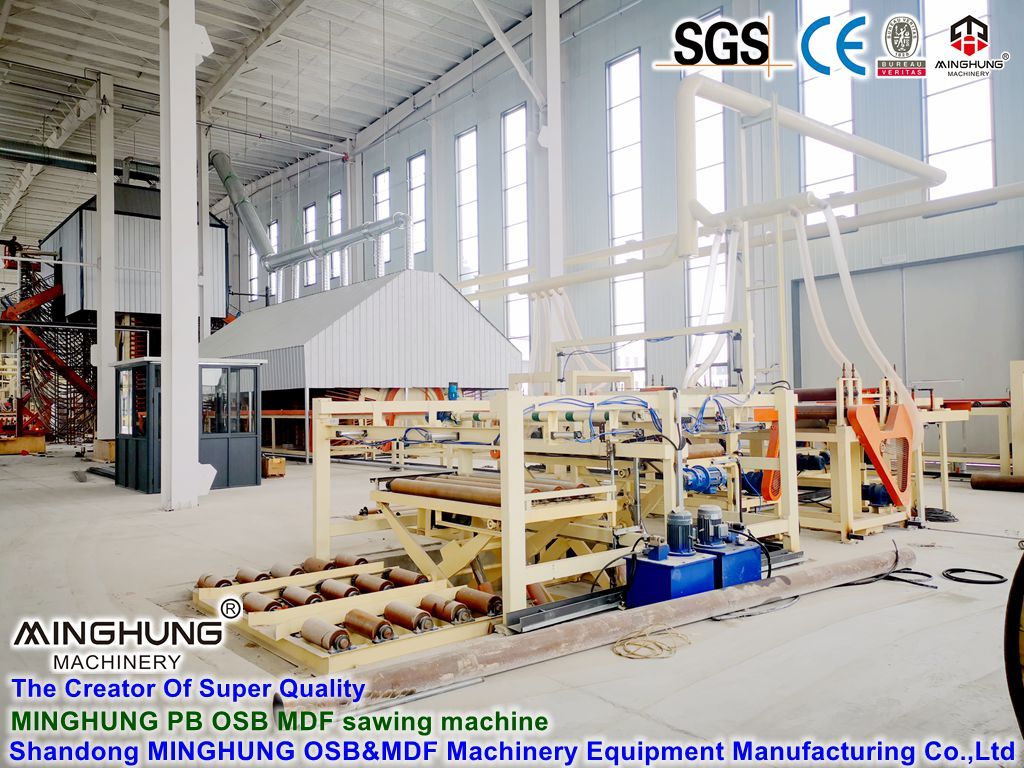
PB sawing machine
sanding machine for chipboard
Ⅲ.Conversion to Fireproof Board
1. Surface Treatment:
Coating with melamine resin + aluminum hydroxide filler (25-35g/㎡)
2. Decorative Lamination:
Layer | Material | Thickness |
Wear Layer | Sb₂O₃-containing overlay | 0.08-0.15mm |
Decorative Layer | Flame-retardant printed paper | 0.12-0.18mm |
Core | Treated substrate | 6-25mm |
Balance Layer | Phenolic-impregnated kraft | 0.3-0.5mm |
3. Hot Pressing:
Pressure: 8-12MPa
Temperature: 140-160℃
Time: 25-40 seconds/mm thickness
4. Post-Processing:
UV-cured scratch-resistant coating (3-5μm)
Surface texturing for stone/wood grain
Ⅳ.Key Performance Standards
Fire Rating (GB A-class): Heat release ≤2.0MJ/kg, smoke density ≤15
Physical Properties: Thermal conductivity 0.15-0.25W/(m·K), flexural strength ≥15MPa
Ⅴ. Critical Role of Hot Press in Class A Certification
5.1 Precision Temperature Control:
Flame retardants (e.g., aluminum hydroxide, phosphorus-nitrogen compounds) activate within specific ranges (180-220°C). Zoned heating ensures core-layer reaction without under/overburning.
5.2 Uniform Pressure Penetration:
High-pressure zones (>5MPa) force molten retardants into substrate pores, creating dense fire barriers to block oxygen diffusion.
5.3 Structural Integrity Assurance:
Constant-pressure curing eliminates internal stress, preventing post-cooling cracks (which compromise fire resistance) and ensuring structural stability during combustion tests.
Ⅵ. Technical Requirements for Class A Certification
6.1 Retardant Compatibility:
Press components (e.g., chrome-plated belts) must resist acid/alkali corrosion from retardants.
6.2 Low-Smoke Emission Design:
Negative-pressure exhaust systems remove volatile decomposition gases during pressing, reducing smoke density in later combustion.
6.3 Process Traceability:
Temperature/pressure curves must be recorded to verify activation conditions for certification audits.
Ⅶ. Certification Value
Regulatory Compliance: Mandatory for interior applications (especially high-rises/public spaces).
Performance Edge: Certified substrates achieve 1-3 hours fire resistance (EN 13501-2).


For more information, welcome contact us, we will reply you quickly and offer working videos with you.
+86 18769900191, +86 15805496117, +86 18954906501
The first day of the 2026 Shanghai International Woodworking Machinery Fair – if this morning's keyword was "surprise," then this afternoon's keywords are definitely "explosive" and "confidence"!
This new facility marks a fresh start for our company. Guided by our enduring commitment to "precision engineering and quality first," we are now better equipped than ever to provide efficient, durable, and innovative machinery solutions for the worldwide wood-based panel industry.
As Christmas approaches, Shandong MINGHUNG wood based panel machinery Co., Ltd. has welcomed another peak in shipments.
In early December 2025, the culmination of close collaboration between the MINGHUNG foreign trade team and our partners — 9 containers fully loaded with the core equipment for a plywood production line .
Shandong Minghung Wood Machinery Factory Shandong minghung wood machine factory produces plywood machinery in linyi city city, china, dedicated to providing high-quality and suitable machines veneer machine,plywood machine,veneer splicing machine.veneer dryer machine,veneer peeling machine,plywood v