Views: 0 Author: Mark Zhai Publish Time: 2023-05-27 Origin: original
Plywood Hot pressing process
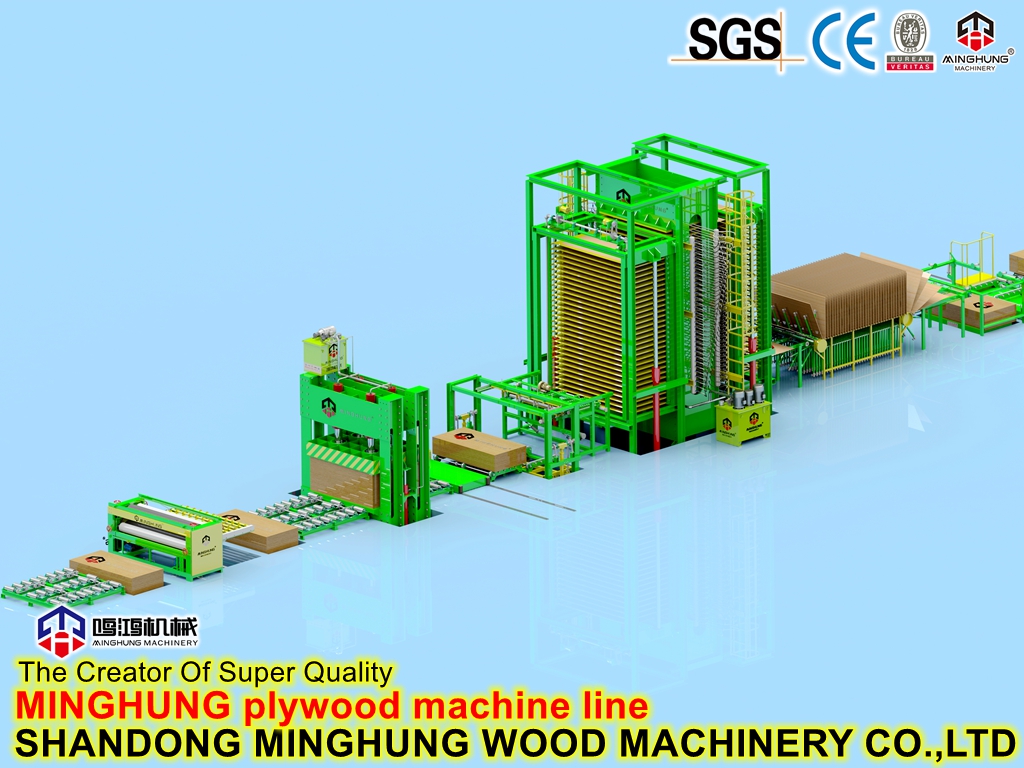
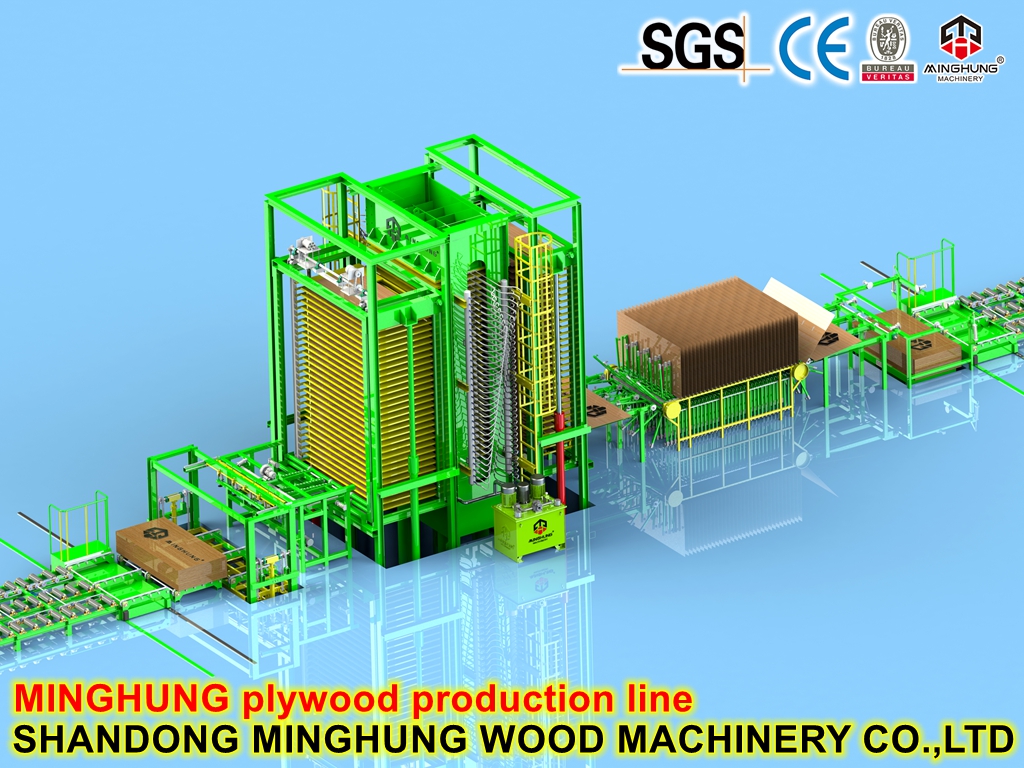
The slab is loaded into a hot press, and the adhesive is fully cured by heating to make a production process of plywood with high strength. Hot pressing is the most critical procedure in plywood production, which directly affects the strength and yield of plywood.
During the hot-pressing process, hot-pressing pressure, hot-pressing temperature, and hot-pressing cycle are key process parameters that affect product quality, and should be controlled from the following aspects:
1. Determination of hot-pressing temperature The hot-pressing temperature is mainly determined according to the type of adhesive, focusing on the temperature selection of urea-formaldehyde glue and phenolic resin, and the moisture content of the veneer should also be considered
2. Selection of hot pressing pressure If the hot pressing pressure is too high, the compression ratio of the slab will be too high, and the cost of raw materials will increase; if the pressure is too small, the strength of the plywood will decrease, which will affect the product quality. The pressure should be controlled within an appropriate range according to the process requirements, and the gauge pressure of the hot press should be calculated according to the unit pressure during operation
3. Determination of the hot-pressing cycle The hot-pressing cycle is mainly determined according to factors such as the thickness of the slab, the moisture content of the veneer, the type of glue, the hot-pressing temperature and the hot-pressing pressure. Experience, bulletin inspection of product quality to find out the heat press cycle parameters.
Hot press machine process for plywood making
The first stage is closed. In the boosting stage, the heat press starts slowly at first, and then closes quickly to shorten the heat pressing cycle. When it is close to the heat platen closing, the heat press turns to slow speed closure to ensure the heat press runs smoothly. . After the press is closed, the slab is compressed and the pressure is gradually increased until the highest pressure is reached
The second stage is the high-pressure dehydration stage. The hot press is maintained under high pressure for a period of time to squeeze out the free moisture in the slab. The holding time is set according to the process requirements
The third stage is the depressurization and low-temperature drying stage. After the high-pressure dehydration is completed, the hot press is depressurized. And keep it under low pressure for a period of time to make the slab form a plywood with a certain strength. The holding time is set according to the process requirements
The fourth stage is boosting. After the low-pressure drying is completed, the press is boosted to the highest pressure again, and the pressure is maintained for a period of time, so that the slab can form a plywood with a certain strength.
The fifth stage is the step-down and opening stage. The compressor depressurizes slowly at first. The high-pressure steam in the slab is gradually released to prevent defects such as delamination and bulging of the plywood. Then the heat press is turned on quickly. When the hot press descends to the end point, reduce it to a slow descent to avoid impacting the machine.
This new facility marks a fresh start for our company. Guided by our enduring commitment to "precision engineering and quality first," we are now better equipped than ever to provide efficient, durable, and innovative machinery solutions for the worldwide wood-based panel industry.
In early December 2025, the culmination of close collaboration between the MINGHUNG foreign trade team and our partners — 9 containers fully loaded with the core equipment for a plywood production line .
How to produce Particle board? What is the production step of Making Particle board?Introduction:Particle board, also known as chipboard, is a versatile and cost-effective material widely used in the construction and furniture industries. It is made by compressing wood particles and adhesive togethe