| Availability: | |
|---|---|
| Quantity: | |
MINGHUNG

Application Scenarios
Pine preservative plywood is a core product for outdoor and humid environment applications, with the following application scenarios:
Construction Formwork: High-strength formwork for concrete pouring, requiring water resistance and multiple reuses
Roofing Structures: Roof sheathing and attic flooring, needing protection against moisture and fungal decay
Outdoor Landscaping: Park facilities, outdoor furniture, trellises exposed to natural elements
Dock and Marine Facilities: Dock decking and marina structures in contact with fresh or saltwater
Agricultural Buildings: Livestock shelters, greenhouses, and other humid/corrosive environments
Pine (especially radiata pine) is the primary raw material for preservative plywood worldwide, due to its straight grain, excellent workability, and superior bonding performance. With the growth of outdoor timber construction and infrastructure development, demand for properly treated pine plywood continues to rise.
Core Process Flow
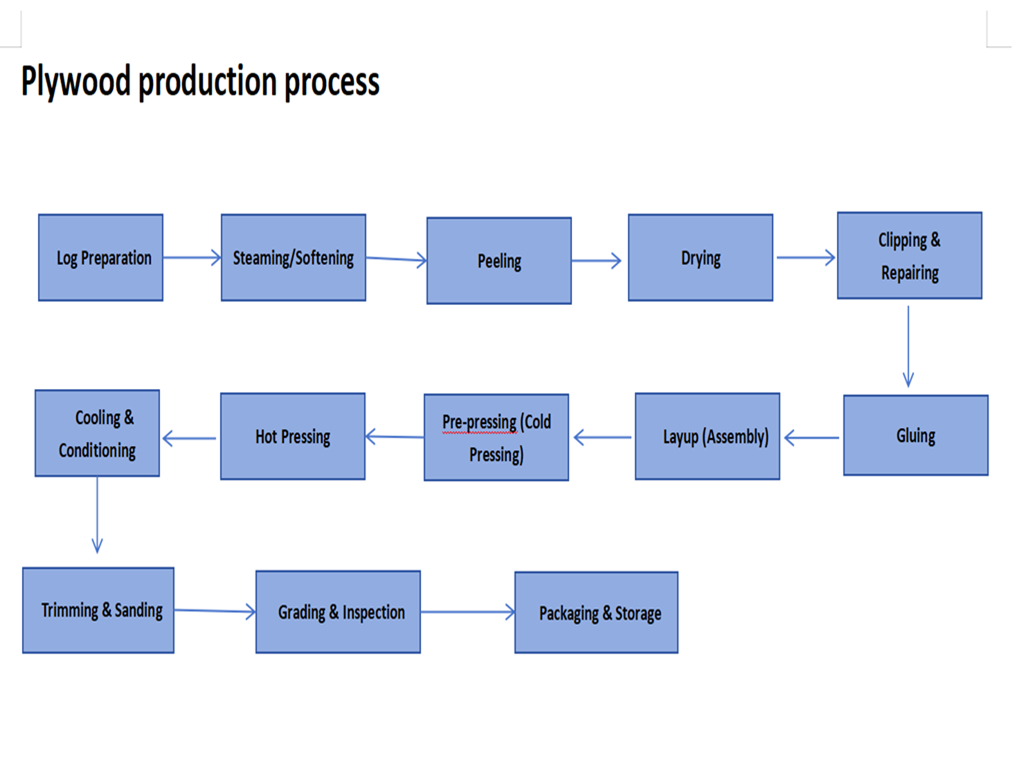
The pine preservative treated plywood production line covers the complete process from logs to finished treated panels:
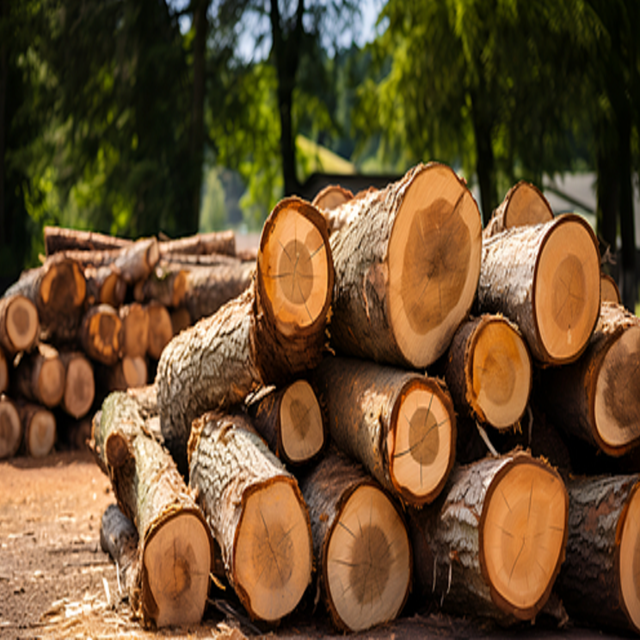
1. Log Preparation → Pine log cross-cutting and debarking
2. Steaming/Softening → High-temperature softening for improved peeling quality
3. Veneer Peeling → Peeling pine logs into continuous veneer ribbons
4. Veneer Drying → Reducing moisture content to 8-12% to prevent deformation
5. Veneer Grading & Patching → CCD inspection, grading, automatic plugging/splicing
6. Gluing & Layup → Using waterproof phenol-formaldehyde (PF) resin, cross-grain layup in odd layers
7. Cold Pre-Pressing → Air exhaustion and initial mat shaping
8. Hot Press Forming → High temperature and pressure curing adhesive to form plywood panels
9. Trimming & Sanding → Edge trimming to standard sizes, calibrating sanding
10. Preservative Treatment (Core Process) → Vacuum-pressure preservative impregnation
11. Curing & Conditioning → Preservative stabilization and panel performance conditioning
12. Quality Inspection & Grading → Testing preservative retention and penetration depth per AS/NZS standards
13. Packaging & Warehousing → Finished product packaging, ready for shipment

Main Production Equipment Introduction
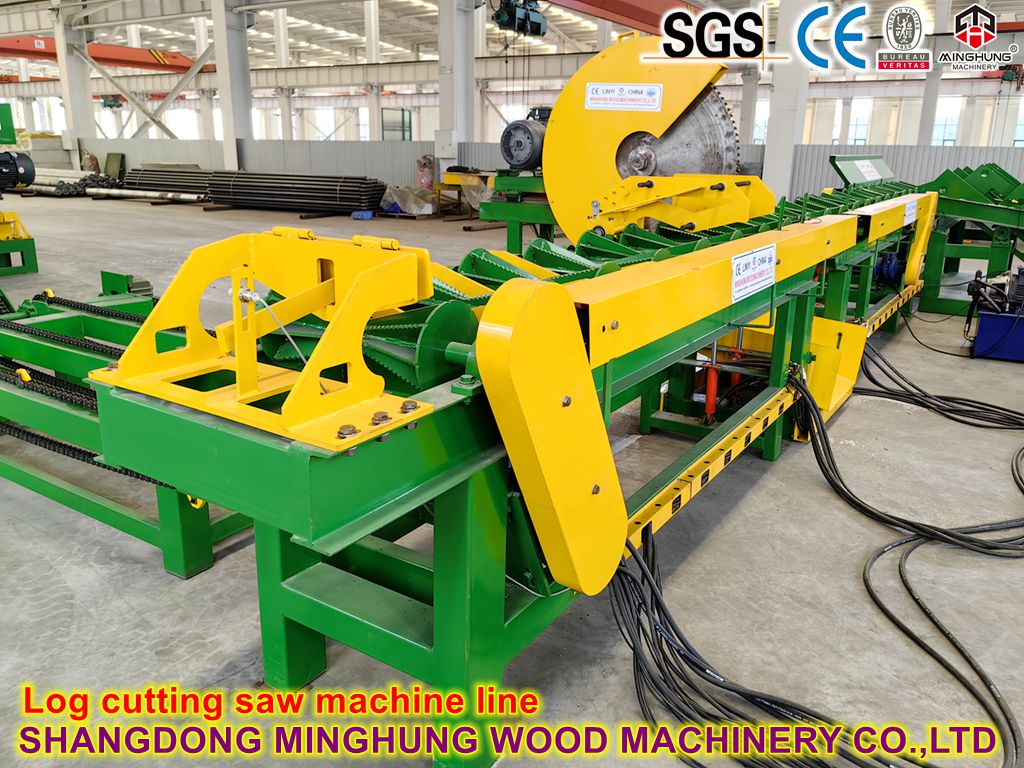
Log Cross-Cut Saw
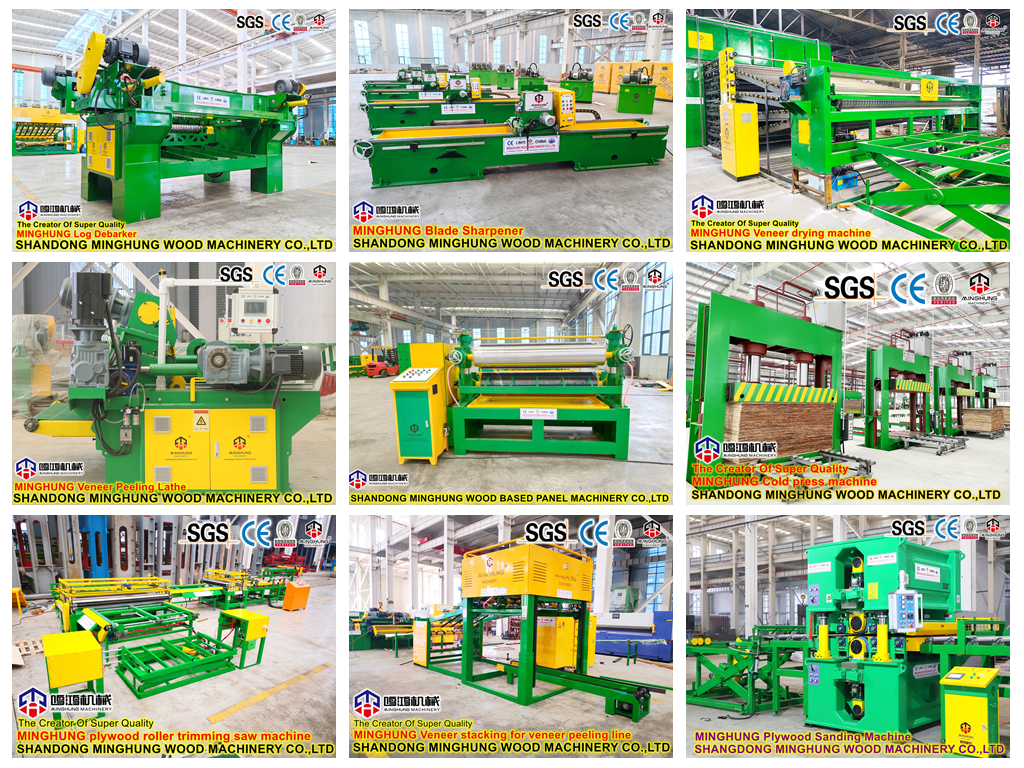
Cuts pine logs to predetermined lengths according to the peeling lathe processing requirements. Equipped with automatic feeding and length-fixing cutting systems, offering high cutting precision and fast production efficiency, capable of handling logs up to 600mm in diameter.
Pine Log Debarker
Removes the bark from pine logs to reduce impurities that affect subsequent peeling knives and veneer quality. Features a roller-type debarking design with hydraulic drive, delivering thorough bark removal with minimal damage to the log. Can handle logs with diameter 150-500mm, with debarking speed up to 57 meters per minute.
Veneer Peeling Lathe (With-Core / Coreless)
Peels softened pine logs into continuous ribbon veneer. This line features high-precision CNC peeling lathes capable of processing logs with diameter 150-800mm at peeling speeds up to 90 meters per minute, with veneer thickness accuracy up to ±0.05mm. Options include with-core lathes (suitable for large-diameter logs) and coreless lathes (suitable for small-diameter logs and residual materials).
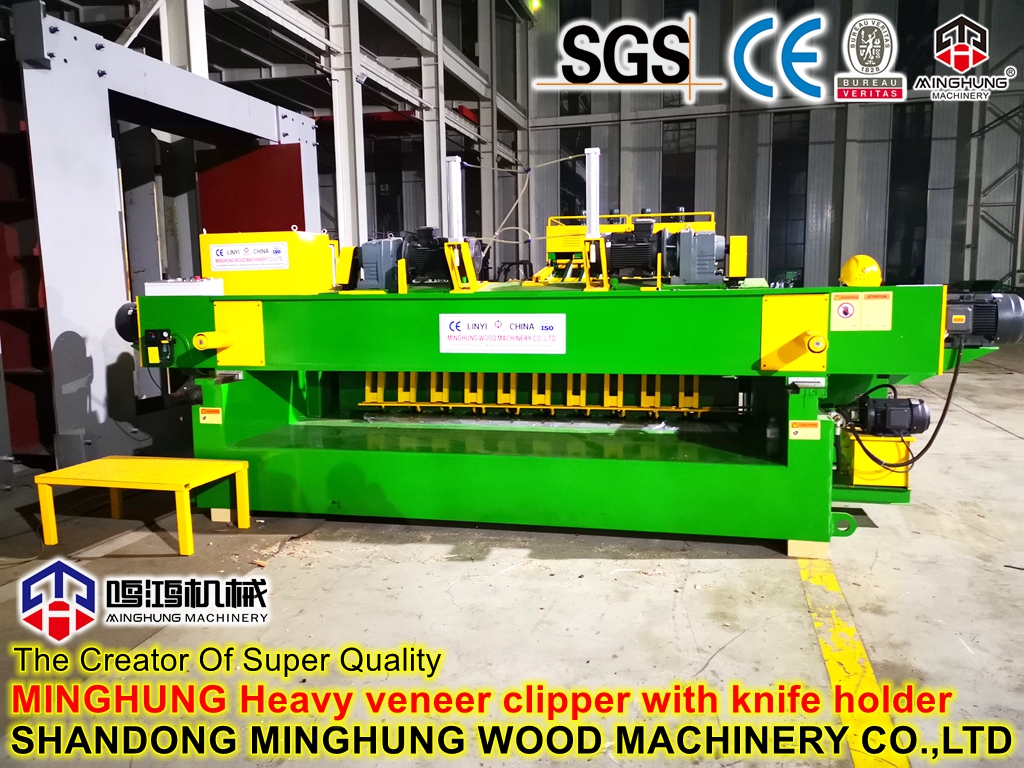
Veneer Edge Trimmer
Trims continuous ribbon veneer to specified standard widths, ensuring uniform veneer dimensions for subsequent layup. Features automatic width-fixing cutting, with trimming width range of 500-2700mm.
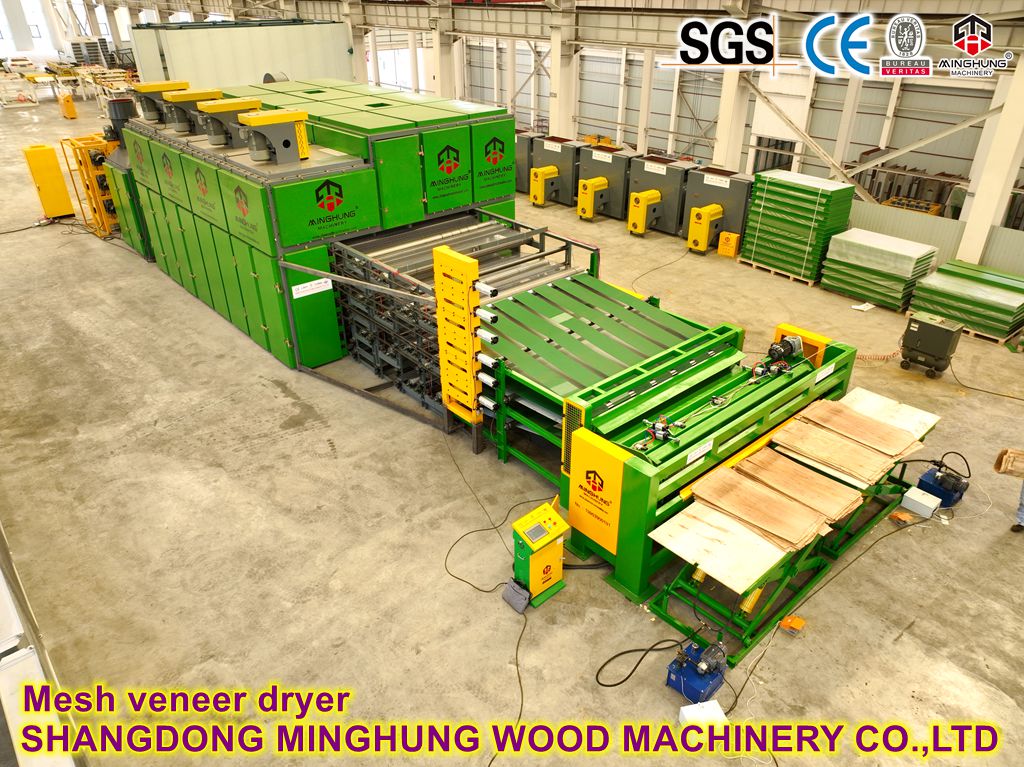
Veneer Dryer (Mesh-Belt or Roller Type)
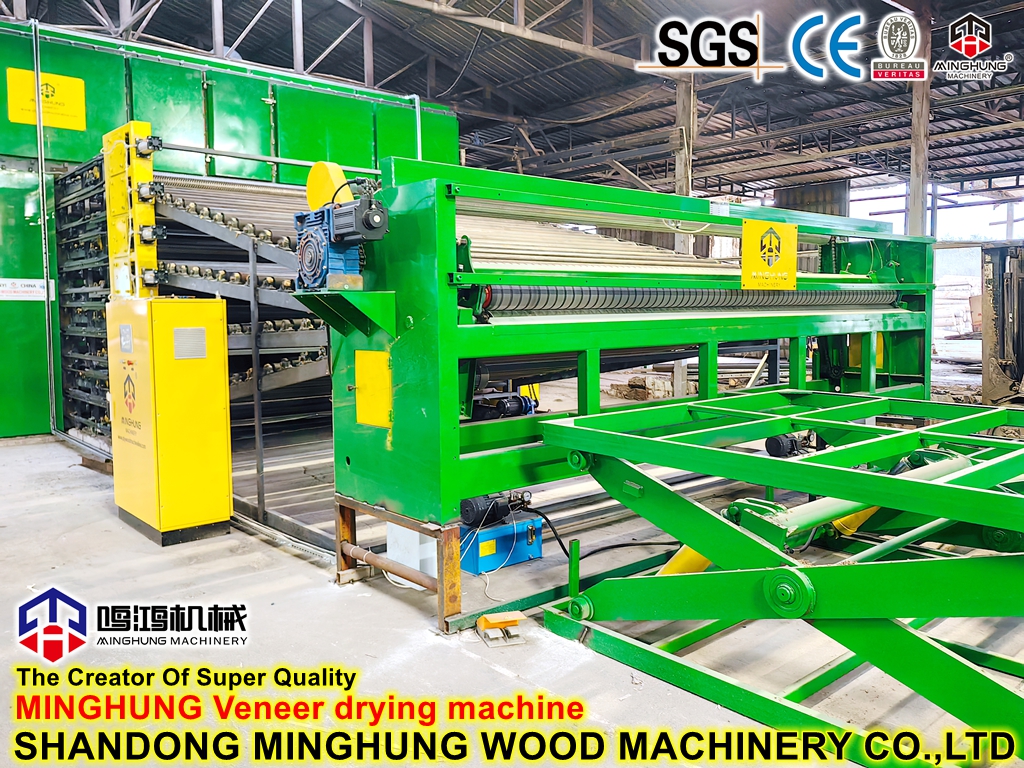
Dries wet veneer to 8%-12% moisture content to prevent warping and deformation. Mesh-belt dryers carry veneer flat on multi-layer belts through hot air circulation for uniform drying. Roller dryers pass veneer in wave form through large-diameter drying rollers. Drying temperature is zoned at 80-120℃, equipped with automatic moisture monitoring devices ensuring uniform drying results.
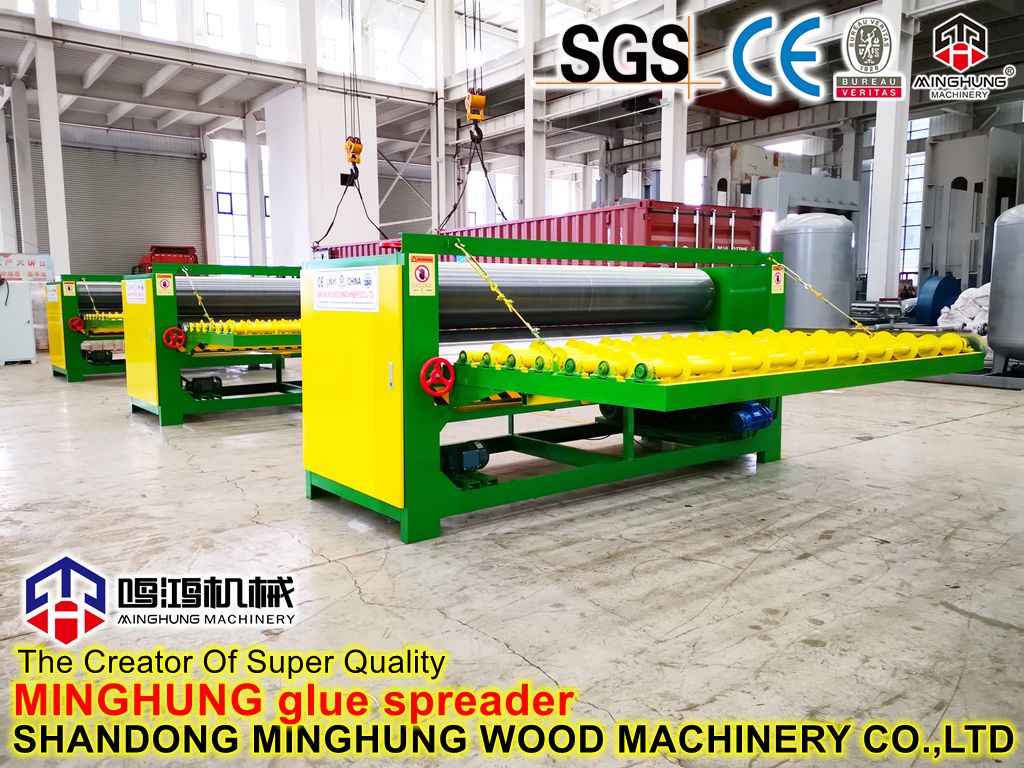
Precision Glue Spreader (Four-Roll Glue Spreader)
Applies waterproof phenol-formaldehyde (PF) resin adhesive uniformly onto both sides of core veneers. The precision four-roll glue spreader precisely adjusts gaps and speed ratios between rollers to maintain stable glue consumption at 180-220g/m² (double-sided) with accuracy of ±10g/m². Preservative plywood requires PF adhesive rather than ordinary UF resin, ensuring excellent water resistance and outdoor durability.
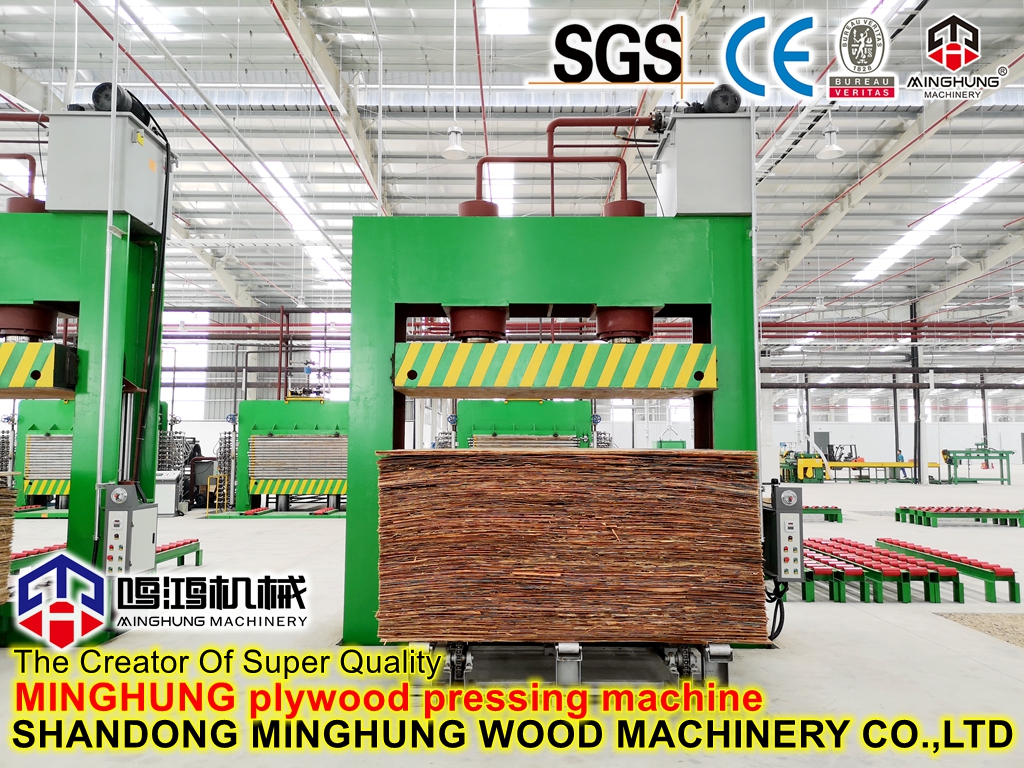
Cold Pre-Press
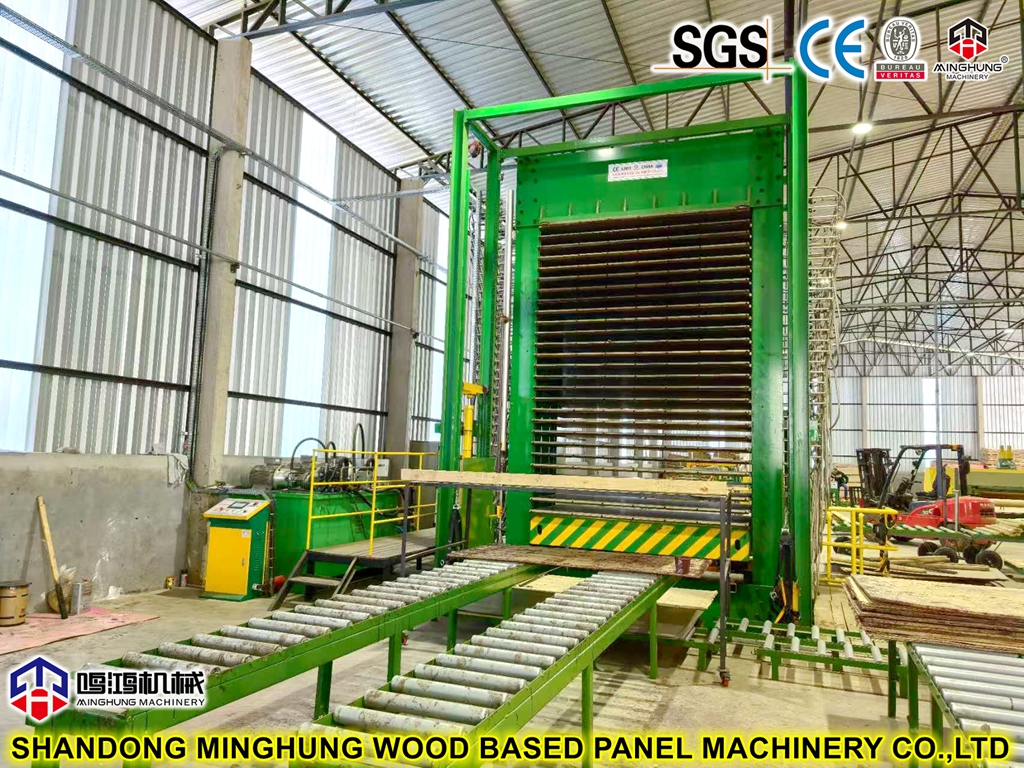
Pre-compresses assembled mats before hot pressing, removing inter-layer air and achieving initial shaping to prevent mat dislocation during hot pressing. Cold press pressure is typically 0.8-1.2MPa with holding time of 10-30 minutes.
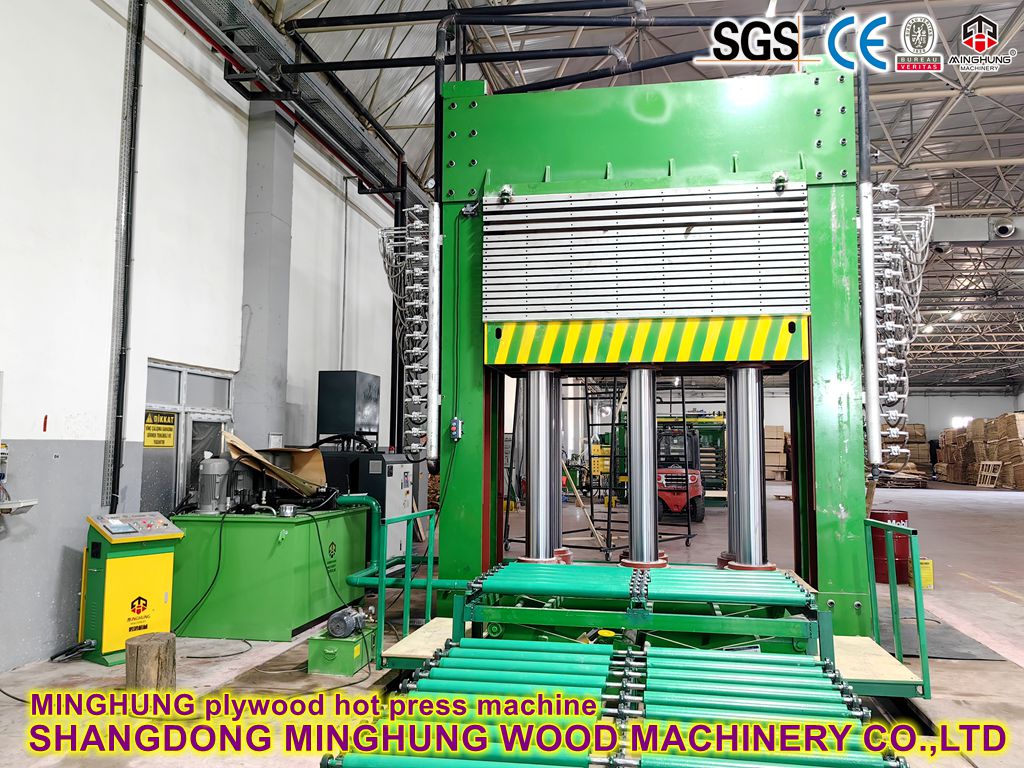
Multi-Layer Hot Press
The most critical equipment for plywood forming. Pre-pressed mats are loaded into the multi-layer hot press, where PF adhesive cures under set temperature (115-220℃), pressure (2.0-6.0MPa), and holding time, bonding multiple veneer layers into an integrated panel. This line features 15-26 opening hot presses capable of simultaneously pressing multiple boards in one batch. Platens are heated by thermal oil or steam with temperature difference controlled within ±1℃.
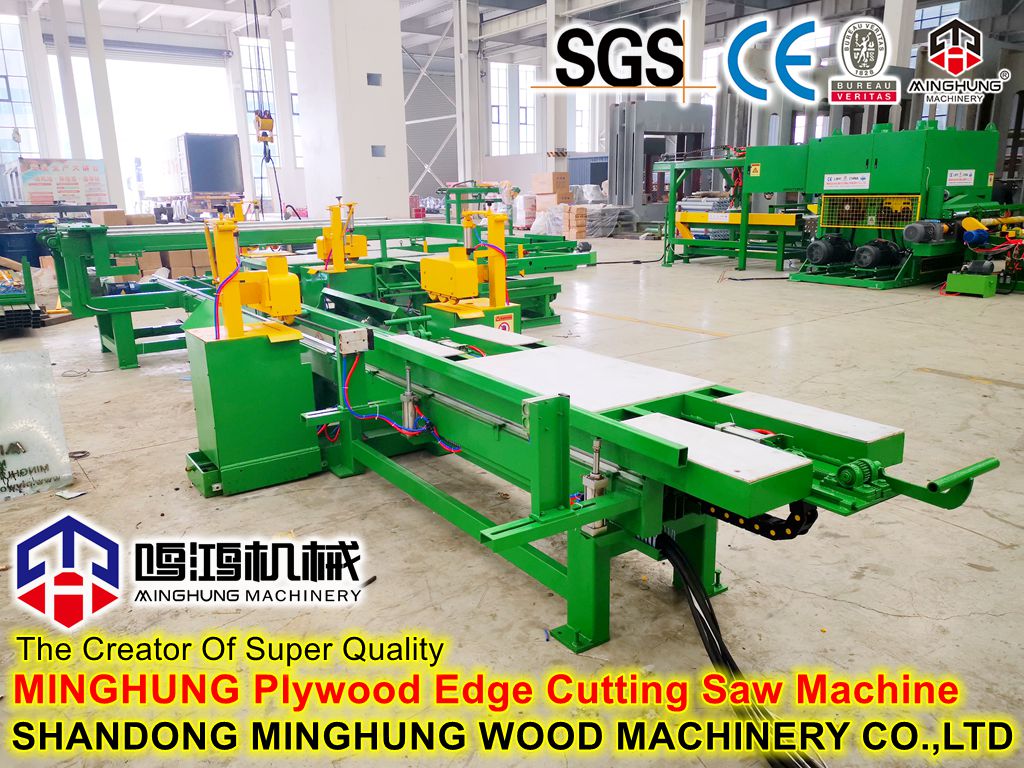
Cross-Cut & Edge Trimming Saw
Precisely trims hot-pressed rough panels to standard finished dimensions (e.g., 1220×2440mm). PLC controlled with infrared positioning, cutting accuracy ±0.5mm, working speed 40-70 meters per minute, capacity up to 8-12 sheets per minute.
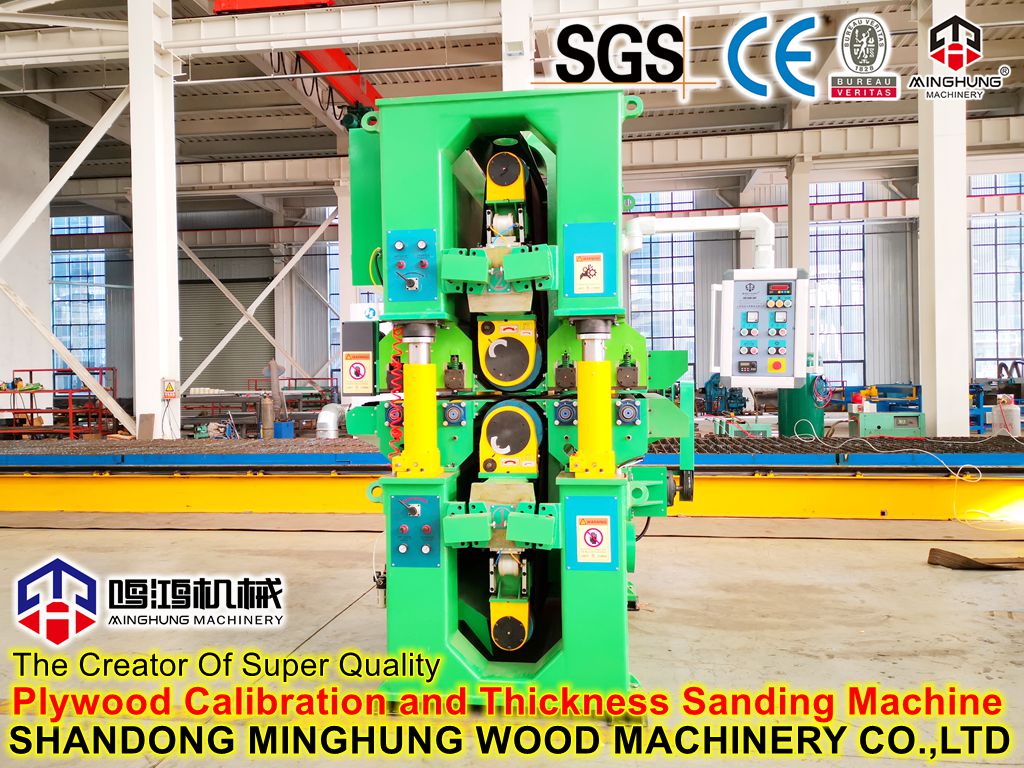
Sander (Three-Head Wide-Belt Sander)
Performs calibrating sanding and surface finishing on trimmed panels, achieving uniform thickness and smooth surface finish in preparation for preservative treatment. The three-head wide-belt sander completes coarse sanding, fine sanding, and polishing in one pass, with thickness accuracy ±0.1mm and surface roughness Ra≤3.2μm.
Vacuum-Pressure Preservative Treatment Retort
The signature equipment of this production line. Loads sanded pine plywood into sealed treatment retorts for vacuum-pressure impregnation. Process sequence includes: initial vacuum (removing air from wood cells) → preservative solution injection → pressure impregnation (1.0-1.5MPa, forcing preservative into wood fibers) → final vacuum (recovering excess preservative). Retorts are constructed of corrosion-resistant stainless steel with automatic level and pressure controls.
Preservative Mixing & Circulation System
Includes preservative concentrate storage tanks, mixing tanks, working solution tanks, circulation pumps, and filtration units. This system dilutes preservative concentrate to working solution at precise ratios, circulating between retorts and tanks for efficient reuse and minimal chemical waste. Equipped with automatic proportioning control with concentration accuracy of ±0.1%.
Curing & Conditioning Area
After preservative treatment, plywood panels require placement in a controlled temperature and humidity environment for sufficient fixing of preservatives within the wood. Curing time is generally 24-72 hours, maintaining ambient temperature at 20-40℃ with protection from direct sunlight and rain.
Automatic Stacking & Packaging System
Automatically sorts and stacks quality-approved panels by grade, wrapping with stretch film, adding edge protectors, and securing with strapping bands to form shipping-ready packaging units suitable for long-distance sea freight.
Thermal Oil Heater or Steam Boiler
Provides heat source for hot presses and dryers. Options include coal-fired, oil-fired, gas-fired, or biomass-fired boilers based on customer's fuel availability, offering high thermal efficiency and stable operation.
PLC Central Control System
The central nervous system of the entire production line. Provides centralized control and real-time monitoring of all equipment parameters including temperature, pressure, time, and speed via touch screen. Features fault self-diagnosis alarm and remote monitoring interface for intelligent production management.

Key Technical Specifications
Parameter | Specification |
Applicable Raw Materials | Radiata pine, southern pine, and various pine species |
Finished Panel Size | 1220×2440 mm (4×8 ft), customizable |
Panel Thickness Range | 9 mm - 30 mm |
Daily Output Capacity | 300 - 800 sheets (standard 4×8 ft panels) |
Hot Press Temperature | 115℃ - 220℃ (temperature control accuracy ±1℃) |
Hot Press Pressure | 2.0 - 6.0 MPa (adjustable) |
Number of Hot Press Openings | 15 - 26 layers |
Adhesive Type | Phenol-Formaldehyde (PF) resin, waterproof grade |
Preservative Types | ACQ, CCA, Boron, MCQ (optional) |
Treatment Method | Vacuum-Pressure Impregnation (initial vacuum + pressure + final vacuum) |
Treatment Pressure | 1.0 - 1.5 MPa |
Finished Product Moisture Content | ≤25% (after treatment and conditioning) |
Thickness Tolerance | ±0.1 mm - ±0.3 mm |
Control System | PLC touch screen fully automatic + remote monitoring |
Why Choose This Production Line?
1. Integrated Full-Process Design: Complete coverage from log peeling to finished preservative treatment, reducing intermediate losses and coordination costs
2. International Standard Treatment Process: Vacuum-pressure impregnation technology ensuring deep preservative penetration
3. Multiple Preservative Compatibility: Flexible switching between ACQ, CCA, Boron, MCQ and other preservative systems for different export market requirements
4. High-Quality Pine Plywood: Waterproof phenol-formaldehyde resin adhesive and strict hot pressing process ensuring superior bond strength and water resistance
5. High Automation Level: PLC fully automatic control reducing labor dependence and ensuring product consistency
6. Turnkey Service: One-stop support from equipment installation, process commissioning to operator training
This new facility marks a fresh start for our company. Guided by our enduring commitment to "precision engineering and quality first," we are now better equipped than ever to provide efficient, durable, and innovative machinery solutions for the worldwide wood-based panel industry.
As Christmas approaches, Shandong MINGHUNG wood based panel machinery Co., Ltd. has welcomed another peak in shipments.
In early December 2025, the culmination of close collaboration between the MINGHUNG foreign trade team and our partners — 9 containers fully loaded with the core equipment for a plywood production line .
Shandong Minghung Wood Machinery Factory Shandong minghung wood machine factory produces plywood machinery in linyi city city, china, dedicated to providing high-quality and suitable machines veneer machine,plywood machine,veneer splicing machine.veneer dryer machine,veneer peeling machine,plywood v
How to produce Particle board? What is the production step of Making Particle board?Introduction:Particle board, also known as chipboard, is a versatile and cost-effective material widely used in the construction and furniture industries. It is made by compressing wood particles and adhesive togethe