|
Product Description
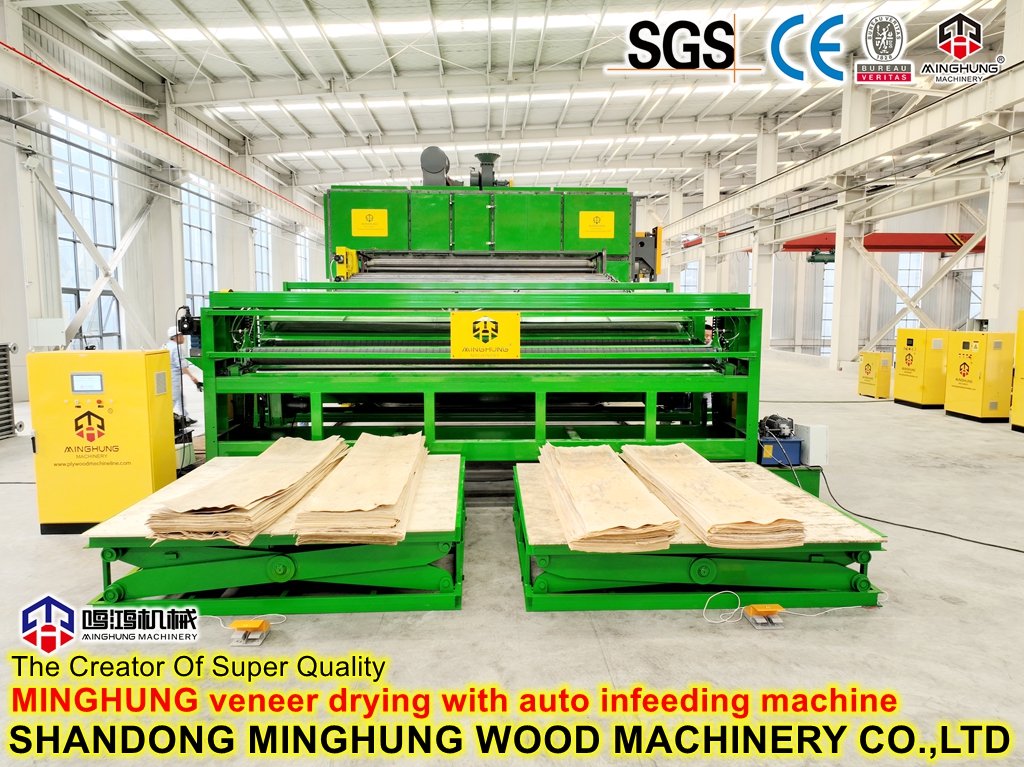
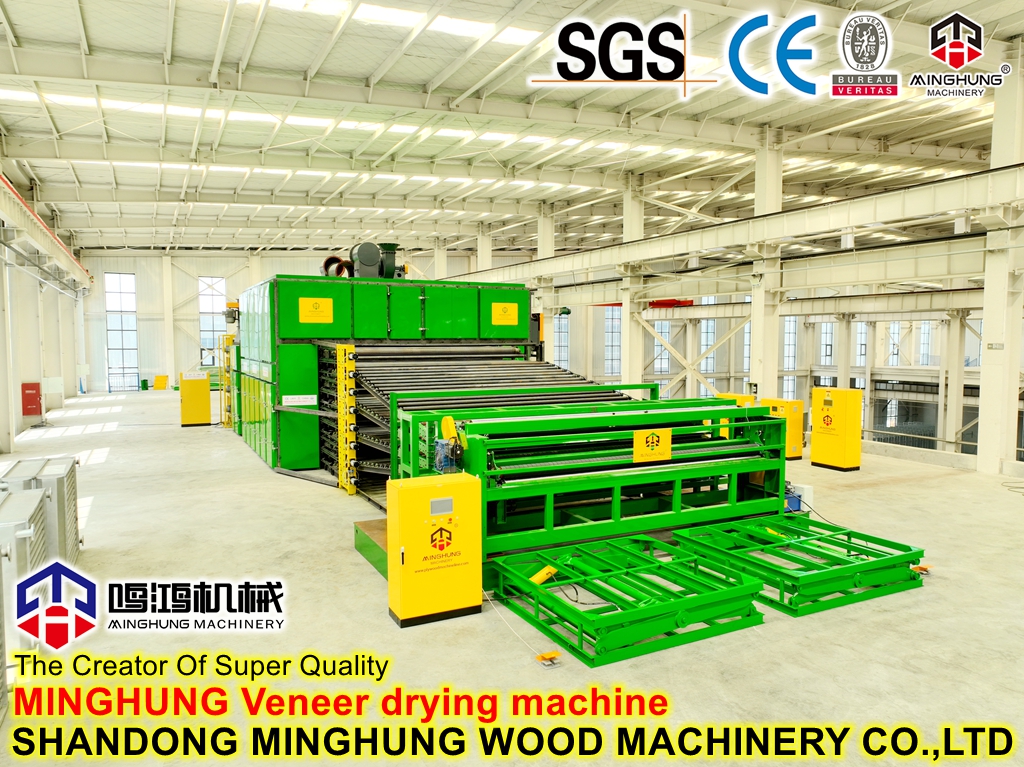
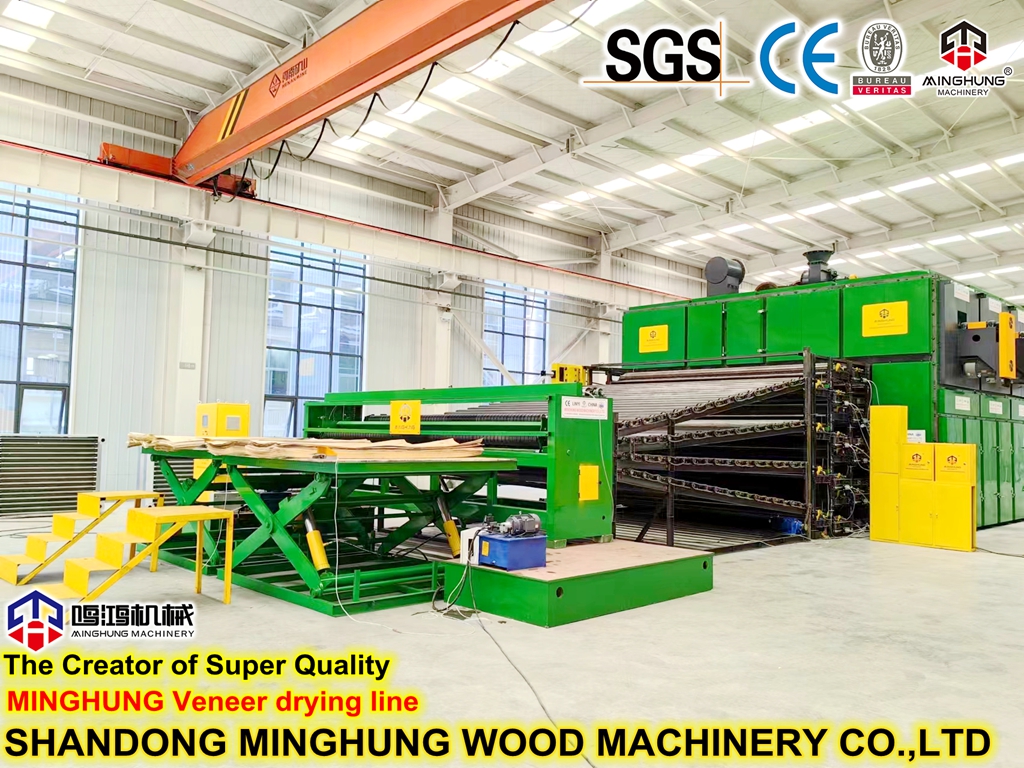
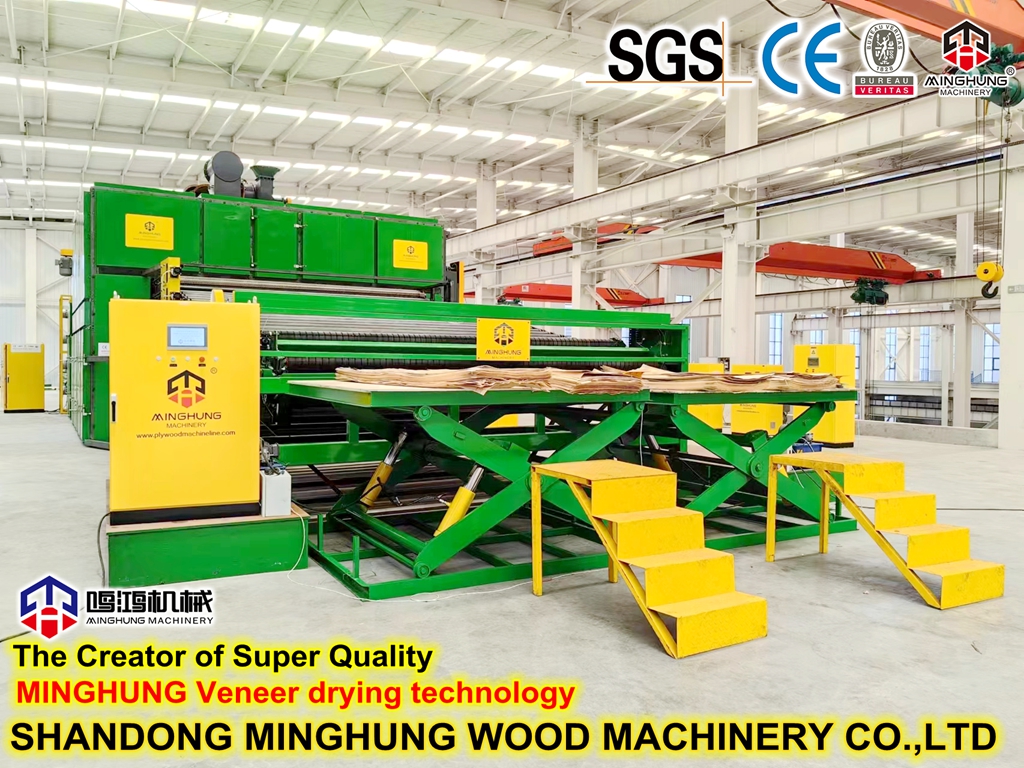
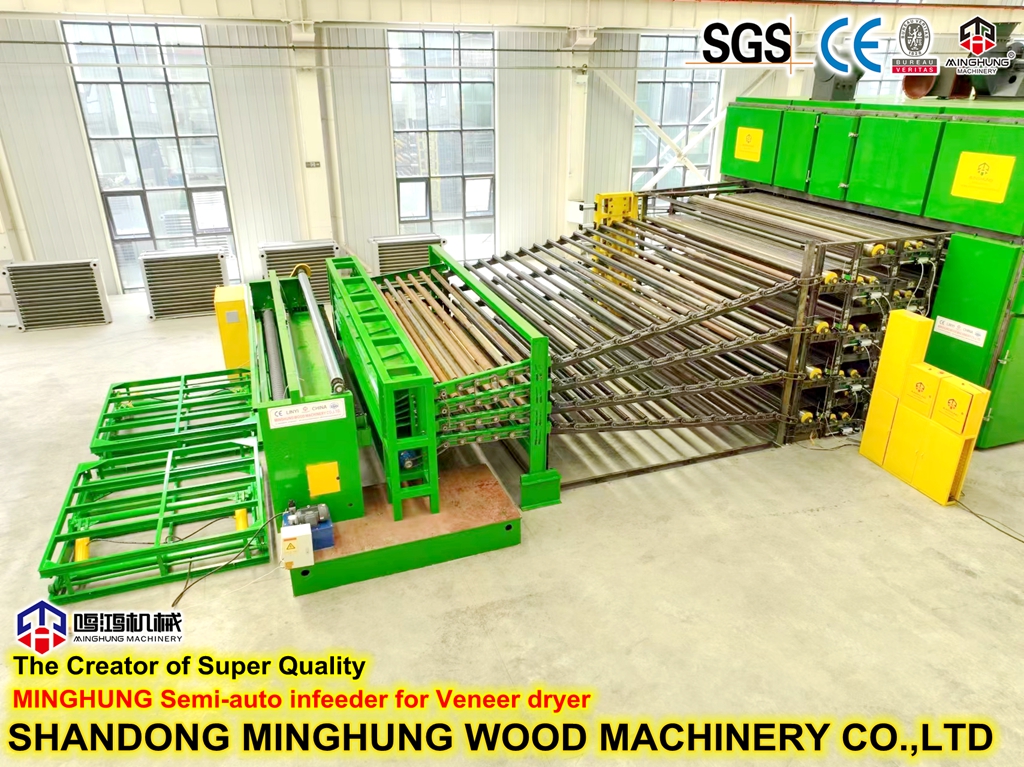
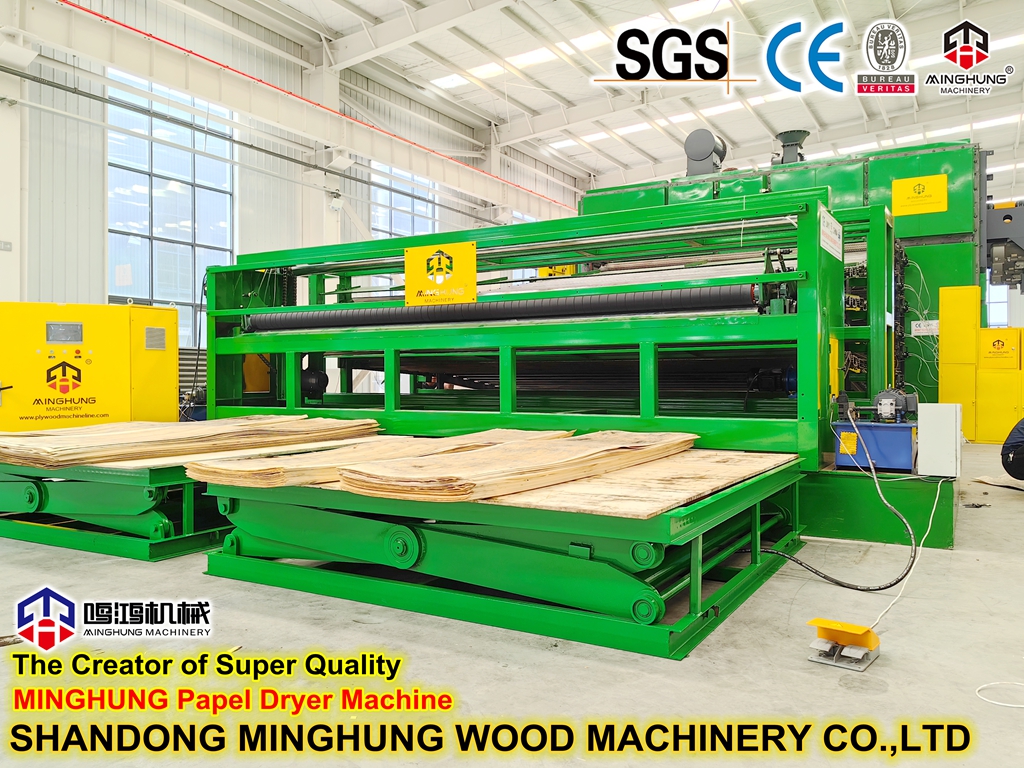
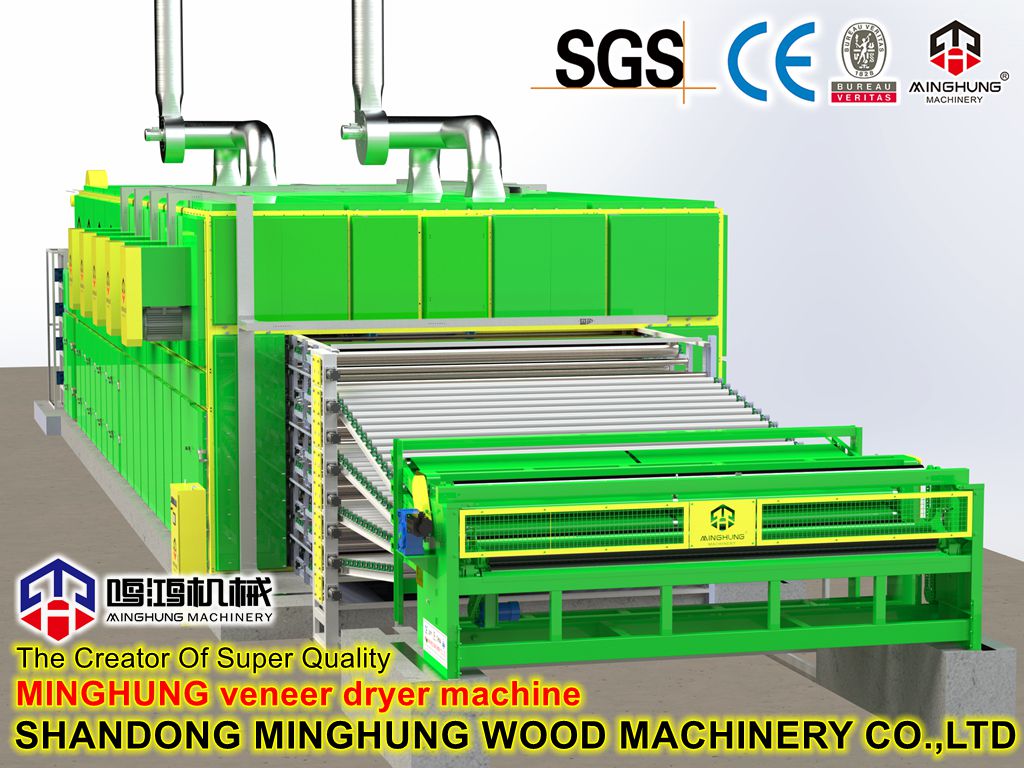
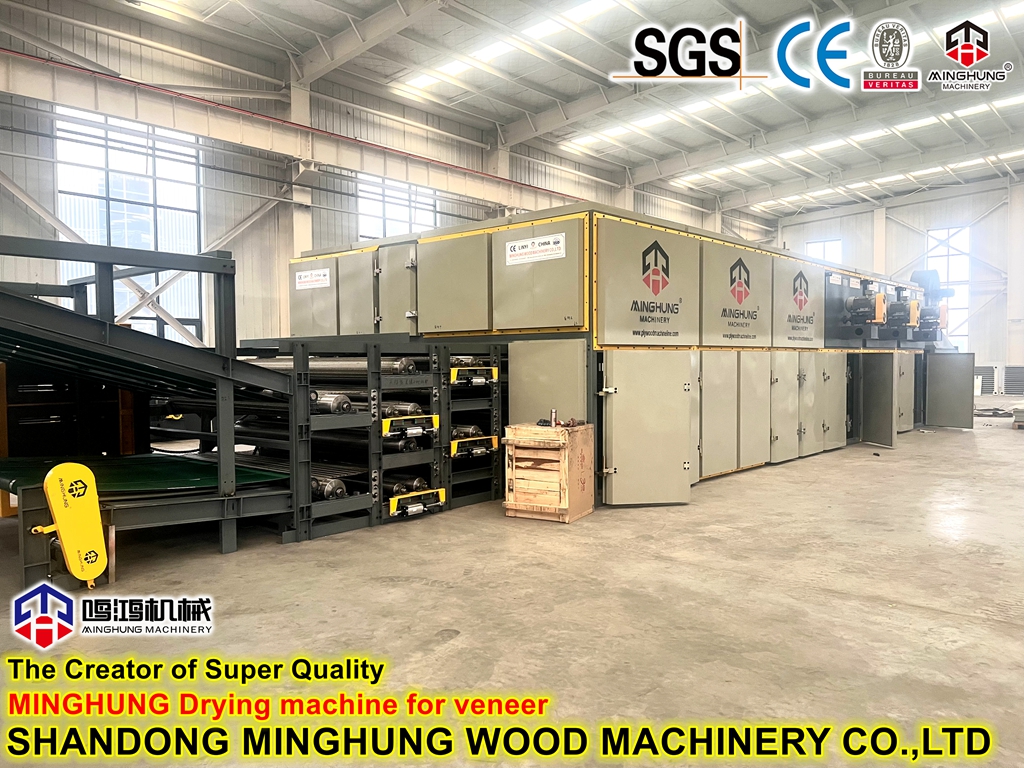
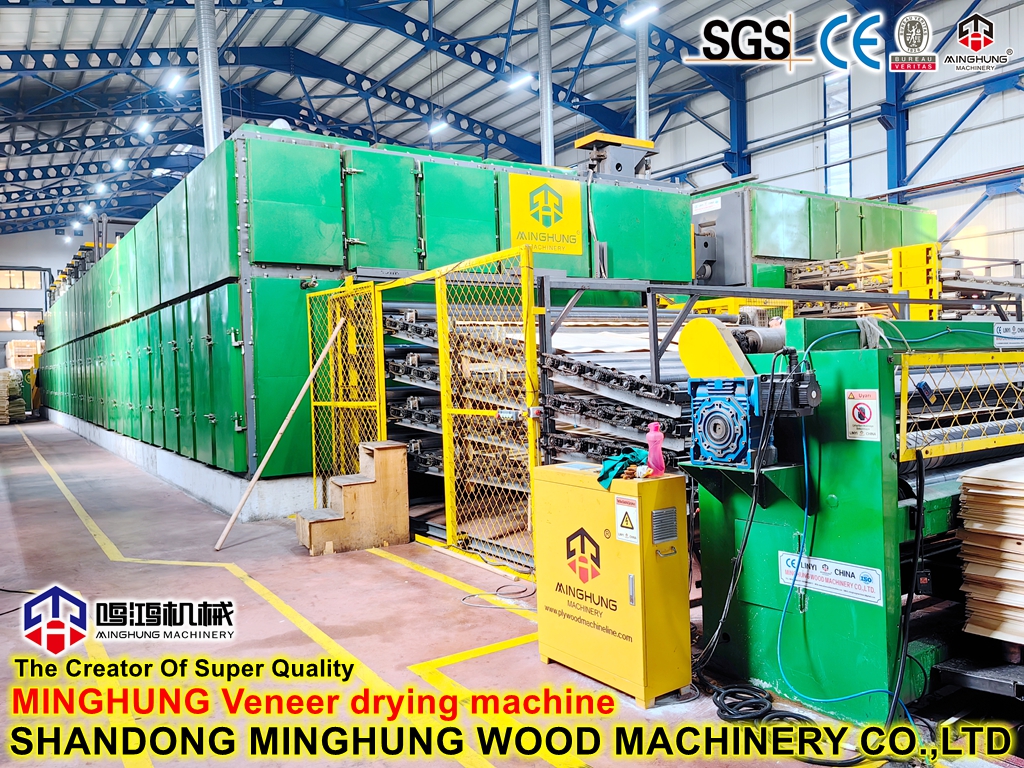
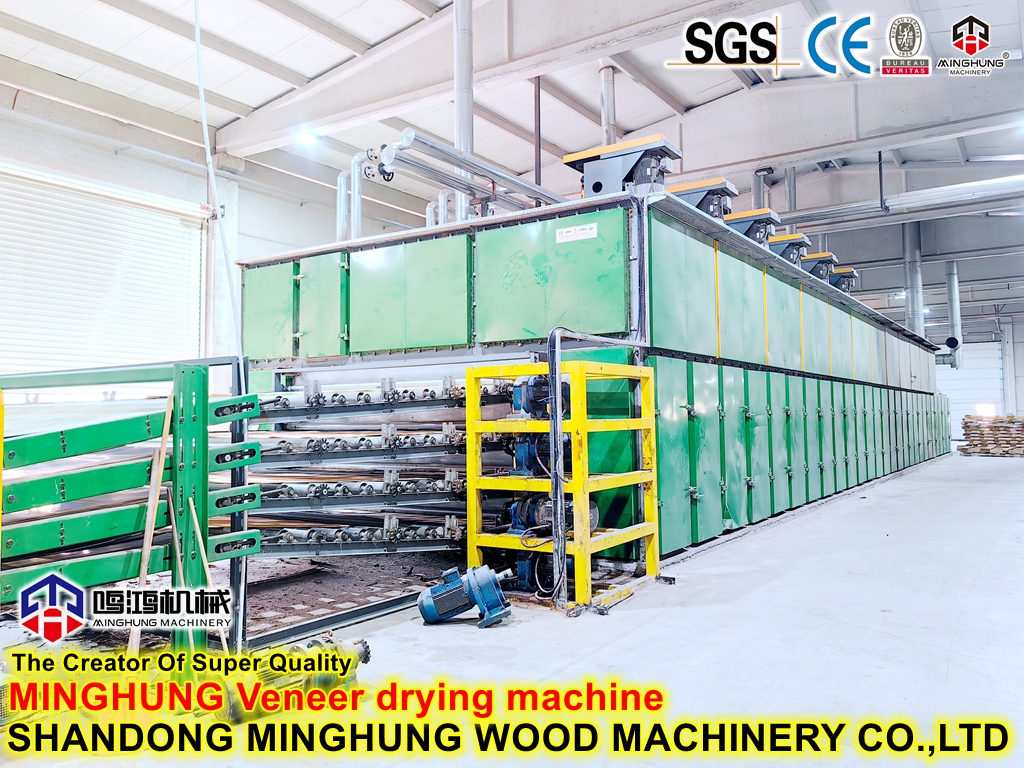
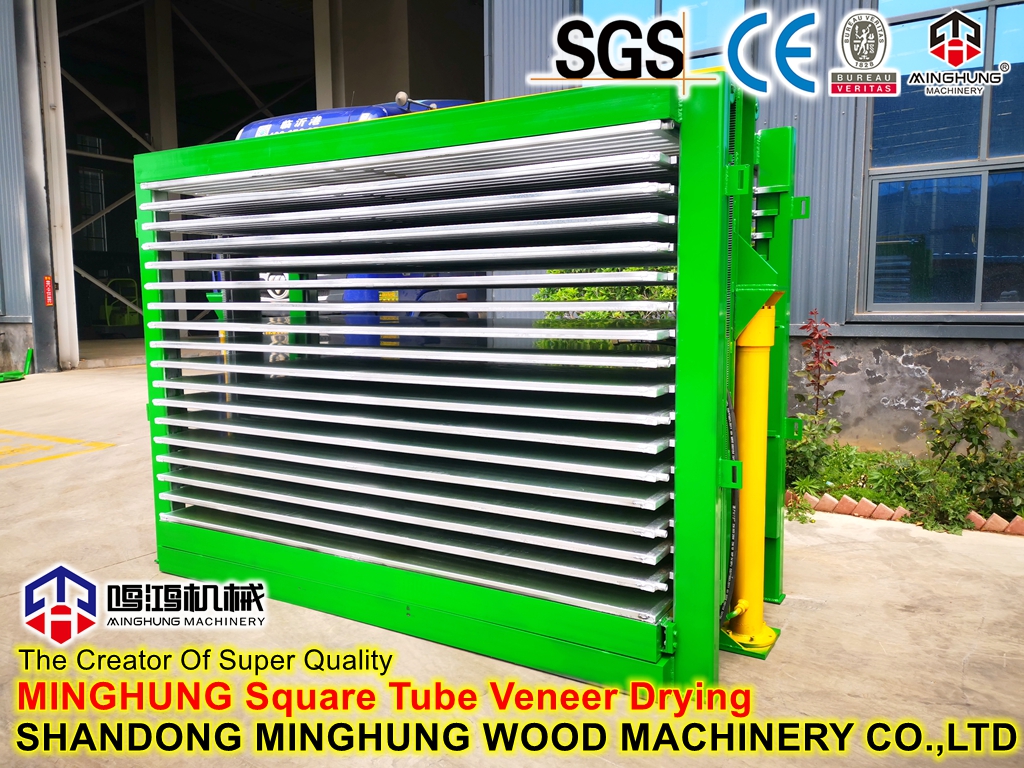
A plywood veneer dryer is specialized industrial equipment designed to dehydrate veneer—the core raw material in plywood production. Its primary function is to rapidly and uniformly reduce the moisture content of freshly peeled or sliced wet veneer (typically 30%-120% or higher) to a level suitable for subsequent gluing processes (usually 6%-12%) through heat exchange.
Drying is a critical process in plywood manufacturing, directly determining the final product's:
Quality: Prevents delamination, warping, and blistering in the panel, enhancing glue bond strength and dimensional stability.
Grade Yield: Uniform drying minimizes checking and discoloration, increasing the output of higher-grade veneer.
Production Efficiency: Fast drying is a prerequisite for continuous, large-scale production.
Production Cost: Efficient dryers significantly reduce energy consumption per unit of product.
|
Fundamental Working Principle
Despite various types, the core principle is based on heat and mass transfer:
1. Heat Generation: A heat source (steam, thermal oil, natural gas, biomass, or electricity) heats air or surfaces.
2. Heat Transfer: The heated air (convection) or surfaces (conduction) transfer heat to the wet veneer.
3. Moisture Evaporation: Internal moisture in the veneer absorbs heat and evaporates from liquid to vapor.
4. Moisture Removal: The generated vapor is carried away by flowing air (the drying medium), maintaining the drying potential.
|
Main Types and Characteristics
1. Mesh Belt (or Mesh Drum) Dryer
Principle: Veneer sheets are laid flat on a horizontally moving stainless steel or alloy mesh belt (or fed through multiple mesh drums). Hot air, driven by circulating fans, passes vertically through the veneer layers.
Advantages:
Excellent Uniformity: Vertical airflow ensures even heating on both sides.
High Versatility: Suitable for various species and thicknesses (especially thin veneer) with low breakage.
High Automation: Continuous feeding, easy integration into production lines.
Corrosion-Resistant Design: Critical components can be stainless steel, ideal for acidic wood species.
Application: The most widely used and mainstream equipment for high-quality veneer drying in the global plywood industry today.
2. Roller (or Hot Plate) Dryer
Principle: Veneer passes between a series of heated (by steam or thermal oil) metal rollers. Heat is transferred primarily through contact conduction, supplemented by hot air convection.
Advantages:
High Thermal Efficiency: Contact heat transfer is more efficient than convection, leading to relatively lower energy consumption.
Fast Drying Rate: Particularly effective for thicker veneer.
Smoothing Effect: Can improve veneer surface smoothness to some extent.
Application: Was widely used historically; still found in specific applications for certain species or thick veneer.
3. Hot Press Dryer
Principle: Stacks of veneer are placed in a multi-opening hot press for rapid drying and setting under controlled temperature and pressure.
Advantages: Extremely fast drying and capable of producing high-density specialty boards.
veneer or R&D.
4. Other & Emerging Types
Dehumidification (Heat Pump) Dryer: Uses a heat pump cycle to recover latent heat from exhaust air, offering very high energy efficiency. Suitable for temperature-sensitive woods or areas with ample electricity, but less common for large-scale veneer drying.
Solar Pre-Drying: Used as an auxiliary energy source for pre-drying to reduce overall energy consumption.
Modern plywood veneer dryers are evolving towards high efficiency, uniformity, energy savings, intelligence, and durability. Among them, well-designed mesh belt dryers with corrosion resistance have become the standard configuration in global high-end plywood production lines due to their superior drying quality and operational stability.
|
Comment & FAQ
Q:What can you purchase from us?
A:Particle board production line, directional particle board production line, medium/high fiber board production line, hot press, preforming press machine, plywood production line, automatic production line for hot press, veneer dryer, hot press, cold press machine and other woodworking machinery.
Q:How long the production time?
A:If one set machine,3-4 months;If the full production line 6-8 months.
Q:What are your advantages?
A:We have rich experience in the market, with the same cost, we do better because we have strict control of the production process. We have an independent inspection department to check the quality.
Q:How is your quality?
A:As an experienced manufacturer, the quality of our machines can be guaranteed and we have supplied our products to thousands of customers all over the world.
|
Company Profile
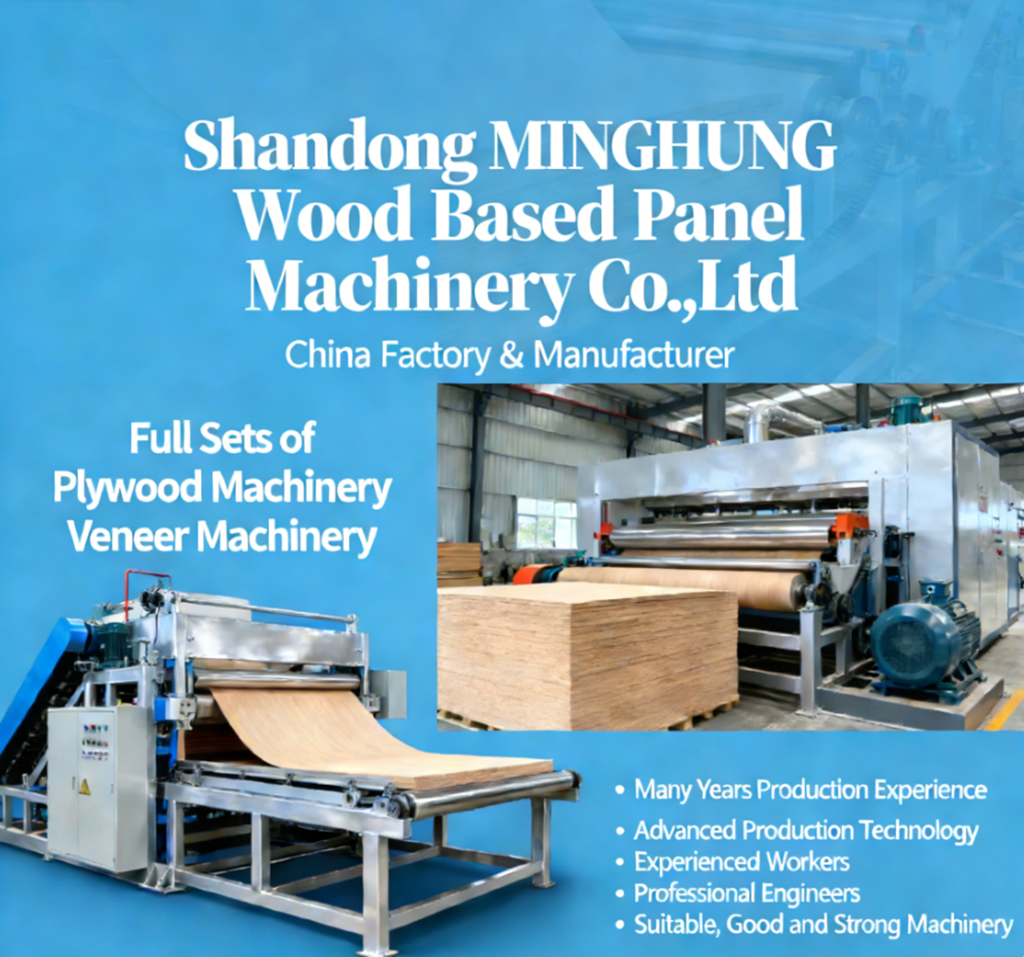
We are Shandong MINGHUNG Wood Based Panel Machinery Co.,Ltd China factory and manufacturer of full sets of Plywood machinery and Veneer machinery. With many years production experience, advanced production technology,experienced workers and professional engineers, we can offer you the suitable, good and strong machinery for you.
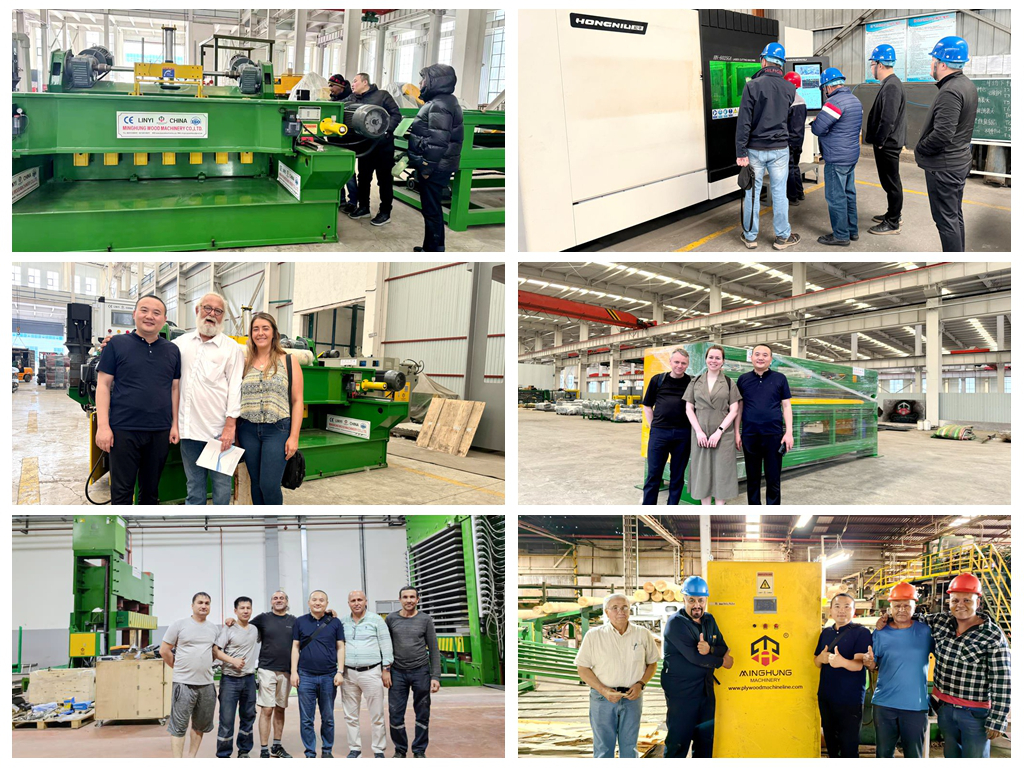
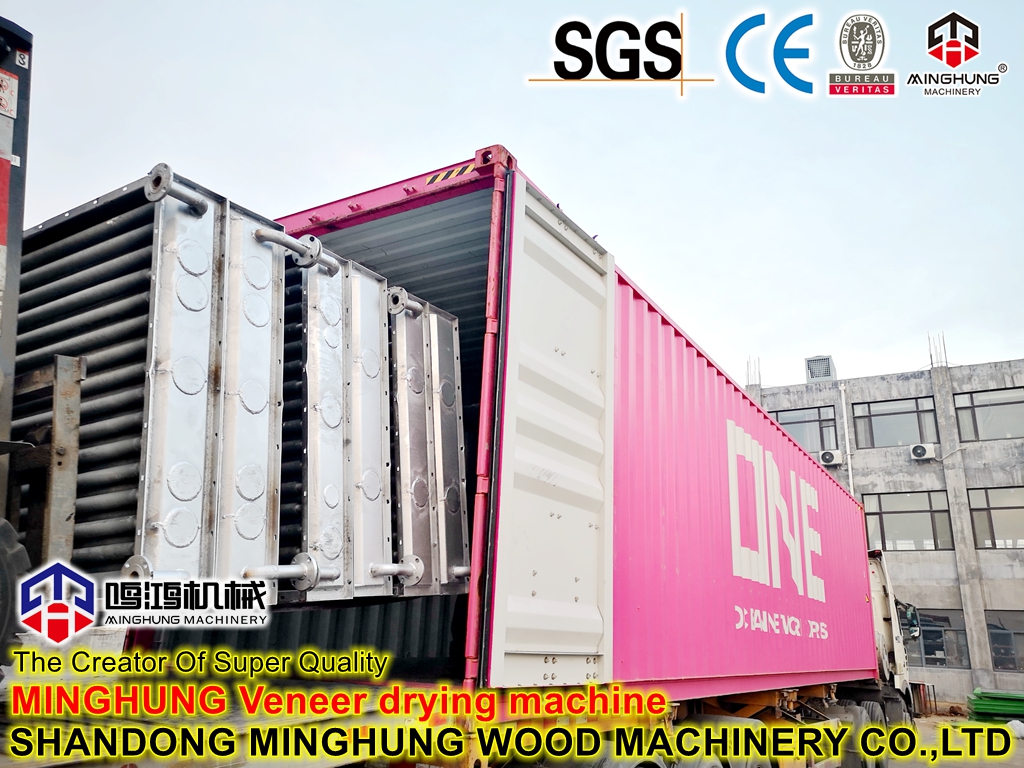
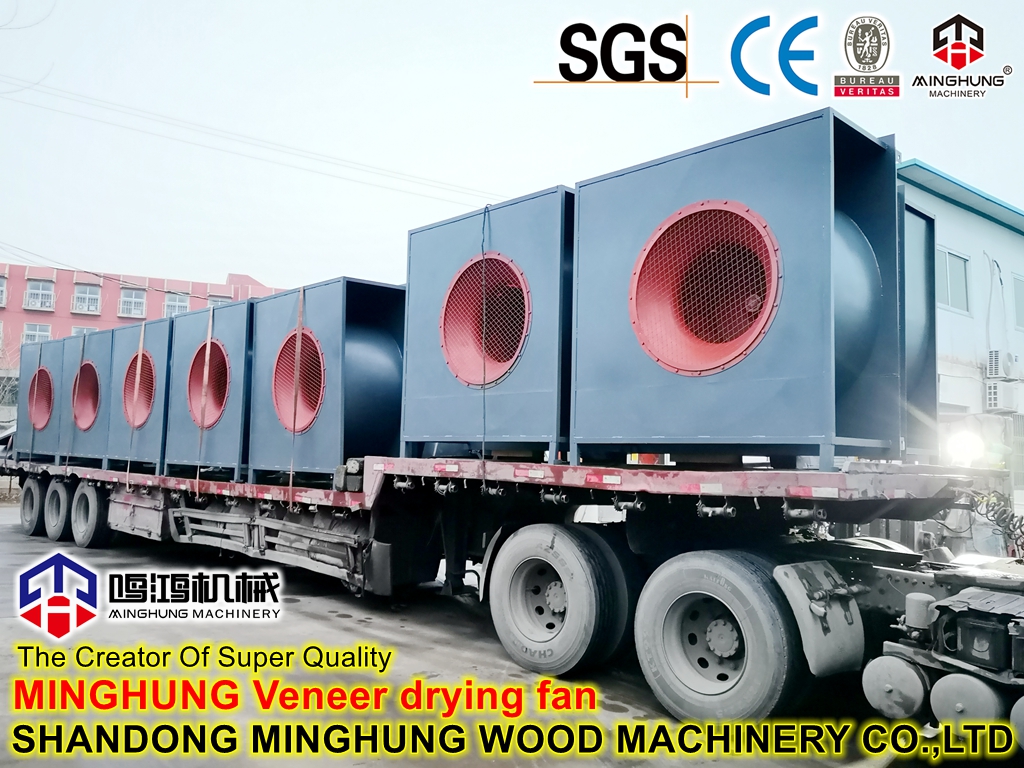
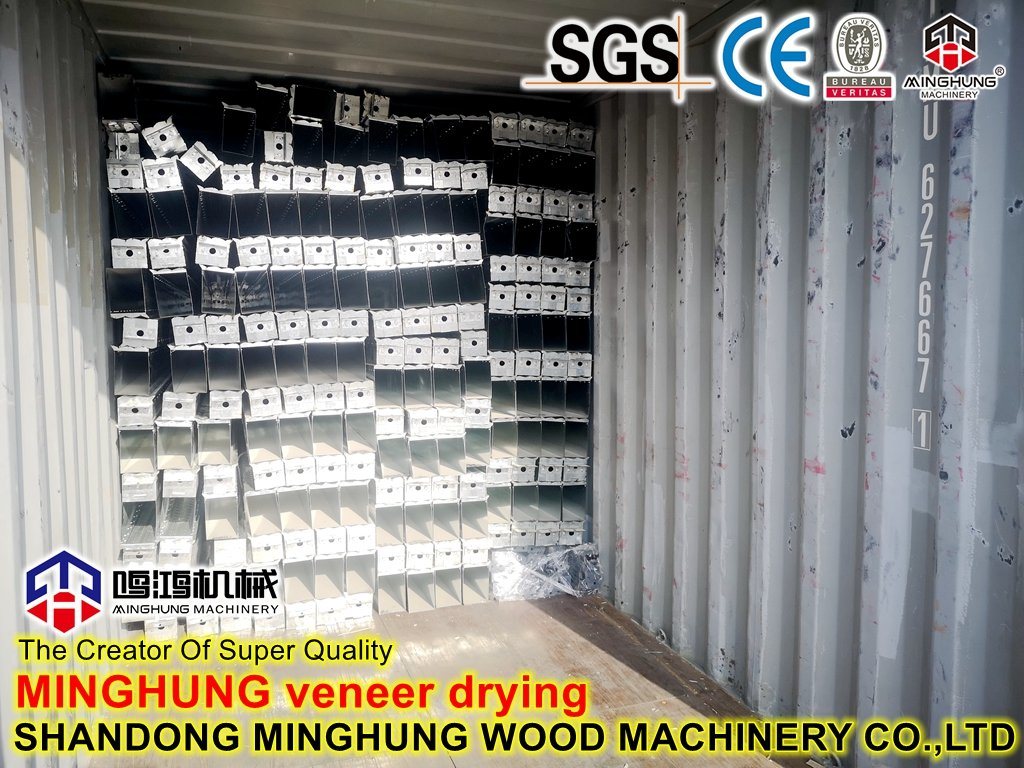
Package and transport
|
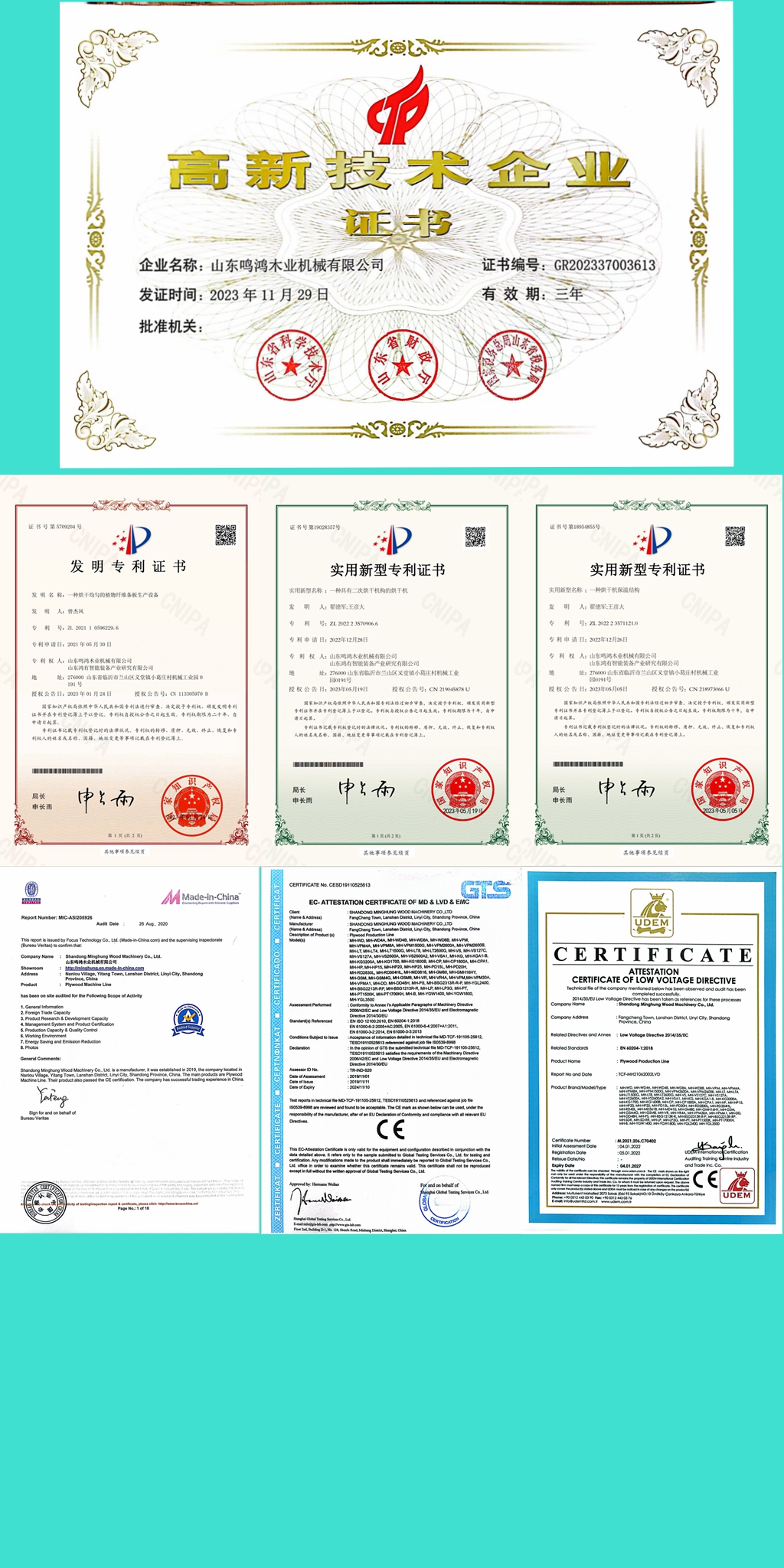
Certifications
For more information, welcome contact us, we will reply you quickly and offer working videos with you.