| Availability: | |
|---|---|
| Quantity: | |
MINGHUNG

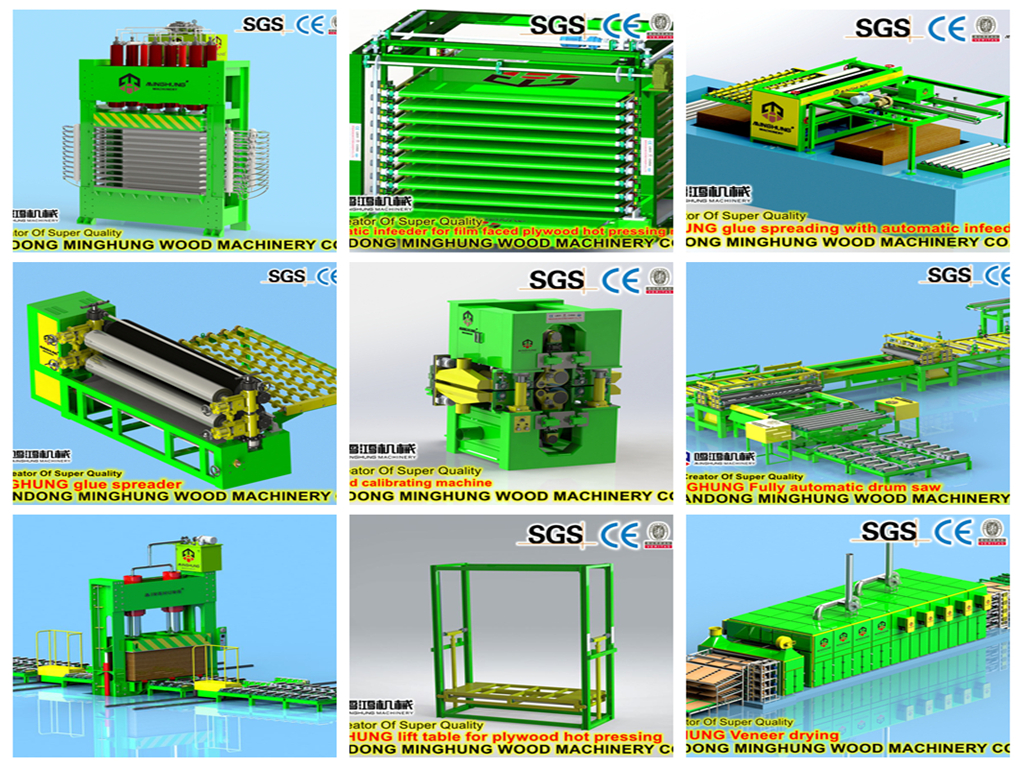
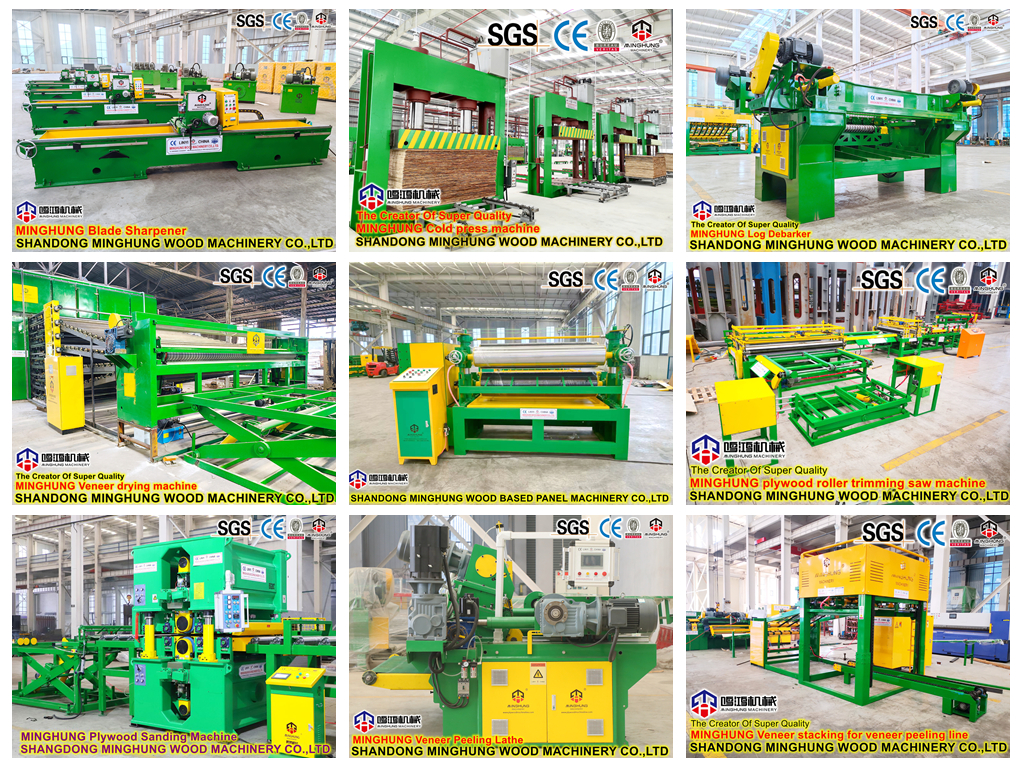
A modern plywood production line is a highly integrated system that transforms logs into high-strength engineered wood panels with a cross-laminated structure through a series of physical and chemical processes . The entire production flow can typically be divided into five main stages: Log Preparation, Veneer Preparation, Mat Forming, Hot Pressing, and Panel Finishing. Below is a detailed introduction to the process flow and core equipment for each stage.
Stage 1: Log Preparation
The goal of this stage is to process logs into standardized wood blocks that are softened and suitable for peeling.
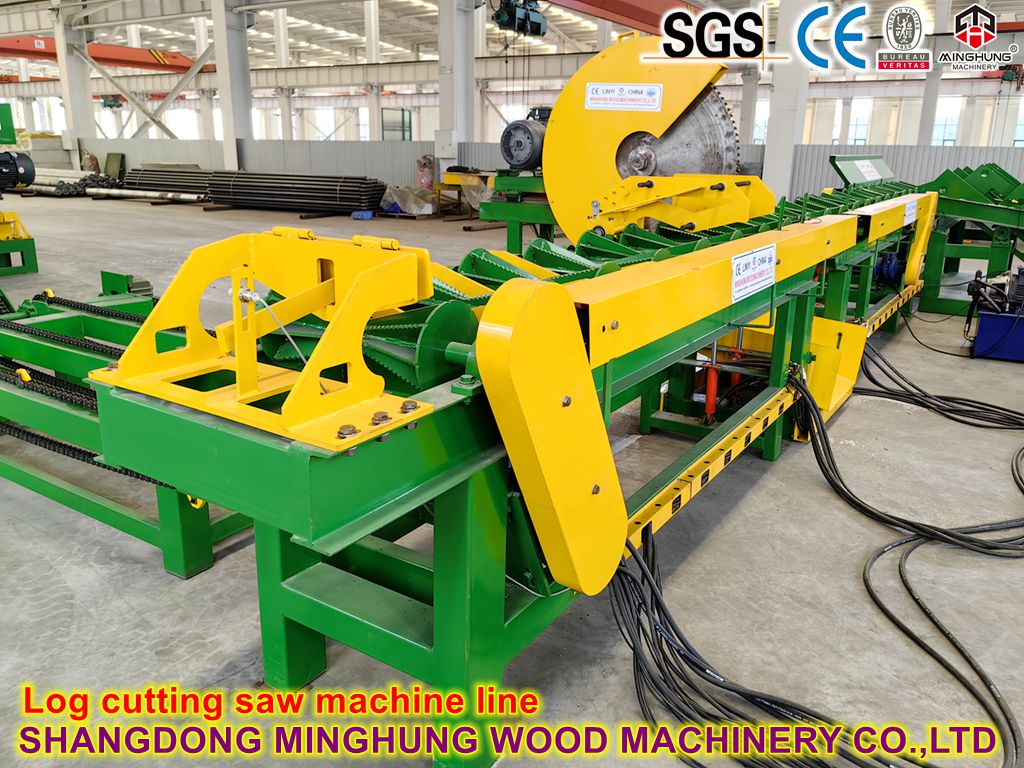
1. Log Bucking (Cutting)
Long logs are sawn into blocks of specific lengths, based on the final plywood size plus a machining allowance. For example, to produce 1220×2440mm plywood, the block length is typically around 1300mm or 2600mm .
Core Equipment: Log Cut-off Saw (e.g., gantry saw, circular saw, or band saw). Some advanced systems are equipped with diameter scanning and optimization systems to maximize yield .
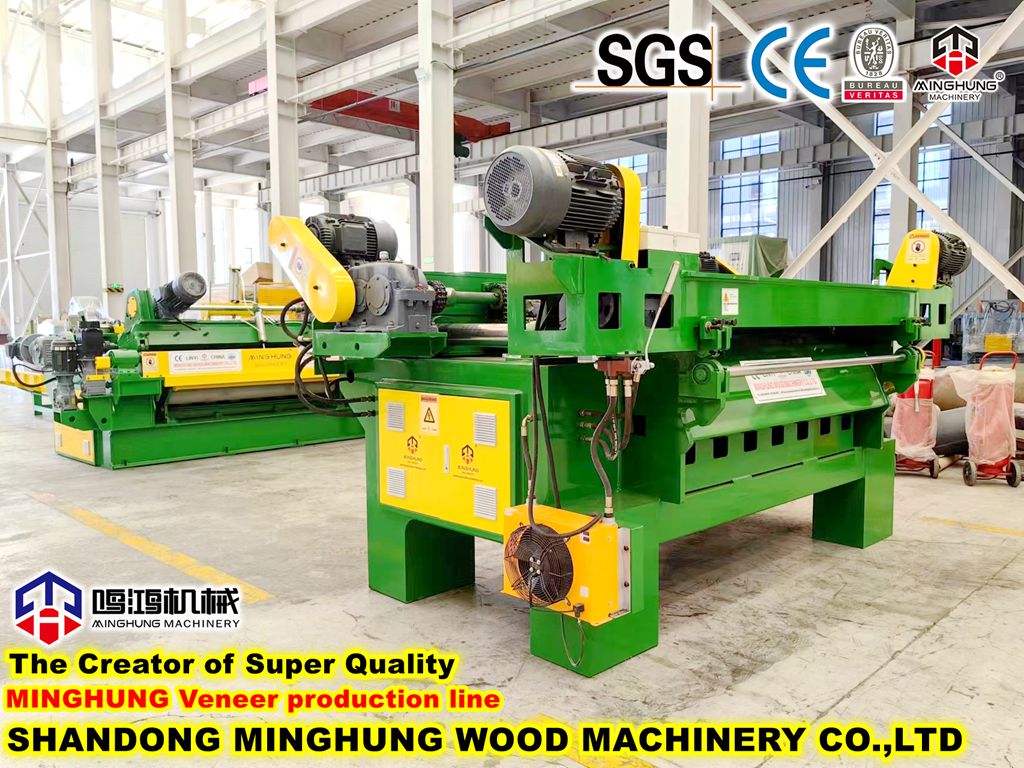
2. Debarking & Centering
The bark is removed from the blocks. Then, an intelligent system finds the optimal peeling center—the largest inscribed cylinder within the block—to maximize wood utilization .
Core Equipment: Log Debarker and Automatic Log Centering Device. Modern lines use intelligent algorithms for fast and precise positioning .
Stage 2: Veneer Preparation
This is the core of plywood production, transforming wood blocks into dry, flat, and usable veneers.
3. Veneer Peeling
The centered block is mounted on a lathe and rotated against a stationary knife, which peels a continuous ribbon of veneer of uniform thickness .
Core Equipment: CNC Veneer Peeling Lathe. Modern high-efficiency lines often use CNC spindle-less peeling lathes or integrated spindle-type/spindle-less lathes. They automatically adjust cutting parameters. The typical veneer thickness range is 0.2-4.0mm, with peeling speeds up to 90 meters per minute and thickness accuracy controlled within ±0.1mm .
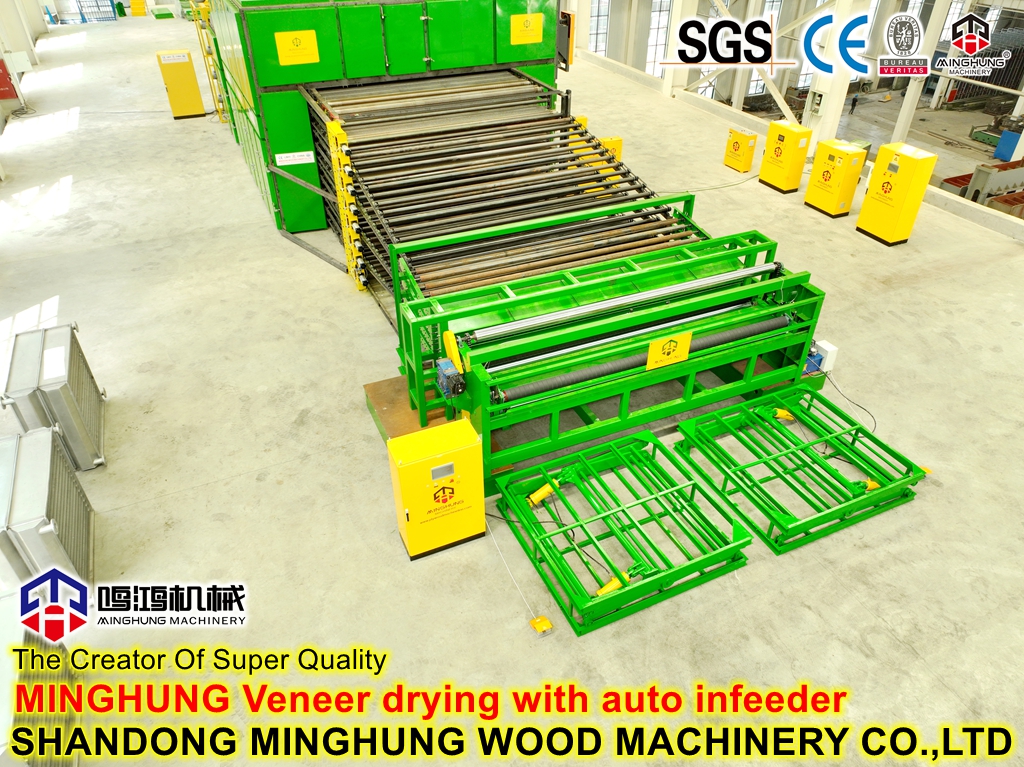
4. Veneer Drying
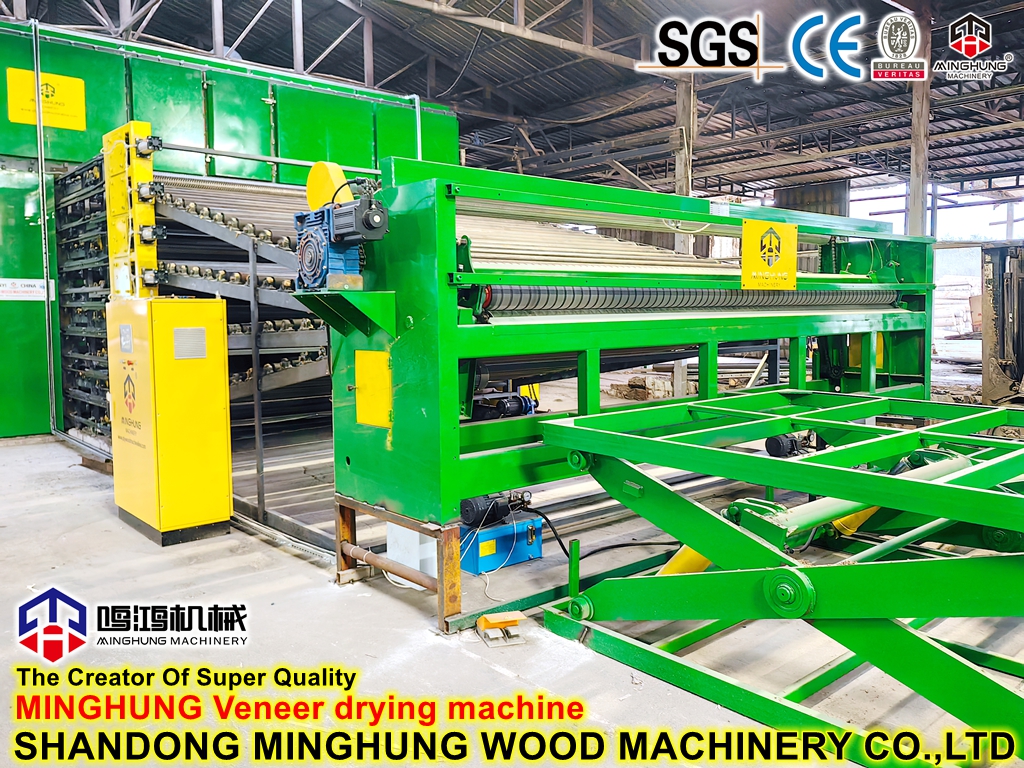
Freshly cut (green) veneer has a very high moisture content (often over 80%). It must be dried to a suitable level, typically 6%-12%, to meet gluing requirements . The veneer undergoes shrinkage during this process .
Core Equipment: Roller Dryer (the mainstream choice for high efficiency) or Mesh Belt Dryer. Modern dryers use intelligent temperature control systems, with temperature gradients typically controlled between 80-120°C for energy efficiency .
5. Veneer Clipping
The continuous veneer ribbon from the lathe is automatically cut into sheets of a set size (e.g., 1.3m or 2.6m length).
Core Equipment: Rotary Shears. These are synchronized with the peeling lathe for high-speed cutting .
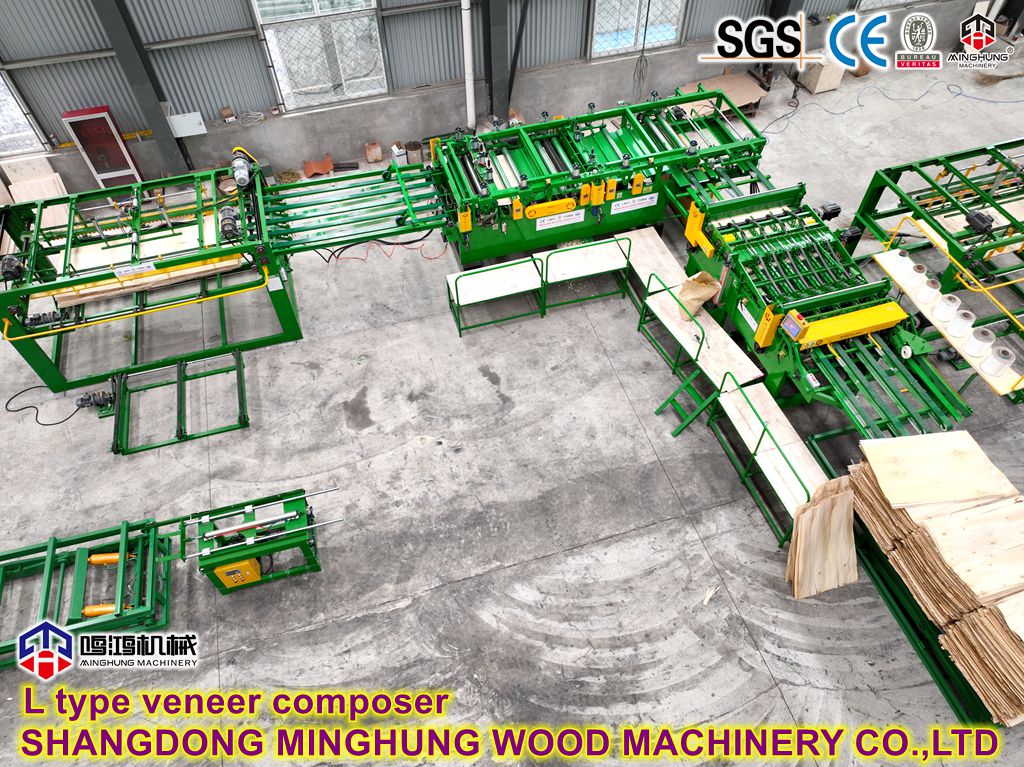
6. Veneer Finishing (Splicing & Patching)
Dried veneers are sorted, patched, and spliced. Defective areas are cut out and patched, and narrow strips are joined together to form full-size sheets for use as cores or faces .
Core Equipment: Veneer Patching Machine, Veneer Splicer (e.g., zig-zag splicer, non-woven tape splicer), Veneer Sorting Line.
Stage 3: Mat Forming
This stage involves gluing and assembling the prepared veneers into a mat ready for pressing.
7. Veneer Gluing
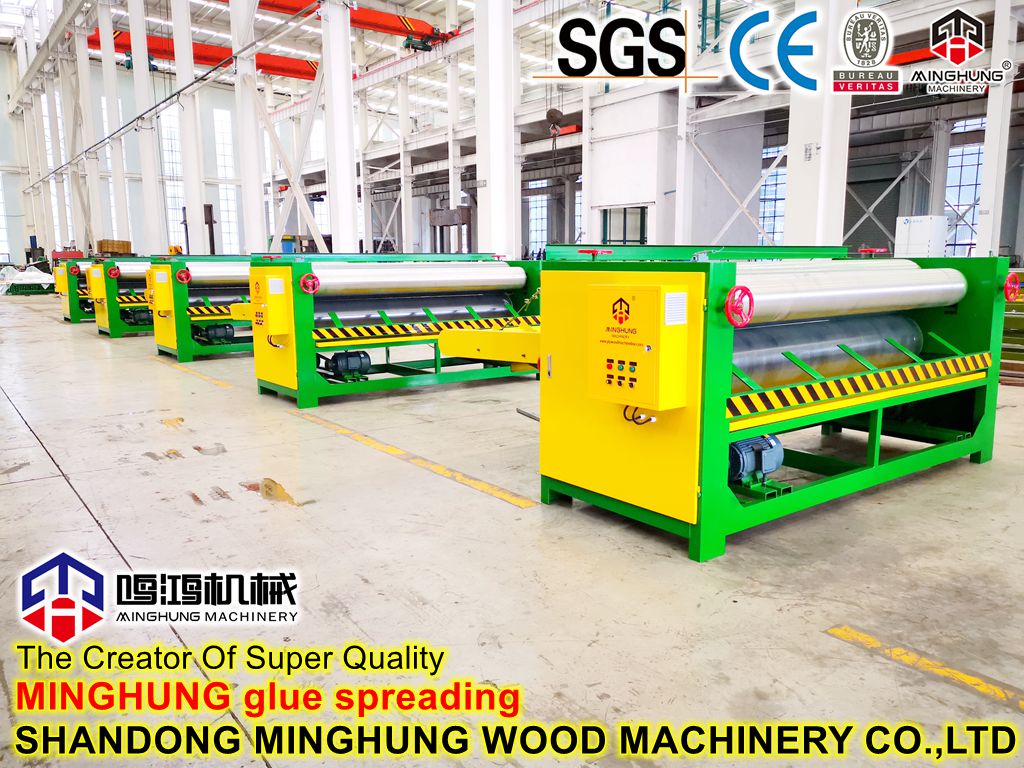
Glue is applied, typically to both sides of the core veneers. The adhesive application rate must be precise, typically 120-150g/m² (double spread) . Traditional methods use roller spreaders, while advanced technology employs curtain coaters, which can save up to 25% on glue consumption and provide a more uniform application .
Core Equipment: Roller Glue Spreader or Curtain Coater.
8. Lay-up & Cold Pressing
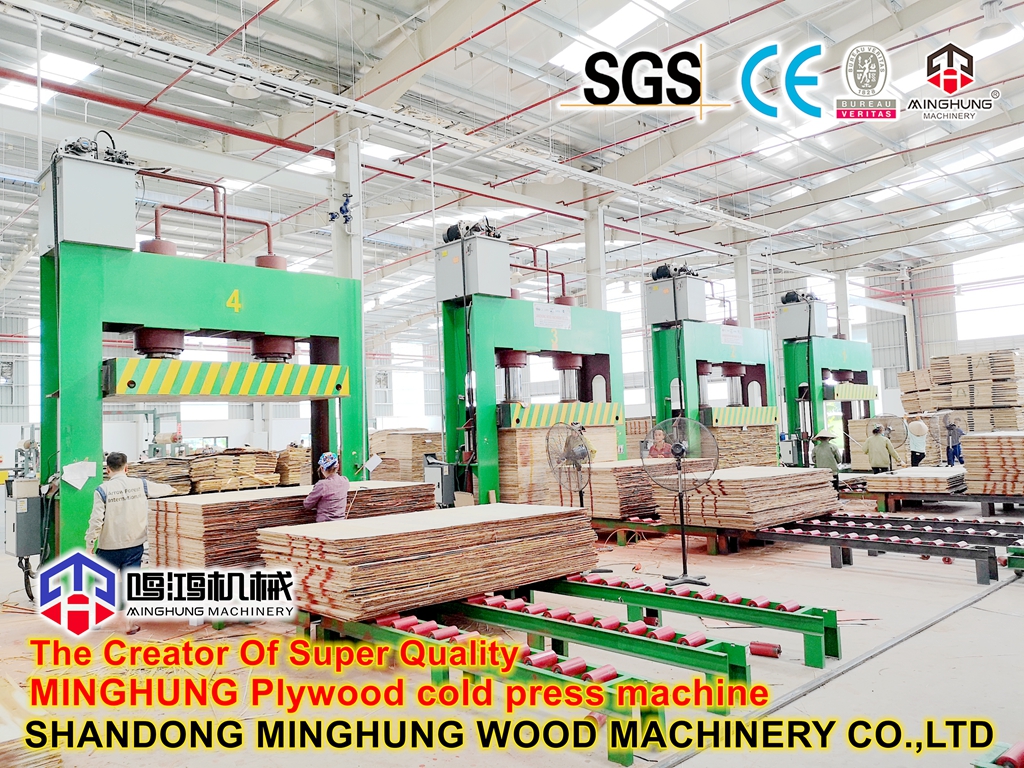
The glued core veneers are assembled with unglued face and back veneers, with their grain directions oriented perpendicularly, to form a panel mat . This mat is then sent through a cold press for initial consolidation, making it easier to handle and load into the hot press .
Core Equipment: Automatic Lay-up Line and a Cold Press.
Stage 4: Hot Pressing
This stage is critical for developing the physical and mechanical properties of the plywood.
9. Hot Pressing
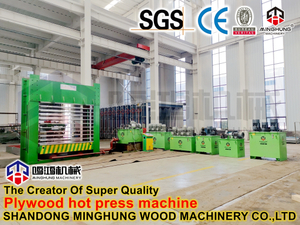
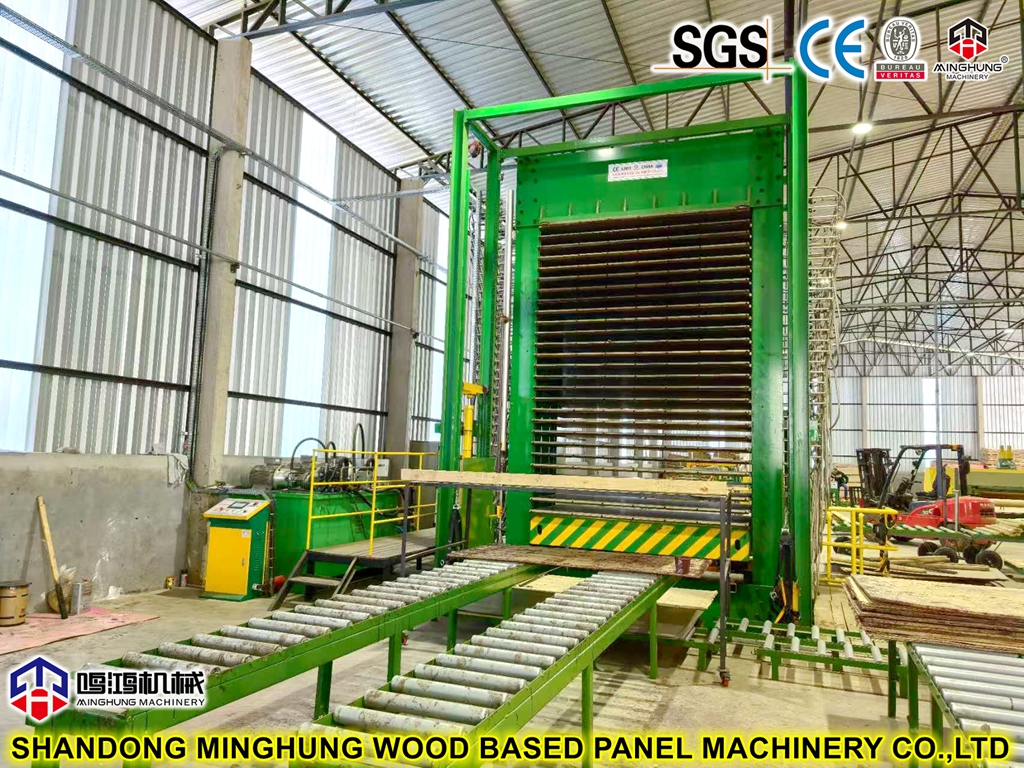
The laid-up and pre-pressed mat is loaded into a hot press. Under high temperature and pressure, the adhesive cures, permanently bonding the multiple veneer layers into a solid plywood panel . Typical hot pressing temperatures are 102-105°C, with a unit pressure of 1.2-1.4 MPa. The pressing time is calculated based on panel thickness, approximately 50-60 seconds per mm .
Core Equipment: Hot Press. There are two main types:
Multi-opening Hot Press: Traditional batch production, offering high capacity .
Continuous Flat Press: Represents the most advanced current technology, offering extremely high efficiency, more uniform product quality, and significant reductions in process steps and energy consumption . For example, the continuous production line at Shengchang New Materials boasts a 4x increase in production efficiency, elimination of 18 process steps, 20% material savings, and 25% reduction in overall costs .
Auxiliary equipment includes automatic loaders and unloaders, hydraulic systems, and heating systems (thermal oil boiler or steam boiler) .
Stage 5: Panel Finishing
This stage involves the final processing of the rough panels from the hot press into finished products.
10. Trimming
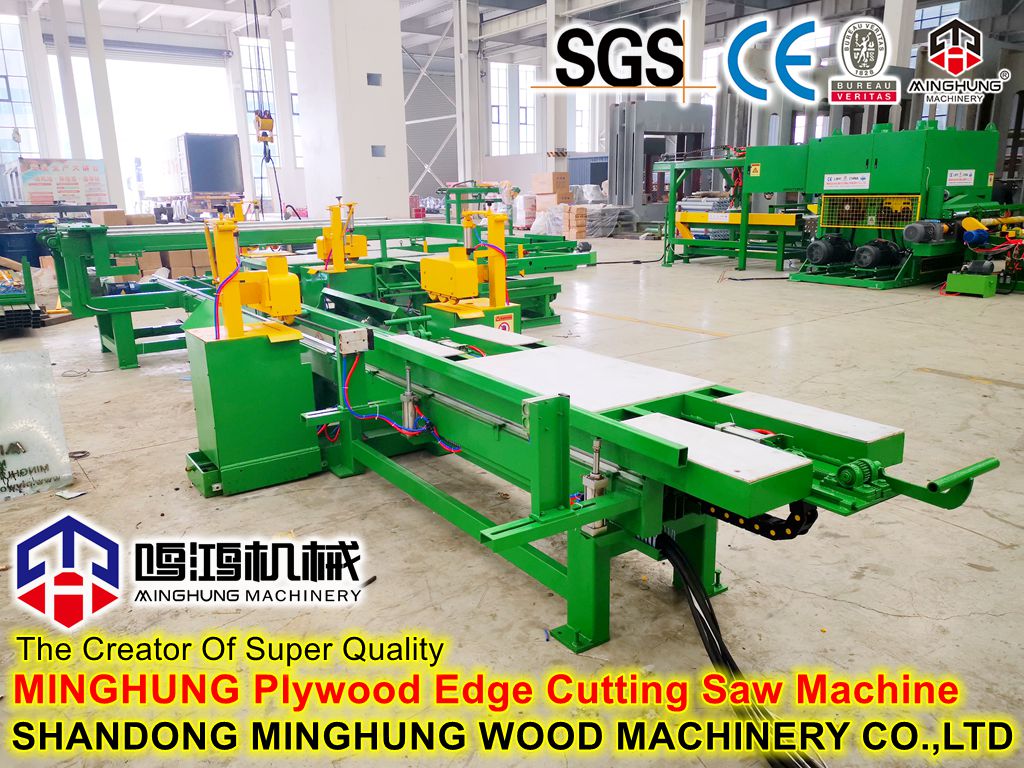
The rough-edged panels from the hot press are trimmed to standard dimensions (e.g., 1220×2440mm) using cross-cut and edge saws .
Core Equipment: Double-end Tenoner / Cross-cut and Edge Saw (Trimming Saws) .
11. Sanding
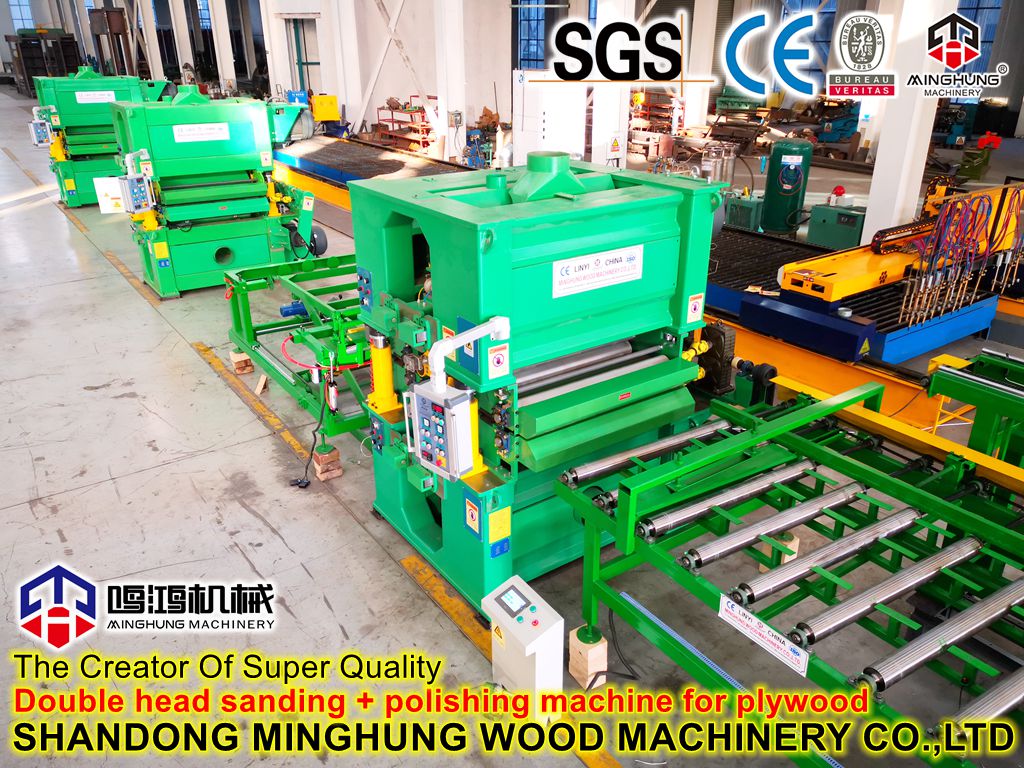
The surface of the trimmed panels is sanded to achieve a uniform thickness and a smooth, flat finish . High-quality panels may require both rough and fine sanding stages.
Core Equipment: Wide-belt Sander.
12. Inspection, Grading & Packaging
Finished panels are inspected for appearance, dimensional tolerances, and physical-mechanical properties. They are graded according to standards (e.g., GB/T 9846, ASTM, EN) . Finally, they are labeled, packaged, and moved to the warehouse.
Core Equipment: Inspection Tables, Thickness Gauge, Automatic Strapping Machine, Stretch Wrapping Machine , Forklift .
Core Advantages
1. High Precision and Stability
The machine utilizes computer technology to automatically control peeling parameters and adjust the knife angle, achieving high-speed constant linear velocity cutting. The veneer thickness accuracy is controlled between ±0.01mm and ±0.1mm, ensuring a smooth surface and uniform thickness, which significantly improves the quality of subsequent plywood production .
2. High Wood Utilization and Energy Saving
Equipped with combined spindle-type/spindle-less technology or advanced spindle-less rotary peeling technology, it can utilize logs down to a minimum core diameter of 30-40mm. This significantly increases the comprehensive wood utilization rate, reducing waste by 15-20% compared to traditional equipment . Additionally, AC servo drives and variable frequency technology are adopted to effectively reduce energy consumption .
3. Full Automation and High Efficiency
The entire process, from log loading to veneer stacking, runs automatically. The peeling speed can reach up to 90 meters per minute. Equipped with automatic rotary shears and stacking systems, it achieves high-speed production and neat stacking while saving labor costs .
4. Wide Processing Range
Suitable for various soft and hard woods such as Poplar, Eucalyptus, Pine, Birch, and Maple. It can process log lengths ranging from 1000mm to 2700mm, with a veneer thickness range covering 0.2mm to 4.0mm, meeting the demands of various applications (decorative veneers, concrete forming plywood, packaging boards, etc.) .
Parameter | Value/Range |
Max. Peeling Diameter | 400mm - 600mm |
Min. Remaining Core Diameter | 30mm - 40mm |
Processing Length | 1000mm - 2700mm |
Veneer Thickness Range | 0.2mm - 4.0mm |
Peeling Line Speed | ≤ 90 m/min |
Control System | Fully Automatic PLC / CNC Servo System |
Applications
This production line is widely used in large-scale plywood manufacturing plants, LVL (Laminated Veneer Lumber) production lines, furniture board manufacturing bases, and high-value-added decorative micro-veneer production. It can be customized according to the client's log sizes and capacity requirements, making it an ideal choice to enhance production efficiency and product competitiveness .
Why choose us?
We are not only equipment suppliers, but also your reliable business partners. We offer a turnkey solution covering factory planning, equipment installation, commissioning, personnel training and after-sales support. Choosing us means choosing quality, innovation and continuous support.
Our contacts:
Whatsapp: +8618769900191 +8615589105786 +8618954906501
Email: osbmdfmachinery@gmail.com

A modern plywood production line is a highly integrated system that transforms logs into high-strength engineered wood panels with a cross-laminated structure through a series of physical and chemical processes . The entire production flow can typically be divided into five main stages: Log Preparation, Veneer Preparation, Mat Forming, Hot Pressing, and Panel Finishing. Below is a detailed introduction to the process flow and core equipment for each stage.
Stage 1: Log Preparation
The goal of this stage is to process logs into standardized wood blocks that are softened and suitable for peeling.
1. Log Bucking (Cutting)
Long logs are sawn into blocks of specific lengths, based on the final plywood size plus a machining allowance. For example, to produce 1220×2440mm plywood, the block length is typically around 1300mm or 2600mm .
Core Equipment: Log Cut-off Saw (e.g., gantry saw, circular saw, or band saw). Some advanced systems are equipped with diameter scanning and optimization systems to maximize yield .
2. Debarking & Centering
The bark is removed from the blocks. Then, an intelligent system finds the optimal peeling center—the largest inscribed cylinder within the block—to maximize wood utilization .
Core Equipment: Log Debarker and Automatic Log Centering Device. Modern lines use intelligent algorithms for fast and precise positioning .
Stage 2: Veneer Preparation
This is the core of plywood production, transforming wood blocks into dry, flat, and usable veneers.
3. Veneer Peeling
The centered block is mounted on a lathe and rotated against a stationary knife, which peels a continuous ribbon of veneer of uniform thickness .
Core Equipment: CNC Veneer Peeling Lathe. Modern high-efficiency lines often use CNC spindle-less peeling lathes or integrated spindle-type/spindle-less lathes. They automatically adjust cutting parameters. The typical veneer thickness range is 0.2-4.0mm, with peeling speeds up to 90 meters per minute and thickness accuracy controlled within ±0.1mm .
4. Veneer Drying
Freshly cut (green) veneer has a very high moisture content (often over 80%). It must be dried to a suitable level, typically 6%-12%, to meet gluing requirements . The veneer undergoes shrinkage during this process .
Core Equipment: Roller Dryer (the mainstream choice for high efficiency) or Mesh Belt Dryer. Modern dryers use intelligent temperature control systems, with temperature gradients typically controlled between 80-120°C for energy efficiency .
5. Veneer Clipping
The continuous veneer ribbon from the lathe is automatically cut into sheets of a set size (e.g., 1.3m or 2.6m length).
Core Equipment: Rotary Shears. These are synchronized with the peeling lathe for high-speed cutting .
6. Veneer Finishing (Splicing & Patching)
Dried veneers are sorted, patched, and spliced. Defective areas are cut out and patched, and narrow strips are joined together to form full-size sheets for use as cores or faces .
Core Equipment: Veneer Patching Machine, Veneer Splicer (e.g., zig-zag splicer, non-woven tape splicer), Veneer Sorting Line.
Stage 3: Mat Forming
This stage involves gluing and assembling the prepared veneers into a mat ready for pressing.
7. Veneer Gluing
Glue is applied, typically to both sides of the core veneers. The adhesive application rate must be precise, typically 120-150g/m² (double spread) . Traditional methods use roller spreaders, while advanced technology employs curtain coaters, which can save up to 25% on glue consumption and provide a more uniform application .
Core Equipment: Roller Glue Spreader or Curtain Coater.
8. Lay-up & Cold Pressing
The glued core veneers are assembled with unglued face and back veneers, with their grain directions oriented perpendicularly, to form a panel mat . This mat is then sent through a cold press for initial consolidation, making it easier to handle and load into the hot press .
Core Equipment: Automatic Lay-up Line and a Cold Press.
Stage 4: Hot Pressing
This stage is critical for developing the physical and mechanical properties of the plywood.
9. Hot Pressing
The laid-up and pre-pressed mat is loaded into a hot press. Under high temperature and pressure, the adhesive cures, permanently bonding the multiple veneer layers into a solid plywood panel . Typical hot pressing temperatures are 102-105°C, with a unit pressure of 1.2-1.4 MPa. The pressing time is calculated based on panel thickness, approximately 50-60 seconds per mm .
Core Equipment: Hot Press. There are two main types:
Multi-opening Hot Press: Traditional batch production, offering high capacity .
Continuous Flat Press: Represents the most advanced current technology, offering extremely high efficiency, more uniform product quality, and significant reductions in process steps and energy consumption . For example, the continuous production line at Shengchang New Materials boasts a 4x increase in production efficiency, elimination of 18 process steps, 20% material savings, and 25% reduction in overall costs .
Auxiliary equipment includes automatic loaders and unloaders, hydraulic systems, and heating systems (thermal oil boiler or steam boiler) .
Stage 5: Panel Finishing
This stage involves the final processing of the rough panels from the hot press into finished products.
10. Trimming
The rough-edged panels from the hot press are trimmed to standard dimensions (e.g., 1220×2440mm) using cross-cut and edge saws .
Core Equipment: Double-end Tenoner / Cross-cut and Edge Saw (Trimming Saws) .
11. Sanding
The surface of the trimmed panels is sanded to achieve a uniform thickness and a smooth, flat finish . High-quality panels may require both rough and fine sanding stages.
Core Equipment: Wide-belt Sander.
12. Inspection, Grading & Packaging
Finished panels are inspected for appearance, dimensional tolerances, and physical-mechanical properties. They are graded according to standards (e.g., GB/T 9846, ASTM, EN) . Finally, they are labeled, packaged, and moved to the warehouse.
Core Equipment: Inspection Tables, Thickness Gauge, Automatic Strapping Machine, Stretch Wrapping Machine , Forklift .
Core Advantages
1. High Precision and Stability
The machine utilizes computer technology to automatically control peeling parameters and adjust the knife angle, achieving high-speed constant linear velocity cutting. The veneer thickness accuracy is controlled between ±0.01mm and ±0.1mm, ensuring a smooth surface and uniform thickness, which significantly improves the quality of subsequent plywood production .
2. High Wood Utilization and Energy Saving
Equipped with combined spindle-type/spindle-less technology or advanced spindle-less rotary peeling technology, it can utilize logs down to a minimum core diameter of 30-40mm. This significantly increases the comprehensive wood utilization rate, reducing waste by 15-20% compared to traditional equipment . Additionally, AC servo drives and variable frequency technology are adopted to effectively reduce energy consumption .
3. Full Automation and High Efficiency
The entire process, from log loading to veneer stacking, runs automatically. The peeling speed can reach up to 90 meters per minute. Equipped with automatic rotary shears and stacking systems, it achieves high-speed production and neat stacking while saving labor costs .
4. Wide Processing Range
Suitable for various soft and hard woods such as Poplar, Eucalyptus, Pine, Birch, and Maple. It can process log lengths ranging from 1000mm to 2700mm, with a veneer thickness range covering 0.2mm to 4.0mm, meeting the demands of various applications (decorative veneers, concrete forming plywood, packaging boards, etc.) .
Parameter | Value/Range |
Max. Peeling Diameter | 400mm - 600mm |
Min. Remaining Core Diameter | 30mm - 40mm |
Processing Length | 1000mm - 2700mm |
Veneer Thickness Range | 0.2mm - 4.0mm |
Peeling Line Speed | ≤ 90 m/min |
Control System | Fully Automatic PLC / CNC Servo System |
Applications
This production line is widely used in large-scale plywood manufacturing plants, LVL (Laminated Veneer Lumber) production lines, furniture board manufacturing bases, and high-value-added decorative micro-veneer production. It can be customized according to the client's log sizes and capacity requirements, making it an ideal choice to enhance production efficiency and product competitiveness .
Why choose us?
We are not only equipment suppliers, but also your reliable business partners. We offer a turnkey solution covering factory planning, equipment installation, commissioning, personnel training and after-sales support. Choosing us means choosing quality, innovation and continuous support.
Our contacts:
Whatsapp: +8618769900191 +8615589105786 +8618954906501
Email: osbmdfmachinery@gmail.com
As Christmas approaches, Shandong MINGHUNG wood based panel machinery Co., Ltd. has welcomed another peak in shipments.
In early December 2025, the culmination of close collaboration between the MINGHUNG foreign trade team and our partners — 9 containers fully loaded with the core equipment for a plywood production line .
Shandong Minghung Wood Machinery Factory Shandong minghung wood machine factory produces plywood machinery in linyi city city, china, dedicated to providing high-quality and suitable machines veneer machine,plywood machine,veneer splicing machine.veneer dryer machine,veneer peeling machine,plywood v
How to produce Particle board? What is the production step of Making Particle board?Introduction:Particle board, also known as chipboard, is a versatile and cost-effective material widely used in the construction and furniture industries. It is made by compressing wood particles and adhesive togethe
The Ultimate Guide to Plywood Hot Press Machines: Crafting High-Quality Plywood Introduction:Plywood is a versatile and widely used material in various industries, from construction to furniture manufacturing. Behind the scenes, plywood hot press machines play a crucial role in the production proces
Shandong Minghung will continue to focus on the research, development, and manufacturing of wood processing machinery. We are committed to building long-term, mutually beneficial partnerships with global clients through reliable products, timely deliveries, and professional service.
What is a veneer dryer?MINGHUNG Roller veneer dryer for drying original wood veneer, remove abundant humidity, in the end, the wood veneer humidity will be 5%-10%, so it is suitable for making plywood.Veneer roller dryer are suitable for big drying capacity per day, it can be different length, width
Particleboard (also known as chipboard) is a common engineered wood panel made by mixing wood fragments or particles with adhesives (such as urea-formaldehyde resin) and then hot-pressing them into shape.
Recently, a high-performance plywood sander was prepared for shipment at Qingdao Port, ready for its journey to our valued partner in Russia.
This shipment not only demonstrates Minghung Machinery’s strong production coordination and international trade execution capabilities but also ensures the rapid commissioning of the customer's production line.