| Availability: | |
|---|---|
| Quantity: | |
The production line integrates complete processes from veneer peeling to finished product sanding. Core stages include high-precision veneer peeling, uniform gluing, precision hot pressing, and double-sided calibrated sanding. Additionally, the line can be equipped with advanced one-step formable decorative surface technology — by pressing ultra-fine wood elements (fine particles or wood fibers) together with plywood substrate in a single step, a uniformly smooth high-density surface layer is formed, giving the board surface finishing performance comparable to fiberboard and particleboard while retaining plywood's solid wood feel and lightweight high-strength characteristics.
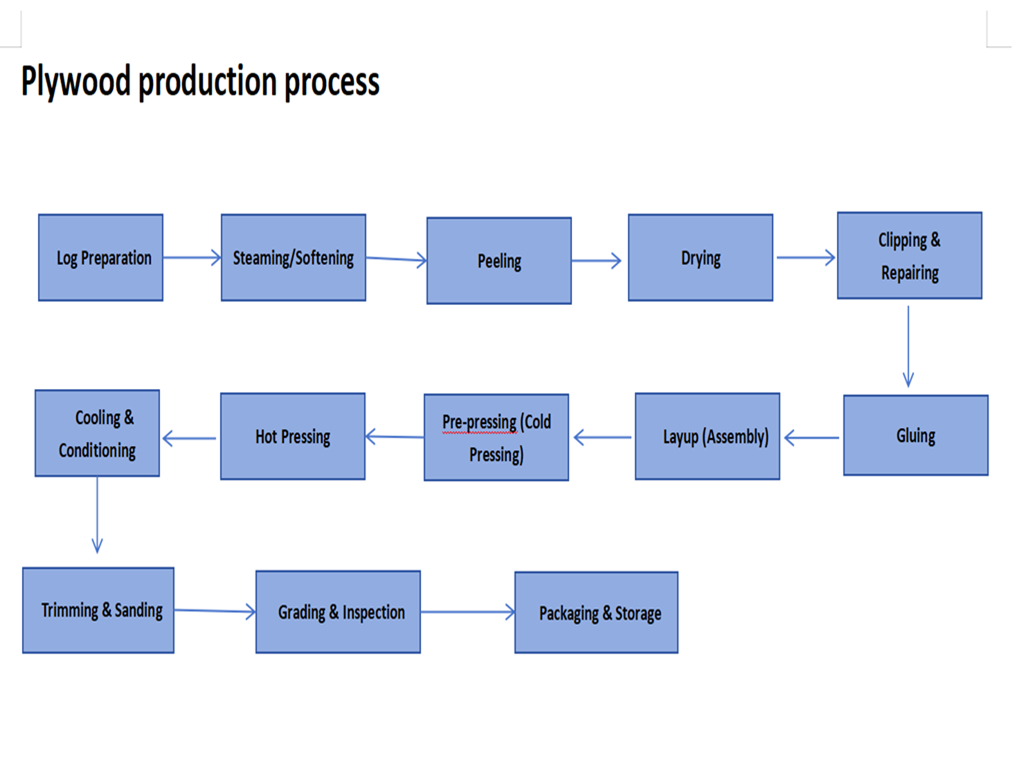
Production Process
The production process of this line is centered around the core objective of "smooth surface finish," with each stage optimized for surface quality from veneer preparation to finished product sanding. The complete process flow is as follows:
Stage 1: Veneer Preparation
1. Log Crosscutting & Debarking: Logs are cut into standard-length billets by crosscut saws, and bark is removed by debarkers in preparation for peeling.
2. Precision Peeling: CNC rotary peelers continuously cut logs into veneers of 0.5–3.0mm thickness. Pressure-bar peelers incorporate pressure bar devices that better stabilize log positioning during peeling, significantly improving veneer thickness uniformity and surface flatness.
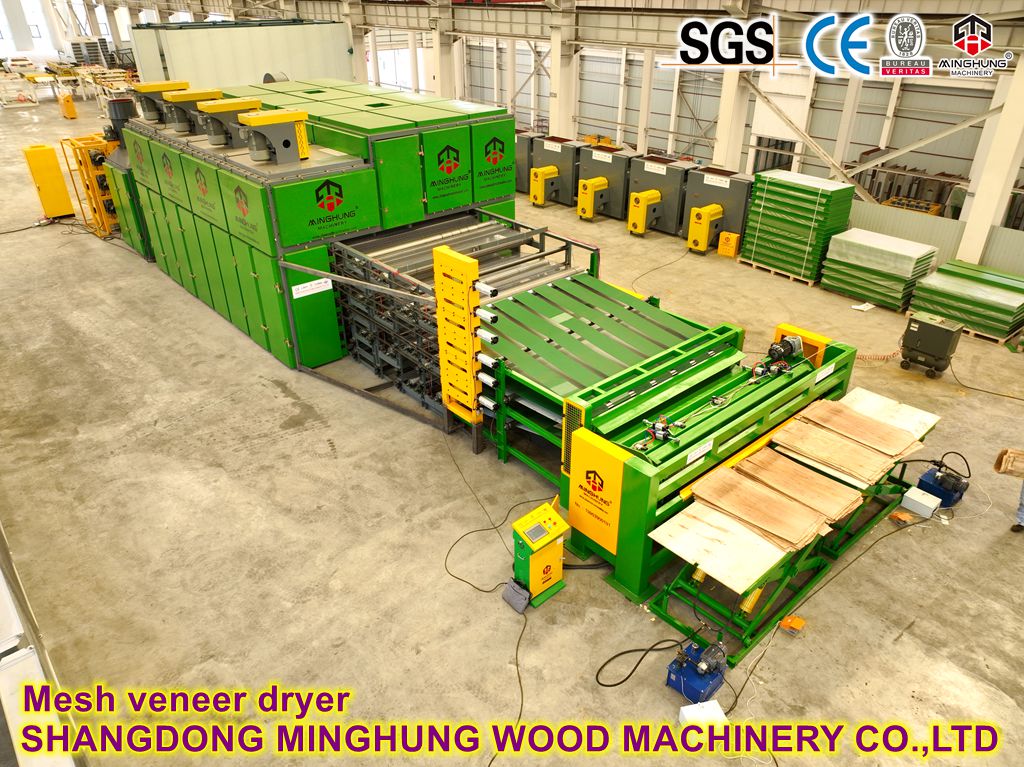
3. Veneer Drying: Mesh-belt dryers precisely control veneer moisture content to 6%–10%, avoiding surface deformation from uneven drying.
4. Veneer Jointing: Automatic jointers splice narrow veneers into full large-format sheets, achieving high-quality invisible seams with joint strength exceeding that of the wood itself.
Stage 2: Gluing & Lay-up
5. Uniform Gluing: Roller coaters or curtain coaters evenly apply adhesive onto veneer surfaces at 180–220g/m² (double-sided), ensuring uniform glue coverage without gaps.
6. Cross-Grain Lay-up: Automatic lay-up lines arrange veneers in a symmetrical structure (3–13 odd layers) with cross-grain orientation, ensuring structural stability.
Stage 3: Forming & Surface Treatment
7. Pre-pressing: Cold presses perform preliminary shaping under low pressure, expelling inter-layer air.
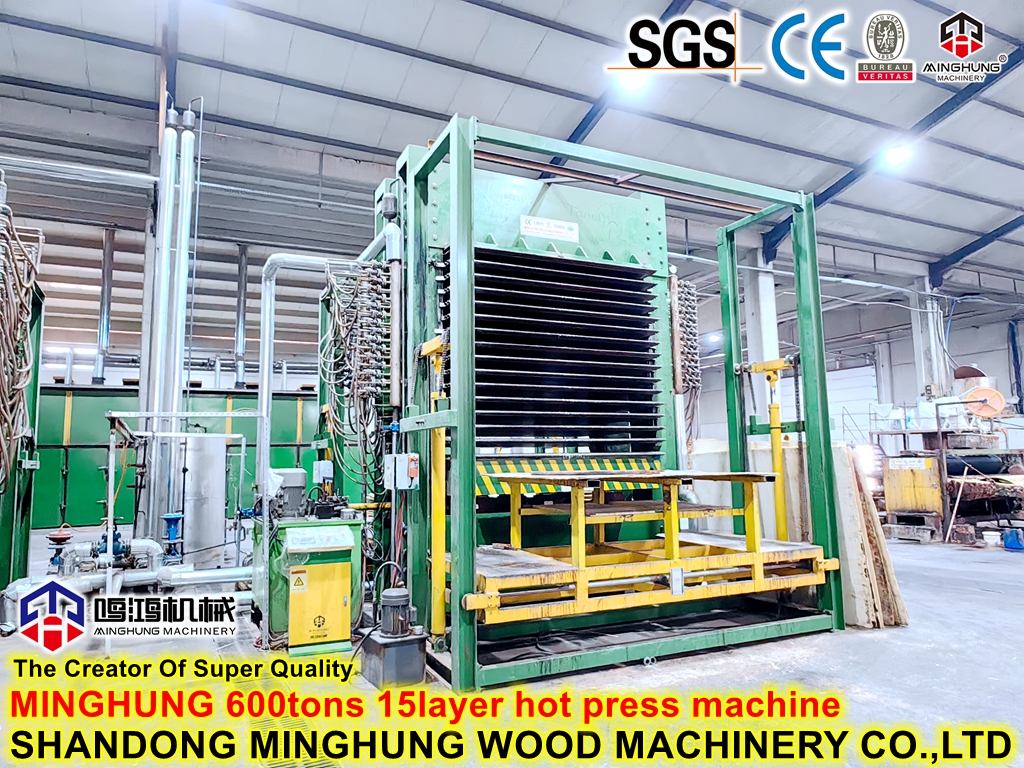
8. Precision Hot Pressing: Multi-opening hot presses cure the mat at 180–220°C and 20–25MPa. Hot platens are precision-machined on large lathes for smooth surfaces with sufficient strength and rigidity, maintaining dimensional stability at high temperatures with uniform heat distribution, ensuring even heating and flat panel surfaces.
9. Double-Sided Calibrated Sanding: Double-sided wide-belt sanders with online thickness sensors perform precision sanding on hot-pressed panels, removing high spots for uniform panel thickness and smooth surfaces. Sanding brings substrate surface roughness within requirements for lamination processes.
10. Edge Trimming: Optional edge sanding equipment can simultaneously sand all four edges of plywood for smooth, flat edges.
Stage 4: Optional Surface Enhancement
11. One-Step Formable Decorative Surface Technology: Ultra-fine wood elements (fine particles/wood fibers) are applied to the plywood surface and pressed in a single step through continuous flat-press equipment, forming a uniformly smooth high-density surface layer. This technology improves production efficiency by 4 times, reduces 18 process steps, saves 20% of raw materials, and lowers comprehensive costs by 25%.

Production Equipment
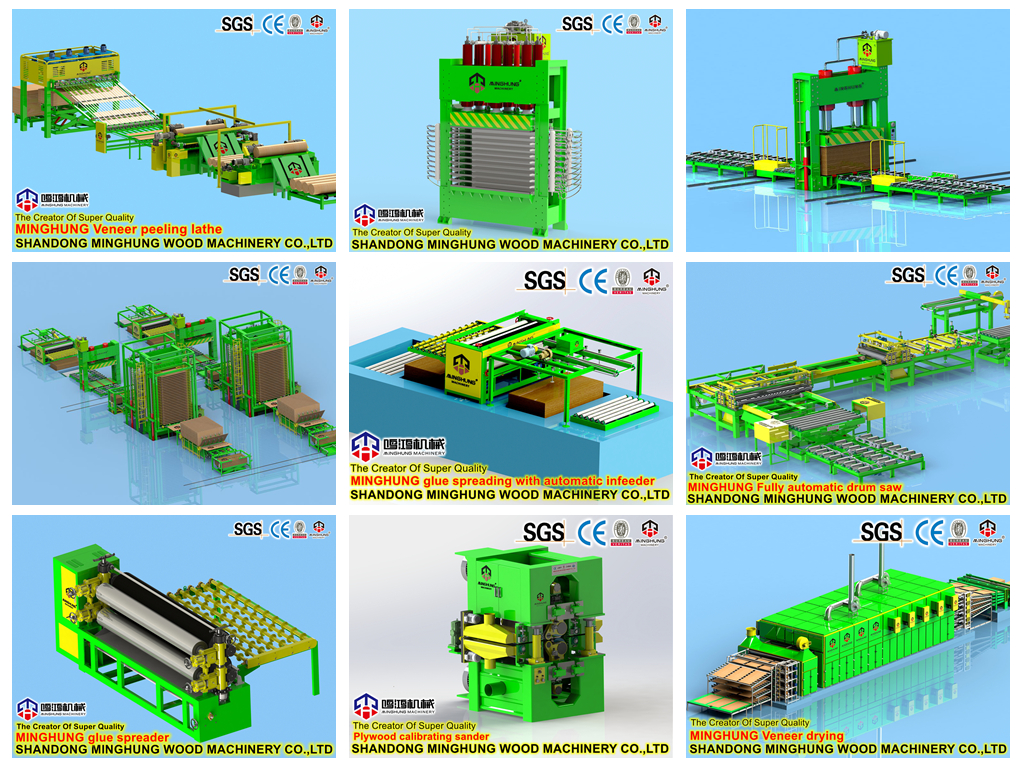
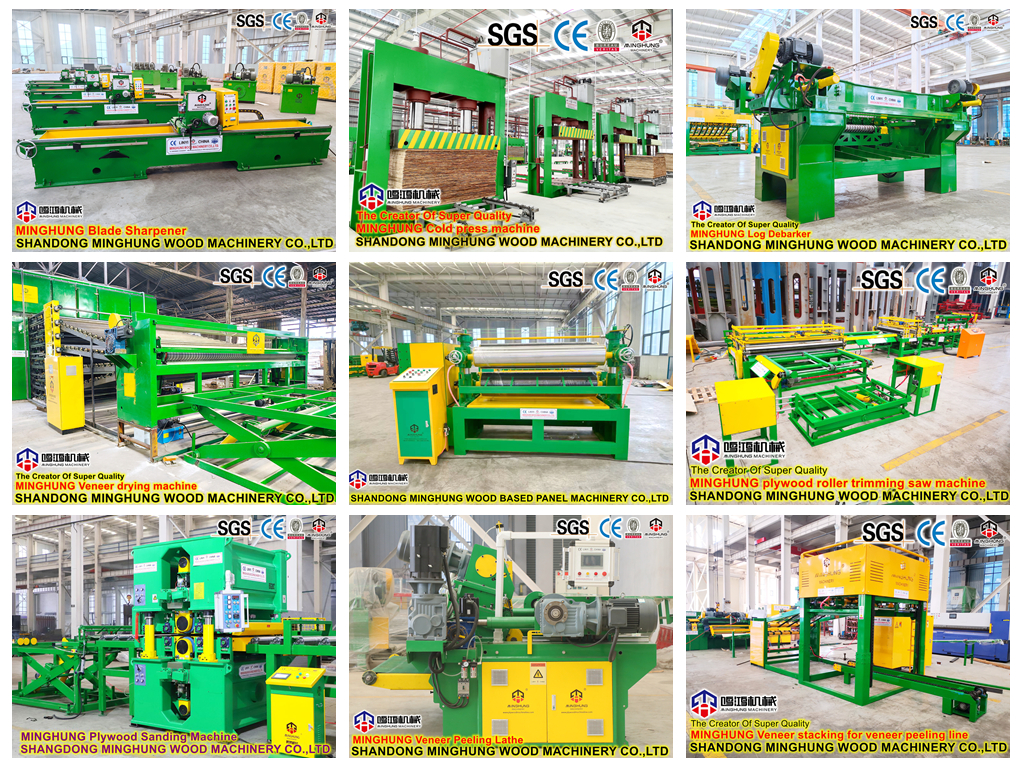
Below are the core equipment of this production line and their contributions to achieving the "smooth surface finish" objective:
Equipment Name | Function Description | Contribution to Surface Smoothness |
Crosscut Saw | Cuts logs into standard-length billets | Provides uniform raw material for subsequent precision peeling |
Debarker | Removes bark from logs | Prevents bark impurities from affecting veneer surface quality |
CNC Peeler (Pressure-Bar Type) | Continuously cuts logs into veneers | Pressure bar stabilizes log positioning, ensuring uniform veneer thickness and flat surface |
Veneer Dryer | Reduces veneer moisture content to 6%-10% | Prevents surface deformation from uneven moisture content |
Veneer Jointer | Splices narrow veneers into large-format sheets | Achieves invisible seams for seamless smooth surfaces |
Roller Coater/Curtain Coater | Evenly applies adhesive | Uniform glue layer prevents surface bubbles and defects |
Automatic Lay-up Line | Cross-grain veneer assembly | Ensures structural symmetry, reducing surface stress deformation |
Cold Press | Preliminary mat shaping | Provides uniform flat substrate for hot pressing |
Multi-Opening Hot Press | High-temperature high-pressure forming | Precision-machined platens with smooth surfaces and uniform temperature ensure flat panel surfaces |
Double-Sided Wide-Belt Sander | Precision calibrated sanding | Removes high spots and surface imperfections for smooth, uniform surface |
Edge Sanding Equipment | Simultaneous four-edge sanding | Creates smooth, flat edges enhancing overall finished product quality |
Continuous Flat-Press Complete Equipment | One-step decorative surface production | Presses ultra-fine wood elements with substrate in one step for uniform smooth high-density surface |


Production Line Advantages
1. Superior Surface Smoothness
2. Significant Production Efficiency Improvement
3. Ready for Direct Coating/Lamination
Smooth finished surfaces require no secondary processing before coating, veneering, or lamination, eliminating surface preparation steps in furniture manufacturing and significantly reducing downstream processing costs.
4. Solves Traditional Plywood Surface Defects
Effectively solves problems of traditional plywood including rough surfaces, susceptibility to cracking, deformation, and carbonization. Advanced gluing processes (such as MDI gluing) ensure board environmental performance exceeding ENF grade standards.
5. Excellent Physical and Mechanical Properties
Retains plywood's solid wood feel and lightweight high-strength characteristics. Through optimized processes, board hardness, water resistance, and fire resistance are significantly improved.
6. High Level of Automation
PLC + HMI centralized control system with fully automated line operation reduces manual labor and ensures product quality consistency.
7. Flexible Customization
Customized configurations available based on customer raw material characteristics, site conditions, capacity requirements, and target markets.
Parameter | Specification |
Product Dimensions | 4×8 ft (1220×2440mm) / 5×10 ft (1525×3050mm) customizable |
Product Thickness Range | 8–40mm (customizable extension) |
Veneer Thickness | 0.5–3.0mm |
Surface Type | Sanded surface / One-step formable decorative surface |
Surface Roughness | Meets lamination requirements after sanding (Rmax ≤ 200μm) |
Glue Application Rate | 180–220g/m² (double-sided) |
Hot Press Temperature | 180–220°C |
Hot Press Pressure | 20–25MPa |
Hot Press Cycle | 5–20 minutes (depending on thickness & adhesive) |
Finished Product Moisture Content | 6%–12% |
Thickness Tolerance | ≤±0.2mm (after sanding) |
Control System | PLC + HMI touchscreen |


Q: What are the main differences between this line and traditional plywood production lines?
Traditional plywood production lines produce panels with rough surfaces, typically requiring multiple pressing steps to achieve a finishable surface. This line integrates one-step formable decorative surface technology and precision sanding systems, achieving smooth surfaces in a single pressing step, increasing production efficiency by 4 times, reducing 18 process steps, and saving 20% of raw materials.
Q: What panel sizes can the production line produce?
Supports multi-specification production from 4×8 ft (1220×2440mm) to 5×10 ft (1525×3050mm), with custom sizes available upon request.
Q: What raw material requirements does the production line have?
The line can process various wood species including poplar, eucalyptus, birch, and pine, as well as recycled wood materials. The core layer can use plywood, blockboard, or solid wood edge-glued panels, among others.
Our contacts:
Whatsapp: +8618769900191 +8615589105786 +8618954906501
Email: osbmdfmachinery@gmail.com
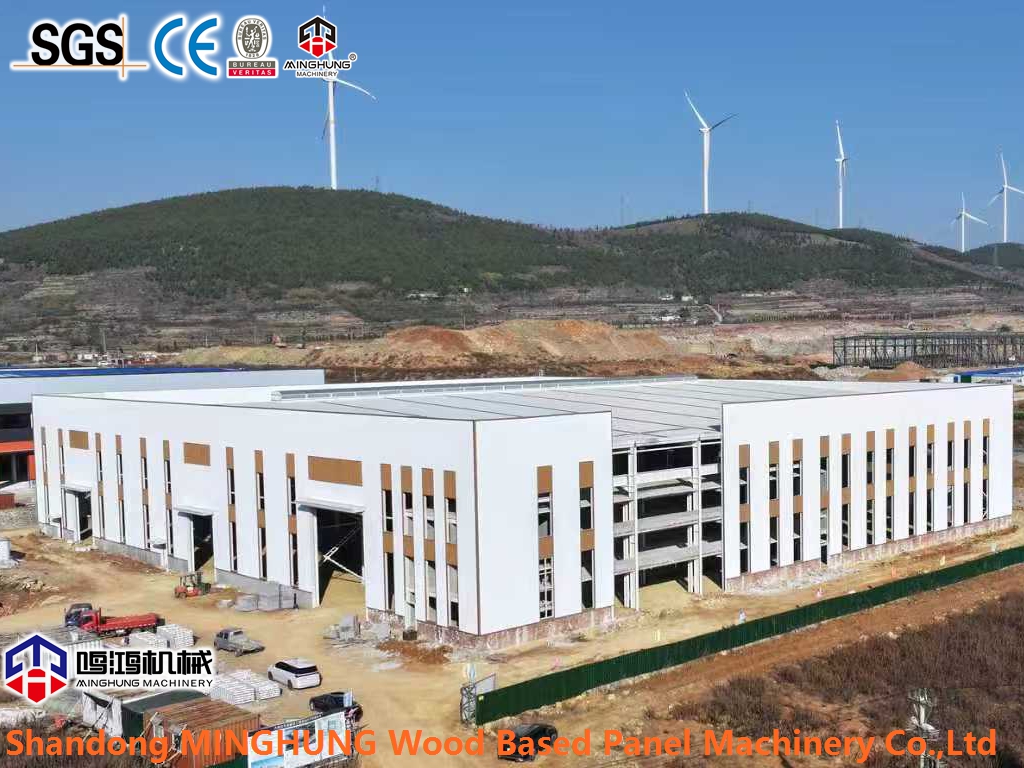
This new facility marks a fresh start for our company. Guided by our enduring commitment to "precision engineering and quality first," we are now better equipped than ever to provide efficient, durable, and innovative machinery solutions for the worldwide wood-based panel industry.
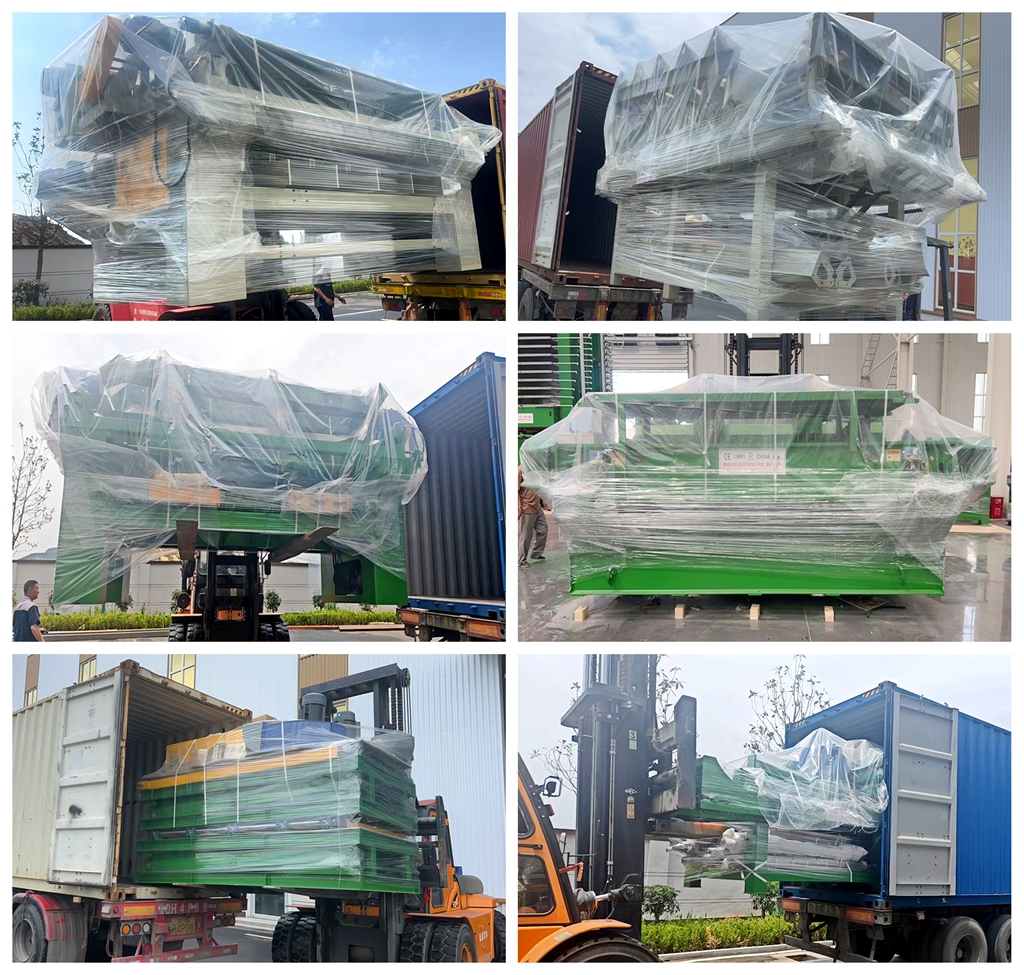
As Christmas approaches, Shandong MINGHUNG wood based panel machinery Co., Ltd. has welcomed another peak in shipments.
In early December 2025, the culmination of close collaboration between the MINGHUNG foreign trade team and our partners — 9 containers fully loaded with the core equipment for a plywood production line .
Shandong Minghung Wood Machinery Factory Shandong minghung wood machine factory produces plywood machinery in linyi city city, china, dedicated to providing high-quality and suitable machines veneer machine,plywood machine,veneer splicing machine.veneer dryer machine,veneer peeling machine,plywood v
How to produce Particle board? What is the production step of Making Particle board?Introduction:Particle board, also known as chipboard, is a versatile and cost-effective material widely used in the construction and furniture industries. It is made by compressing wood particles and adhesive togethe