| Availability: | |
|---|---|
| Quantity: | |
MH-VPM
MINGHUNG
Product Positioning & Core Value
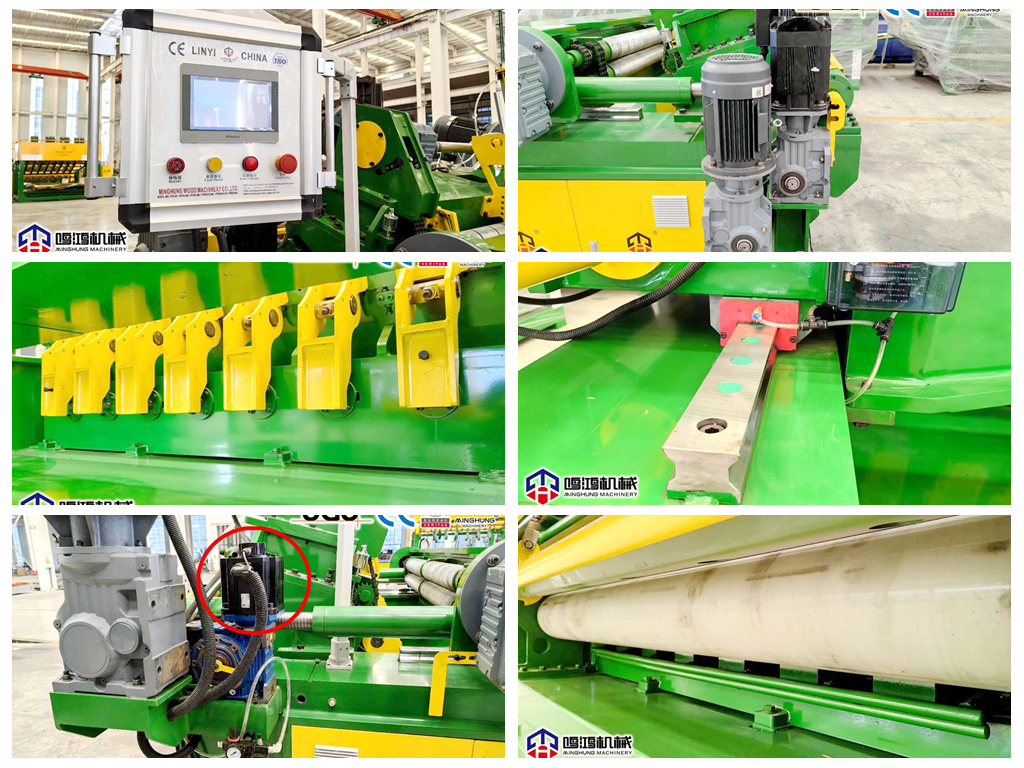
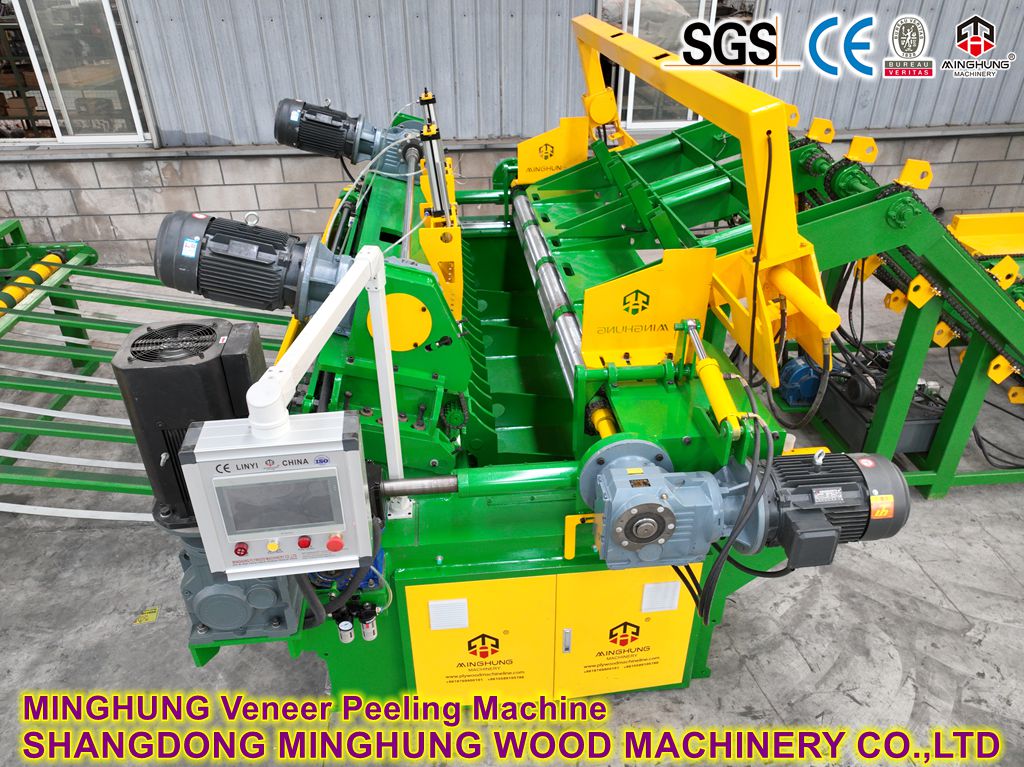
This equipment focuses on solving the processing challenges of small-diameter timber (typically referring to raw material with smaller diameters and limited utilization value). Traditional peeling machines have restrictions on minimum log diameter and core size, leading to low yield and high waste for small logs. This 8-foot (approx. 2.44 meters) spindleless peeler, through its unique structure, completely overcomes this limitation. It aims to maximize the utilization of small-diameter logs, significantly enhancing overall wood utilization and economic benefits.
Workflow
1. Log Loading: Small-diameter logs with a maximum length of 8 feet (approx. 2.44m) are delivered to the machine infeed table via roller conveyors or forklifts.
2. Automatic Measurement & Centering: Once the log enters the machine, an intelligent measuring system (e.g., laser or mechanical probes) quickly scans its profile to determine the maximum usable diameter and the optimal rotational center. Hydraulic centering arms then act to adjust and secure the log to this best position.
3. External Clamping & Driving: The bottom V-type support bed rises to cradle the log. The pair of main drive friction rollers on both sides advance synchronously, driven by the hydraulic system, firmly pressing against the outer circumference of the log. They rely on strong friction to become the "power spindle" that rotates the log.
4. Peeling Initiation & Feed: The drive rollers rotate the log. Simultaneously, the knife carriage assembly, according to the preset veneer thickness (e.g., 1.0-3.5mm), moves precisely and uniformly in a radial feed motion towards the rotating log to begin peeling.
5. Continuous Veneer Generation & Lead-out: The sharp peeling blade meets the rotating log, shaving off a continuous ribbon of veneer. The veneer is immediately and smoothly led out by conveyor rollers or lead-in devices below the knife, preventing jams or folding.
6. Process Adaptive Adjustment: As peeling proceeds, the log diameter continuously decreases. The PLC control system monitors in real-time and automatically adjusts: a) the speed of the drive rollers to maintain constant cutting linear speed; b) the pressure of the drive rollers to maintain sufficient driving friction; c) the feed rate of the knife carriage to ensure constant veneer thickness.
7. Veneer Cutting & Collection: The continuous veneer ribbon can be automatically cross-cut to preset lengths. It is then conveyed via a follow-up line to a winder to be rolled into large coils or layered and stacked by a stacker for easy transfer to the drying process.
8. Core Ejection & Reset: When the log is peeled down to the preset minimum core diameter (e.g., Φ45mm), the machine automatically stops peeling. The drive rollers retract, and the remaining core drops out for disposal. The knife carriage rapidly returns to its starting position, ready for the next cycle.
1. Heavy-Duty Base & Bed: Provides an extremely solid foundation to withstand torsional forces and vibrations during peeling, ensuring long-term processing accuracy.
2. Spindleless Drive Assembly:
Main Drive Friction Rollers: A pair of heavy-duty steel rollers covered with a high-friction coating (e.g., polyurethane). They are the core power components for driving the log.
Hydraulic Pressure System: Provides adjustable, substantial clamping pressure to the drive rollers, ensuring effective driving without slippage even for irregular small-diameter logs.
V-Type Support & Adjustment Mechanism: Located below the drive rollers, it is used for initial log support and alignment. In some models, it can move up/down to adapt to diameter changes.
3. Precision Knife Carriage System:
Knife Holder & Peeling Blade: A knife holder that mounts a high-strength alloy peeling blade. The installation angle can be adjusted based on wood species.
Nose Bar Mechanism: Located just ahead of the blade edge, it is crucial. It compresses the wood fibers, creating compressive stress before cutting, thereby reducing checks on the veneer backside and improving quality.
Feed Drive System: Typically driven by a servo motor or hydraulic motor coupled with a precision ball screw, it controls the linear feed motion of the knife carriage, determining veneer thickness.
4. Automatic Centering & Measuring System: Located at the infeed end, it integrates sensors and actuators. This system is key to achieving high utilization rates from small logs, ensuring each log starts peeling from its optimal position.
5. Veneer Output & Handling Devices: Include lead-in rollers, conveyor belts, a hydraulic guillotine or flying cut-off saw, and optional automatic winder or pneumatic/mechanical stacker.
6. Advanced Electrical Control System:
PLC (Programmable Logic Controller): The brain of the equipment, handling all logic control, calculations, and coordination.
HMI (Human-Machine Interface Touchscreen): Used for parameter setting (thickness, length, speed, etc.), real-time monitoring, and equipment diagnostics.
Frequency Converters & Servo Drives: Precisely control the drive motors and feed motors.
7. Hydraulic Power Unit: Provides stable and reliable hydraulic power for actions such as centering, clamping, and rapid advance/retreat of the knife carriage.
Suitable Raw Material Wood
This machine is specifically designed for small-diameter timber, fast-growing species, and forestry residues. It is particularly suitable for peeling veneer from the following types of wood:
1. Softwoods (Conifers):
Pine: Such as Masson Pine, Scotch Pine, Radiata Pine, etc. This is the most typical suitable raw material. Relatively soft and easy to peel; resin content requires optimized tool management. Small-diameter pine logs and thinnings are ideal feedstock.
Cedar / Fir: Light and soft, straight grain, good peeling properties. Veneer is often used for construction plywood core.
Spruce: Properties similar to pine, a quality veneer material.
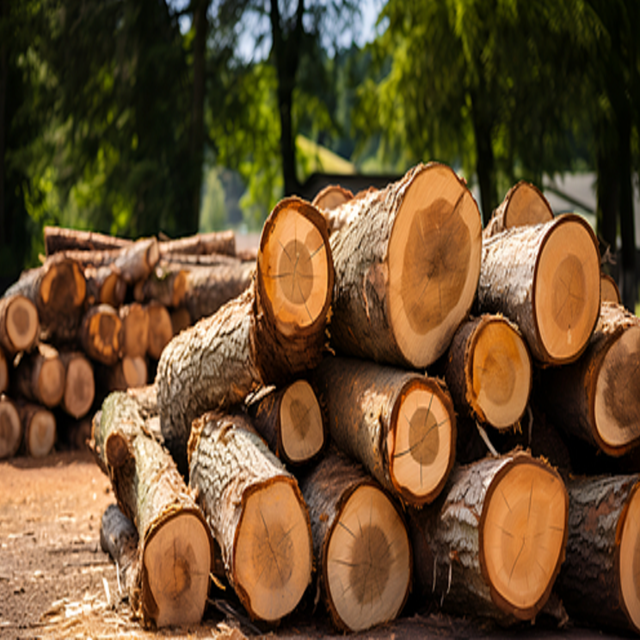
pine
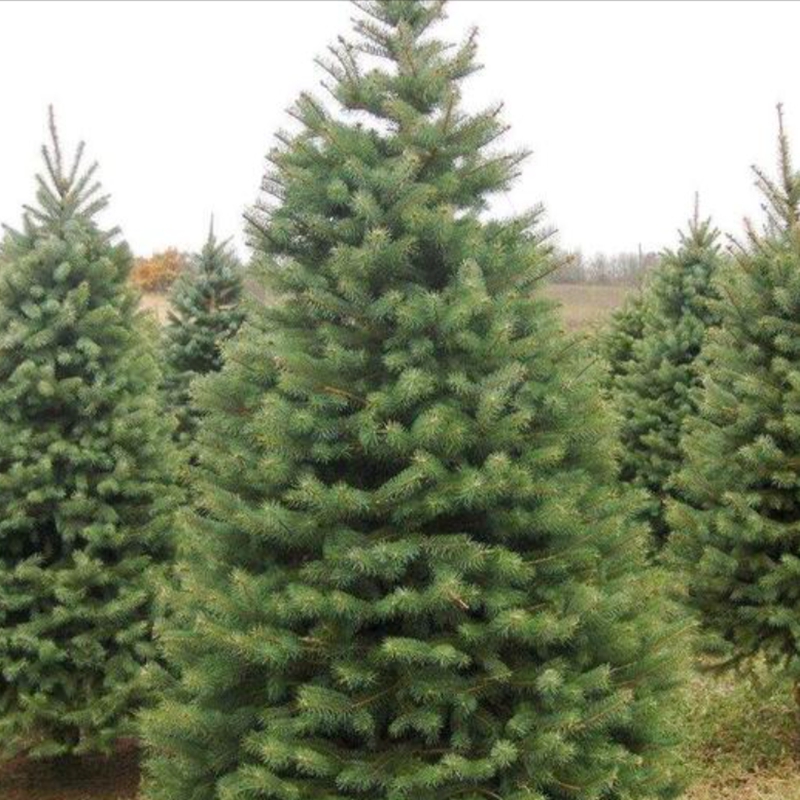
spruce
2. Soft Hardwoods (Fast-Growing Hardwoods):
Poplar / Aspen: Fast-growing, uniform, light, and soft texture. Easy to peel with a smooth veneer surface. An important raw material for plywood core and packaging board manufacturing. Very well-suited for small-log processing.
Eucalyptus: Fast-growing species, some varieties have moderate density. Suitable for peeling, but process adjustments may be needed due to growth stress. Small-diameter eucalyptus is a significant feedstock source.
Basswood / Linden: Very soft, easy to cut, used for high-grade decorative veneer.
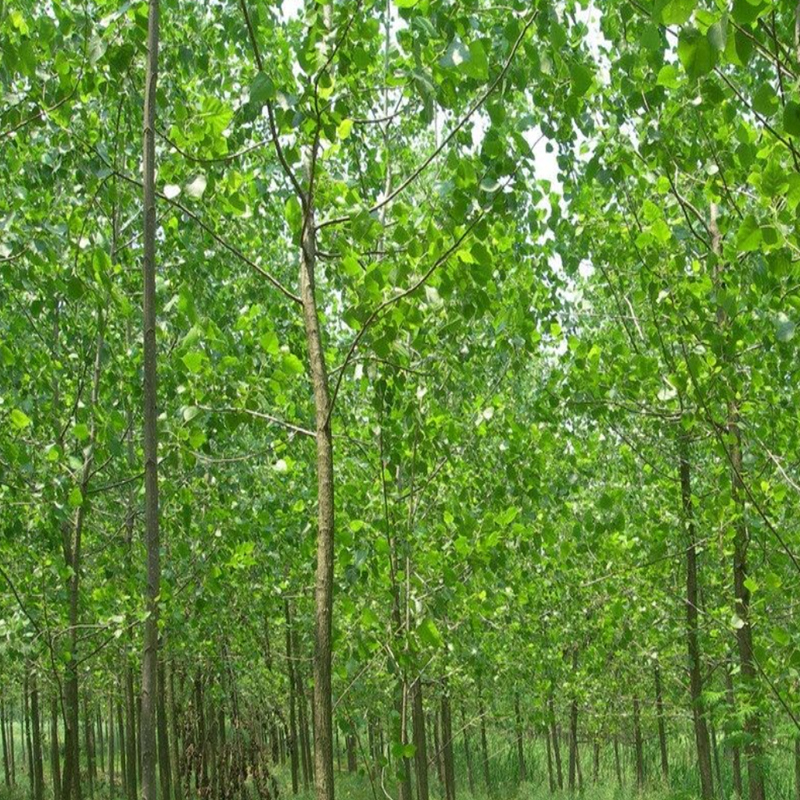
Poplar
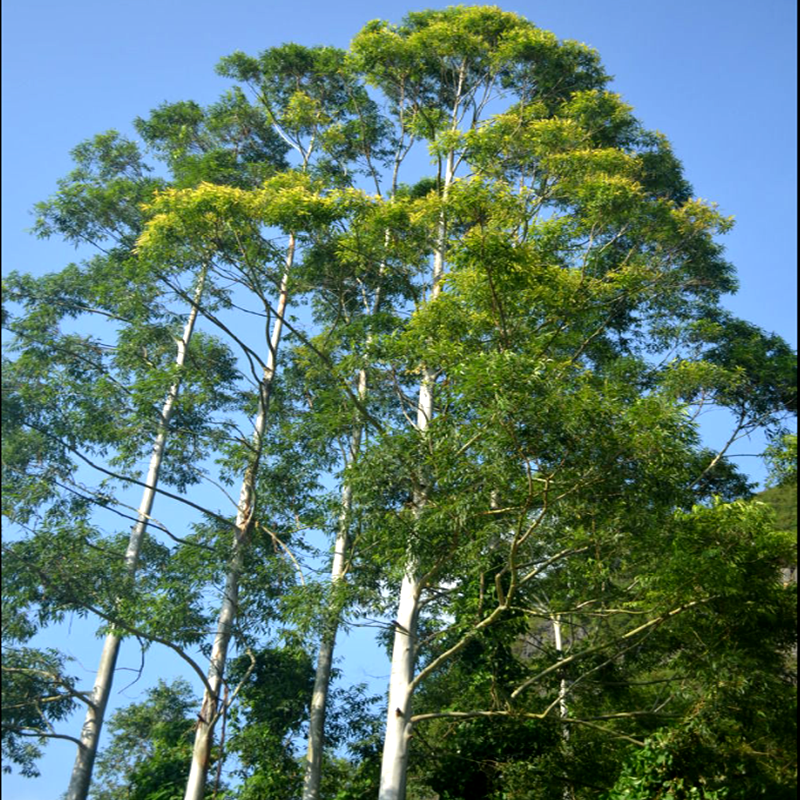
Eucalyptus
3. Other Suitable Materials:
Birch (Some varieties): Although birch is generally harder, small-diameter logs or softer species can still be processed.
Reclaimed Timber: Old timber, demolition wood, etc., that is regular in shape and can be clamped securely.
Bamboo: Bamboo culms, with proper pre-treatment and clamping, can also be attempted for peeling.

Birch

Bamboo
The wood diameter should fall within the machine's clamping capability (e.g., Φ80mm - Φ400mm). Wood with low to medium density and relatively low cutting resistance is ideal. The machine's powerful adaptive clamping system can effectively handle common defects in such wood, like bending, ovality, and knots, transforming them into valuable products.
Optimized Design for Small-Diameter Logs
Exceptionally High Yield: The spindleless design minimizes core loss from small logs, improving wood utilization by an average of 15%-30% compared to traditional spindle-type equipment.
Fast Return on Investment: Effectively transforms low-value small-diameter logs and forest residues into high-value veneer, broadening raw material sources and reducing procurement and production costs.
Strong Adaptability: Particularly adept at handling small logs with a wide range of diameters and irregular shapes. It has low requirements for raw material, allowing for more flexible production scheduling.
Automation & Ease of Use: Features fully automated control from automatic feeding/centering to veneer output. Operators only need to set simple parameters, greatly reducing dependence on highly skilled workers.
Typical Applications
Primarily used for peeling small-diameter logs, thinnings of species like pine, poplar, and eucalyptus into veneer for manufacturing plywood core/back layers, construction concrete formwork, or packaging boards. It is core equipment for enhancing the value of forestry residues and achieving efficient resource utilization.
Our contacts:
Whatsapp: +8618769900191 +8615589105786 +8618954906501
Email: osbmdfmachinery@gmail.com

Product Positioning & Core Value
This equipment focuses on solving the processing challenges of small-diameter timber (typically referring to raw material with smaller diameters and limited utilization value). Traditional peeling machines have restrictions on minimum log diameter and core size, leading to low yield and high waste for small logs. This 8-foot (approx. 2.44 meters) spindleless peeler, through its unique structure, completely overcomes this limitation. It aims to maximize the utilization of small-diameter logs, significantly enhancing overall wood utilization and economic benefits.
Workflow
1. Log Loading: Small-diameter logs with a maximum length of 8 feet (approx. 2.44m) are delivered to the machine infeed table via roller conveyors or forklifts.
2. Automatic Measurement & Centering: Once the log enters the machine, an intelligent measuring system (e.g., laser or mechanical probes) quickly scans its profile to determine the maximum usable diameter and the optimal rotational center. Hydraulic centering arms then act to adjust and secure the log to this best position.
3. External Clamping & Driving: The bottom V-type support bed rises to cradle the log. The pair of main drive friction rollers on both sides advance synchronously, driven by the hydraulic system, firmly pressing against the outer circumference of the log. They rely on strong friction to become the "power spindle" that rotates the log.
4. Peeling Initiation & Feed: The drive rollers rotate the log. Simultaneously, the knife carriage assembly, according to the preset veneer thickness (e.g., 1.0-3.5mm), moves precisely and uniformly in a radial feed motion towards the rotating log to begin peeling.
5. Continuous Veneer Generation & Lead-out: The sharp peeling blade meets the rotating log, shaving off a continuous ribbon of veneer. The veneer is immediately and smoothly led out by conveyor rollers or lead-in devices below the knife, preventing jams or folding.
6. Process Adaptive Adjustment: As peeling proceeds, the log diameter continuously decreases. The PLC control system monitors in real-time and automatically adjusts: a) the speed of the drive rollers to maintain constant cutting linear speed; b) the pressure of the drive rollers to maintain sufficient driving friction; c) the feed rate of the knife carriage to ensure constant veneer thickness.
7. Veneer Cutting & Collection: The continuous veneer ribbon can be automatically cross-cut to preset lengths. It is then conveyed via a follow-up line to a winder to be rolled into large coils or layered and stacked by a stacker for easy transfer to the drying process.
8. Core Ejection & Reset: When the log is peeled down to the preset minimum core diameter (e.g., Φ45mm), the machine automatically stops peeling. The drive rollers retract, and the remaining core drops out for disposal. The knife carriage rapidly returns to its starting position, ready for the next cycle.
1. Heavy-Duty Base & Bed: Provides an extremely solid foundation to withstand torsional forces and vibrations during peeling, ensuring long-term processing accuracy.
2. Spindleless Drive Assembly:
Main Drive Friction Rollers: A pair of heavy-duty steel rollers covered with a high-friction coating (e.g., polyurethane). They are the core power components for driving the log.
Hydraulic Pressure System: Provides adjustable, substantial clamping pressure to the drive rollers, ensuring effective driving without slippage even for irregular small-diameter logs.
V-Type Support & Adjustment Mechanism: Located below the drive rollers, it is used for initial log support and alignment. In some models, it can move up/down to adapt to diameter changes.
3. Precision Knife Carriage System:
Knife Holder & Peeling Blade: A knife holder that mounts a high-strength alloy peeling blade. The installation angle can be adjusted based on wood species.
Nose Bar Mechanism: Located just ahead of the blade edge, it is crucial. It compresses the wood fibers, creating compressive stress before cutting, thereby reducing checks on the veneer backside and improving quality.
Feed Drive System: Typically driven by a servo motor or hydraulic motor coupled with a precision ball screw, it controls the linear feed motion of the knife carriage, determining veneer thickness.
4. Automatic Centering & Measuring System: Located at the infeed end, it integrates sensors and actuators. This system is key to achieving high utilization rates from small logs, ensuring each log starts peeling from its optimal position.
5. Veneer Output & Handling Devices: Include lead-in rollers, conveyor belts, a hydraulic guillotine or flying cut-off saw, and optional automatic winder or pneumatic/mechanical stacker.
6. Advanced Electrical Control System:
PLC (Programmable Logic Controller): The brain of the equipment, handling all logic control, calculations, and coordination.
HMI (Human-Machine Interface Touchscreen): Used for parameter setting (thickness, length, speed, etc.), real-time monitoring, and equipment diagnostics.
Frequency Converters & Servo Drives: Precisely control the drive motors and feed motors.
7. Hydraulic Power Unit: Provides stable and reliable hydraulic power for actions such as centering, clamping, and rapid advance/retreat of the knife carriage.

Suitable Raw Material Wood
This machine is specifically designed for small-diameter timber, fast-growing species, and forestry residues. It is particularly suitable for peeling veneer from the following types of wood:
1. Softwoods (Conifers):
Pine: Such as Masson Pine, Scotch Pine, Radiata Pine, etc. This is the most typical suitable raw material. Relatively soft and easy to peel; resin content requires optimized tool management. Small-diameter pine logs and thinnings are ideal feedstock.
Cedar / Fir: Light and soft, straight grain, good peeling properties. Veneer is often used for construction plywood core.
Spruce: Properties similar to pine, a quality veneer material.
pine
spruce
2. Soft Hardwoods (Fast-Growing Hardwoods):
Poplar / Aspen: Fast-growing, uniform, light, and soft texture. Easy to peel with a smooth veneer surface. An important raw material for plywood core and packaging board manufacturing. Very well-suited for small-log processing.
Eucalyptus: Fast-growing species, some varieties have moderate density. Suitable for peeling, but process adjustments may be needed due to growth stress. Small-diameter eucalyptus is a significant feedstock source.
Basswood / Linden: Very soft, easy to cut, used for high-grade decorative veneer.
Poplar
Eucalyptus
3. Other Suitable Materials:
Birch (Some varieties): Although birch is generally harder, small-diameter logs or softer species can still be processed.
Reclaimed Timber: Old timber, demolition wood, etc., that is regular in shape and can be clamped securely.
Bamboo: Bamboo culms, with proper pre-treatment and clamping, can also be attempted for peeling.
Birch
Bamboo
The wood diameter should fall within the machine's clamping capability (e.g., Φ80mm - Φ400mm). Wood with low to medium density and relatively low cutting resistance is ideal. The machine's powerful adaptive clamping system can effectively handle common defects in such wood, like bending, ovality, and knots, transforming them into valuable products.
Optimized Design for Small-Diameter Logs
Exceptionally High Yield: The spindleless design minimizes core loss from small logs, improving wood utilization by an average of 15%-30% compared to traditional spindle-type equipment.
Fast Return on Investment: Effectively transforms low-value small-diameter logs and forest residues into high-value veneer, broadening raw material sources and reducing procurement and production costs.
Strong Adaptability: Particularly adept at handling small logs with a wide range of diameters and irregular shapes. It has low requirements for raw material, allowing for more flexible production scheduling.
Automation & Ease of Use: Features fully automated control from automatic feeding/centering to veneer output. Operators only need to set simple parameters, greatly reducing dependence on highly skilled workers.
Typical Applications
Primarily used for peeling small-diameter logs, thinnings of species like pine, poplar, and eucalyptus into veneer for manufacturing plywood core/back layers, construction concrete formwork, or packaging boards. It is core equipment for enhancing the value of forestry residues and achieving efficient resource utilization.
Our contacts:
Whatsapp: +8618769900191 +8615589105786 +8618954906501
Email: osbmdfmachinery@gmail.com
As Christmas approaches, Shandong MINGHUNG wood based panel machinery Co., Ltd. has welcomed another peak in shipments.
In early December 2025, the culmination of close collaboration between the MINGHUNG foreign trade team and our partners — 9 containers fully loaded with the core equipment for a plywood production line .
Shandong Minghung Wood Machinery Factory Shandong minghung wood machine factory produces plywood machinery in linyi city city, china, dedicated to providing high-quality and suitable machines veneer machine,plywood machine,veneer splicing machine.veneer dryer machine,veneer peeling machine,plywood v
How to produce Particle board? What is the production step of Making Particle board?Introduction:Particle board, also known as chipboard, is a versatile and cost-effective material widely used in the construction and furniture industries. It is made by compressing wood particles and adhesive togethe
The Ultimate Guide to Plywood Hot Press Machines: Crafting High-Quality Plywood Introduction:Plywood is a versatile and widely used material in various industries, from construction to furniture manufacturing. Behind the scenes, plywood hot press machines play a crucial role in the production proces
Shandong Minghung will continue to focus on the research, development, and manufacturing of wood processing machinery. We are committed to building long-term, mutually beneficial partnerships with global clients through reliable products, timely deliveries, and professional service.
What is a veneer dryer?MINGHUNG Roller veneer dryer for drying original wood veneer, remove abundant humidity, in the end, the wood veneer humidity will be 5%-10%, so it is suitable for making plywood.Veneer roller dryer are suitable for big drying capacity per day, it can be different length, width
Particleboard (also known as chipboard) is a common engineered wood panel made by mixing wood fragments or particles with adhesives (such as urea-formaldehyde resin) and then hot-pressing them into shape.
Recently, a high-performance plywood sander was prepared for shipment at Qingdao Port, ready for its journey to our valued partner in Russia.
This shipment not only demonstrates Minghung Machinery’s strong production coordination and international trade execution capabilities but also ensures the rapid commissioning of the customer's production line.