How to Produce Plywood? - Plywood Production Step
keyworkds: #plywoodproduction #plywoodmaking #plywoodequipment
The veneer is the raw material for making plywood. When you have the veneer, you can proceed to the next production process.
1. Glue making - mixer
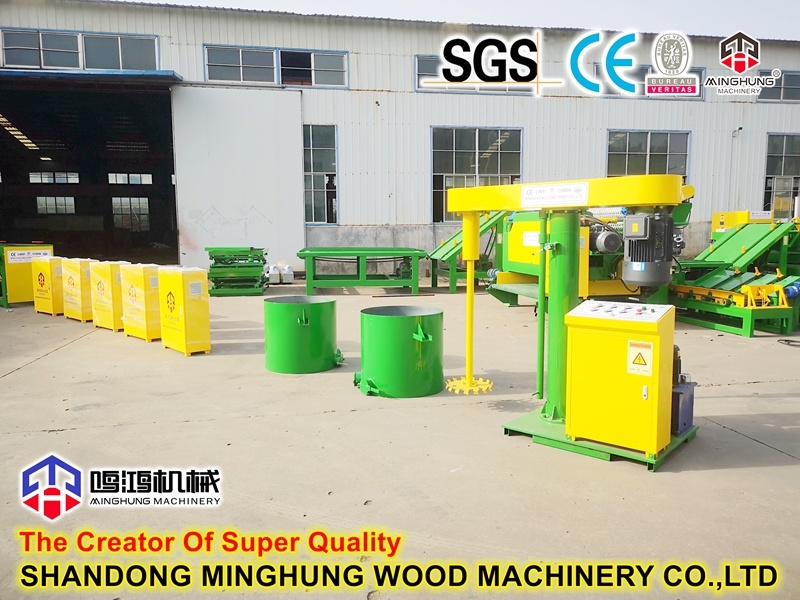
Generally, various glue materials are purchased and made according to the proportions. A glue applicator is required to stir each material and finally make glue.
2. Veneer gluing-gluing machine
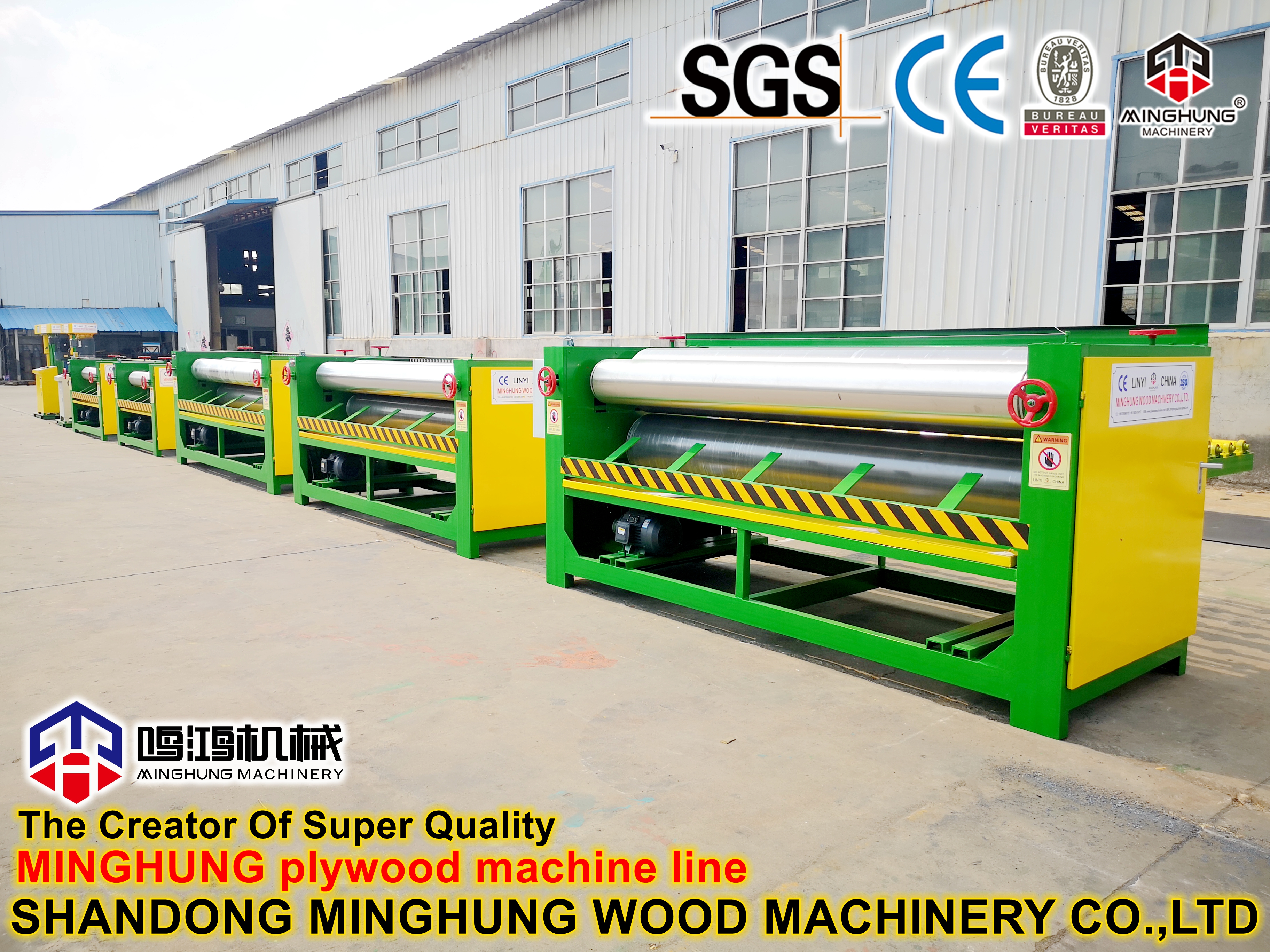
Use a glue applicator to apply glue to both sides of the veneer
(1) The quality of glue-coated veneer must meet the requirements, the moisture content is 5%-12%, and the temperature is below 40 degrees. For the veneer with uneven thickness, insufficient length, curved sides on both sides, and high moisture content, special treatment should be carried out.
(2) The staff should be clear of the sundries on the veneer, the amount of glue applied should be uniform, and the unpainted parts should be manually brushed with glue, and no blank spots are allowed. Remove excess glue from areas where glue has accumulated.
(3) The veneer after gluing should be carried out in time for the next process.
(4) The veneer of different tree species should not be glued at the same time and used in combination
3. Lay out the plywood
Arrange and stack the glued veneers according to the size and thickness of the plywood
4. Pre-pressing process - Cold Press Machine
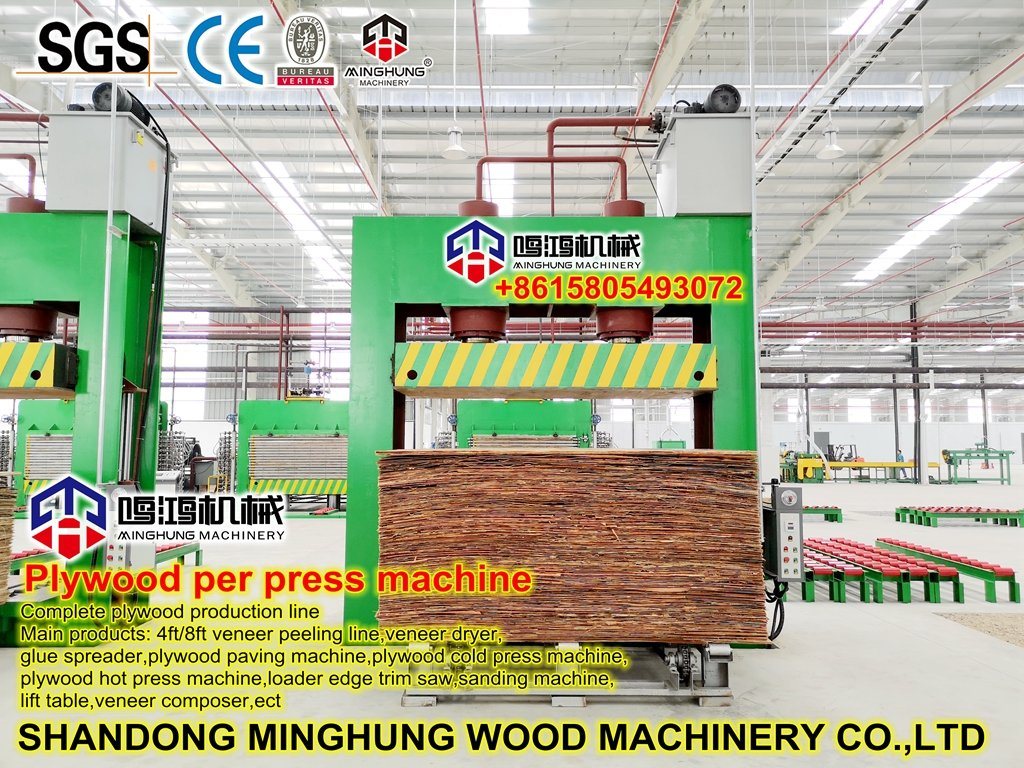
Put the prepared plywood into a cold press for pre-pressing to melt the glue in each plywood
5. Hot Press - Hot Press Machine
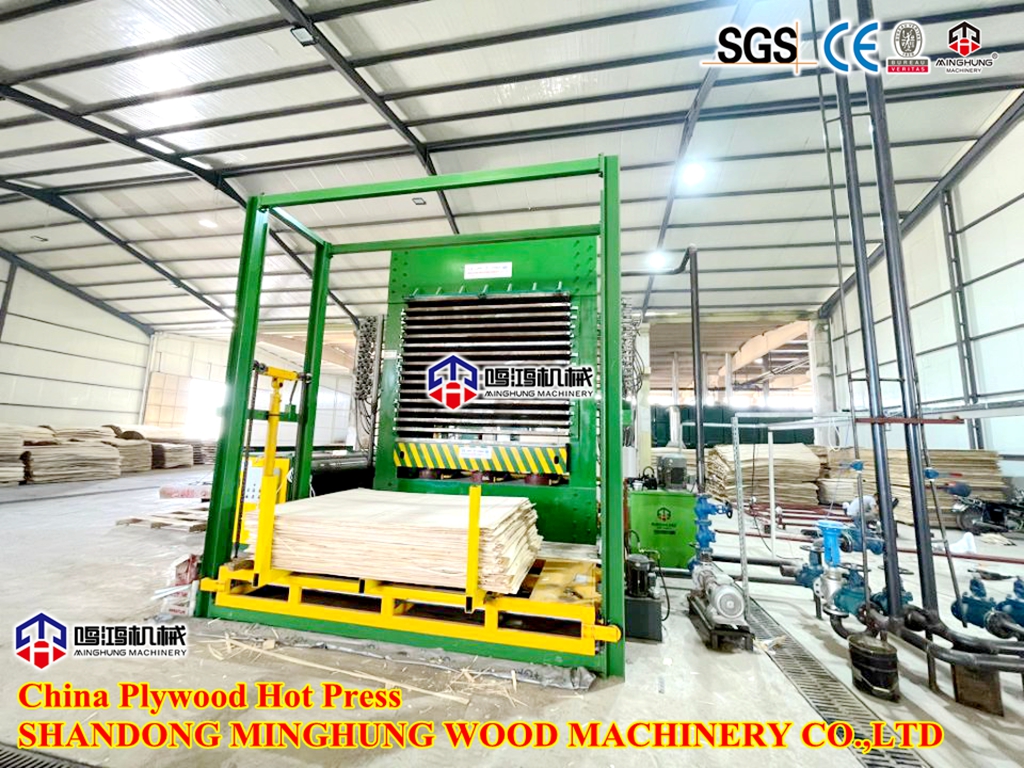
Put the pre-pressed plywood into a hot press, and press the plywood with high pressure and high temperature to ensure that the plywood is pressed evenly and the thickness is consistent.
The pressure relief should be slow, especially when pressing multi-layer boards and plywood with high moisture content, otherwise the phenomenon of glue opening and bubbling will easily occur.
6. Scrape putty on the plywood surface -Manually or By Putty Machine
1. The pressed plywood should be trimmed in time according to the specifications and tree species. The cracks and holes in the plywood should be smoothed with putty of similar color to the plywood. The excess putty should be dropped and hung up, and other parts of the plywood should not be polluted.
2. During the trimming process, if any plywood that has been opened or bubbling is found, it should be picked out, marked and placed in the designated position, and fed back to the relevant process for repair in time.
3. After the plywood putty is cured, the plywood can be stacked neatly according to the tree species and specifications, and transported to the next process.
4. Putty preparation: urea-formaldehyde glue, talcum powder, and pigment are mixed and adjusted to a sticky state
7. Saw Edge - Plywood Edge Cutting Saw
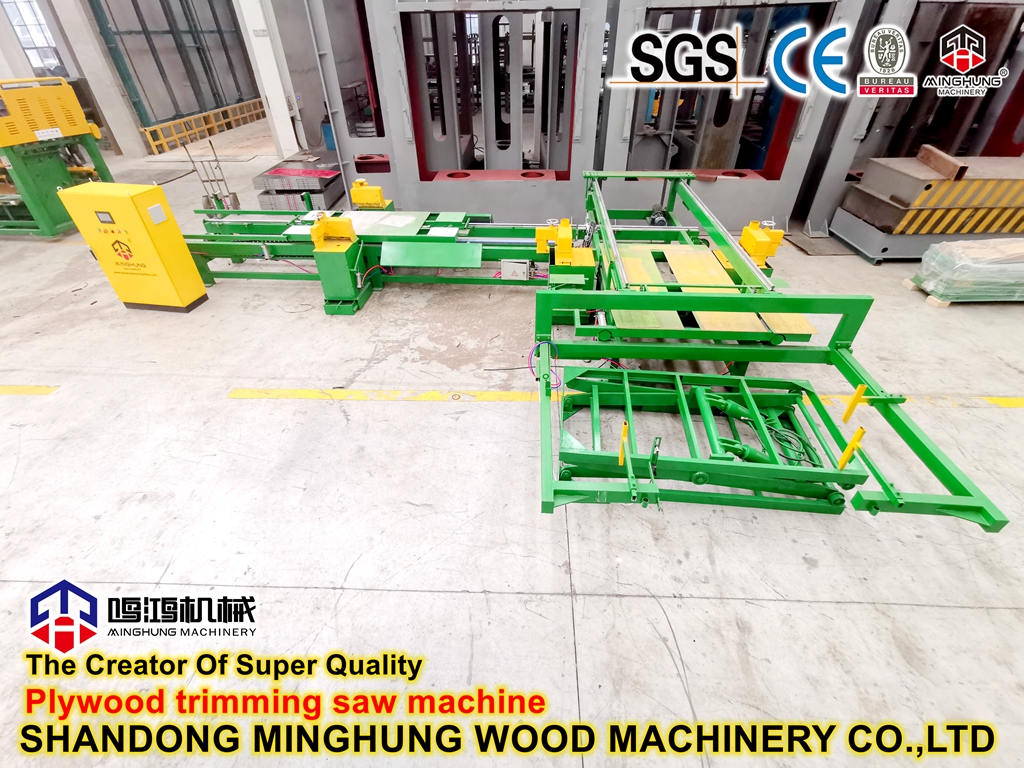
According to the required size of plywood, use an edge sawing machine to perform sawing processing on each plywood, and the sawing machine will automatically saw the four sides of the plywood, and automatically stack it. Make each plywood the same size
8. Sanding - Sander
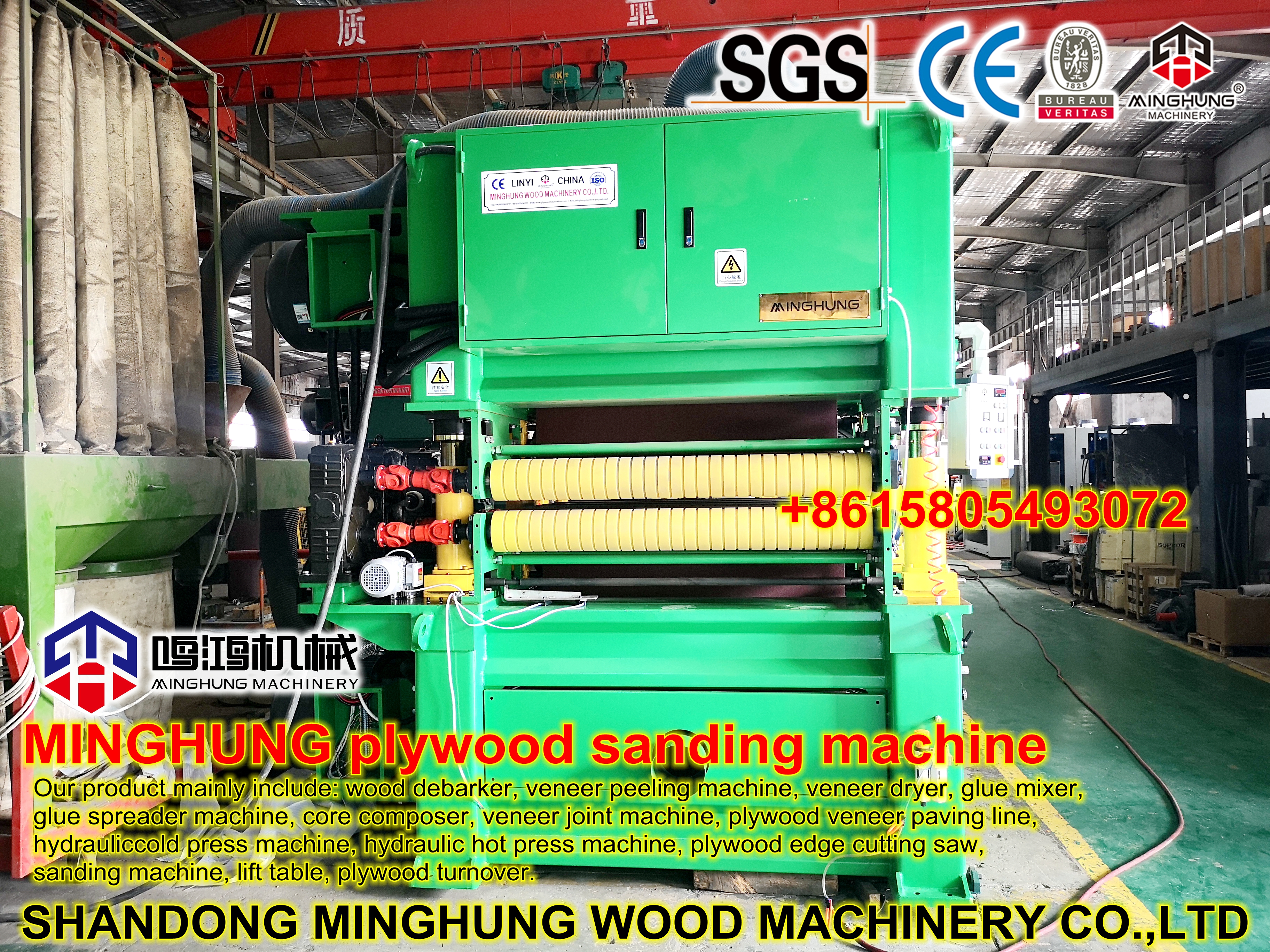
For some high-grade plywood, especially furniture boards, the quality requirements of the board are very high, so a sander should be used to calibrate the thickness of the plywood to ensure that the thickness of the plywood is uniform and accurate. Using a polishing machine, polish the surface of the plywood to make the surface of the plywood smooth. The quality of the plywood produced in this way will be much better
Until now, the production process technique finished, so with above machines, you can produce plywood board, whatever construction plywood, furniture plywood, packing plywood, marine plywood, all can be produced.
If you want to produce plywood, welcome contact us, we are China factory which produce the full line of plywood machine.
Contacts:
Mark: +8618769900191
Ali: +8615805496117
Lucinda: +8615805493072
Email: minghungmachinery@gmail.com