Environmental Low-Formaldehyde Plywood Production Line
Product Positioning & Application Scenarios
Eco-friendly low-formaldehyde plywood is a core product aligned with the global green building material trend, primarily used in:
Indoor furniture manufacturing: wardrobes, kitchen cabinets, tables and chairs
Interior decoration: wall paneling, ceilings, partitions
Children's furniture and educational toys: the most demanding environmental applications
Flooring substrates: engineered wood flooring core layers
As global consumer awareness of indoor air quality continues to rise, "no-added-formaldehyde" has become a mainstream trend in the premium plywood market.
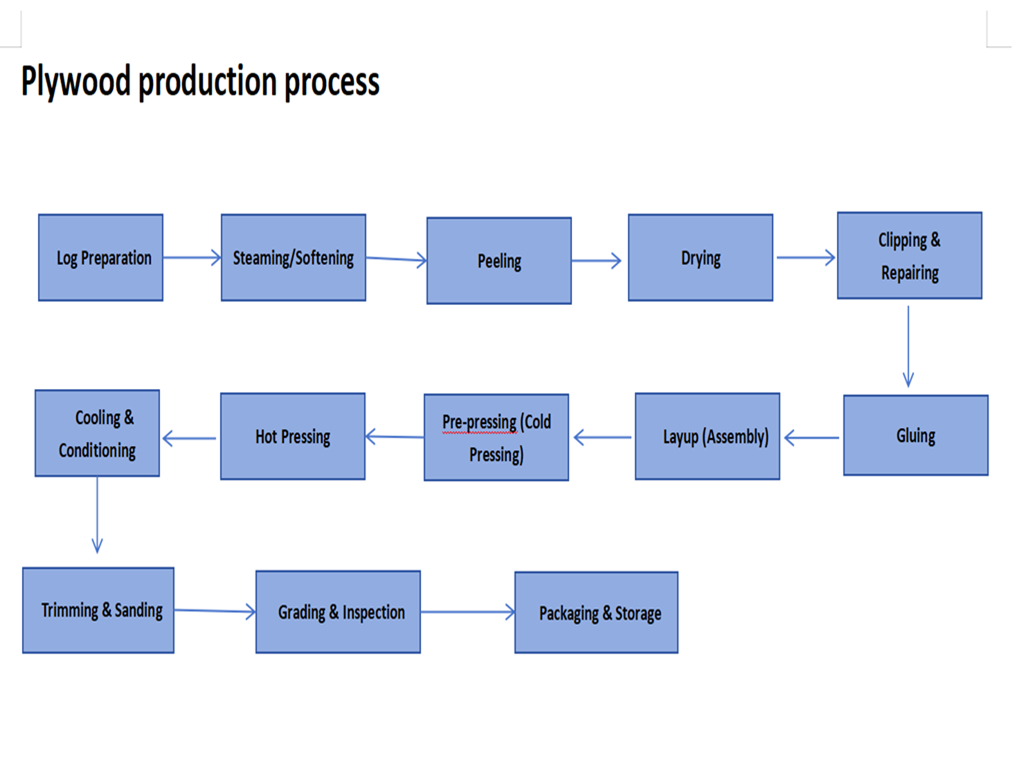
1. Raw Material Preparation: Quality logs (poplar, eucalyptus, birch, pine, etc.) → cross-cutting → debarking → steaming/softening
2. Peeling & Drying: Logs peeled into continuous veneer → roller dryer to 8%-12% moisture content
3. Low/No-Formaldehyde Gluing: Using low-formaldehyde modified UF resin, MDI isocyanate adhesive, or bio-based adhesives, applied uniformly via precision glue spreader (180-220g/m² double-sided) to ensure bond strength while controlling formaldehyde at the source
4. Layup & Assembly: Automatic or manual layup following symmetry and odd-number layer principles
5. Cold Pre-Pressing: Low-temperature pre-pressing to remove air and achieve initial shaping
6. Hot Press Forming: Adhesive curing under specific temperature, pressure, and time. When using low-formaldehyde resin, pressing time is typically 1.3-1.4 times that of ordinary UF resin, requiring extended pressing time to ensure bond strength
7. Cooling & Curing: Releasing internal stress and stabilizing panel performance
8. Sanding & Trimming: Calibrating sanding, fine sanding, precision edge trimming
9. Inspection & Packaging: 100% inspection including formaldehyde emission sampling; qualified products packed for shipment
Main Production Equipment Introduction
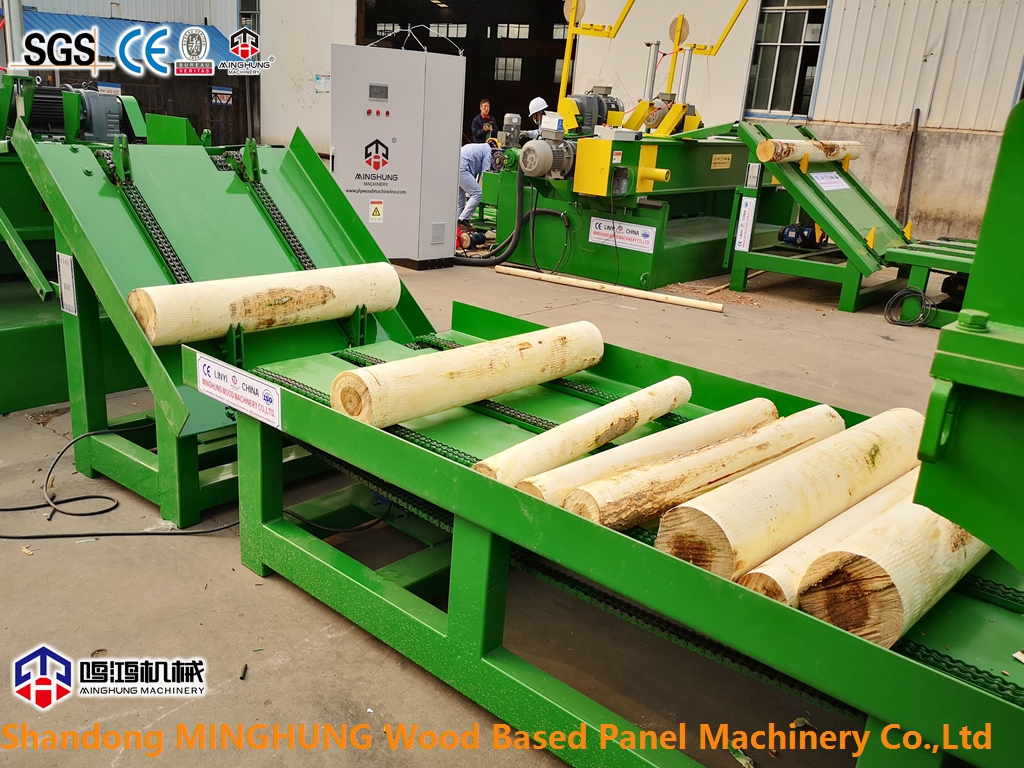
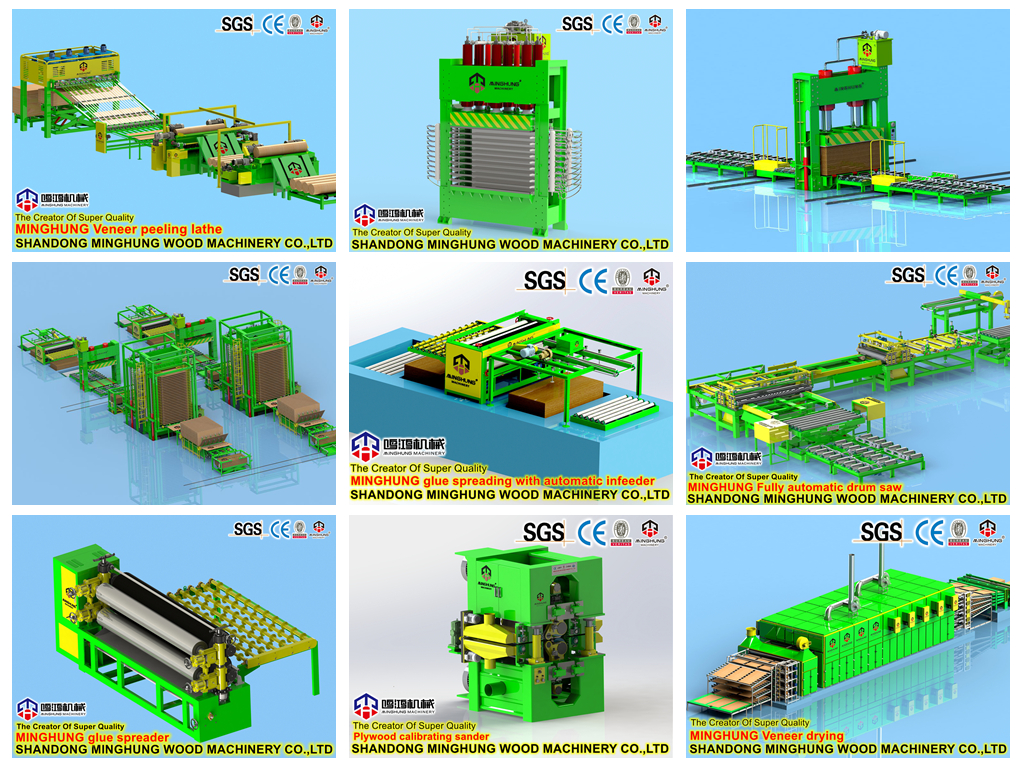
Log Debarker
Used to remove the bark from logs, reducing impurities that affect subsequent processing. Common type is roller debarker, capable of handling logs with diameter 150-500mm, debarking speed up to 57m/min, hydraulic control for stable operation.
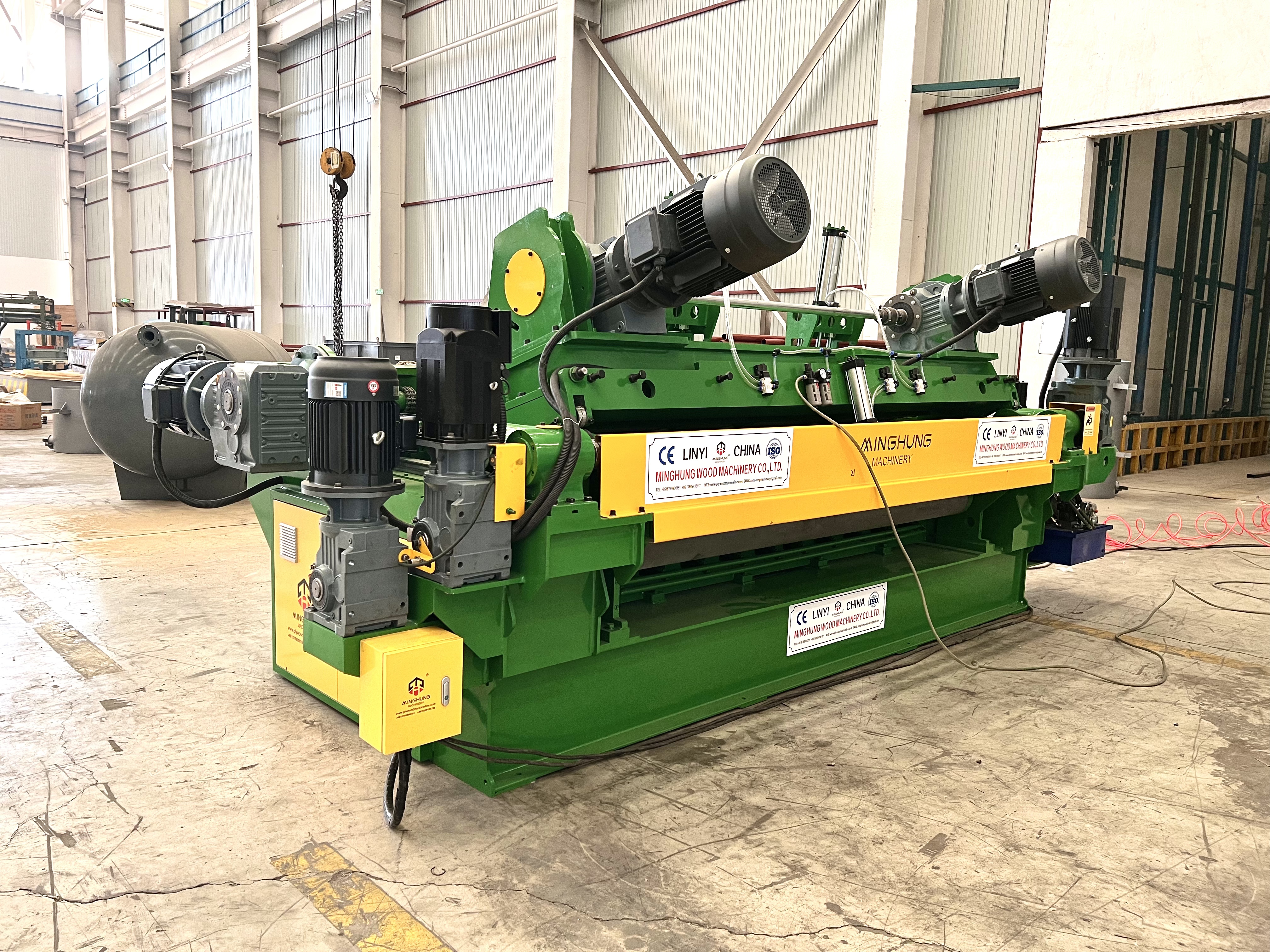
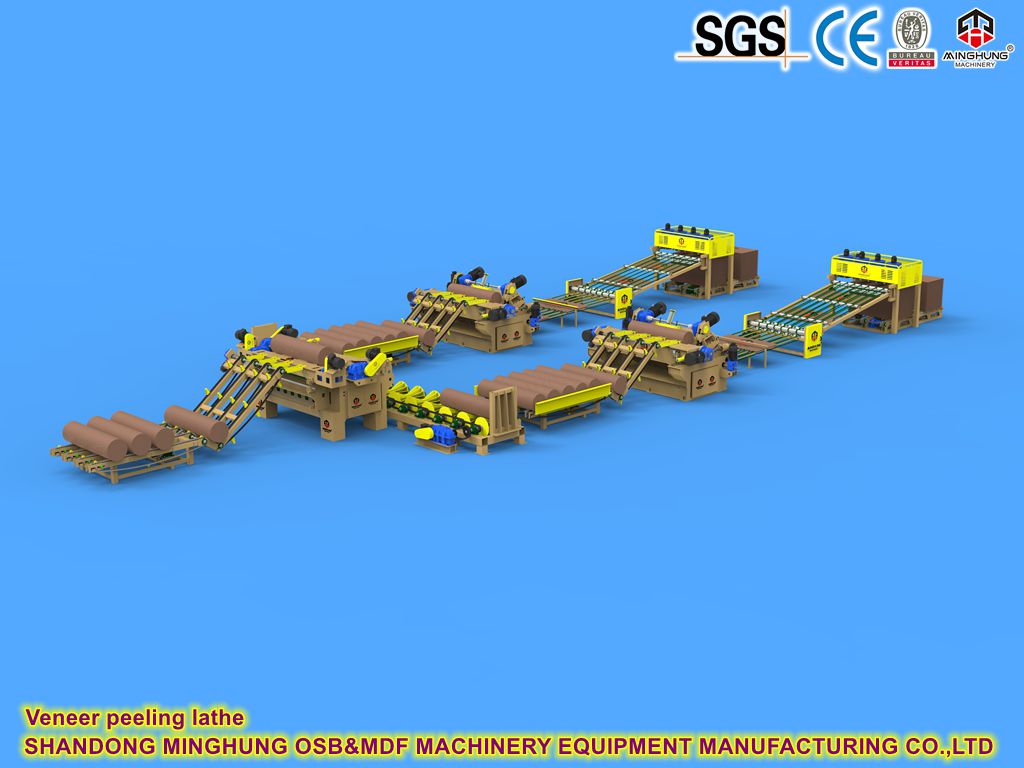
Veneer Peeling Lathe
Core equipment that peels logs into continuous veneer. High-precision peeling lathe can process logs with diameter 150-800mm, peeling speed up to 90m/min, servo-knife control, veneer thickness accuracy up to ±0.05mm. The peeled veneer is used for subsequent drying and layup.
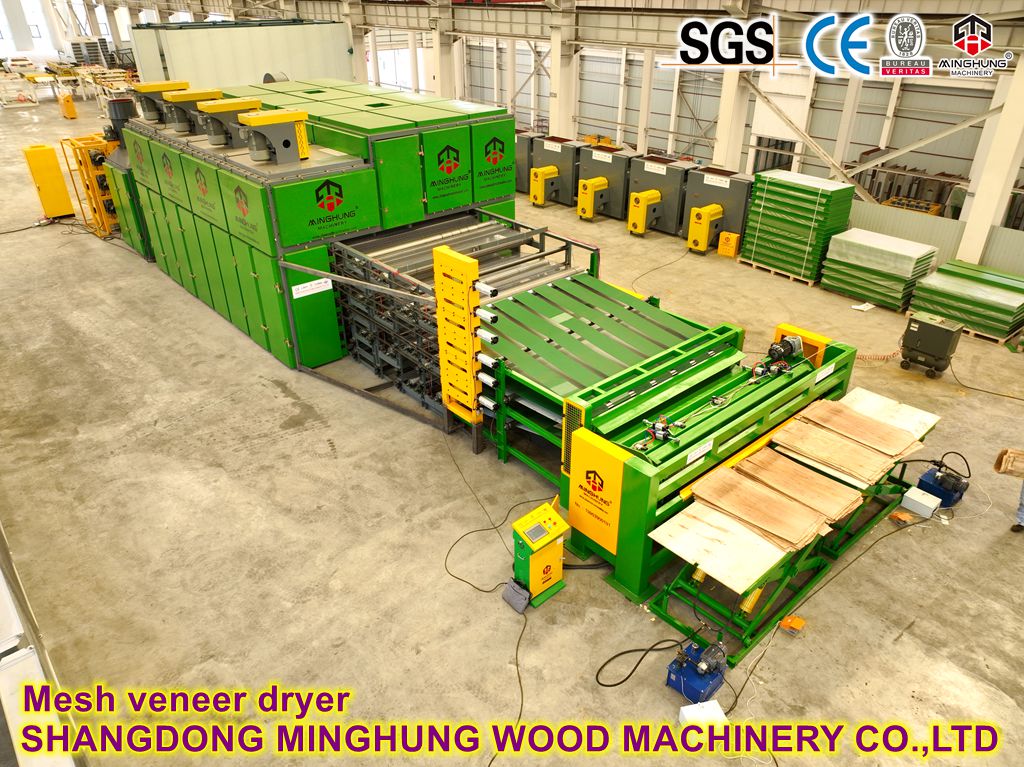
Veneer Dryer
Used to dry wet veneer after peeling to 8%-12% moisture content. Main types include mesh-belt dryer and roller dryer. Mesh-belt dryer uses multi-layer mesh belts to carry veneer through hot air circulation for uniform heating, particularly suitable for warp-prone species like eucalyptus. Drying temperature is zoned at 80-120℃, energy consumption approx. ≤120kWh/m³.
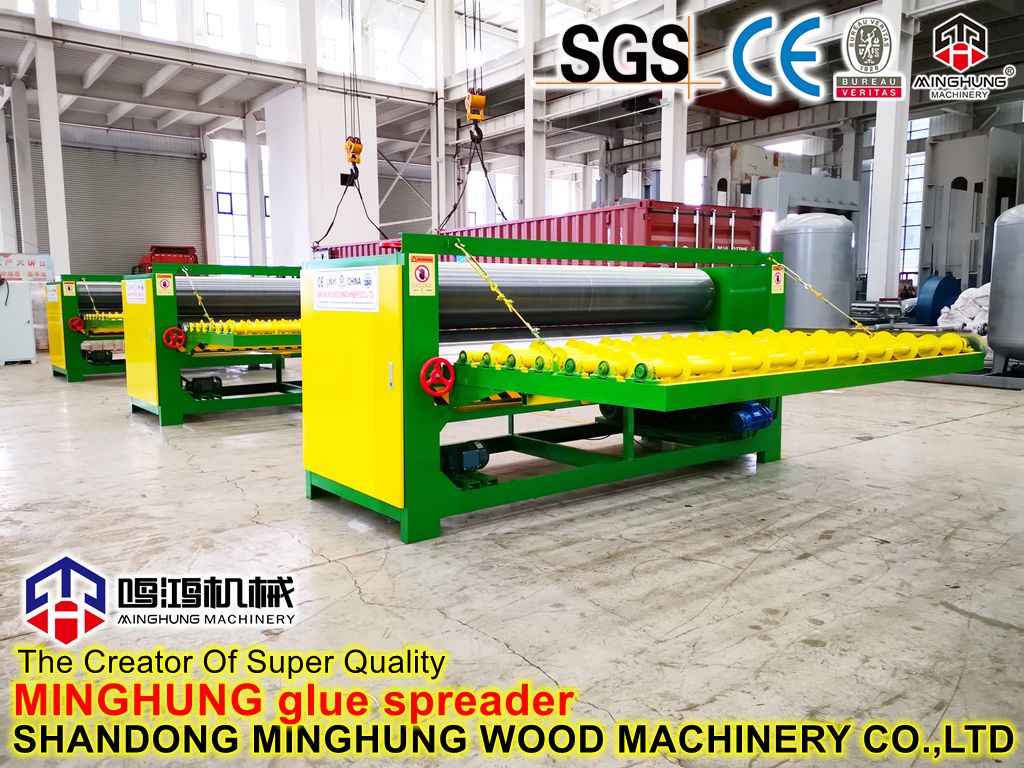
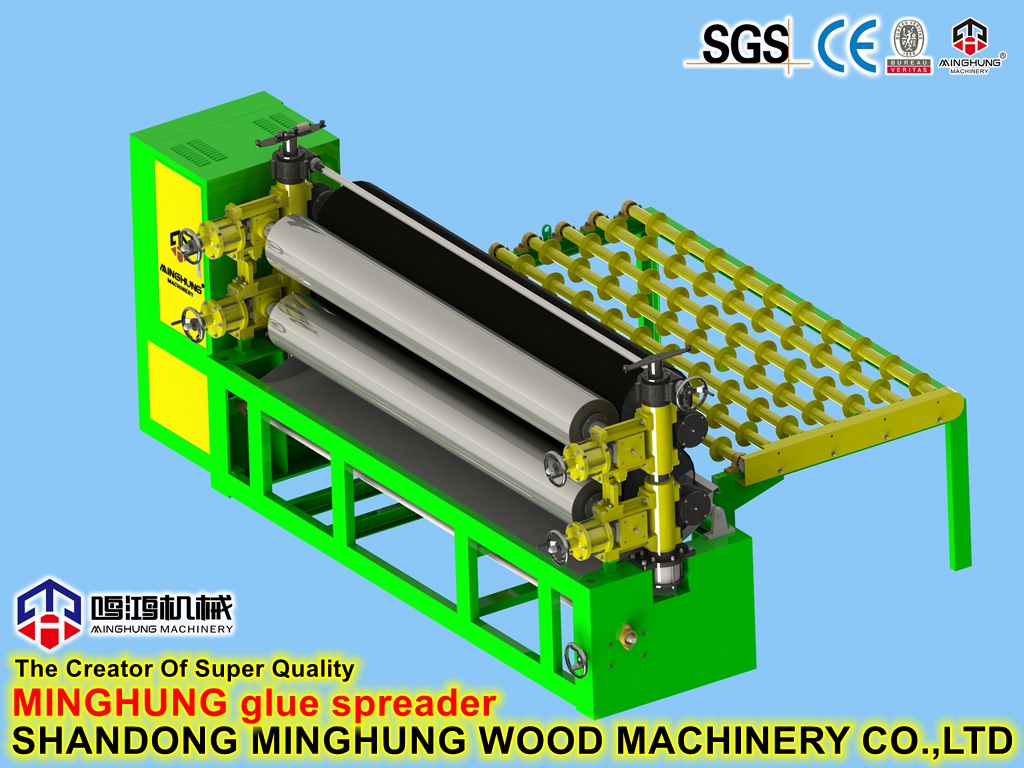
Glue Spreader
Applies eco-friendly low-formaldehyde adhesive (low-UF resin, MDI, or bio-based adhesive) uniformly onto the veneer surface. For eco-friendly low-formaldehyde lines, precision four-roll glue spreader is recommended. By precisely adjusting gaps and speed ratios between rollers, glue consumption can be accurately controlled at 180-220g/m² (double-sided), accuracy ±10g/m². Uniform gluing prevents starved or excessive glue joints, minimizing consumption of expensive formaldehyde-free adhesive while ensuring bond strength.
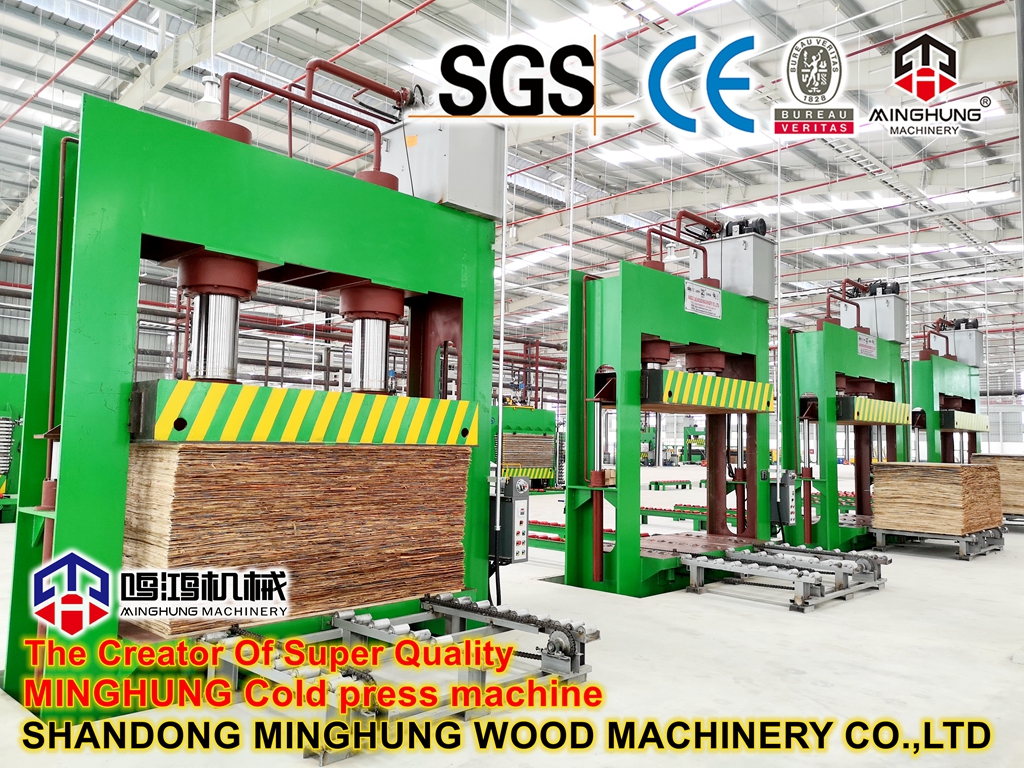
Cold Pre-Press
Performs low-temperature pre-pressing on assembled mats before hot pressing, removing inter-layer air and achieving initial shaping to prevent mat dislocation during hot pressing. Cold press pressure is typically 0.8-1.2MPa.
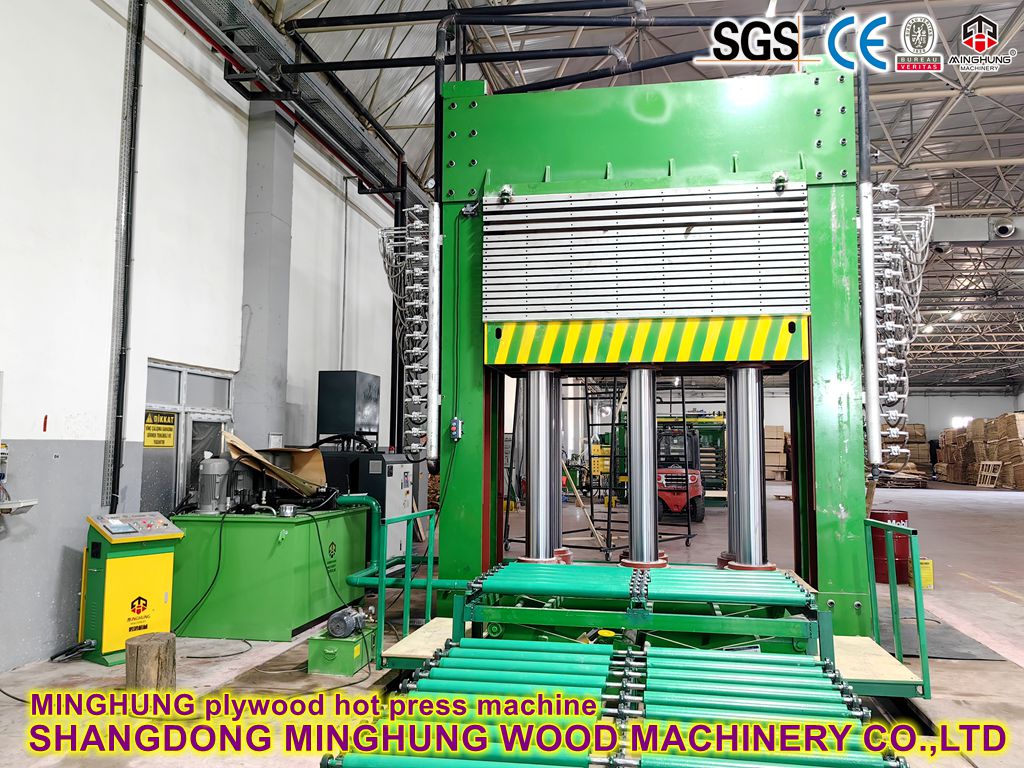
Hot Press
The most core equipment of the plywood production line, determining final product quality and capacity. The eco-friendly low-formaldehyde line mainly adopts two hot press solutions:
Multi-Opening Hot Press (Intermittent) : Traditional solution with 15-26 openings, hot press temperature 115-220℃, pressure 2.0-6.0MPa. For low-formaldehyde resin, pressing time needs to be extended to 1.3-1.4 times that of ordinary UF resin due to slower curing speed.
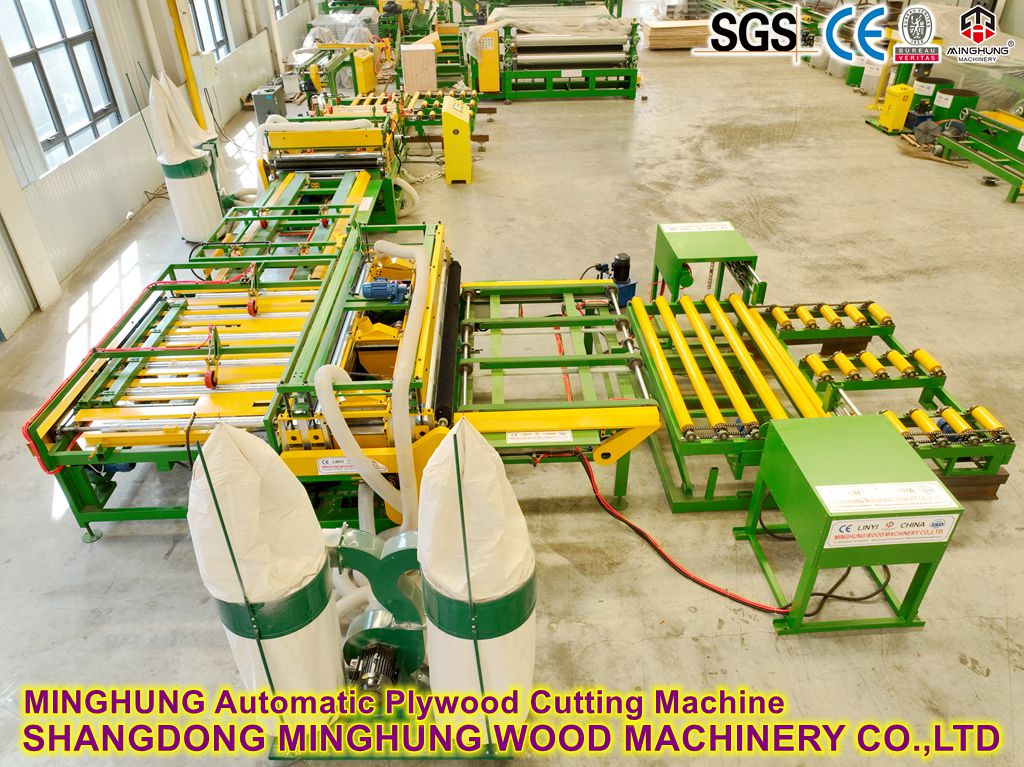
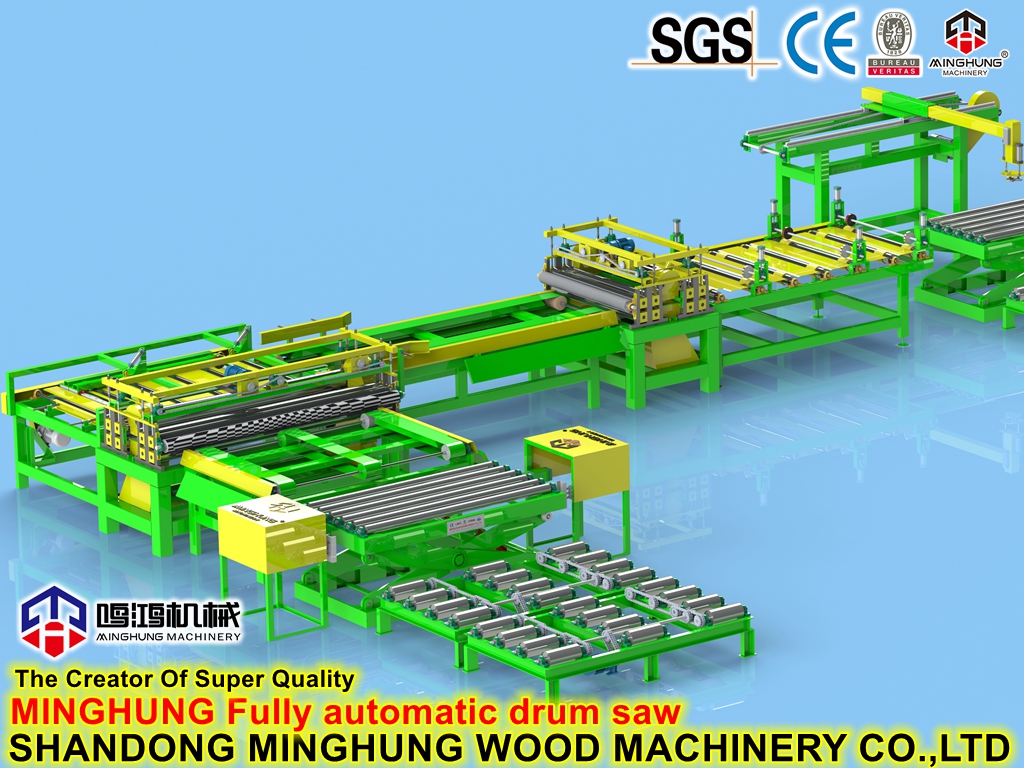
Cross-Cut & Edge Trimming Saw
Trims hot-pressed rough panels to standard sizes (e.g., 1220×2440mm) with precision. PLC controlled with infrared positioning, cutting accuracy ±0.5mm, working speed 40-70m/min, capacity up to 8-12 sheets/min.
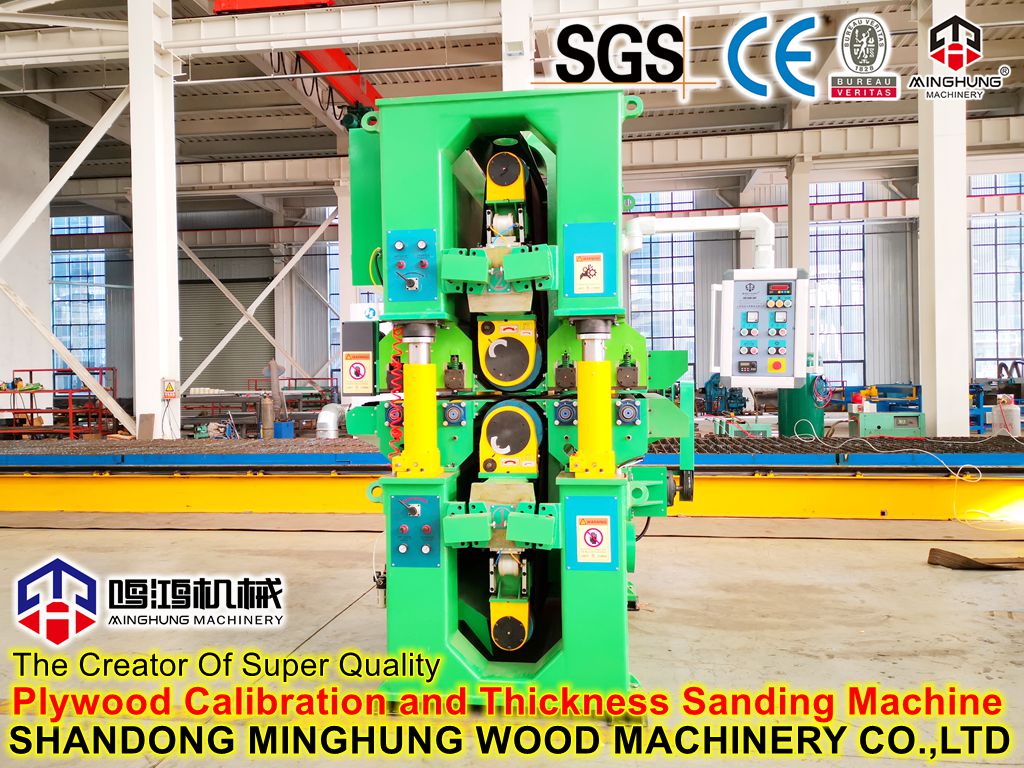
Sander
Performs calibrating sanding and surface finishing on trimmed panels. For eco-friendly low-formaldehyde lines, a 3-head wide-belt sander is recommended, capable of simultaneous calibrating and polishing, thickness accuracy ±0.1mm, surface roughness Ra≤3.2μm.
Equipment Configuration Recommendations
Capacity | Recommended Configuration |
300-500 sheets/day | Multi-layer hot press (15 openings) + manual/semi-automatic veneer assembly + standard sanding machine |
500-1000 sheets/day | Multi-layer hot press (20-26 opening) + automatic adhesive application and laying + wide belt sander |
1000+ sheets/day | Continuous flat hot press + robotic automatic blank assembly + intelligent grading system |
Key Technical Specifications
Parameter | Specification |
Applicable Raw Materials | Poplar, eucalyptus, pine, birch, and various fast-growing wood species |
Finished Panel Size | 1220×2440 mm (4×8 ft), non-standard sizes customizable |
Panel Thickness Range | 5 mm - 30 mm (continuously adjustable) |
Daily Output Capacity | 300 - 1,000 sheets (standard 4×8 ft panels, configuration dependent) |
Hot Press Temperature | 115℃ - 220℃ (temperature control accuracy ±1℃) |
Hot Press Pressure | 2.0 - 6.0 MPa (adjustable) |
Number of Hot Press Openings | 15 - 26 openings (configurable based on capacity) |
Thickness Tolerance | ±0.1 mm - ±0.3 mm |
Formaldehyde Emission (finished product) | ≤0.02 mg/L (1/25 of E0 standard), or NAF certification available |
Compatible Adhesives | Low-formaldehyde UF resin, MDI isocyanate adhesive, bio-based adhesives |
Glue Consumption | 180 - 220 g/m² (double-sided application) |
Veneer Moisture Content Control | 8% - 12% |
Total Installed Power | 180 - 350 kW (depending on configuration) |
Comprehensive Energy Saving Rate | 20% - 35% lower than traditional equipment |
Automation Control System | PLC touch screen fully automatic control with remote monitoring interface |
Why Choose This Production Line?
1. Full Environmental Compliance: Meets the world's strictest formaldehyde emission standards, facilitating exports to premium markets in EU, U.S., Japan, and Korea
2. Multi-Technology Compatibility: One production line supports switching between low-UF, MDI, and bio-based adhesive systems, flexibly meeting diverse order requirements
3. High Automation Level: Fully automatic continuous press solutions enable Industry 4.0 intelligent production, reducing labor by 75% and cost by over 10%
4. Enhanced Brand Value: Producing "no-added-formaldehyde" eco-plywood significantly increases product added value and brand image
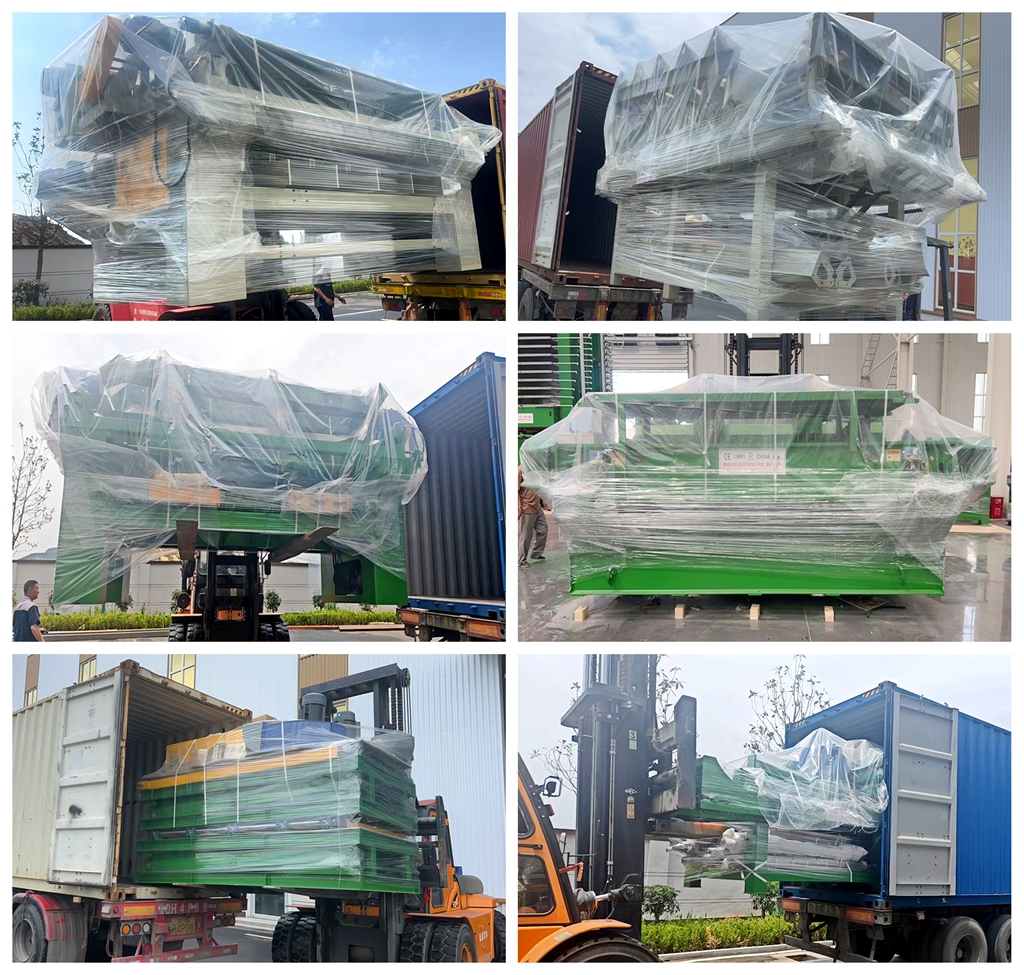
5. Turnkey Service: Comprehensive one-stop support from equipment installation, process commissioning to operator training
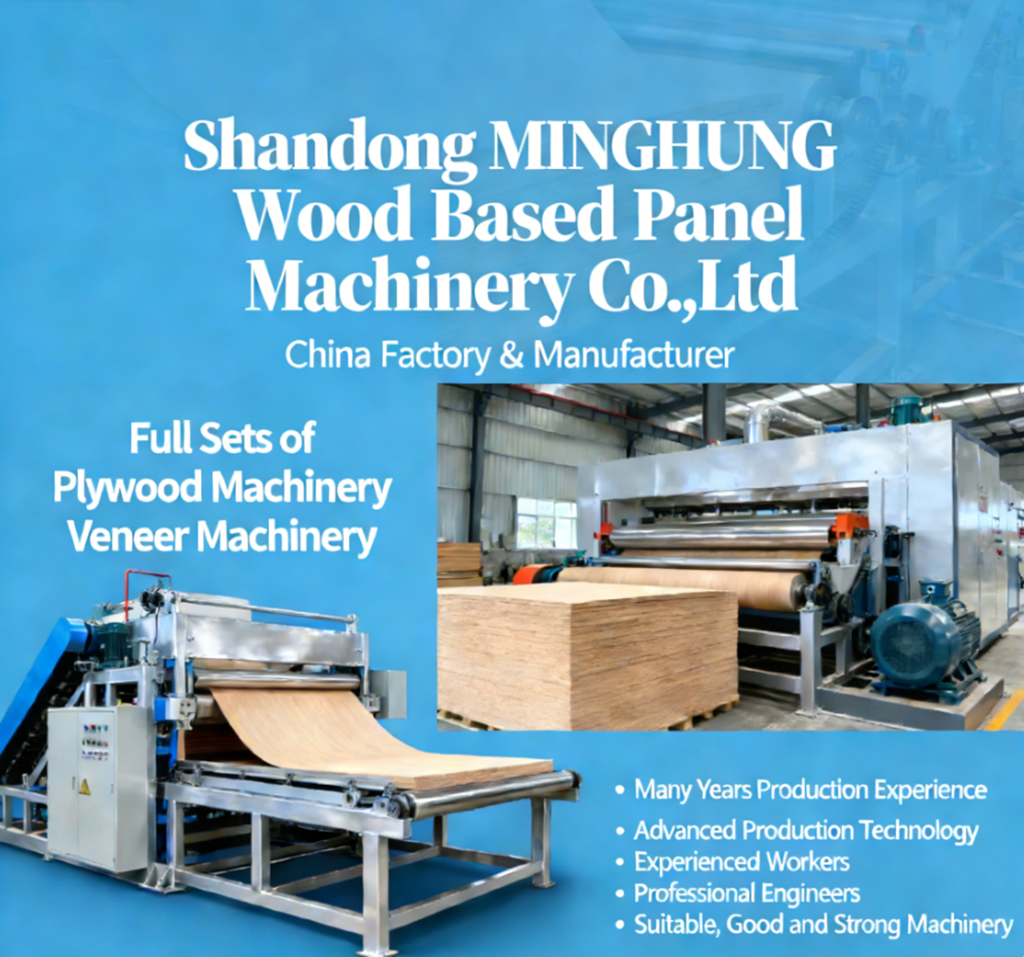
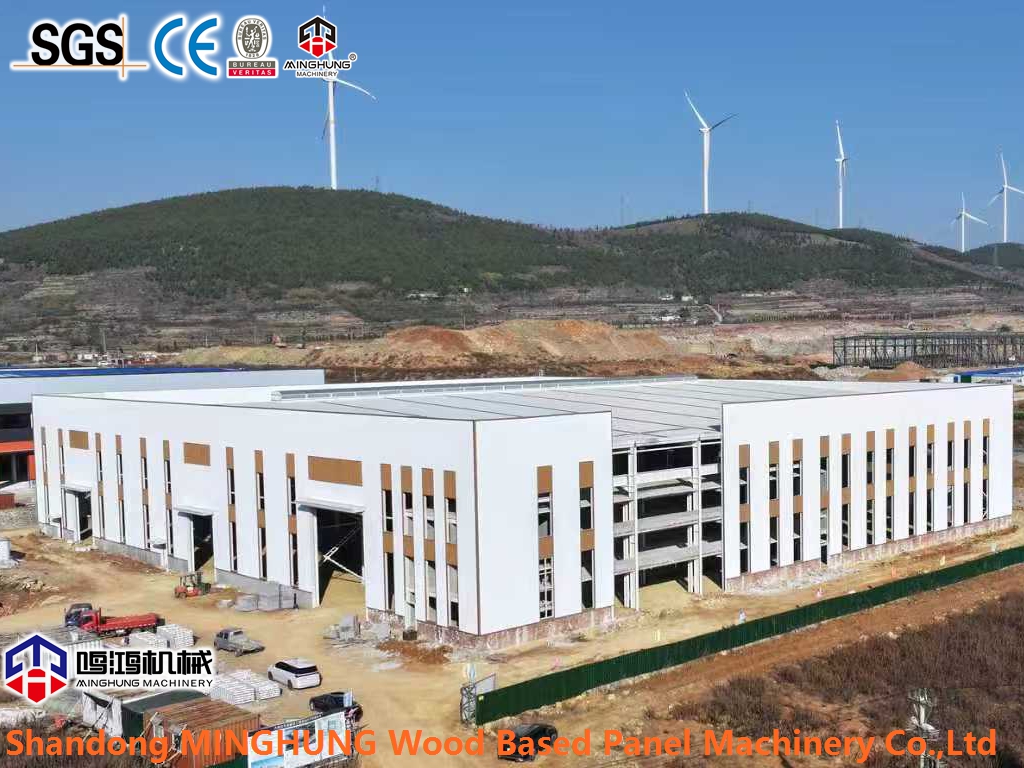
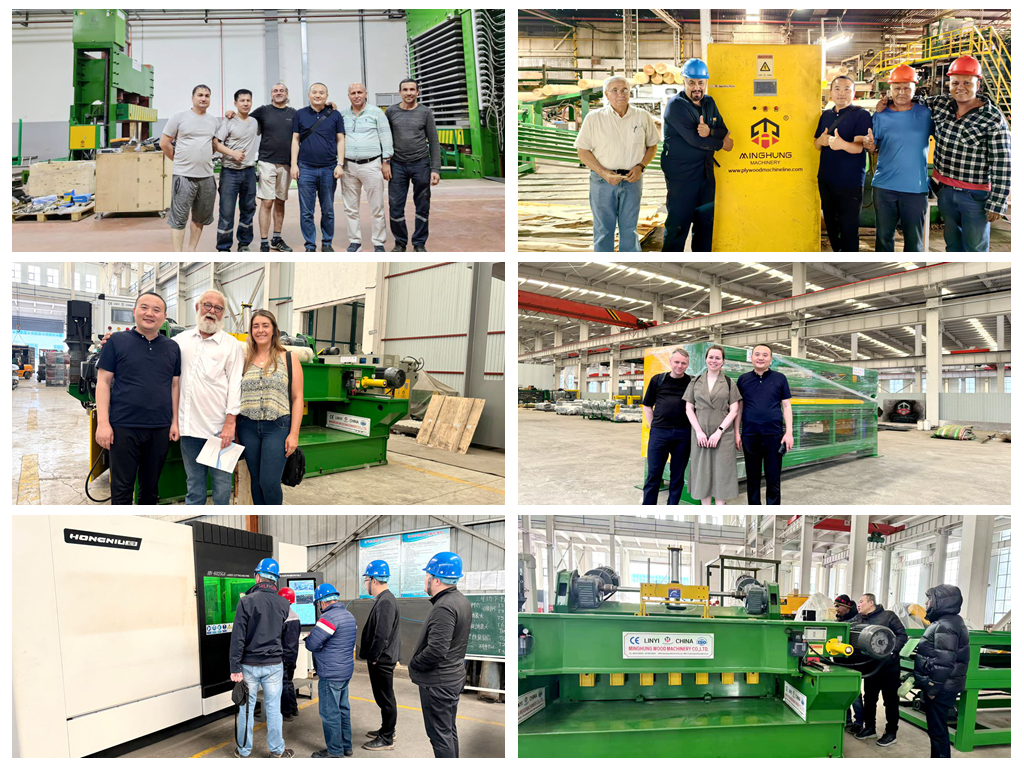
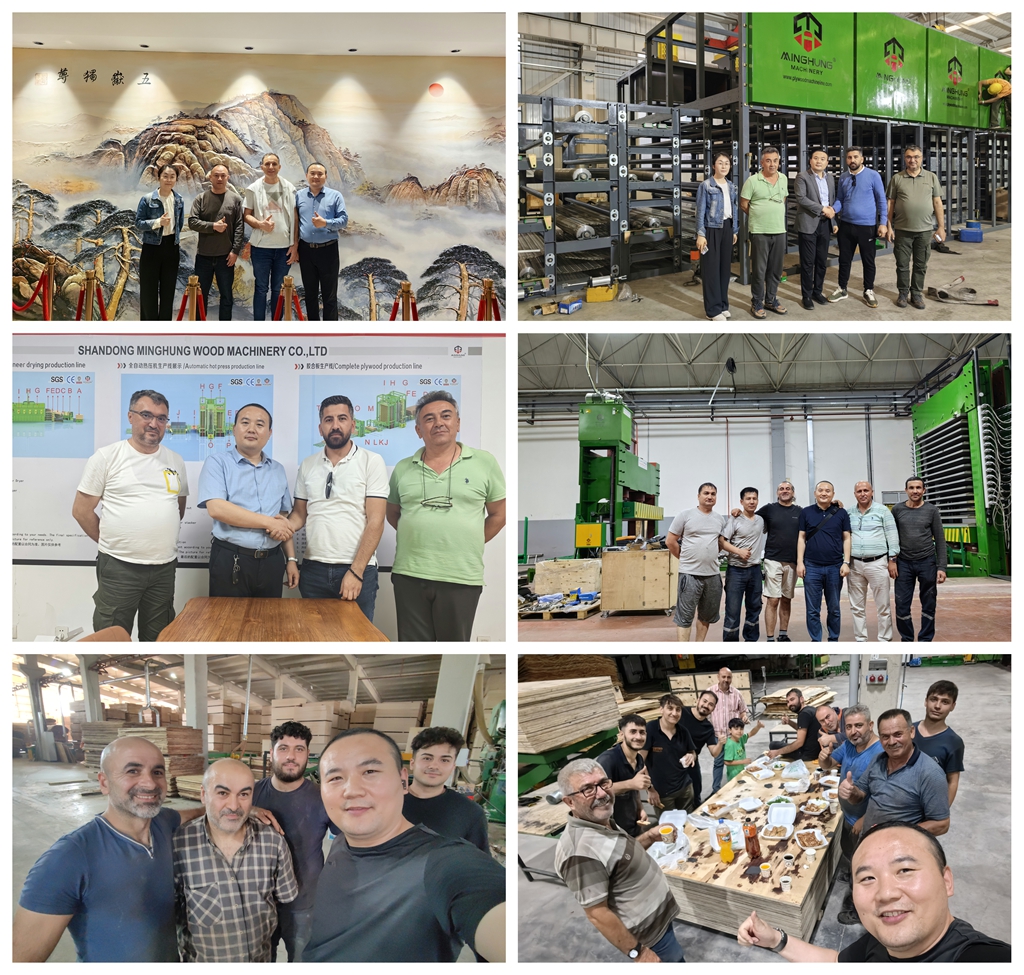
We are Shandong MINGHUNG Wood Based Panel Machinery Co.,Ltd China factory and manufacturer of full sets of Plywood machinery and Veneer machinery. With many years production experience, advanced production technology,experienced workers and professional engineers, we can offer you the suitable, good and strong machinery for you.