After the log enters the factory, it must first be cut into wood sections according to the required length, and then when the wood is cut, the sawing plan must be selected according to the diameter of the log, the wood texture and the fixing method of the wood on the planer, so that the planer can be cut. The width of veneer shall not be less than the relevant requirements.
The reasonable plan not only has a high yield, but also produces more veneers in radial cuts and less veneers in string cuts, and the obtained products have high decorative value. Logs of different diameter grades require different sawing schemes. The thick solid line in the figure is the saw section line, and the direction of the arrow is the cutting direction of the planer:
In actual production, sawing plan B is usually used for logs with a diameter of less than 400mm, while sawing D and E are used for logs with a diameter of 400~800mm. When veneer is produced by these sawing and slicing schemes, the board yield is high, the veneer quality is better, and the slicer efficiency is higher.
softening (steaming or boiling) cooking
The plasticity of the wood increases after the wood is cooked (ie, hydrothermally treated). The most effective way to improve the plasticity of wood is to adjust the two factors of temperature and moisture content at the same time, that is, to increase the temperature of the wood and increase the moisture content of the wood at the same time. This is the reason why the wood is usually cooked with saturated steam or hot water in actual production—hydrothermal treatment.
First of all, when the wood cube is put into the cooking tank, it should be carried out according to the tree species and the size of the wood cube; it is best to keep the water temperature at room temperature and raise the temperature slowly to avoid the cracking of the wood cube due to thermal stress. When the temperature rises to above 40°C, the heating rate should be slowed down; excessive cooking will also reduce the quality of veneer; the cooking tank should be frequently cleaned of resin, bark, and sediment, and the water should be changed frequently to reduce wood pollution; after cooking The wood should be put into the warm water tank for wood storage in front of the slicer in time, and the heat preservation should be in the range of 40~50 °C (depending on the tree species and the thickness of the veneer).
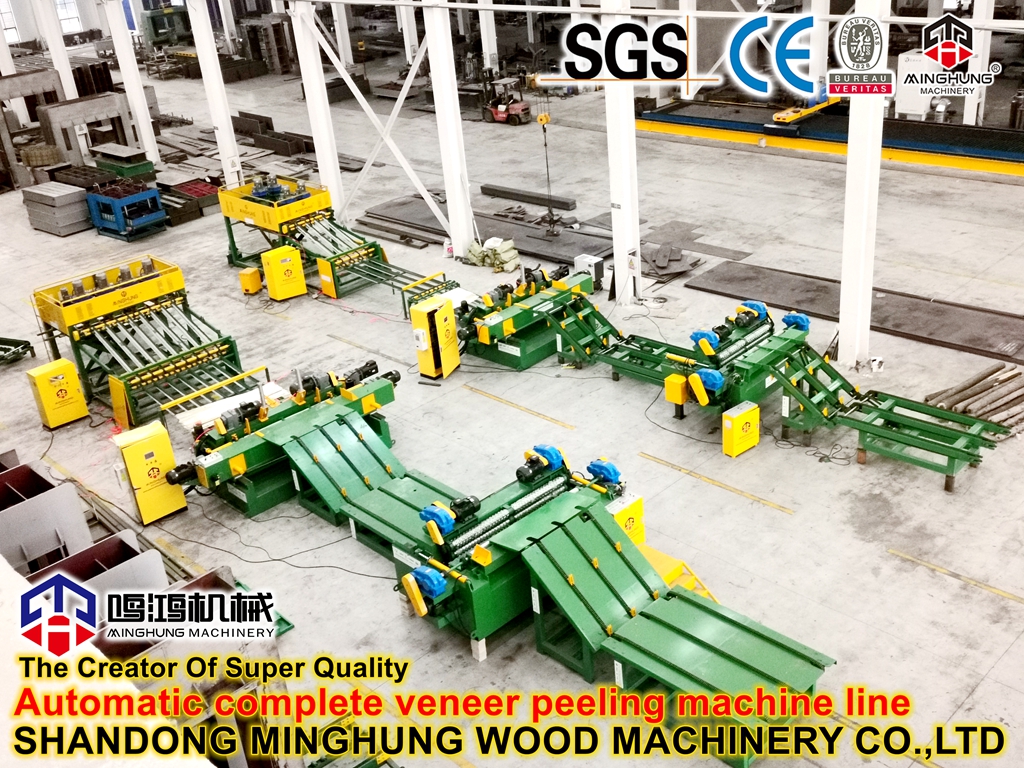
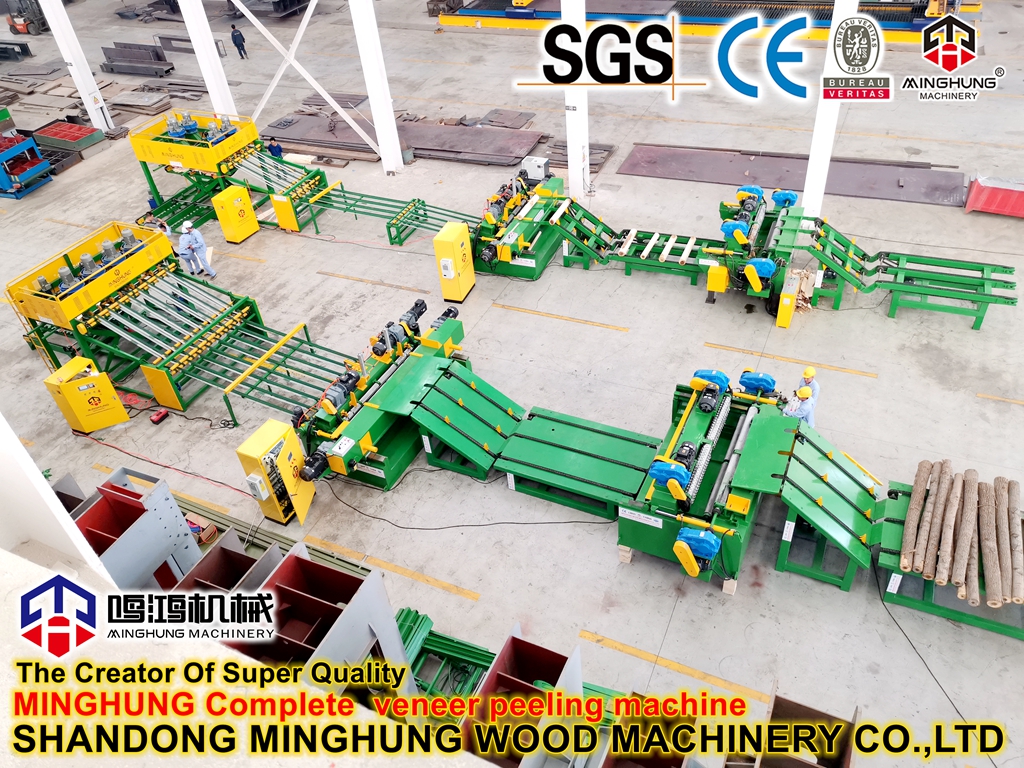
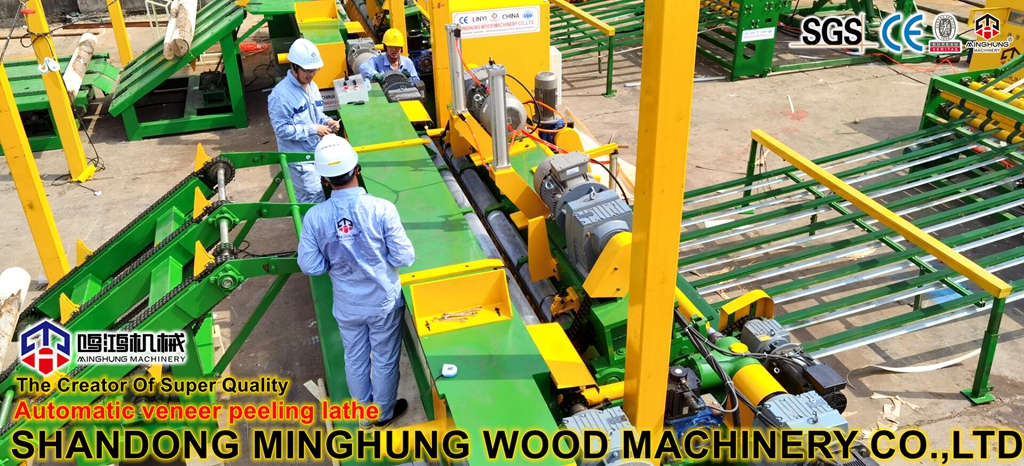
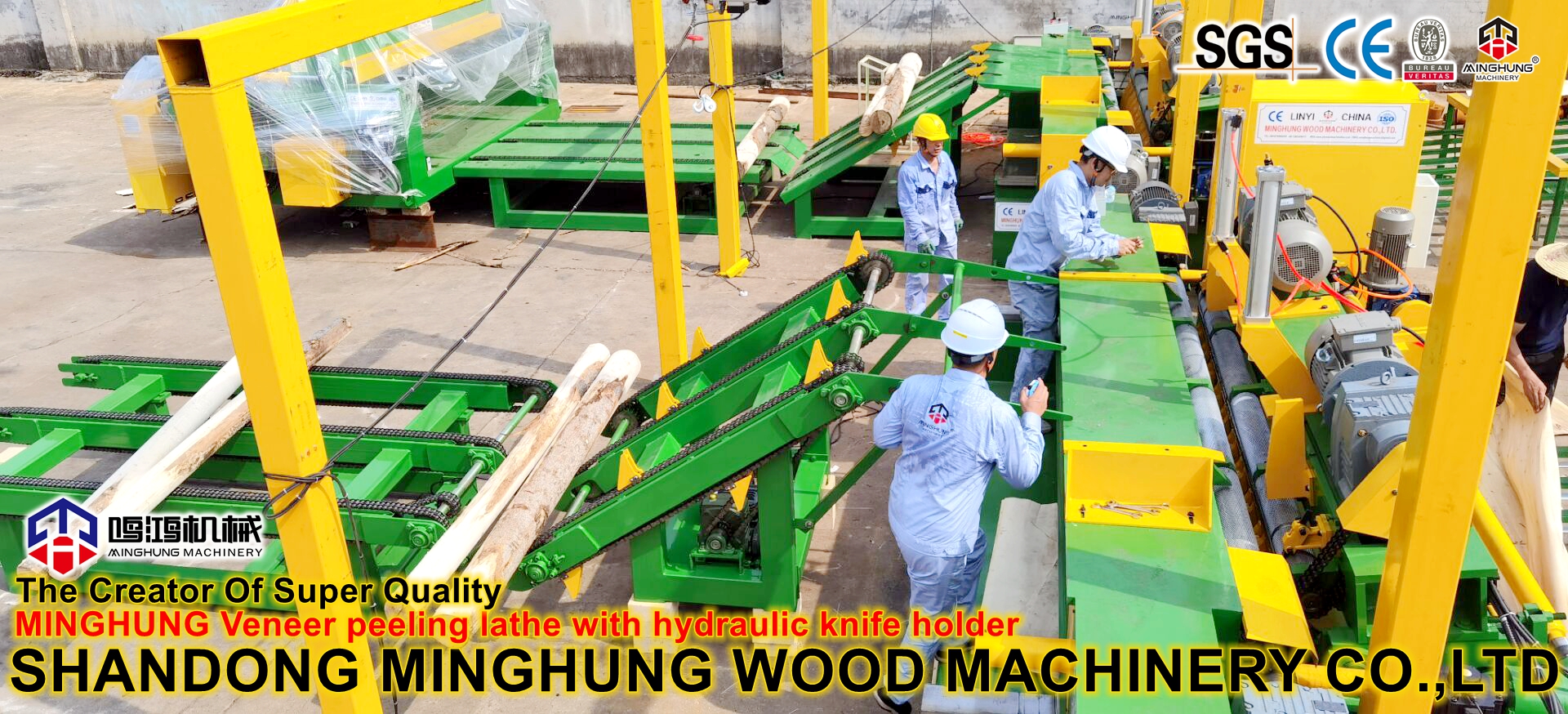
wood veneer peelingOur product 4feet Veneer production line includes 4feet log debarker, 4feet wood peeling machine, log conveyor, and 4feet vacuum veneer stacker.
The function of veneer peeling line for processing wood and produce wood veneer, as you know, wood veneer is material for making plywood, wooden furniture and others. So its quality are very important. This requires the veneer machine are good quality and strong enough.
This 4feet veneer production line can process max log length 1400mm, and max log diameter 550mm, and thickness can be 0.5-4mm.
With advanced and mature production technology, and experienced workers and professional technicians, So our veneer machine structure and characters are good. And we use good and thick materials, super machine accessories, good electric box and upgraded electric parts, So our log peeling machine are strong enough to peel kinds of hardwood like beech, birch and others, and can help you produce very accurate wood veneer with smooth surface, which will help you create much value.
veneer drying
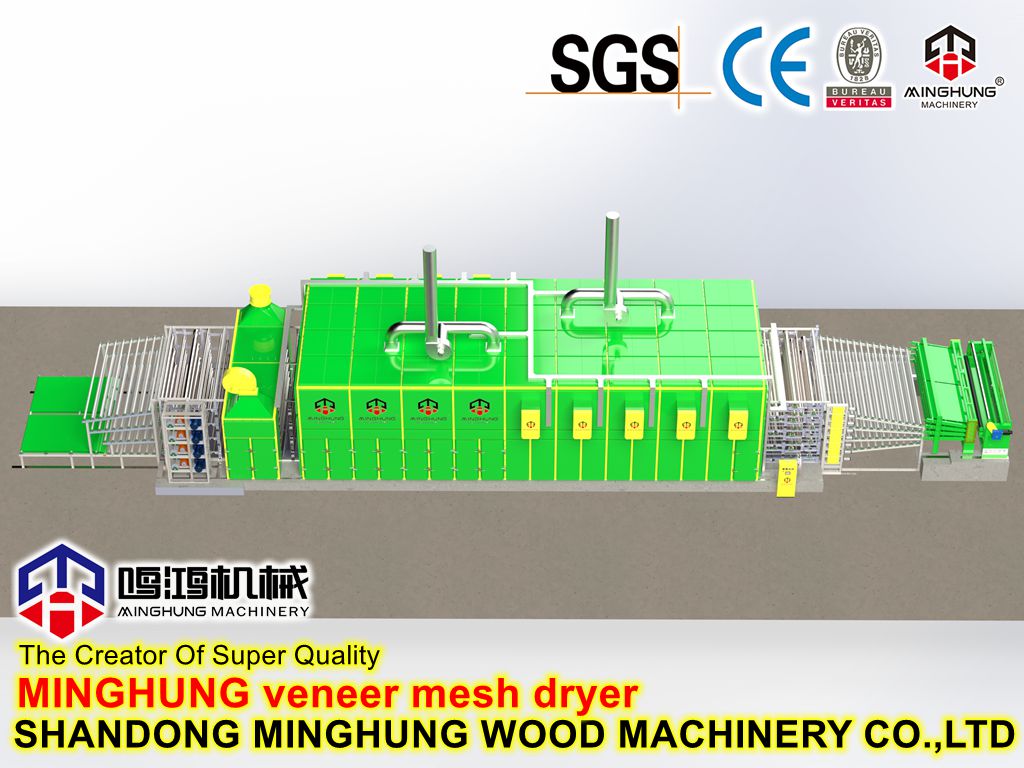
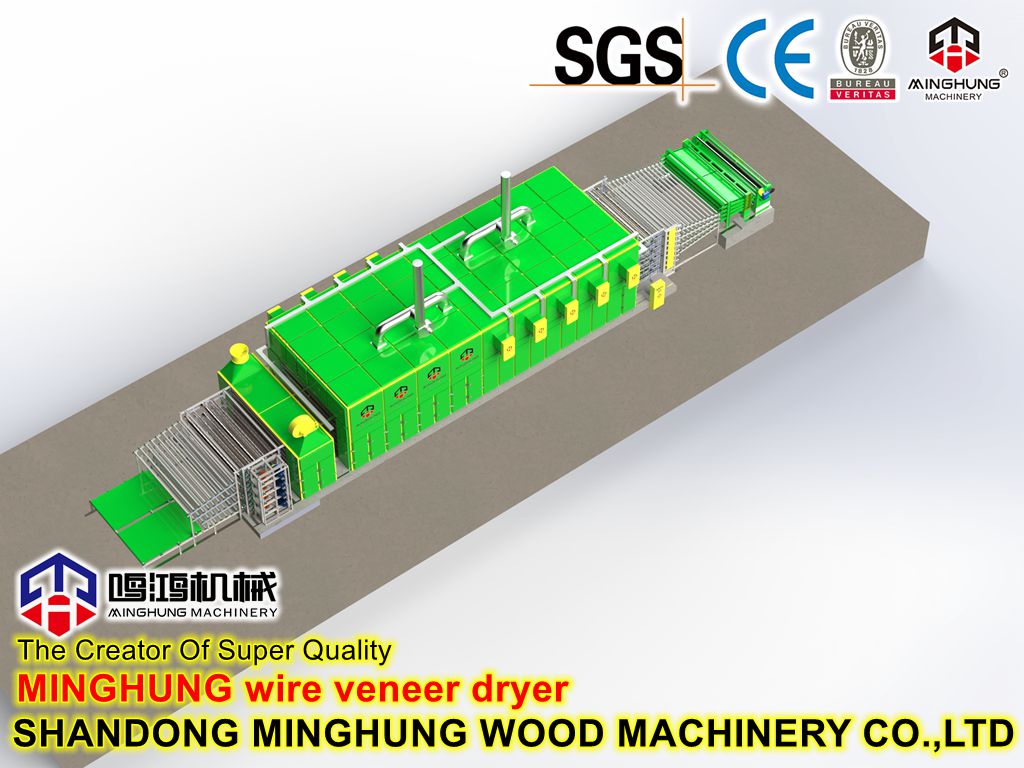
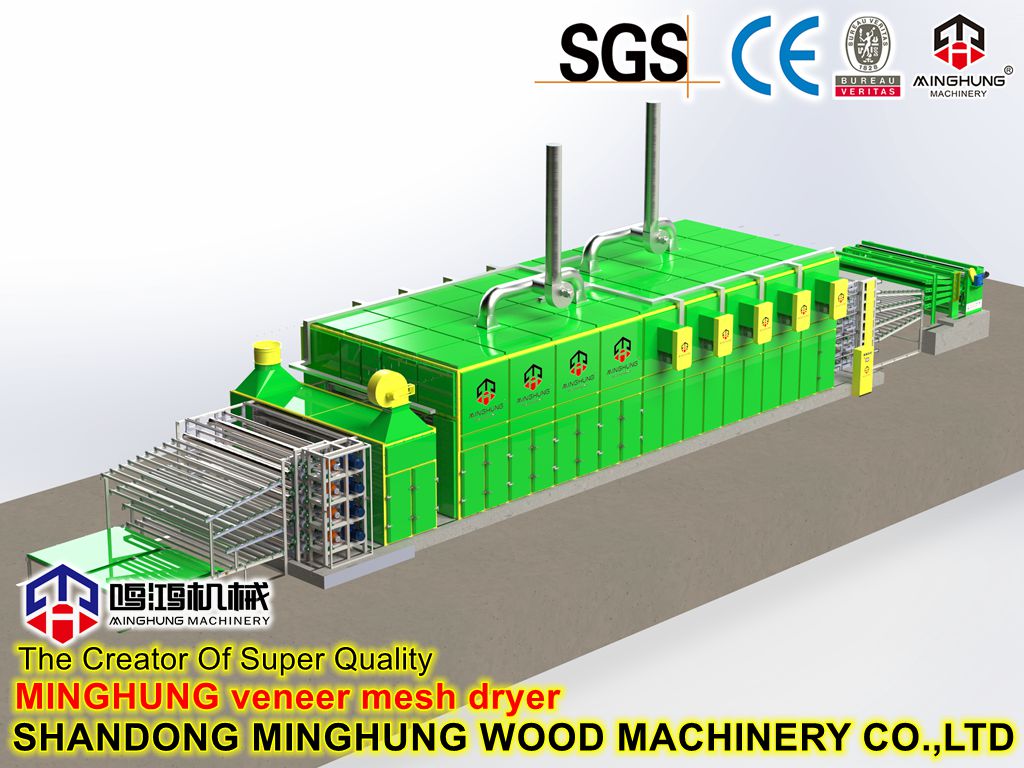
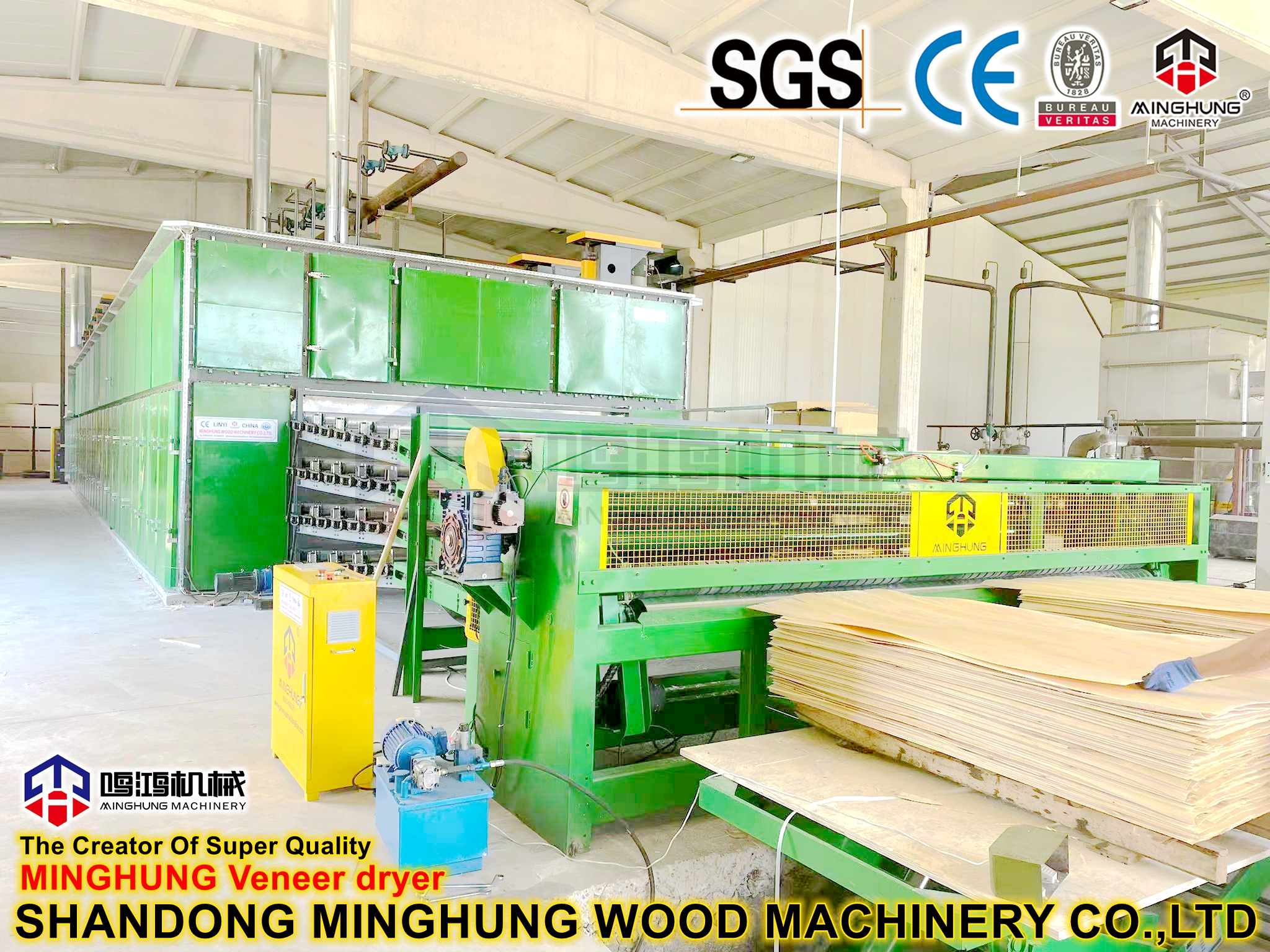
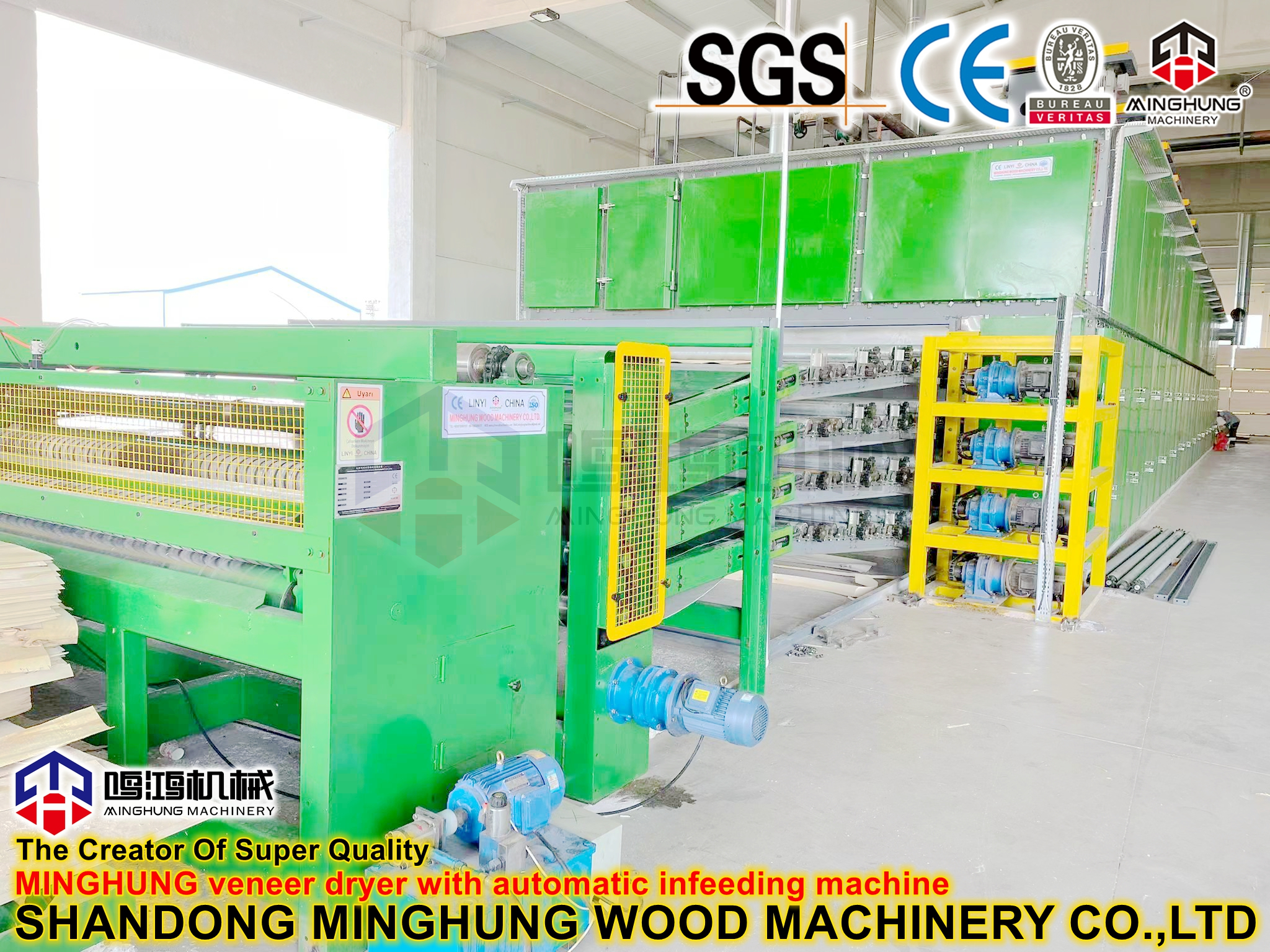
The moisture content after drying is generally required to be 8%~12%. The veneer drying equipment includes a drum dryer and belt dryer for continuous operation and a drying room for intermittent operation. The drying room is an old-fashioned drying equipment, which is very uneconomical, but the drying quality is better. The most widely used is the tumble dryer. For thin veneers, especially those with a thickness of less than 0.4mm, a belt dryer must be used.
The first day of the 2026 Shanghai International Woodworking Machinery Fair – if this morning's keyword was "surprise," then this afternoon's keywords are definitely "explosive" and "confidence"!
This trip to Shanghai was not only a display of products, but also a dissemination of our brand and a connection of emotions. We will continue to stay true to our original aspiration and repay every customer's trust and support with even better products and services. The future is full of promise, and we are always on the way!
The Mid-Autumn Festival is approaching, and the moon is growing round. While many people are beginning to prepare for family reunions, the company’s factory tells a different story: forklifts weaving through the yard, crane arms rising and falling, containers lined up in rows, and loading work proceeding in a tense yet orderly manner.
How to produce Particle board? What is the production step of Making Particle board?Introduction:Particle board, also known as chipboard, is a versatile and cost-effective material widely used in the construction and furniture industries. It is made by compressing wood particles and adhesive togethe
This new facility marks a fresh start for our company. Guided by our enduring commitment to "precision engineering and quality first," we are now better equipped than ever to provide efficient, durable, and innovative machinery solutions for the worldwide wood-based panel industry.