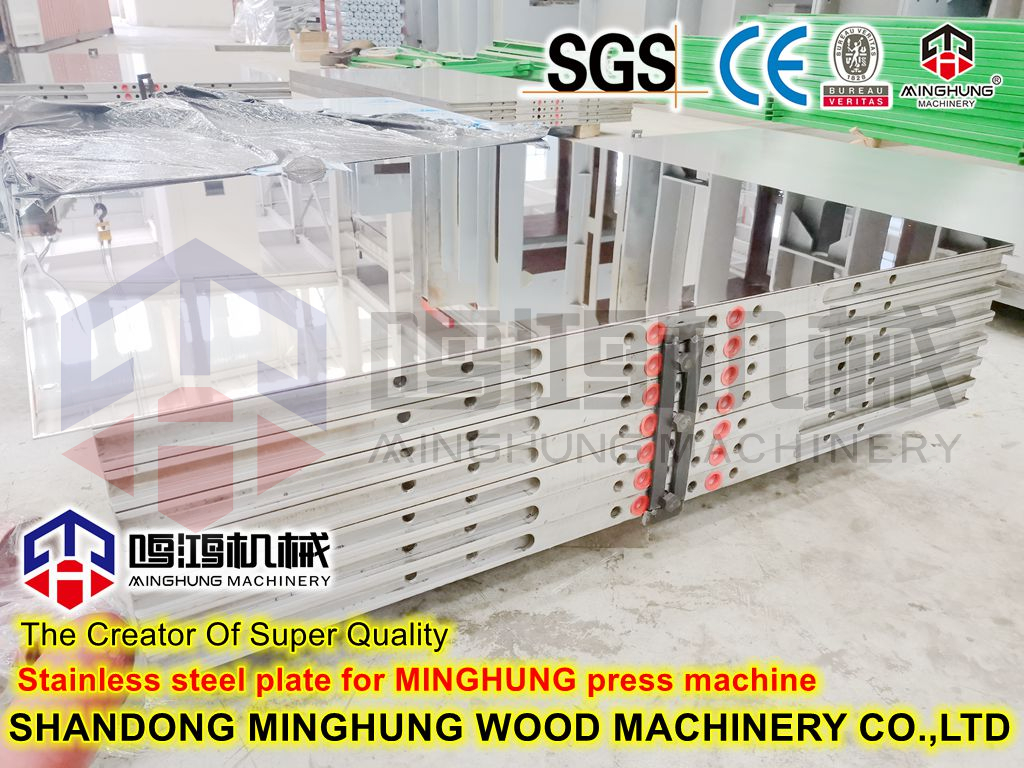
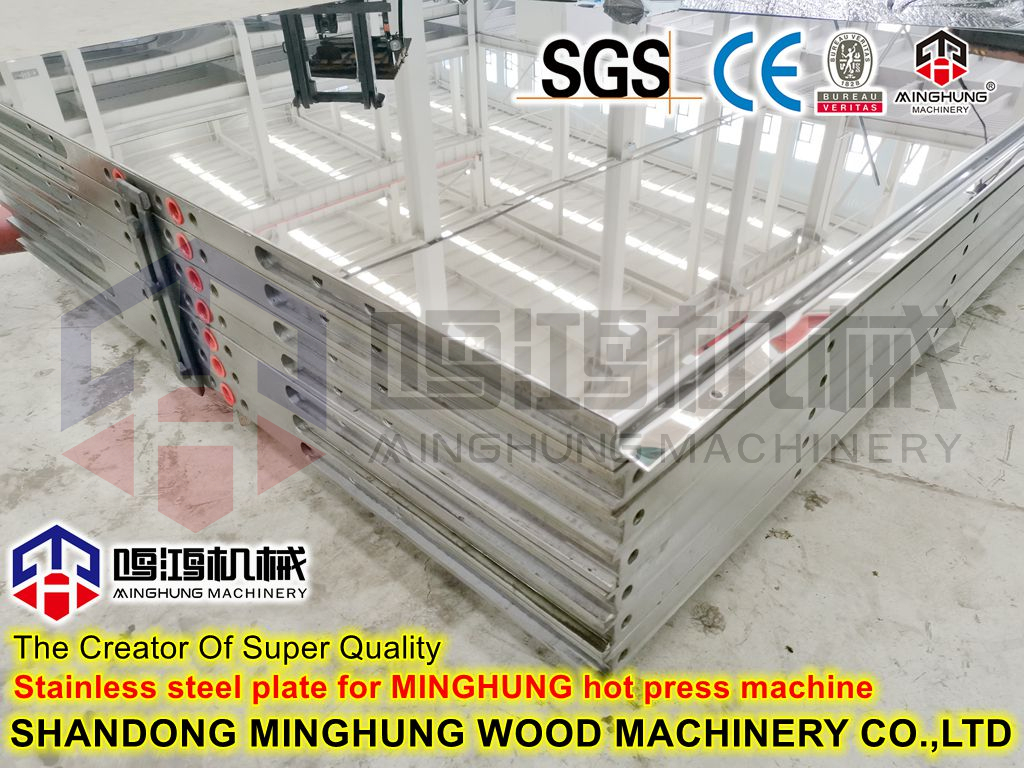
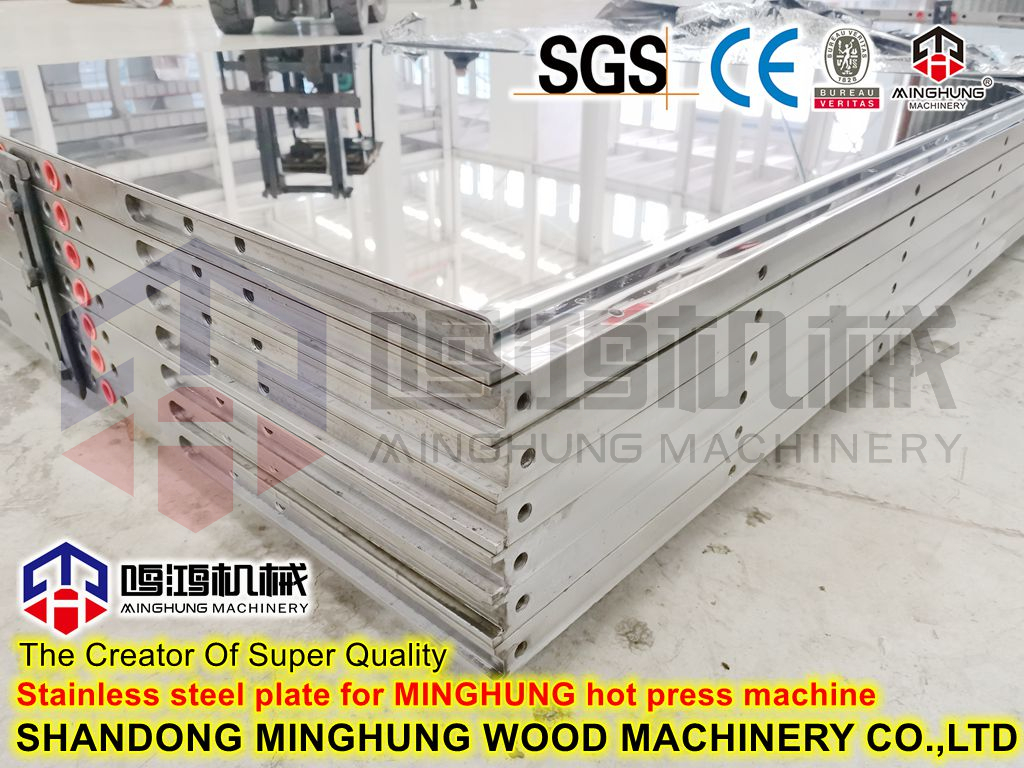
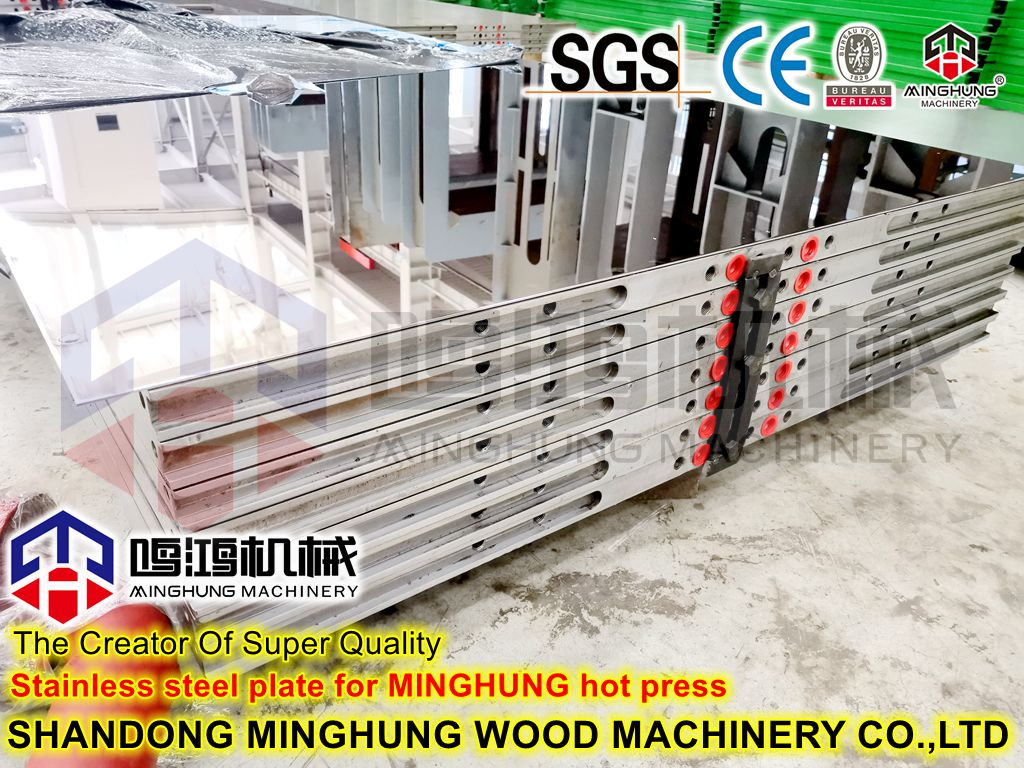
304 stainless steel plate for hot press machine
For the new template used for the first time, use clean gauze, dip it in detergent diluted with hot water, clean the board surface, rinse, wipe off the water stains, and dry in the sun. When installing, install in the order of laying the cushion first, then the upper formwork, then laying the lower cushion, and lower the formwork. Pay attention to the following four points during installation: 1) It is better to have a card-shaped slot on the suspension device, which is convenient for adjusting the position of the formwork, so as to maintain the shape and flatness of the formwork. 2) The buffer pad must be laid flat without deformation. 3) Avoid falling lubricating oil and sundries during installation. 4) If a tensioning device is used, the expansion factor should be considered.
1. In order to achieve the perfect surface effect of the product, after years of research and experiments, the design and manufacturing personnel of our factory have proposed that due to the difference in the performance, pressure, and veneering process of the press, the newly put into use formwork must undergo adaptive pretreatment . It has been verified that good results have been achieved.
Template pretreatment process:
1. When the template is used, the surface is coated with a release agent or special silicone oil (our company has a special template release agent). Under repeated temperature changes, the release agent penetrates into the capillary pores of the template to form a A fine and firm mucous membrane.
2. Spread 1-2 layers of white paper on the working surface close to the template, and sandwich 2-4 layers of kraft paper in the middle. Note that the above paper should use unimpregnated base paper to avoid staining the surface of the template by the resin cured under no pressure.
2. Close the hot press, and gradually increase the temperature under the premise of no pressure, 30°C-60°C-90°C-60°C-120°C-90°C-150°C, until the highest hot pressing temperature. Repeat back and forth for more than 20 minutes, then cool naturally, pressurize to 20-30kg/cm2, and finally turn on the heat press. In this way, the surface structure and flatness of the formwork can be maintained under repeated temperature changes, so that it can withstand a large number of pressing processes during the production process and the surface processing accuracy and gloss of the formwork will not change, prolonging the service life of the formwork.
3. Our factory recommends that users who produce laminate flooring and melamine veneer panels use special chrome-plated templates with high surface hardness and good storage resistance. Because the laminate floor is made by directly applying the wear-resistant melamine surface material (decorative paper with aluminum oxide or transparent surface paper) to the surface of the wood-based panel by hot pressing in a low-pressure short-cycle press. Therefore, the special chrome-plated template has the characteristics of reducing the friction of aluminum oxide and improving the service life of the template.